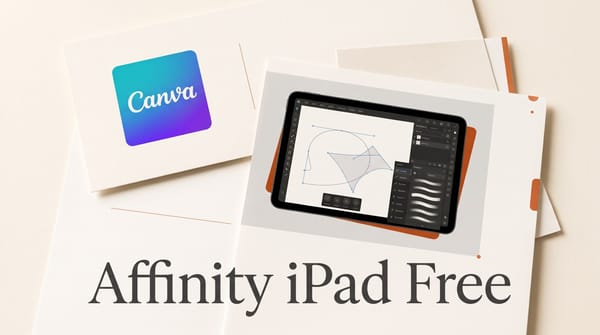
Affinity for iPad Is Free: What Canva AI Costs
Canva released Affinity for iPad on November 2, 2026, free for individuals. Drawing, vector, photo and layout tools cost nothing; the AI features need Canva Pro at $18 a month or $143.99 a year.
Canva released Affinity for iPad on November 2, 2026, free for individuals. Drawing, vector, photo and layout tools cost nothing; the AI features need Canva Pro at $18 a month or $143.99 a year.
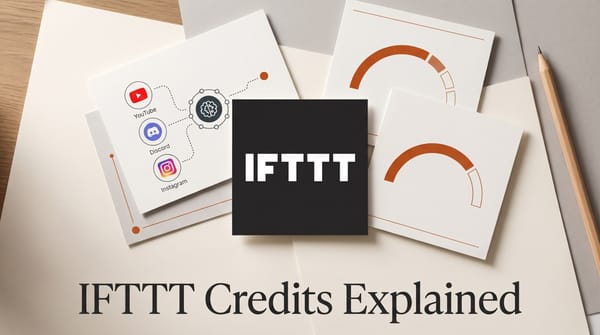
IFTTT switched to credit-based pricing on October 28, 2026: unlimited Applets on every plan, 1,000 free credits a month, and a new $2.99 Starter plan. Here is what each plan costs, how credits are counted, and how IFTTT now compares with Zapier.
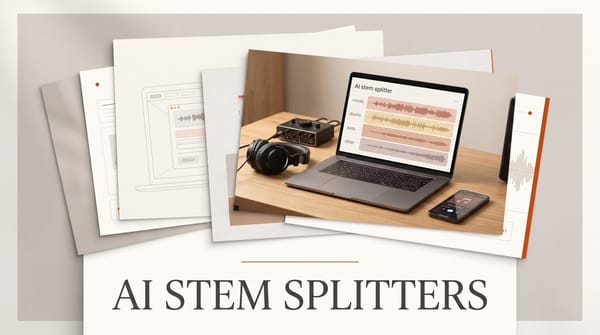
The best AI stem splitter depends on where the song goes next. Logic Pro is the best value on a recent Mac, LALAL.AI suits occasional jobs and video files, Moises is for practice, and Ultimate Vocal Remover is free.
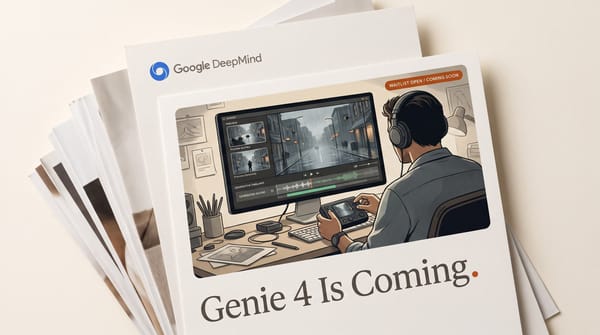
Google DeepMind announced Genie 4 on October 27, a real-time world model with generated music, ambient sound and dialogue, plus typed edits mid-session. It is in tester preview and coming soon to Google AI Ultra in Project Genie.
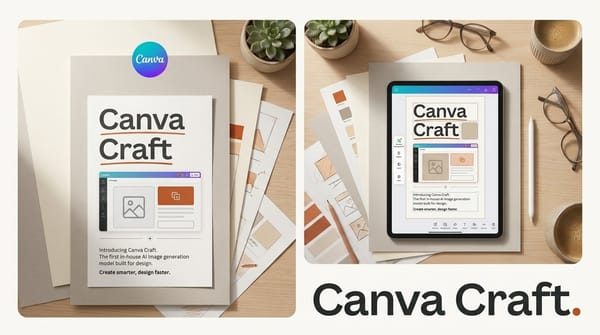
Canva released Canva Craft on October 22, 2026, its first in-house image model, live for every Canva user in Dream Lab. It plans layout and text before rendering, outputs up to 2K, and draws on your Canva AI allowance.
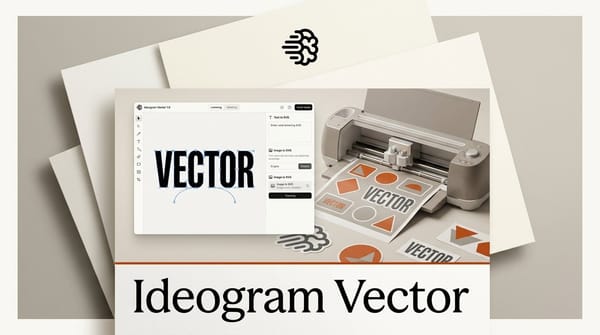
Ideogram Vector 1.0 turns a prompt or an image into an editable SVG for $0.10 to $0.32. Here is how it compares with Recraft and QuiverAI Arrow 2 on price per file, free plans and editing, plus a step-by-step route to a print-ready file.
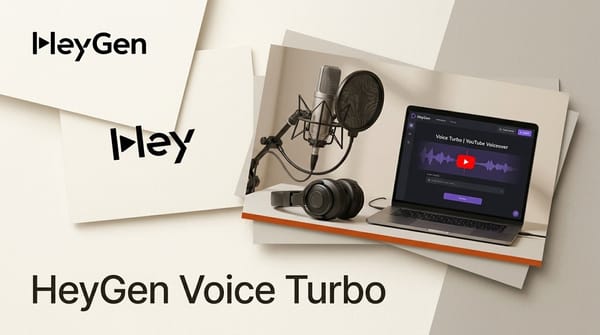
On October 21, 2026, HeyGen made HeyGen Voice Turbo free until November 30 and set its paid price at $4 per million characters. It now ranks first on the Artificial Analysis Controlled Voice leaderboard. Here is what a voiceover costs against ElevenLabs, and what the ranking does not prove.
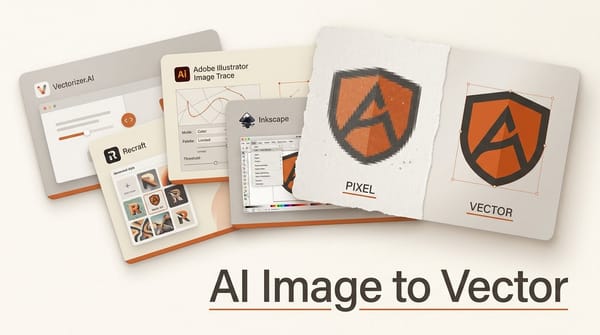
The best way to turn an AI image into a clean vector file depends on the job. For a logo, sticker or t-shirt graphic, Vectorizer.AI gives the most tools for fixing the result.
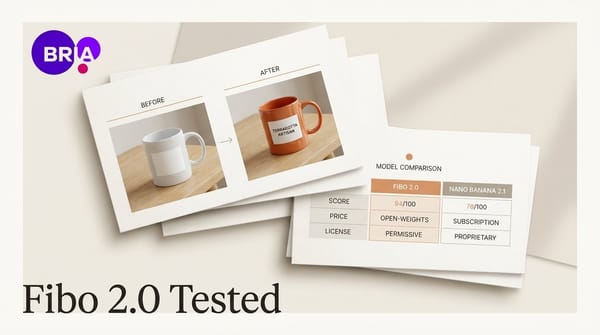
Bria Fibo 2.0 is the top-scoring open-weights image editor, trained on licensed images. It costs about what Nano Banana 2.1 does, scores lower, and the free download is non-commercial.
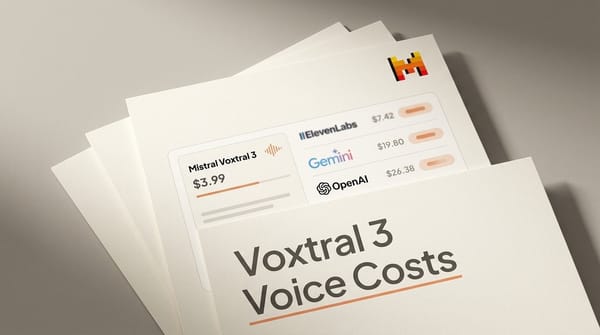
Mistral released Voxtral 3 on October 20, 2026: a $13 per million character voice model and transcribers from $0.0035 a minute. About 12 cents for a 10-minute voiceover, 21 cents for an hour of transcript with speaker labels.
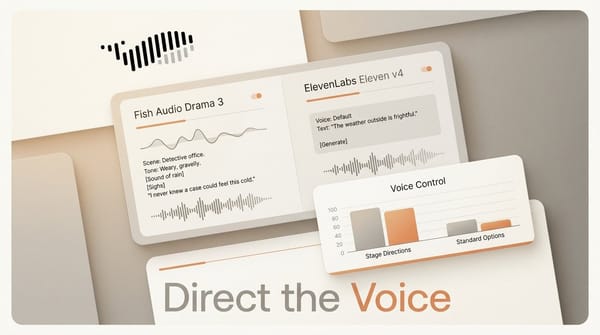
Fish Audio released Drama 3 on 13 October, a voice model you direct like an actor. We compare it with Eleven v4 on price and control, and show how to direct a scene in the app.
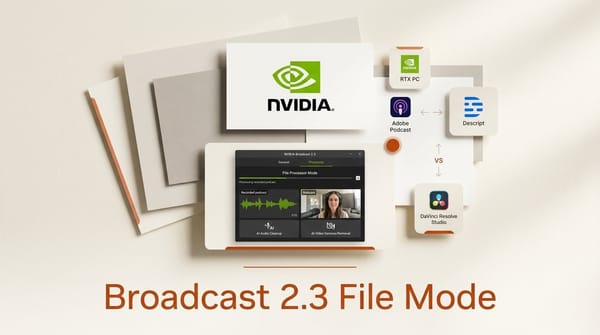
NVIDIA Broadcast, the free RTX app streamers use to clean up their mic and webcam live, can now fix recordings after the fact. Version 2.3 adds a File Processor Mode for MP4, M4A, MP3 and WAV files.
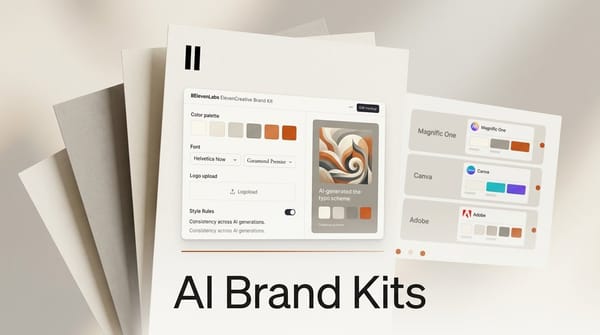
ElevenLabs added Brand Kit to ElevenCreative on October 9: save your colors, fonts, logos and rules once, then tag them in any image or video prompt. Here is how it compares with Magnific One's new kit, Canva and Adobe, what a campaign costs, and a workflow to try.
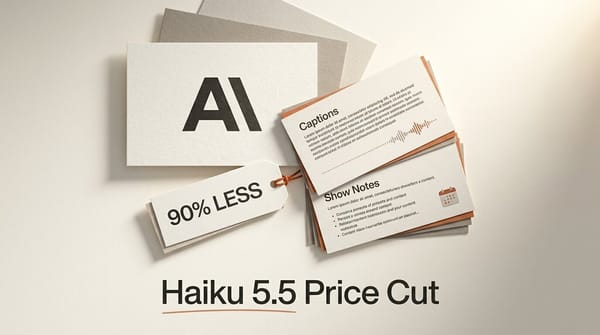
Claude Haiku 5.5 launched October 7 at $0.10 in and $0.50 out per million tokens, 90% under Haiku 4.5 for most jobs. Here is what that means per podcast show note, caption and browser chore, and when to pick Sonnet 5.5 instead.

Kandinsky 6.0 Video, released October 6, 2026 under MIT, generates 5-second clips with synced 44 kHz audio and runs on 16 GB GPUs. The catch is system RAM: Pro needs about 58 GiB.

Together Link puts Kimi K3, GLM 5.3 and the Flash models inside Claude Code, Codex and OpenCode. Priced on 13 real Opus 5.5 sessions, the Flash models save 92-96%, but Kimi K3 saves only 6% because cache reads decide the bill.
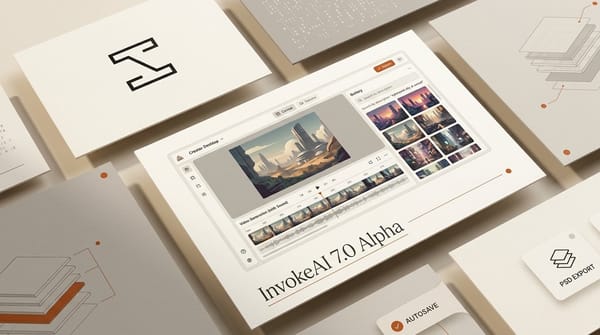
InvokeAI 7.0 alpha 1 adds video with generated sound, a rewritten canvas with PSD export, autosaving projects and semantic gallery search. What changed, which video model you can legally use, and how to install it without breaking v6.

Cloudflare launched a Web Search API on October 2, 2026: one endpoint that lets an AI agent search the web through Ceramic.ai at $0.25 per 1,000 requests, Linkup at $5 or Exa at $7, with no markup. Here is how it prices against Brave, Tavily and Claude's search tool.

rembg's default background removal model is now BRIA's RMBG-2.0, which is non-commercial and ran out of memory on our 12 GB test machine. We scored the models that do run on 500 photos: ISNet with ViTMatte edges was the best free setup.

YouTube said on October 1 that Shorts recommendations will favour original content and cut reach for re-uploads without anything of your own. Here is which AI clipping workflows are at risk, how TikTok, Instagram and Facebook compare, and a five-step check before you post.
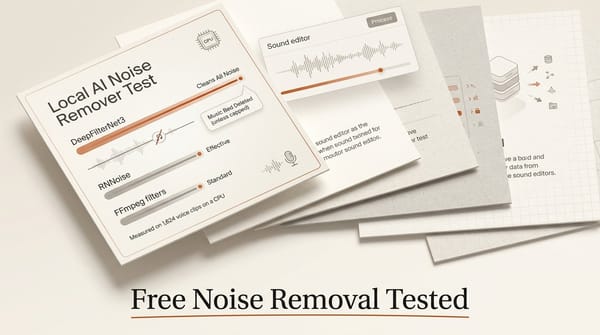
DeepFilterNet3 lifted speech quality on every noise we tested, from keyboard clatter to mains hum, on one CPU core. At its default setting it also removes a music bed almost completely, and the RNNoise inside OBS is the pre-2024 model.
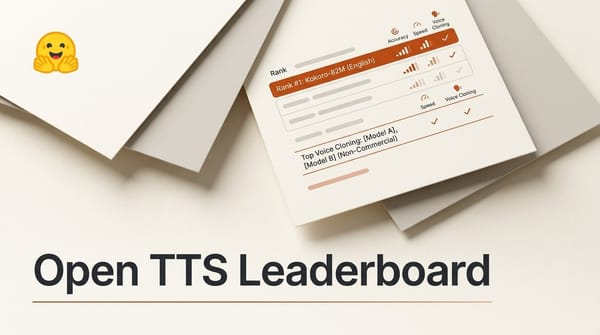
Hugging Face's new Open TTS Leaderboard puts the 82M-parameter Kokoro first in English. We read every model's license: in the multilingual and voice cloning views the #1 and #2 are non-commercial, and the first model you can ship is Qwen3-TTS at #3.
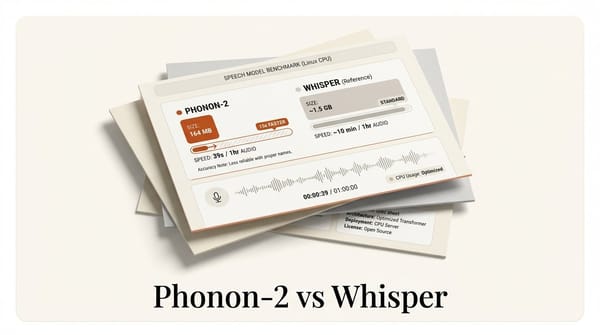
Fermion Research's Phonon-2, a 164 MB open English speech model released 29 September, transcribed an hour of audio in 39.3 seconds on our 6-thread Linux server, about 15x faster than Whisper large-v3-turbo, at level accuracy. Its hotwords fix for names only works on Macs.
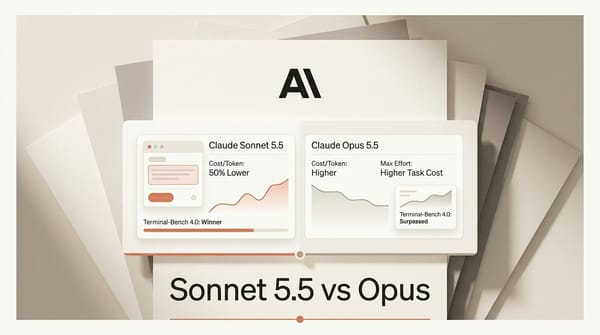
Claude Sonnet 5.5 costs half of Opus 5.5 per token and beats it on Terminal-Bench 4.0. At max effort, Artificial Analysis measured $7.60 per task against Opus 5.5's $5.98. Here is how effort decides your bill, and the five breaking changes to fix first.