Deep Dive
Sep 20, 2026
Alibaba's Qwen team published Qwen-Image-2.1 on September 20, 2026: 7B parameters, native RGBA output, up to 10 reference images, and day-0 support across Diffusers, ComfyUI and SGLang. It is also the first Qwen-Image release you are not allowed to sell work from.
Deep Dive
Sep 19, 2026
TypeSafe opened access to Jev on 15 September. Within 48 hours six open reproductions had shipped, each claiming to match it. Four independent evaluations put Jev's own Banking77 accuracy at 87.0%, 83.2%, 77.8% and 76.3%.
Deep Dive
Sep 18, 2026
OpenClaw shipped v2026.9.5 on 19 September with atomic updates and plugin hot reload. The continuity promise is thinnest in two places: an open hot-reload regression, and an extended-stable channel that published nothing.
Deep Dive
Sep 17, 2026
Victor Taelin's Bend 2 makes your AI supply a machine-checked proof that your rules still hold. The proof is real. It moves the work into specification, which is the part people are worst at.
Deep Dive
Sep 17, 2026
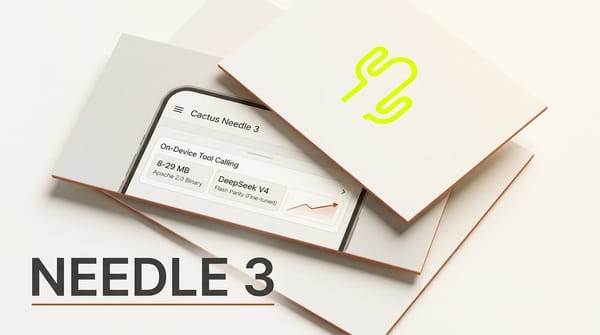
Cactus released Needle 3 on 17 September, an Apache 2.0 automation model in an 8 to 29 MB binary claiming DeepSeek V4 Flash parity. The claim holds on a 200-row benchmark after fine-tuning. The first public outside test scored it 20.4%.
Deep Dive
Sep 16, 2026
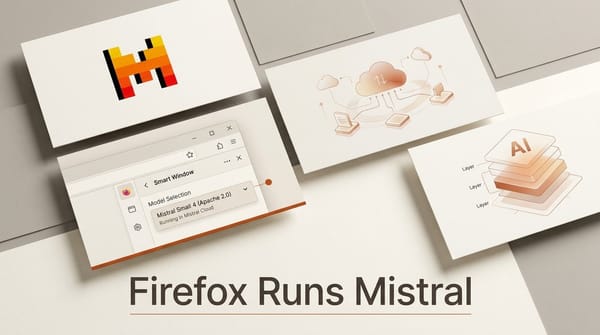
Mozilla and Mistral put an Apache 2.0 model into Firefox Smart Window. It does not run on your machine, and the smallest published build of Mistral Small 4 is 54.4 GB. The privacy guarantee here is contractual, not architectural.
Deep Dive
Sep 16, 2026
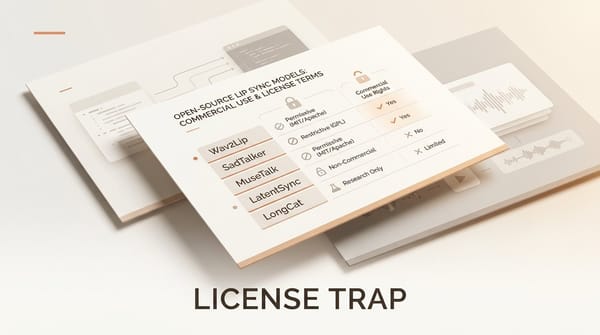
The open-source lip sync model most tutorials still recommend first is the one you are least allowed to use. Five models compared on the only axis that decides whether you can ship the output: what the license actually says.
Deep Dive
Sep 14, 2026
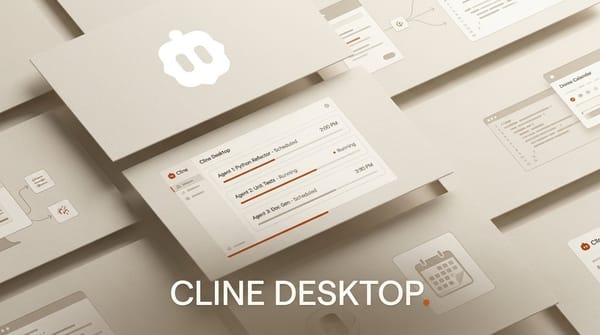
Cline shipped a desktop app on September 14, 2026, and the interesting part is not the window. Every headline feature was already shipping as an installable package four months ago, when Cline released its SDK.
Deep Dive
Sep 14, 2026
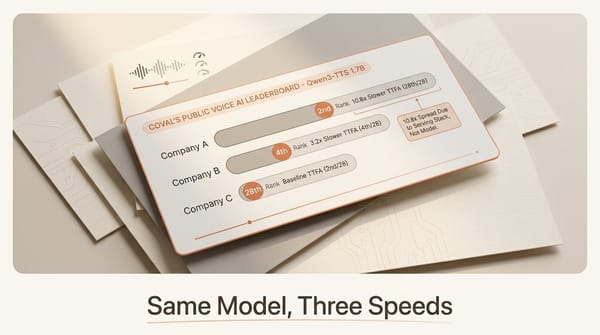
Nari Labs says it leads Coval's voice AI benchmarks. The live board shows something more useful: three companies serve the same Qwen3-TTS 1.7B weights and land at 2nd, 4th and 28th of 28, a 10.8x spread in time-to-first-audio.
Deep Dive
Sep 11, 2026
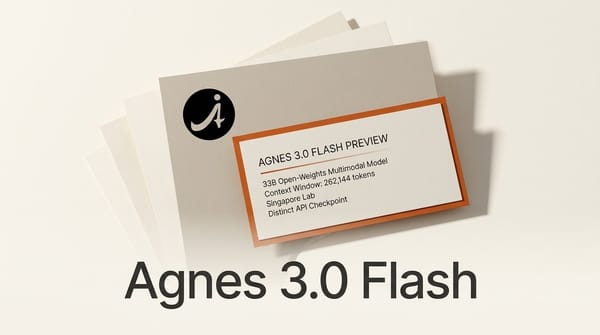
Agnes AI published Agnes-3.0-Flash Preview, a 33B hybrid-attention multimodal model with a 262,144-token context window, under Apache 2.0 on 11 September 2026. The downloadable weights are a different checkpoint from the Agnes 3.0 Flash listed on Artificial Analysis.

Deep Dive
Sep 10, 2026
The Gradio team rebuilt most of AUTOMATIC1111 as a 73-node canvas with nine REST endpoints that double as MCP tools. The project it replaces has not shipped a tagged release since February 2025.
Deep Dive
Sep 10, 2026
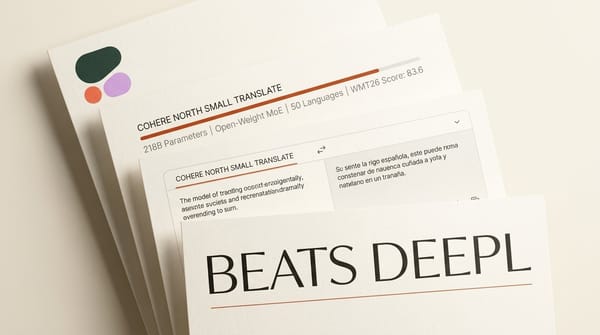
Cohere released North Small Translate 1.0 on 10 September 2026, a 218B model scoring 83.60 on WMT26 against DeepL NextGen at 81.37. The weights are CC BY-NC 4.0, so you cannot use them in anything you sell.

Deep Dive
Sep 9, 2026
DeepSeek shipped V4.1-Flash on 10 September: 552B multimodal MoE, MIT open weights, cache-hit prices down 57%, and every V4-Pro API call rerouted to it from 14 September.
Deep Dive
Sep 9, 2026
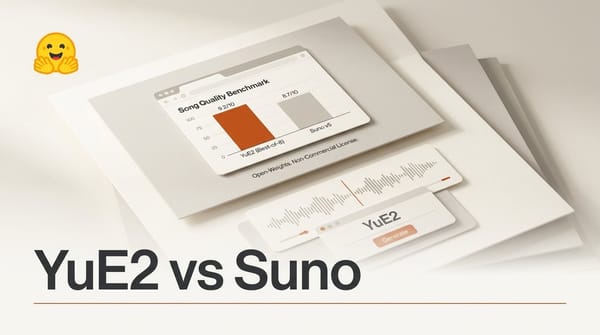
The M-A-P collective released YuE2 on 9 September 2026, and its model card says it rivals Suno v5. The benchmark tables say something more specific: the win needs best-of-8, it costs lyric intelligibility, and the weights are CC BY-NC.
Deep Dive
Sep 7, 2026
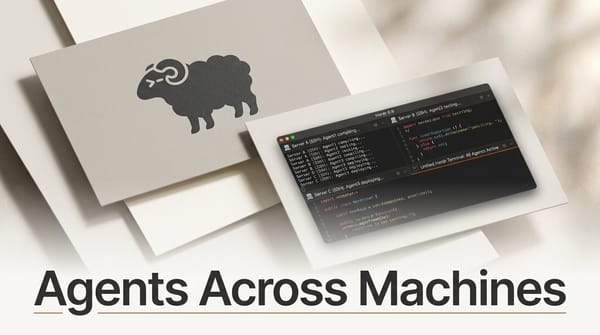
Herdr v0.9.0 lets one window hold the coding agents running on every machine you own. The enabling change is architectural, and it also defines exactly what this release cannot do.
Deep Dive
Sep 7, 2026
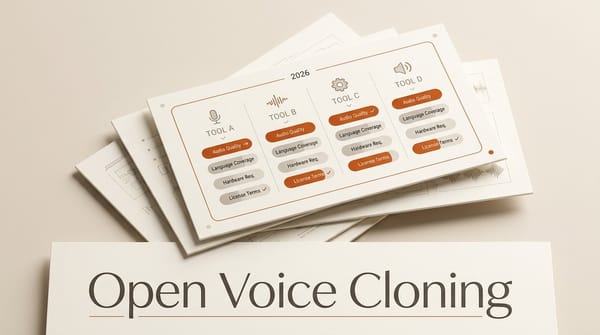
Breeze TTS 2 is the best-sounding open-weights voice model of the four here and the one you are least likely to be allowed to use. In open voice AI, license and hardware decide the pick long before audio quality does.
Deep Dive
Sep 7, 2026
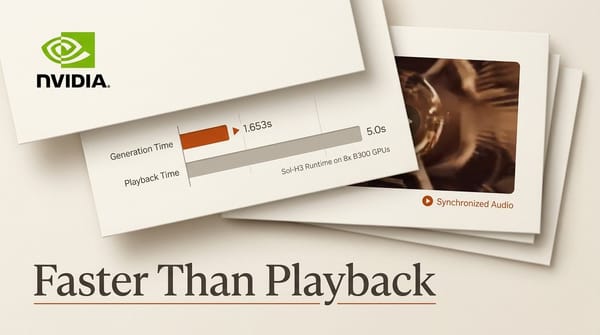
NVIDIA's SANA team published Sol-H3, an inference runtime that generates 5.17 seconds of MiniMax H3 video with synchronized audio in 1.653 seconds on 8 B300 GPUs. Faster than the clip plays, with caveats NVIDIA states plainly.
Deep Dive
Sep 7, 2026
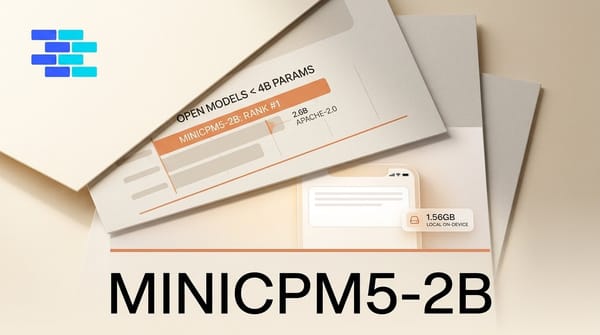
OpenBMB released MiniCPM5-2B on September 7, 2026, a 2.6B dense Apache-2.0 model that Artificial Analysis ranks #1 of 47 open-weights models at or under 4B parameters. The Q4_K_M quantization is 1.56 GB on disk.
AI
Sep 4, 2026
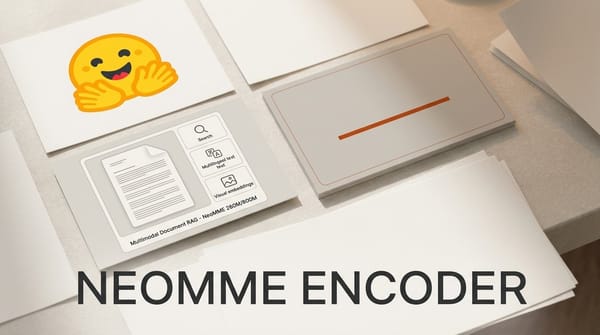
H Company released NeoMME, an Apache 2.0 family of multimodal and multilingual encoders for visual document retrieval and RAG, in 260M and 800M sizes.
Open Source
Sep 4, 2026
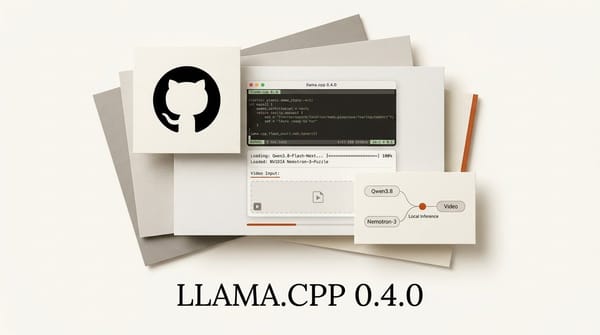
llama.cpp shipped version 0.4.0 on September 4, adding initial support for Qwen3.8-Flash-Next, NVIDIA Nemotron-3-Puzzle-75B-A9B, and video input for local multimodal models.
Deep Dive
Sep 3, 2026
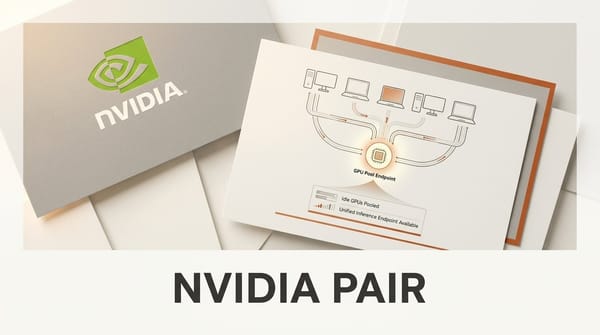
NVIDIA PAIR is a free, open-source Personal AI Router that turns the idle GPUs across your home or studio into one local inference endpoint. Here is how it works and when it beats the cloud.
Deep Dive
Sep 3, 2026
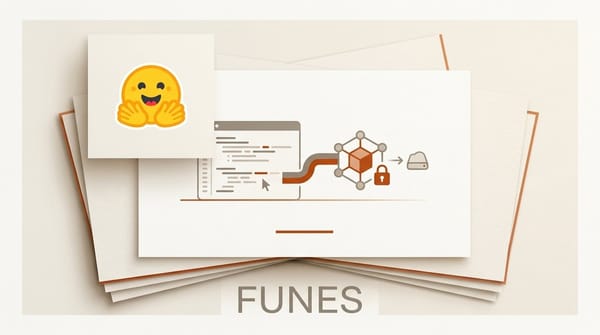
Hugging Face's open-source Funes gives coding agents like Claude Code and Codex a persistent memory that lives on your machine and travels between tools. Here is how the agent-memory-you-own pattern compares to vendor-locked and knowledge-graph memory.
Open Source
Sep 3, 2026
IFM released K2 Horizon on September 3: six fully open models from 0.9B to 375B, shipped with weights, code, and training data under Apache 2.0. Here is how to download and run them.
AI
Sep 2, 2026
TONE3000 launched a free, open-source plugin that streams more than 700,000 Neural Amp Modeler captures and impulse responses straight into your DAW.