Anthropic released Claude Fable 5.2 and Claude Mythos 5.2 on November 9, 2026. Fable 5.2 costs $8 per million input tokens and $40 per million output tokens, 20% less than Fable 5.1's $10 and $50, and Anthropic says it writes up to 30% faster. For creators on a subscription, the bigger news is a launch offer: until November 16, Pro plans get Fable included for one week (up to 50% of the weekly usage limit) and one free Fable reset. Max and Ultra subscribers get one to three resets, depending on how long they have subscribed.
Anthropic itself says most people should start with Opus 5.5 and only step up to Fable for the hardest jobs. This guide compares Fable 5.2 with Fable 5.1 and Opus 5.5, prices both models per task, and gives you a plan for using the free week on one real project.
What Anthropic Released on November 9
Fable 5.2 and Mythos 5.2 are the same underlying model. Fable is the version anyone on a paid plan can use. It carries safety filters that block most cybersecurity and biology research tasks. Mythos 5.2 removes those filters and is only for organizations accepted into Anthropic's Cyber Verification Program or its Life Sciences program. Unless you are a security team or a lab, Fable is the one you will see.
Anthropic says the new model is better at coding, reasoning and vision, and that testers found it communicates more clearly than earlier Fable versions. The filters also get in the way less often: in early testing across claude.ai, Claude Code and Cowork, Anthropic counted about 55% fewer blocks than with Fable 5.1. When a request is still blocked, you get an answer from an older model (Opus 4.8 for security topics, Opus 5 for biology) instead of an error.
The first independent score landed the same day. Artificial Analysis rated Fable 5.2 at its highest effort setting 65 on its Intelligence Index, first of the 74 models it lists. That top setting is slow and not cheap: each test task averaged about 44 minutes and $26.54, so save it for the jobs that need it and use lower effort for everyday drafting.
Anthropic also lists an optional fast mode that generates up to 2.5 times faster for double the price ($16 and $80 per million tokens). It is offered in Claude Code and on the developer platform. Fable 5.2 is also available today through Amazon, Google Cloud, Microsoft and third-party gateways such as Vercel's AI Gateway, which is how many design and website tools reach Claude.
Fable 5.2 vs Fable 5.1 vs Opus 5.5
The table uses Anthropic's published prices from the Fable 5.2 model page and scores from the launch post's benchmark table. Every score is Anthropic's own, run at each model's highest effort setting. We have not run our own tests yet.
| Fable 5.2 | Fable 5.1 | Opus 5.5 | |
|---|---|---|---|
| Input price (per million tokens) | $8 | $10 | $4 |
| Output price (per million tokens) | $40 | $50 | $20 |
| Cache read (per million tokens) | $0.20 | $0.25 | $0.20 |
| Agentic coding (FrontierCode 2.0) | 49.1% | 32.4% | 45.5% |
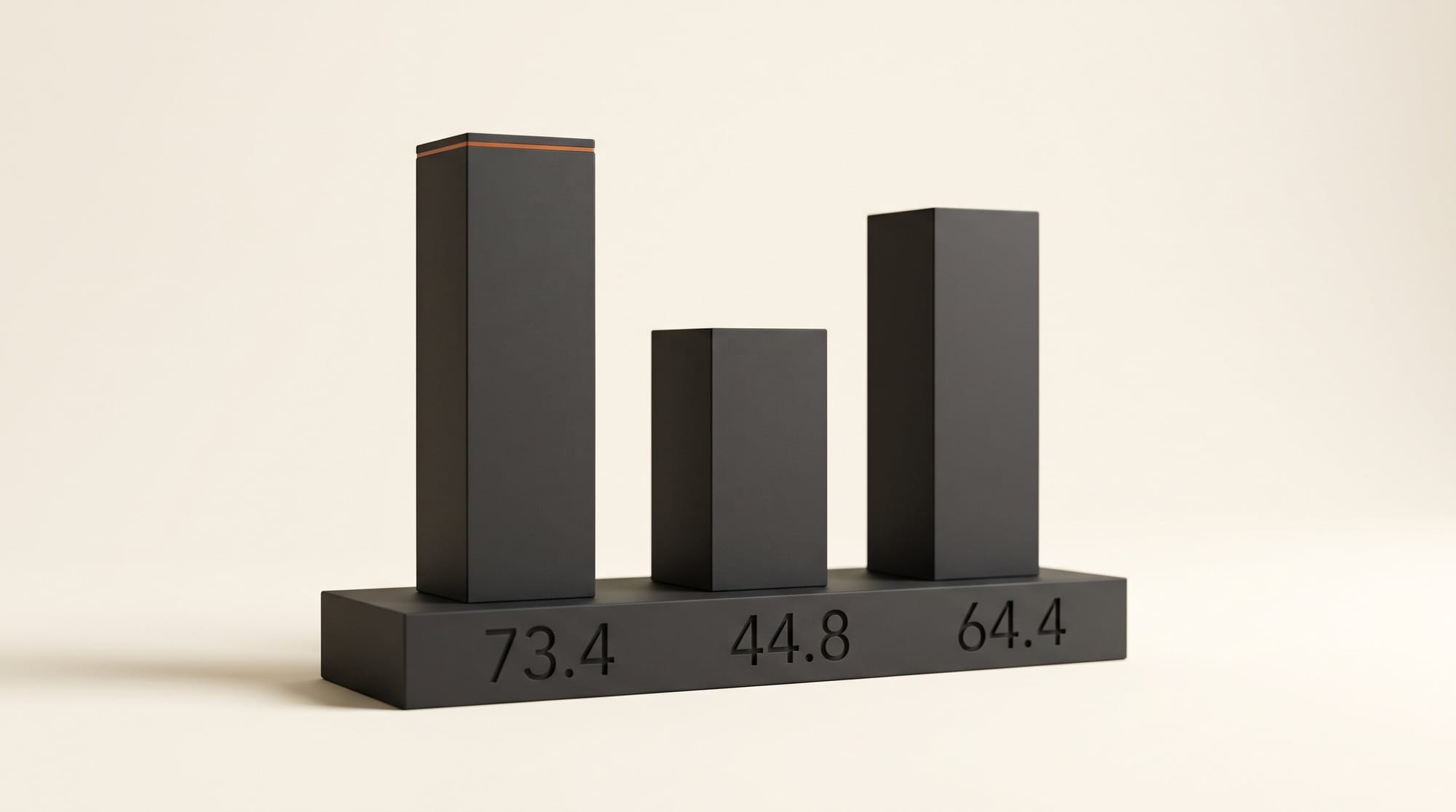
| Reading charts (Chartography, no tools) | 73.4% | 44.8% | 64.4% |
| Using a computer (OSWorld 2.1) | 89.3% | 83.5% | 87.2% |
| Knowledge work (AA-Briefcase v1.1) | 66.1% | 61.5% | 61.2% |
| Expert reasoning (Humanity's Last Exam, tools) | 74.2% | 65.6% | 67.7% |
| Robot control (RoboDojo Sim) | 64.9% | 27.6% | 39.4% |
Three things stand out for creative work. First, chart and image reading jumped from 44.8% to 73.4%. That is the skill you use when you paste a screenshot of a YouTube Analytics graph, a mood board or a slide and ask what it shows. Second, Opus 5.5 is still close on most rows at half the price. Third, the gap between Fable 5.2 and Opus 5.5 is biggest on long, open-ended jobs, which is exactly where Anthropic positions Fable.
Anthropic's cost charts make the same point from the other side. On FrontierCode 2.0, Fable 5.2 at High effort scored 45.3% against Opus 5.5's best of 45.5%, for "roughly half the cost per task." On Chartography, Fable 5.2 at Medium effort scored 66.4%, ahead of Opus 5.5 at Max effort (64.4%), for less than a tenth of the cost. Fable is not cheap per word, but it can be cheap per finished answer, because it reaches the same score at a lower effort setting.
What It Costs You: Plans and Per Task
Most creators use Claude through a subscription, not the API, so plan rules matter more than token prices. Here is what Anthropic's launch offers page says:
- Pro ($20 a month) and standard Team seats: all Fable models (5.2, 5.1 and 5) are included in your plan for one week, up to 50% of your weekly usage limit, plus one Fable limit reset. Both end on November 16, 2026 at 11:59 pm PT. After that, Fable on Pro goes back to being paid from usage credits.
- Max, Ultra and premium Team seats: one reset if you have paid for less than six months, two for six to 12 months, three for more than 12 months. These resets last until March 8, 2027.
- Who qualifies: your paid billing must have started before 10:00 am PT on November 9, 2026. The Free plan is not included.
A reset only refills your Fable allowance for the week; your usage of other models stays where it was. If your plan has a five-hour limit, that refills completely. You use a reset in Settings, then Usage, by choosing "Reset for free" under Limit resets. On Max and Ultra, Fable could already use up to half of the weekly limit at no extra cost, as we explained in our Claude Max vs Ultra guide.
If you build with the API or pay through usage credits, here is what one job costs. Take restructuring a long video script: about 11,000 words of notes and transcript going in (roughly 20,000 tokens, using Anthropic's rule of thumb of about 555,000 words per million tokens) and a 2,800-word draft coming out (roughly 5,000 tokens). At list prices:
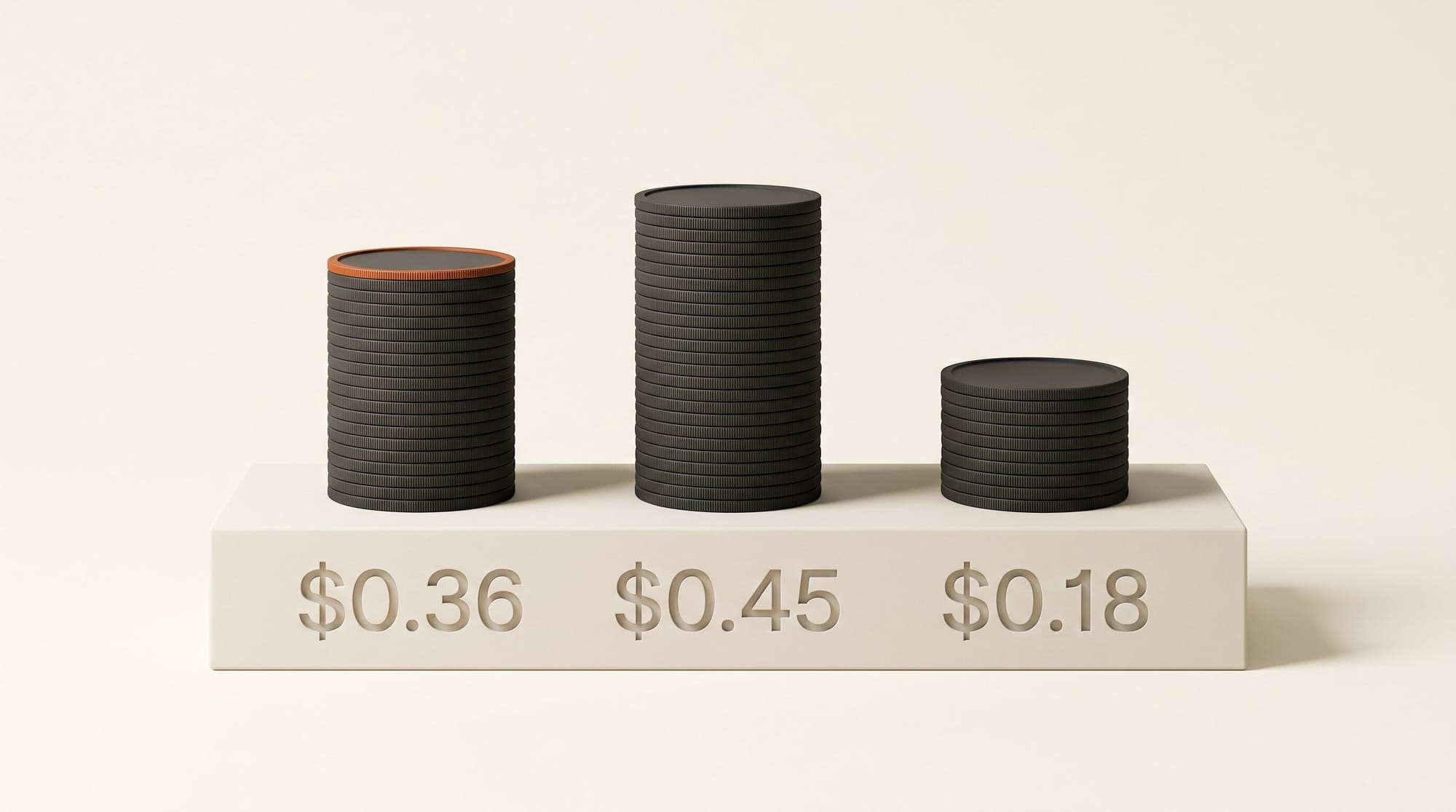
- Fable 5.2: $0.16 input plus $0.20 output, about $0.36
- Fable 5.1: $0.20 plus $0.25, about $0.45
- Opus 5.5: $0.08 plus $0.10, about $0.18
These figures leave out the model's thinking, which is billed as output. Fable 5.2 always thinks before answering, and its default effort on the API is High, against Medium for Opus 5.5, so expect real bills to come in above these numbers. Anthropic notes that in Claude apps and Claude Code the default effort is Medium, where Fable 5.2 uses fewer tokens than Fable 5.1.
Where Fable 5.2 Helps Creative Work
Most of the launch post is about software, science and security. The parts that matter to creators are smaller but specific.
Games and 3D. Unity, the game engine company, was among the early testers. Sam Zhang, a Creative Technologist at Unity, said the clearest gains were "building higher-quality 3D scenes from scratch and rebuilding an experience from a visual reference," and that the model "keeps iterating and improving instead of getting stuck" on harder game-dev tasks. If you prototype games or interactive pieces by describing them to Claude, that is the use case to try.
Reading what you show it. The Chartography jump means Fable 5.2 is better at reading screenshots, charts and slides. Paste a channel analytics graph, a sponsor's media kit or a client's brand deck and ask questions about it.
Physical products. From a one-paragraph prompt, Anthropic had the model design three working devices, including a handheld virtual pet, with circuit boards, 3D-printed cases and software. It worked with the board maker Diode, and Anthropic says all three worked without electrical changes. Most creators will not build hardware, but makers and merch designers should take note.
Long projects. Testers describe a model that keeps working until the job is done and admits when it does not know something. For creators, that means one long session for a full course outline, a season of episode plans or a website rebuild, instead of ten short ones you have to stitch together.
How to Use the Free Week (Pro Plans)
A week goes quickly. This plan takes about 30 minutes to set up and needs nothing beyond the Claude app or claude.ai.
- Check that you qualify. Open Settings, then Usage. Your plan qualifies if it was paid before November 9 at 10:00 am PT. Look for your reset under Limit resets.
- Pick one stuck project, not ten small tasks. Fable's advantage shows on work that needs many steps: a script that needs restructuring, a game or site prototype built from a reference image, or a pile of analytics screenshots you want explained.
- Run the same request on Opus 5.5 first. Save the result. This is your baseline, and Opus uses your allowance more slowly.
- Switch the model picker to Fable 5.2 and paste the exact same request. Compare the two answers side by side: which needed fewer corrections, and which understood the reference.
- Watch the Fable bar on the Usage screen. When it fills, use your reset, then carry on.
- Decide before November 16. If Fable clearly beat Opus on your project, check how much you would spend on Fable in usage credits per week. If that would come to more than $80 a month, our earlier analysis found Max at $100 is the cheaper way to keep it.

When to Stay on Opus 5.5
For everyday work, stay on Opus 5.5. Anthropic says so in its own post, calling Opus 5.5 "our strongest daily driver" and recommending that users "start with Claude Opus 5.5" before moving up to Fable. Captions, show notes, emails, first drafts and quick edits do not need Fable's extra depth, and Opus costs half as much per token. Our Opus 5.5 guide covers how its effort settings work.
Two other limits are worth knowing. Fable 5.2 requires 30-day data retention for safety monitoring, so it is not available under zero data retention unless Anthropic approves it; agencies with strict client contracts should check before uploading client material. And TechCrunch reports the launch comes amid outside concerns about how fast AI labs are improving their own models. Anthropic says both models voice suspicion that they are being tested more often than any of its recent models, which makes their real-world behavior harder to predict; the system card has the details.
Key Takeaways
- Fable 5.2 costs $8 and $40 per million tokens, 20% less than Fable 5.1, and writes up to 30% faster.
- Pro plans get Fable included for one week, up to 50% of the weekly limit, plus one reset, until November 16, 2026.
- Max, Ultra and premium Team seats get one to three resets based on tenure, valid until March 8, 2027.
- Chart and image reading improved the most among creator-relevant scores: 73.4% against 44.8% for Fable 5.1.
- Opus 5.5 remains the better default for everyday tasks at half the price.
Frequently asked questions
Is Claude Fable 5.2 free on the Pro plan?
For one week. Until November 16, 2026 at 11:59 pm PT, Pro plans can use all Fable models for up to 50% of the weekly usage limit at no extra cost, plus one Fable reset. Your paid billing must have started before 10:00 am PT on November 9. After the week, Fable on Pro is paid from usage credits again.
How much cheaper is Fable 5.2 than Fable 5.1?
20% on input and output: $8 and $40 per million tokens, down from $10 and $50. Cache reads fall from $0.25 to $0.20 per million tokens. Fast mode costs $16 and $80.
What is the difference between Claude Fable 5.2 and Mythos 5.2?
They are the same model. Fable 5.2 has filters that block most cybersecurity and biology research tasks, so it can be offered to everyone. Mythos 5.2 removes them and is only for organizations accepted into Anthropic's verification programs.
Should I use Fable 5.2 or Opus 5.5?
Start with Opus 5.5 for everyday work; Anthropic recommends the same. Move to Fable 5.2 for long, complex projects where Opus needs many rounds of correction, such as building a prototype from a visual reference or restructuring a long script.
How do I use a Fable reset?
Open Settings, then Usage, and choose "Reset for free" under Limit resets. A reset refills your Fable allowance for the week and your five-hour limit if you have one. It does not raise your limits, and unused resets expire.
Can Fable 5.2 read images and screenshots?
Yes. It accepts text and images and answers in text. Its chart-reading score rose to 73.4% from 44.8% on Fable 5.1, the largest creator-relevant gain in Anthropic's table.