Anthropic released Claude Opus 5.5 on 22 September 2026 at $4 per million input tokens and $20 per million output tokens, down from Opus 5's $5 and $25, and it debuted at number one on the Artificial Analysis Intelligence Index. TechCrunch reported it outpaces the larger Fable model on many benchmarks. Every headline today is some version of "cheaper and better."
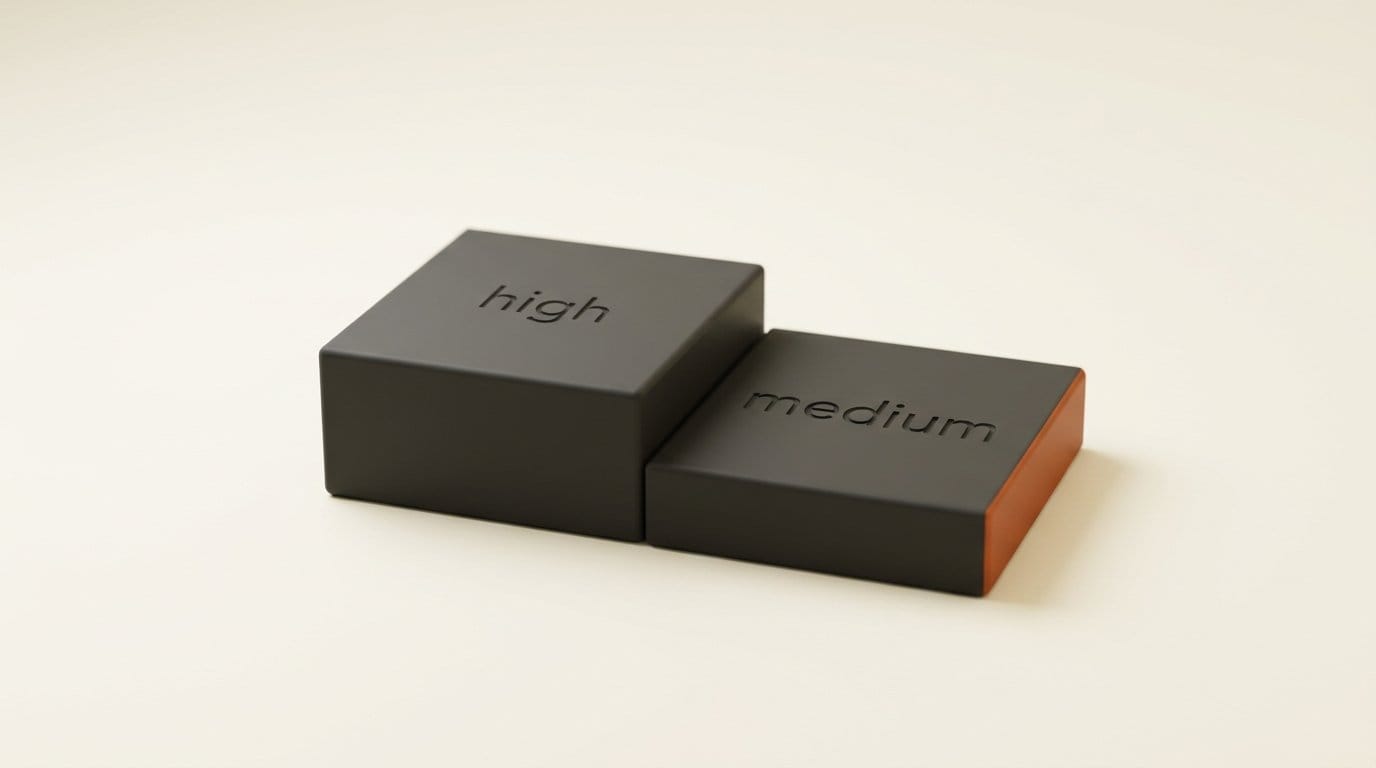
The number that will actually change your bill is not in the announcement. It is in the migration guide, and it is not a price at all. Opus 5.5 ships with its effort default set to medium. Opus 5 defaulted to high. A request that omits the parameter now runs one level lower than the same code ran yesterday.
That single default is why a model-ID swap is not a clean comparison, and why some of the savings people are about to report are not a price cut at all.
What Anthropic Shipped
Opus 5.5 uses the model ID claude-opus-5-5, keeps Opus 5's 1M token context window and 128k maximum output tokens, and carries a June 2026 knowledge cutoff. It is available on the Claude API, Amazon Bedrock, Google Cloud, Microsoft Foundry and Claude Platform on AWS, and on the Pro, Max, Team and seat-based Enterprise plans. Anthropic commits to keeping it available until no sooner than 22 September 2027.
The published rate card moved on four lines at once, and they did not move by the same amount.
| Token type | Opus 5 | Opus 5.5 | Change |
|---|---|---|---|
| Input | $5.00 | $4.00 | 20% lower |
| Output | $25.00 | $20.00 | 20% lower |
| Cache write | $6.25 | $5.00 | 20% lower |
| Cache read | $0.50 | $0.20 | 60% lower |
Anthropic's summary figure is "40% less than Opus 5 on typical workloads." Three of those four lines fell by 20%. The only way the total reaches 40% is if cache reads dominate the bill, and the arithmetic sets a demanding bar: for the blended saving to hit 40%, cache reads have to run roughly 70 to 100 times your output volume. At the 7:2:1 cache-read to input to output mix Artificial Analysis uses for its blended figure, the same rate card produces $3.85 for Opus 5 against $2.94 for Opus 5.5, which is a 24% reduction, not 40%.
Neither number is wrong. They describe different workloads. If you run a long-lived agent that re-reads a large stable context on every turn, 40% is reachable. If you generate copy, images prompts or one-shot answers, the honest expectation is 20%.

The One Line That Changes Your Benchmark
The effort parameter controls how many tokens Claude spends on a response. It applies, in Anthropic's words, to "all tokens in the response," including text, tool calls and thinking. Five levels exist: low, medium, high, xhigh and max.
Anthropic's documentation is direct about what changed: "Most Claude models default to high effort, spending as many tokens as needed for excellent results; Claude Opus 5.5 defaults to medium." The migration guide repeats it as a recommended change, noting that "a request that omits effort now runs at medium."
This matters for two reasons, and the second is the one to watch.
First, cost. Fewer output tokens at $20 per million is a real saving, and for plenty of work it is a saving you will happily take. Second, and less comfortable: if you evaluate Opus 5.5 against Opus 5 by changing the model string and rerunning your suite, you are not comparing two models. You are comparing Opus 5 at high effort against Opus 5.5 at medium effort. Any quality gap you measure is partly the new model and partly a setting you did not know you changed. Any cost saving you measure is partly a cheaper token and partly less work.
Anthropic tells you to fix this, in the same guide: "Run an effort sweep on your own evals rather than carrying settings over from an earlier model." That is the single most actionable sentence published today, and it is four clicks from the launch post.
There is a related detail worth knowing before you reach for the lever. Changing top-level effort between requests invalidates your prompt cache, because effort shapes the rendered prompt. On Opus 5.5 you can change it mid-conversation with a per-message output_config, which preserves the cache, but that path is still behind the mid-conversation-output-config-2026-07-01 beta header. If you are on the stable API, pick a level at the start of a cached session and hold it.
Four Breaking Changes Before You Swap the Model ID
The migration guide lists four changes that return HTTP 400 errors rather than degrading quietly. Code that runs today on Opus 5 can fail outright on Opus 5.5.
Thinking cannot be disabled. Both thinking: {"type": "disabled"} and thinking: {"type": "enabled", "budget_tokens": N} are rejected at every effort level. Adaptive thinking is always on. Where you previously disabled thinking to save tokens, the replacement is a lower effort level. Responses now begin with thinking blocks, so read content blocks by type rather than by position, and pass thinking blocks back unmodified alongside tool results.
Forced tool use is gone. The tool_choice types any and tool both return 400, including on the token counting endpoint. Anthropic's replacement is auto combined with strict tool use or structured outputs, plus an instruction in the prompt saying when the tool applies. Anyone who built a deterministic extraction step by forcing a single tool call has real work here, not a find and replace.
Thinking blocks are bound to the model and the conversation. On the Claude API, only Fable 5.1 and Mythos 5.1 can read Opus 5.5 thinking blocks. A router or fallback that shifts a conversation to any other model runs those turns without them. Keep conversations append-only: for accounts created on or after 31 August 2026, replaying a thinking block after editing the system prompt, the tools or earlier messages returns a 400 by default.
The older computer use tool is not accepted. On the Claude API and Google Cloud, a computer_20251124 entry returns 400. You declare the computer_toolset_20260801 toolset instead, drop the beta header, and handle several member tool_use blocks per turn where the action is the block's name rather than input.action. On Amazon Bedrock the old tool keeps working, so the same code can pass on one platform and fail on another.
One more change does not throw an error, which makes it easier to miss. Text the model writes between tool calls now returns inside progress-update thinking blocks rather than text blocks, and at the default display setting of omitted that field is empty. Anthropic states the consequence plainly: an application that streams that narration to users "goes quiet between tool calls." If you have built a visible progress feed on top of an agent loop, it will keep working and stop talking.
Where It Sits Against GPT-6 Sol and Fable 5.1
OpenAI shipped GPT-6 Sol and Luna the same afternoon, at what it describes as half the cost of the 5.6 series. Two flagship price moves in one day is the real story of 22 September, and Artificial Analysis has already scored both.
| Model | Intelligence Index | Input / output per 1M | Blended per 1M | Context |
|---|---|---|---|---|
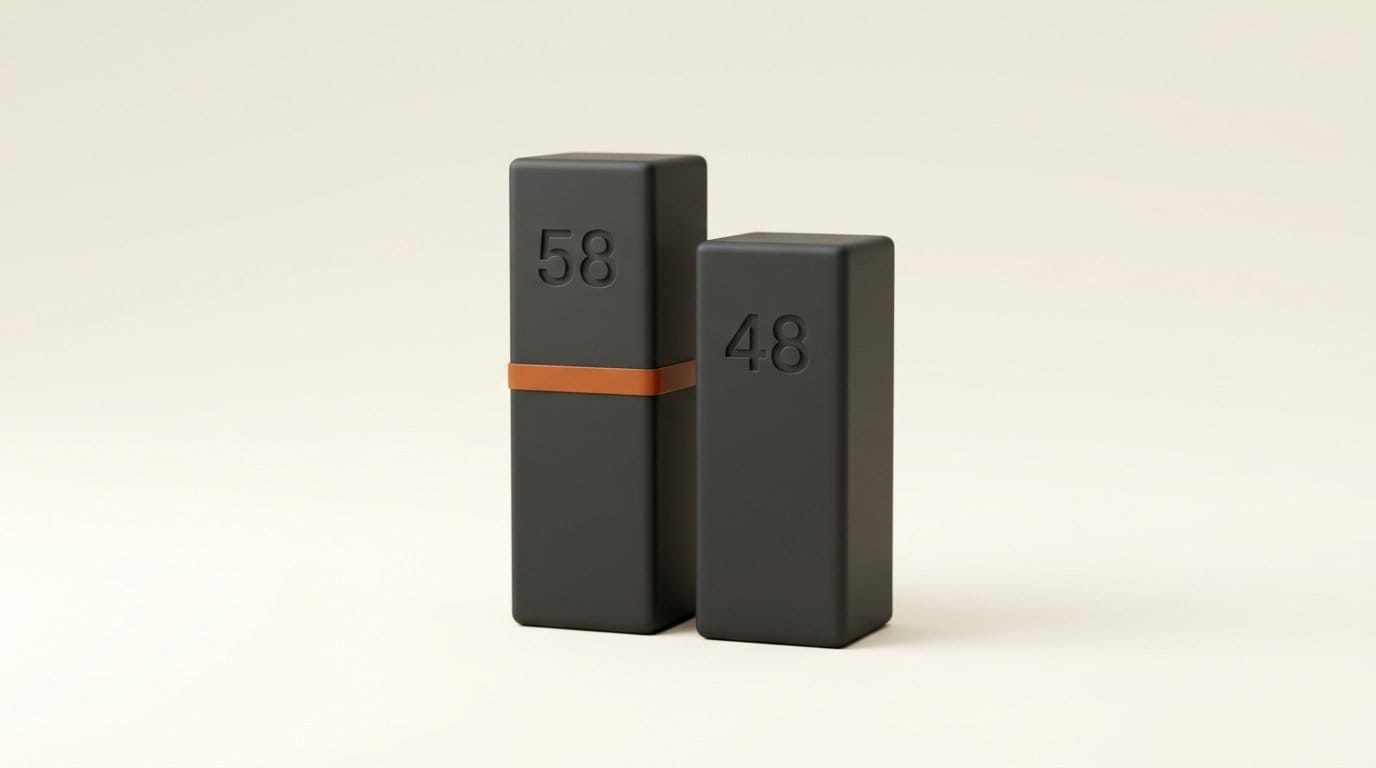
| Claude Opus 5.5 | 58 (rank 1 of 212) | $4 / $20 | $2.94 | 1M |
| GPT-6 Sol | 48 (rank 18 of 212) | not published / $10 | $1.54 | 872k |
| Claude Fable 5.1 | not yet rescored | $10 / $50 | $7.18 | 1M |
Read across the top two rows and the trade is explicit: Opus 5.5 at 58 costs roughly 1.9 times the blended rate of GPT-6 Sol at 48. Ten index points, nearly double the price. Whether that is worth paying is a question about your task, not about the leaderboard.
Anthropic makes the same point against its own table, which is the most unusual sentence in the launch: "At these levels of capability, benchmark margins have become a less reliable guide to real-world differences." That is a vendor publishing ten benchmark rows and then telling you the margins in them do not settle the decision. On several of those rows the lead over Fable 5.1 is one to four points.
There is a second reason to be careful with per-token comparisons here. Artificial Analysis records that Opus 5.5 emitted 260M output tokens across its index run, against a median of 88M for comparable models, roughly three times the median. Output is the most expensive line on the card at $20 per million, and thinking tokens bill as output. A cheaper token that you spend three times as often is not automatically a cheaper answer. This is exactly the quantity the effort default is now pulling in the other direction, and exactly why the sweep matters more than the rate card.
One Cache Rate Became Three
Most Claude models price a cache read at 10% of the base input rate. Fable 5.1 prices it at 2.5%. Opus 5.5 lands in between at 5%, which is how $4 input produces a $0.20 cache read. Anthropic now runs three different cache-read ratios across one lineup, and the models overview carries that fact in a footnote.
The practical effect is that you can no longer rank Claude models by their headline rates and get the right answer for a context-heavy workload. We covered the mechanics when Fable 5.1 cut cache reads by 75%, and the same logic decides this comparison: on a long agent session the cache read is the line you hit repeatedly, so a model with a worse headline rate and a better cache ratio can finish cheaper. Compare the ratio, not the sticker.

What To Do This Week
If you call the API directly, set effort explicitly today, before anything else. Whatever level you choose, writing it down converts an invisible default change into a decision you made. Then run the sweep Anthropic asks for: the same eval at low, medium and high, recording quality, latency and token count at each. That table, not the launch post, tells you what Opus 5.5 costs you.
Before you move production traffic, grep your code for the four hard failures: thinking with disabled or budget_tokens, tool_choice set to any or tool, any computer_20251124 entry, and any router that can move a live conversation to a third model. Each one is a 400, not a regression. If you render text between tool calls, check that your progress feed still speaks.
If you use Claude through Claude Code, claude.ai or Claude Managed Agents, none of the above applies to you: those clients are already append-only and Anthropic says a managed-agents migration needs nothing beyond the model name. You get the cheaper rate and the quieter default without touching anything.
Frequently asked questions
Is Claude Opus 5.5 actually 40% cheaper than Opus 5?
Only on cache-heavy workloads. Input, output and cache writes each fell 20%, and only cache reads fell 60%, so the blended saving depends entirely on your mix. At Artificial Analysis's 7:2:1 ratio the reduction works out to about 24%, from $3.85 to $2.94 per million blended. Long-running agents that re-read a large cached context approach the 40% figure; one-shot generation lands nearer 20%.
Can I turn off thinking on Claude Opus 5.5?
No. Both thinking: {"type": "disabled"} and the manual budget_tokens form return a 400 error at every effort level. Adaptive thinking is always on. The supported way to spend fewer thinking tokens is to lower the effort level, which Anthropic describes as a behavioural signal rather than a strict token budget, so the model still thinks on genuinely hard problems.
Why did my results change when I only swapped the model ID?
Because the effort default moved. Opus 5 defaults to high and Opus 5.5 defaults to medium, so a request that omits the parameter runs one level lower than it did before. Set effort explicitly on both models if you want a like-for-like comparison.
Does Opus 5.5 beat GPT-6 Sol?
On the Artificial Analysis Intelligence Index it scores 58 against GPT-6 Sol's 48, ranking first of 212 models against Sol's eighteenth. It also costs roughly 1.9 times as much on a blended basis, $2.94 against $1.54 per million. Anthropic itself cautions that benchmark margins at this level are "a less reliable guide to real-world differences," so the ranking is a starting point for your own eval rather than a verdict.
What breaks if I use forced tool calls?
tool_choice types any and tool return a 400 error on Opus 5.5, including on the token counting endpoint. Anthropic's replacement pattern is tool_choice: auto combined with strict tool use or structured outputs, and an explicit instruction in the prompt describing when the tool should be used. Pipelines that relied on a guaranteed single tool call need reworking rather than a parameter swap.
Is the old computer use tool still supported?
It depends on the platform, which is the trap. On the Claude API and Google Cloud, computer_20251124 returns a 400 and you must declare the computer_toolset_20260801 toolset instead, without a beta header. On Amazon Bedrock the earlier tool continues to work exactly as it did on Opus 5, so identical code can pass on Bedrock and fail on the Claude API.