Meituan put LongCat-2.5-Preview on its API platform on 25 September 2026, and it is one of the largest models you can run free inside a coding agent this week. The LongCat changelog lists three changes over LongCat-2.0: image understanding, stronger coding, and "deep compatibility" with Claude Code, OpenCode, Kilo Code, OpenClaw and Hermes. A day later it appeared on OpenCode Zen as longcat-2.5-preview-free, free for a limited time.
Direct API pricing is $0.30 per million input tokens and $1.20 per million output, flat across a 1M-token context. What Meituan has not published is a single benchmark score. So this guide covers what is confirmed, what a coding session actually costs next to GPT-6 Luna, DeepSeek V4 Pro and Claude Opus 5.5, how to wire it into OpenCode and Claude Code in about ten minutes, and how to test it on your own repo before you trust it with real work.
What Meituan Shipped on 25 September
LongCat-2.5-Preview is an update to the model family Meituan open-sourced in July. LongCat-2.0 was a 1.6-trillion-parameter Mixture-of-Experts coding model with MIT-licensed weights on Hugging Face and a 59.5 score on SWE-bench Pro. According to Lookonchain's launch summary, the 2.5 Preview keeps that scale: 1.6T total parameters, about 48B active per token, and a 1M-token context window.
The confirmed specs from Meituan's own API quick-start guide:
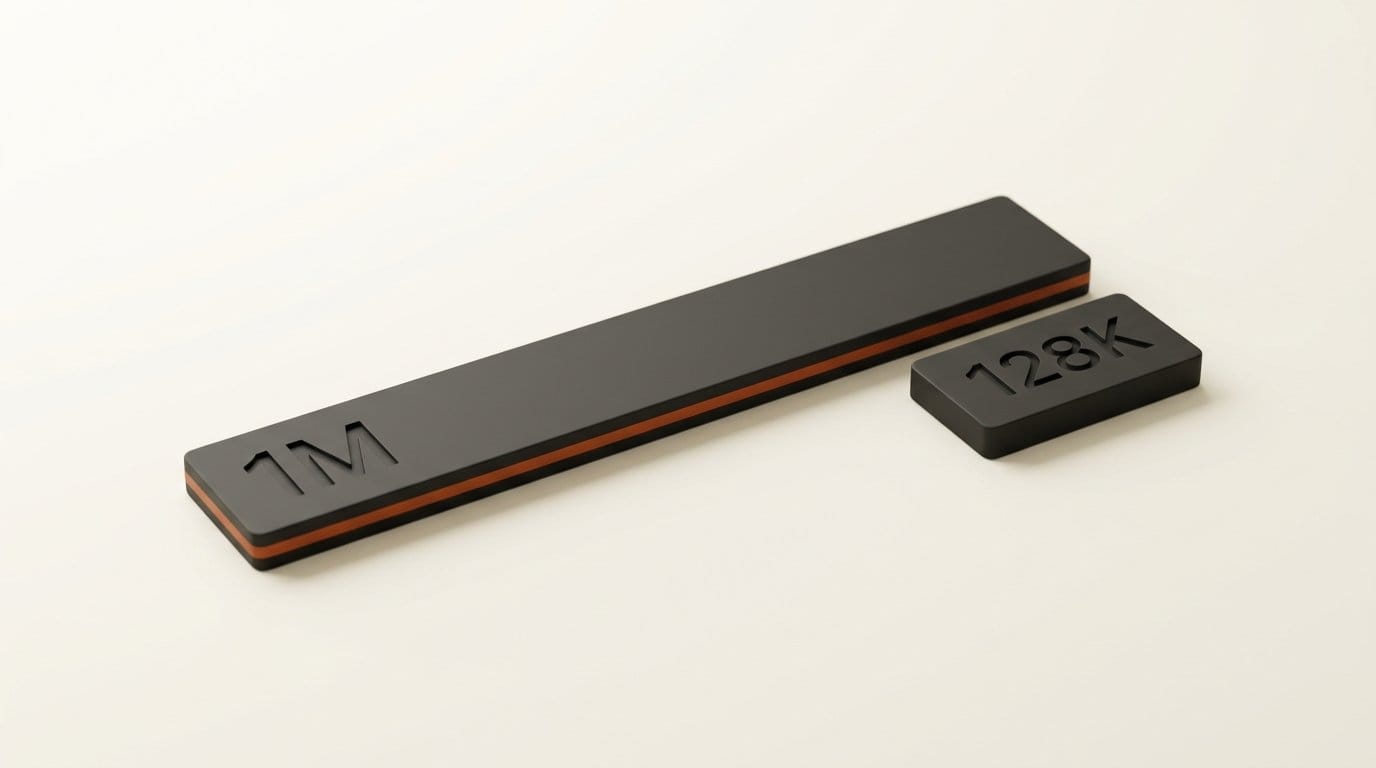
- Context: 1M tokens in, up to 128K tokens out per request.
- API formats: OpenAI-compatible at
https://api.longcat.chat/openaiand Anthropic-compatible athttps://api.longcat.chat/anthropic. - Input types: text, images and video (video by URL only).
- Thinking mode: on by default, switchable per request with a
thinkingfield. - Launch credit: 5 million free tokens for existing platform users, per the launch summary.
Two things are different from LongCat-2.0. First, no weights. The Meituan Hugging Face organisation has no 2.5 repository, and "Preview" suggests the open release, if it comes, is later. Second, vision. The changelog lists image understanding as new, and 2.5 Preview reads screenshots, charts and screen recordings, which matters if you build front ends.
What It Costs Against the Other Coding Models
Meituan's LongCat-2.5-Preview pricing page lists $0.30 per million uncached input tokens, $0.006 per million cached input tokens and $1.20 per million output tokens, marked "limited-time" with no end date. That is exactly what LongCat-2.0 costs on the same platform, so the upgrade is free for existing users. It is also well under the $0.75 input and $2.95 output LongCat-2.0 listed at on OpenRouter in July.
Per-token prices do not tell you what a session costs, because coding agents re-read the same context constantly. The table below prices one heavy agent session: 10M input tokens, 90% of them served from cache, plus 300K output tokens. Rival prices come from the OpenCode Zen pricing table as of 27 September, so every model is priced by the same reseller on the same day.
| Model | Input $/M | Cached $/M | Output $/M | Heavy session |
|---|---|---|---|---|
| GPT-6 Luna | $0.10 | $0.01 | $0.50 | $0.34 |
| LongCat-2.5-Preview (direct) | $0.30 | $0.006 | $1.20 | $0.71 |
| DeepSeek V4.1 Flash | $0.30 | $0.006 | $1.20 | $0.71 |
| MiniMax M3 | $0.30 | $0.06 | $1.20 | $1.20 |
| DeepSeek V4 Pro | $1.74 | $0.145 | $3.48 | $4.09 |
| GLM 5.3 | $1.40 | $0.26 | $4.40 | $5.06 |
| GPT-6 Sol | $2.00 | $0.20 | $10.00 | $6.80 |
| Kimi K3 | $3.00 | $0.30 | $15.00 | $10.20 |
| Claude Opus 5.5 | $4.00 | $0.20 | $20.00 | $11.80 |
| LongCat-2.5-Preview (OpenCode Zen) | Free | Free | Free | $0.00 |
GPT-6 figures use the rate for requests up to 272K tokens; above that, Zen charges Sol $4.00 in and $15.00 out, and Luna $0.20 and $0.75. Opus 5.5 excludes its $5.00 per million cache-write charge, so its real bill runs higher. LongCat's rate is flat all the way to 1M tokens.
The honest reading: LongCat-2.5-Preview is not the price floor. GPT-6 Luna is half the cost, and DeepSeek V4.1 Flash costs exactly the same. What LongCat offers at that price is a 1.6T-parameter agentic model with a flat 1M context and video input. Whether that buys you Sol-class output or Luna-class output is the one thing nobody can tell you yet. Our MiMo-V2.6-Pro vs Grok 4.7 test showed how far bills can drift apart at the same score; the reverse, same bill at very different quality, is just as possible.

The Catch: No Benchmarks, No End Date
Meituan's changelog says the model "excels in code generation, code understanding, and automated programming tasks", but the platform docs, the pricing page and the Vercel AI Gateway listing give no SWE-bench, Terminal-Bench or Arena figure. The launch summary states outright that no performance benchmarks have been released for the preview. Scores for 2.5 Preview circulating on social media do not trace back to a Meituan source, so treat them as unverified.
The free window is also vague. OpenCode's docs say only that LongCat 2.5 Preview Free "is free on OpenCode for a limited time", and add that the provider "follows a zero-retention policy and does not use your data for model training". Meituan's LongCat account on X said "two weeks" on 26 September, which points to roughly 10 October. The direct API discount carries no date at all.
That combination defines how to use it: as a free test harness now, not as a production dependency. If the model is good, you find out at zero cost. If it is not, you have lost an afternoon.
How to Run It Free in OpenCode
OpenCode now ships a built-in LongCat provider, and the free Zen tier needs no Meituan account at all. Two routes:
- Free via Zen. Install or update OpenCode (
npm i -g opencode-ai), sign in to Zen, runopencode, type/modelsand pick LongCat 2.5 Preview Free. The model ID islongcat-2.5-preview-freeon the Zen chat-completions endpoint. - Direct with your own key. Create a key on the LongCat API platform, run
opencode auth login, type "LongCat" to filter the provider list, and paste the key. If LongCat is missing from the list, Meituan's OpenCode guide says to upgrade OpenCode first. - Optional: turn thinking off. Thinking is on by default. For quick edits, add a
provider.longcat.models["LongCat-2.5-Preview"].options.thinkingblock set to{"type":"disabled"}in~/.config/opencode/opencode.json.
If you already run local models in OpenCode, the switch is the same /models picker covered in our OpenCode and LM Studio guide, so you can flip between a local model and LongCat mid-project.
How to Point Claude Code at LongCat
Because LongCat exposes an Anthropic-format endpoint, Claude Code can use it without a proxy. Meituan's Claude Code guide sets it through the env block in ~/.claude/settings.json:
- Set
ANTHROPIC_BASE_URLtohttps://api.longcat.chat/anthropicandANTHROPIC_AUTH_TOKENto your LongCat key. - Set
ANTHROPIC_MODEL,ANTHROPIC_SMALL_FAST_MODEL,ANTHROPIC_DEFAULT_SONNET_MODELandANTHROPIC_DEFAULT_OPUS_MODELall toLongCat-2.5-Preview, so no call silently falls back to an Anthropic model. - Set
CLAUDE_CODE_MAX_OUTPUT_TOKENSto131072to use the full 128K output ceiling. - Run
claudeand ask it to introduce itself. A LongCat answer confirms the route.
Two cautions. This route bills your LongCat balance, not the free Zen tier, so it runs at the direct rates above. And editing the global settings file swaps every Claude Code session on the machine. A project-level .claude/settings.json keeps the change inside one repo, and our OpenCodex guide covers another way to run non-Anthropic models inside Claude Code.
Screenshots and Screen Recordings as Input
Vision is the part that matters most for people building interfaces. Meituan's visual understanding docs accept PNG, JPG, WebP and GIF images up to 10 MB each, up to 50 per request, as base64 or a public URL. Video goes in as a URL only: MP4, MOV, MKV, AVI or WebM, up to 50 MB and one hour long. Both the OpenAI and Anthropic endpoints take images.
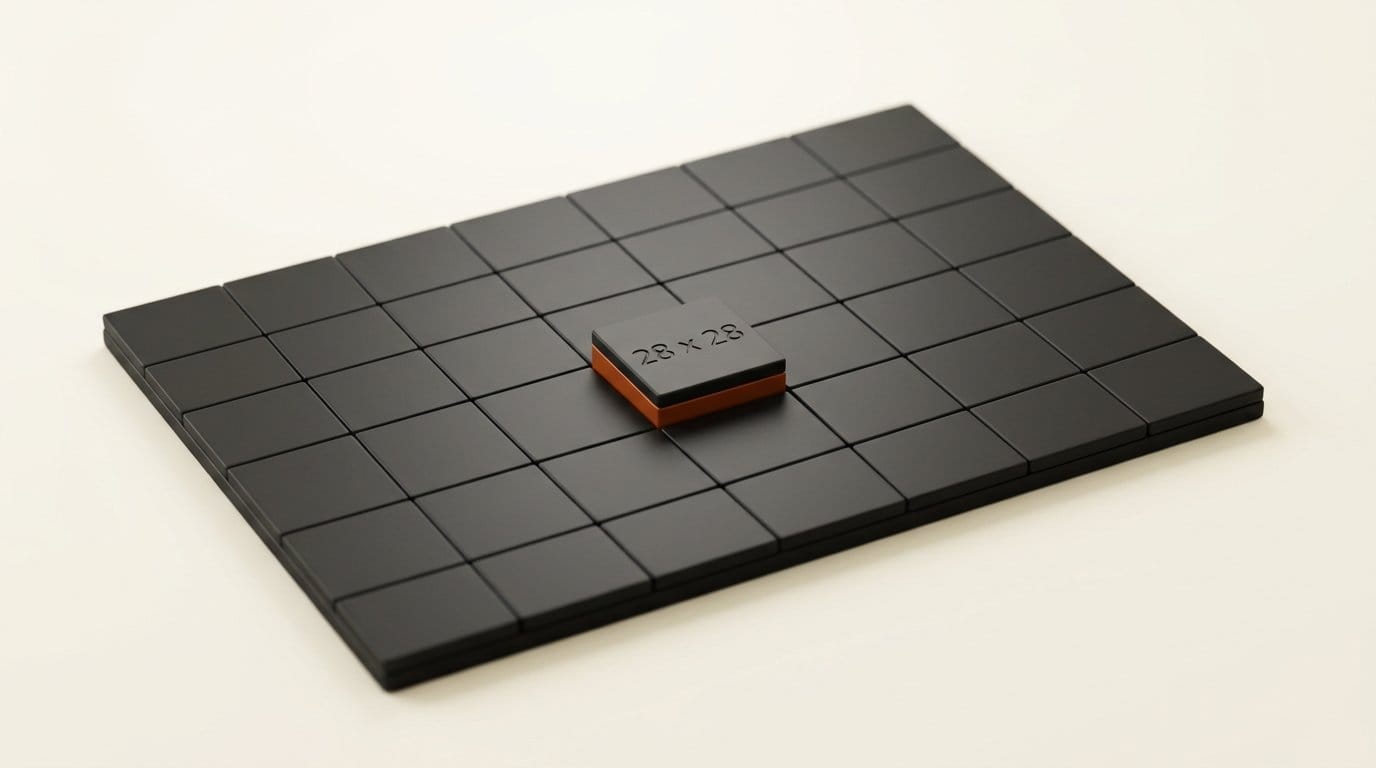
Image cost is predictable. Each visual token covers a 28 x 28 pixel tile, so the docs give the formula tokens = width x height / 784, plus two marker tokens. A 1920 x 1080 screenshot comes to about 2,645 tokens, or roughly $0.0008 at the direct input rate. Fifty full-HD screenshots in one request is about 132K tokens, well inside the 1M window. Meituan does not publish a per-second formula for video, so check the usage field on a short clip before you send an hour of footage.
Practical uses this opens: paste a design mock and ask for the component, send a screenshot of a broken layout next to the CSS, or pass a screen recording of a bug reproduction instead of writing the steps out.
A One-Afternoon Test Plan Before You Switch
With no published scores, your own repo is the benchmark. A fair test takes about three hours while the model is free:
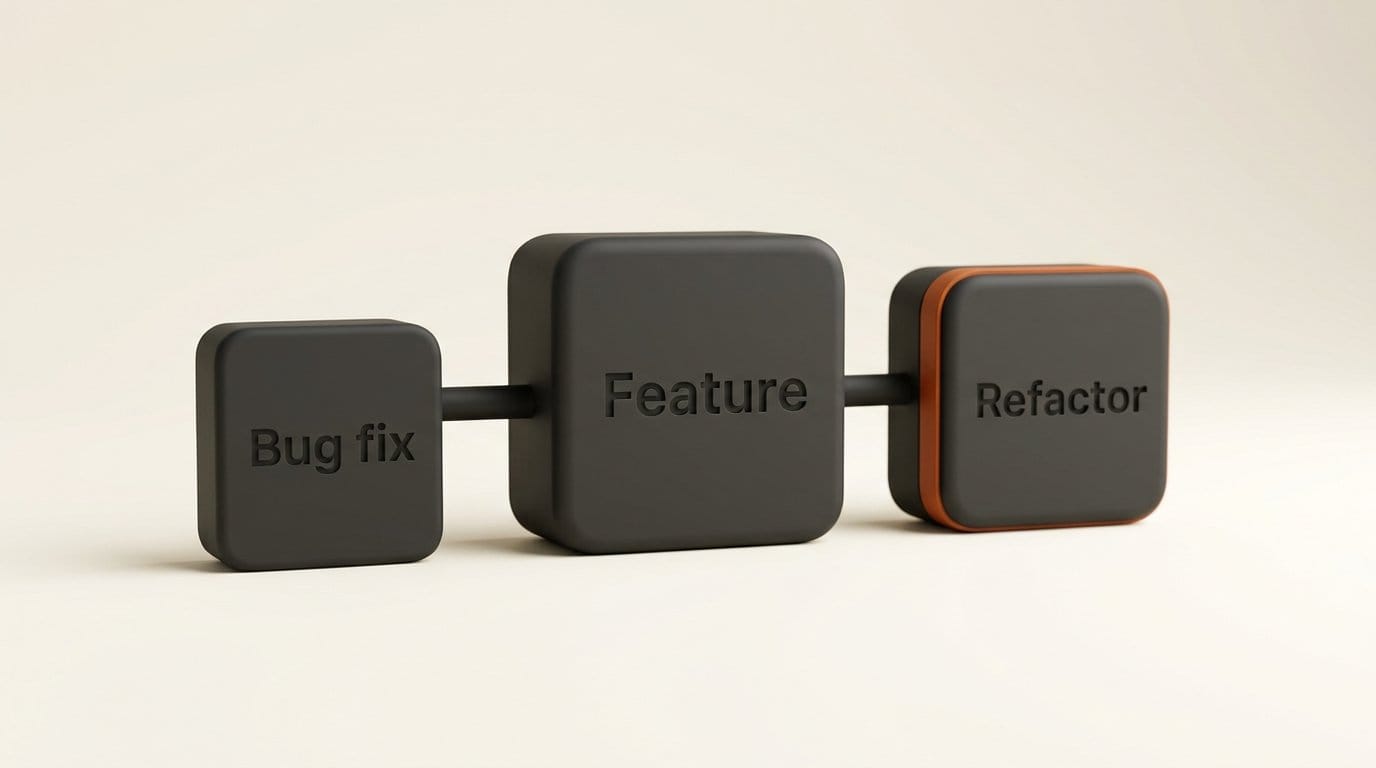
- Pick three closed tickets from your own history: one bug fix, one small feature, one refactor across several files. You already know the right answer to each.
- Run each ticket twice in the same harness from the same commit: once on LongCat 2.5 Preview Free, once on the model you use today.
- Score three things: did the tests pass, how many turns did it take, and how many files did it touch that it should not have.
- Add one visual task: a screenshot of a UI you have already built, with a request to rebuild it. This is the capability LongCat-2.0 did not have.
- Load the whole repo once. If your codebase fits in 1M tokens, ask a question that needs files from opposite ends of it. That is the case the flat 1M context is priced for.
- Decide by cost per passed ticket, not per token. If LongCat passes two of three where Luna passes one, it is the cheaper model even at twice the rate.
Keep anything confidential out of the test unless you have read the retention terms for the route you are on. The zero-retention statement applies to the OpenCode Zen free tier; the docs checked for this article do not say the same about the direct API.
Frequently Asked Questions
Is LongCat-2.5-Preview open source?
No, not yet. LongCat-2.0 was released with MIT-licensed weights on Hugging Face, but there is no 2.5 repository. The preview is available through Meituan's API, OpenCode Zen and gateways such as Vercel AI Gateway only.
How long is LongCat-2.5-Preview free on OpenCode?
OpenCode's docs say "a limited time" without a date. Meituan's LongCat account said two weeks on 26 September, which suggests around 10 October. Plan your test for the next few days rather than counting on the later date.
Does LongCat-2.5-Preview work with Claude Code?
Yes. Point ANTHROPIC_BASE_URL at https://api.longcat.chat/anthropic, set your LongCat key as ANTHROPIC_AUTH_TOKEN, and map every model variable to LongCat-2.5-Preview. That route bills your LongCat balance, not the free OpenCode tier.
How does LongCat-2.5-Preview compare to GPT-6 Luna on price?
Luna is cheaper per token: $0.10 input and $0.50 output against LongCat's $0.30 and $1.20. On the heavy session priced above, Luna costs $0.34 and LongCat $0.71. LongCat's rate stays flat to 1M tokens, while Luna's rises above 272K.
Can LongCat-2.5-Preview read video?
Yes, through a public video URL: MP4, MOV, MKV, AVI or WebM, up to 50 MB and one hour. Local files have to be uploaded somewhere reachable first; base64 upload is supported for images only.
What benchmarks has Meituan published for LongCat-2.5-Preview?
None as of 27 September 2026. The changelog describes coding as "superior" without numbers. LongCat-2.0's 59.5 on SWE-bench Pro is the last published figure for the family, and it does not transfer automatically to the new version.