AI answers in Google take clicks from your website, and the size of the cut is now measured: in a randomized experiment run in January and February 2026, Google's AI Overviews cut outbound clicks by 38% on the searches where they appeared. AI chatbots do not make up for it. They sent 0.32% of all website traffic in 2026, against 42.75% from organic search. But the loss is uneven. AI answers take clicks from questions ("how do I...", "what is the best..."), much less from searches for your name or for something to buy. If you are a photographer, illustrator, musician, YouTuber or writer with your own site, which of those your traffic depends on matters more than the headline number.
Background
Google started showing AI-written summaries at the top of search results in May 2024 and has since added AI Mode, a chat-style search page with no list of links up top. For two years the argument ran on anecdote: publishers said traffic was falling, and Google said it was not. In an August 2025 post titled AI in Search is driving more queries and higher quality clicks, Liz Reid, head of Google Search, wrote that "total organic click volume from Google Search to websites has been relatively stable year-over-year."
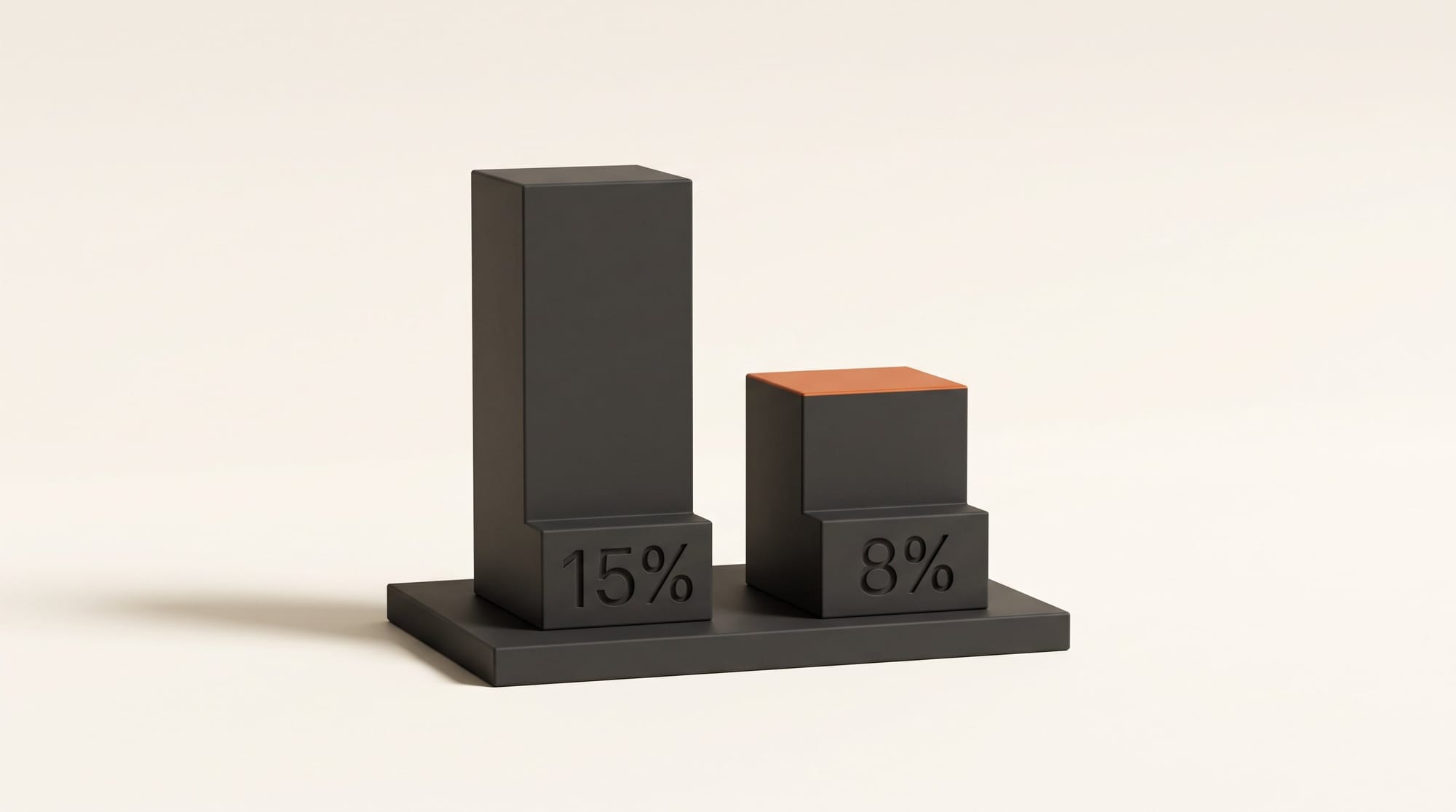
The first hard numbers came from the Pew Research Center, which tracked the real browsing of 900 US adults across 68,879 Google searches in March 2025. When an AI summary appeared, people clicked a regular result on 8% of visits. Without one, they clicked on 15%. Only 1% clicked a link inside the summary itself, and 26% simply ended their browsing session, against 16% when no summary showed.
Since then three things have happened. Large datasets from SEO companies measured how the click rate fell through 2025. Two controlled experiments, the first ever, tested cause rather than correlation. And a 2026 study showed the decline stopped getting worse. Put together, they answer the question creators actually ask: is this coming for my site?
Deep Analysis
The cut is real, and now it is proven
Correlation studies came first. Ahrefs compared 300,000 keywords and, in February 2026, reported that "the presence of an AI Overview now correlates with a 58% lower average clickthrough rate for the top-ranking page." Its model predicted a 3.7% click rate for the number one result on those searches; the actual figure in December 2025 was 1.6%. A year earlier Ahrefs had measured the drop at 34.5%, so it got worse through 2025. Lower results lost less: 50.8% at position two, 19.4% at position ten.
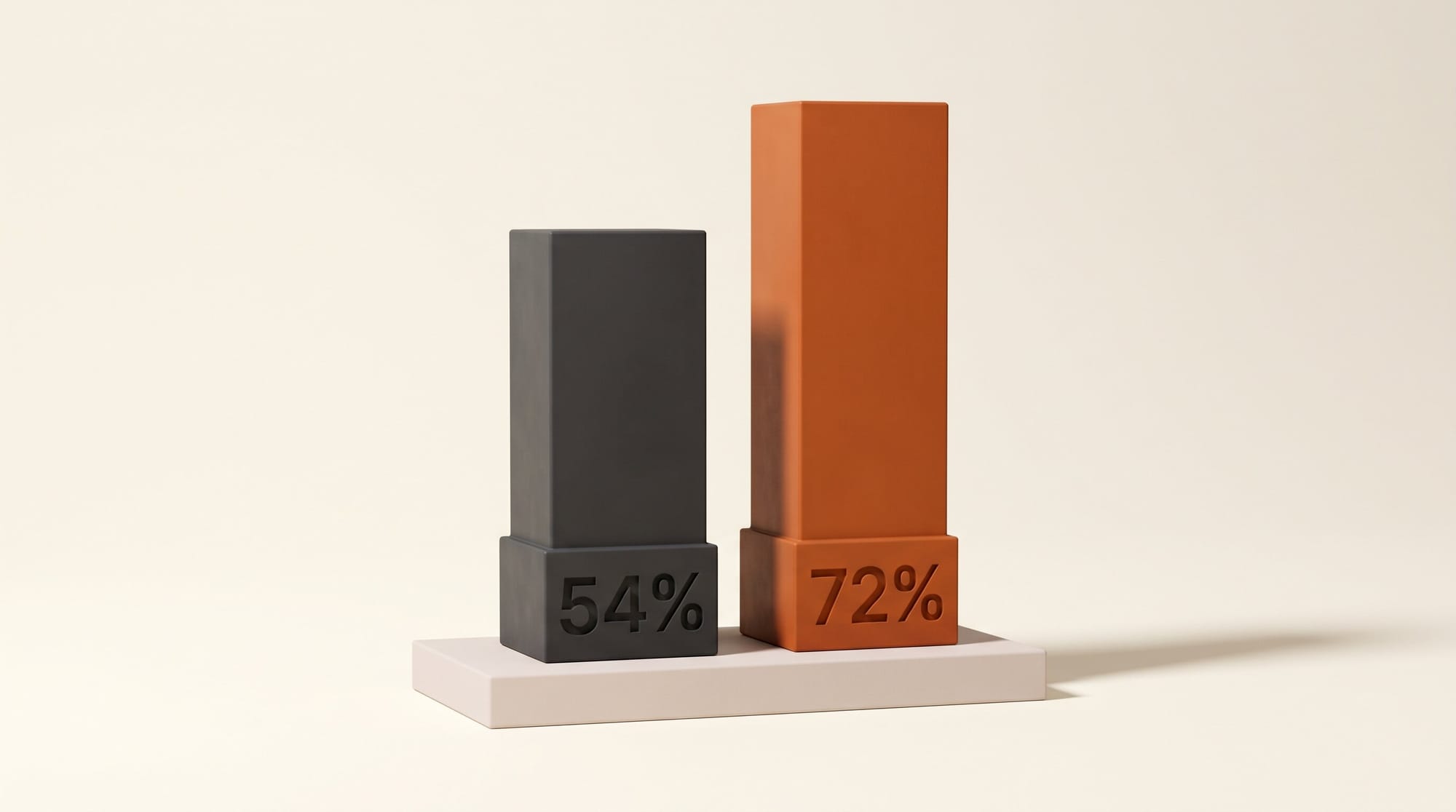
The causal proof came in April 2026. Saharsh Agarwal and Ananya Sen, researchers at the Indian School of Business and Carnegie Mellon University, gave 1,065 US volunteers a Chrome extension that quietly hid AI Overviews for some of them for two weeks, as Search Engine Journal reported. With the summaries showing, outbound organic clicks were 38% lower on the searches that triggered them, and zero-click searches rose from 54% to 72%. The detail that should worry anyone who earns from search: more than 95% of the people whose summaries were hidden did not notice, and they rated their searches just as satisfying.
A second experiment, posted to arXiv in August 2026 by a team led by Stephanie T. Wang, tested AI Mode with 1,100 participants. Switching people to AI Mode cut the share of searches ending in a click to a website by 18.8 percentage points. It also lowered satisfaction and trust, and pushed 11.2 percentage points more of them to try Bing, DuckDuckGo or Yahoo.
The decline stopped getting worse
The one piece of good news comes from Seer Interactive, which tracked 5.47 million searches for 53 brands. On searches with an AI Overview, the organic click rate fell from 3.19% in January 2025 to a low of 1.31% in December 2025, then climbed back to 2.36% in February 2026. Seer's own line: "The 2025 CTR decline did not extend into 2026." But searches without a summary sat at 3.82% that same month, so the recovery is partial. The new normal is lower than the old one, not a return to it.
Seer also found the biggest lever a site owner has. Pages that the AI Overview cited got roughly two to five times the click rate of pages it skipped. Being the source the summary names is now worth more than ranking just below it.
Questions lose, names and purchases hold
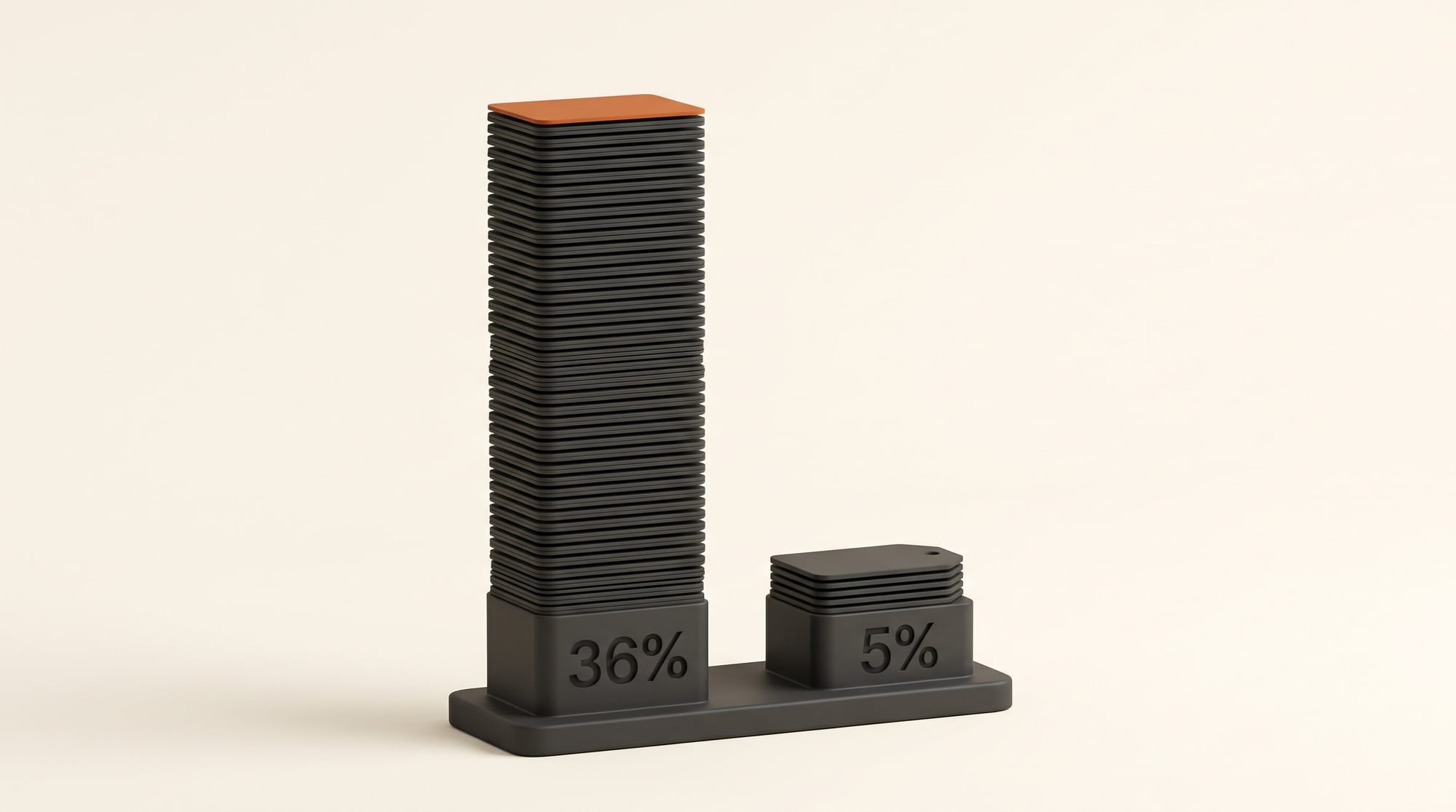
Here is the part the headline numbers hide. AI summaries do not appear on every search. In Pew's data, 18% of all searches produced one, but the share depended on the kind of search: 8% of one- or two-word searches, 53% of searches of ten words or more, and 60% of searches that started with a question word. Seer saw the same split by intent: about 36% of informational searches showed an AI Overview, against 5% of searches to buy something.
For creators that is a map. A search for your name, your studio or your shop is short and specific, and rarely gets a summary. A search like "how to edit night sky photos in Lightroom" or "best mic for a podcast under $100" is exactly what Google now answers on the page. If your site lives on tutorials, gear lists and explainers, you are in the exposed group. If it lives on people looking for you, your portfolio or your prints, you mostly are not.
AI chatbots are not the replacement
The hope that ChatGPT and its rivals would send the lost visitors back does not hold up yet. SE Ranking found that AI platforms sent 0.32% of all website traffic in 2026, up from 0.24% in 2025 and 0.02% in 2024. That is 16 times growth, but it is still one visit in every 312. Organic search sent 42.75%, which means Google still sends 134 times more visitors than every AI chatbot combined. ChatGPT supplied 74.78% of AI referrals, followed by Gemini at 11.56%, Perplexity at 7.23%, Copilot at 3.51% and Claude at 2.62%.
So the picture is not "search is dead, chatbots won." Google is still the biggest source of visitors for almost every site. It now keeps a larger share of the answers for itself.
Impact on Creators
Start by finding out which group you are in. Open Google Search Console (free, no code; most website builders walk you through connecting it) and go to the Performance report. Set the dates to the last 16 months and look at your top queries. If most of your clicks come from questions and "best" lists, and impressions are flat while clicks fall, AI answers are taking your traffic. If your top queries are your name, your shop or your work, your search traffic is far safer than the headlines suggest. Google added reports on AI search to Search Console in June; our coverage explains what they show.
Then give the click a reason. A summary can repeat your tips; it cannot hand over your preset pack, your printable template, the full-resolution gallery, the sample pack, the booking calendar or the print shop. A tutorial that ends in a free download is a page people still need to visit. A tutorial that only explains steps is a page the summary replaces.
If you are a YouTuber, the same data cuts the other way. Pew found Wikipedia, YouTube and Reddit were the three most-linked sources in Google's AI summaries. A video that answers the question well can be the thing the summary sends people to.
Finally, own the relationship. Every visitor who joins your email list or follows your channel is someone who no longer needs Google to find you again. That is the logic behind Google's own Search Profiles for creators, which put your links in front of people searching your name, though only above 100,000 followers. If you do not have a site of your own yet, our portfolio site walkthrough compares the builders; put a newsletter signup on it from day one.
One thing to know before you block anything: switching off AI training does not take you out of Google's AI answers. Cloudflare's training opt-out separates AI training from search indexing, which protects your work from being trained on but is a different question from the summaries in search results, and it will not bring clicks back.
Key Takeaways
1. AI Overviews cut clicks by 38% on the searches where they appear, in the first randomized test; correlation studies put the hit to the top result at 58%.
2. The losses concentrate on question searches: 60% of question-word searches showed a summary, against 8% of one- or two-word searches.
3. The decline stopped deepening in early 2026, and cited pages get two to five times the clicks of uncited ones.
4. AI chatbots sent 0.32% of website traffic in 2026; Google still sends 134 times more, so do not plan around chatbot referrals yet.
5. Pages that hand over something a summary cannot (files, galleries, bookings, products) and searches for your own name are the safest traffic you have.
What to Watch
AI Mode is the bigger risk. In the August 2026 experiment it cut clicks far more than AI Overviews did. If AI Mode becomes the default view for question searches, the tutorial-and-explainer model of a creator website loses most of what is left of its search traffic. The same experiment found people liked AI Mode less and drifted to other search engines, which gives Google a reason to go slowly.
Also watch the referral numbers from ChatGPT and Gemini. They grew 16 times in two years from almost nothing. If that growth continues, being the source an AI chatbot names becomes a second front door to your site. For now, the safest plan is the old one with a sharper edge: make pages worth clicking, and turn the people who do click into subscribers you can reach without a search engine in between.
Frequently Asked Questions
Do Google AI Overviews reduce website traffic?
Yes, on the searches where they appear. A randomized study of 1,065 people in early 2026 found 38% fewer clicks to websites on searches showing an AI Overview, and Pew found people clicked a result on 8% of searches with a summary against 15% without one.
Which creator websites are hit hardest by AI search?
Sites that earn traffic from questions: tutorials, how-to guides, gear lists and explainers. AI summaries appeared on 60% of question-word searches in Pew's data, but on only 8% of one- or two-word searches like a name or a shop.
Does ChatGPT send traffic to websites?
Some, but very little so far. SE Ranking found AI platforms sent 0.32% of all website traffic in 2026, with ChatGPT supplying 74.78% of that. Organic search sent 42.75%.
How do I check if AI search is affecting my site?
Open the Performance report in Google Search Console, set the date range to 16 months and compare clicks with impressions for your top queries. Impressions holding steady while clicks fall on question searches is the pattern AI answers leave.
Is the drop in clicks from AI Overviews getting worse?
Not in the latest data. Seer Interactive found the organic click rate on AI Overview searches fell to 1.31% in December 2025, then recovered to 2.36% by February 2026, still below the 3.82% on searches without a summary.