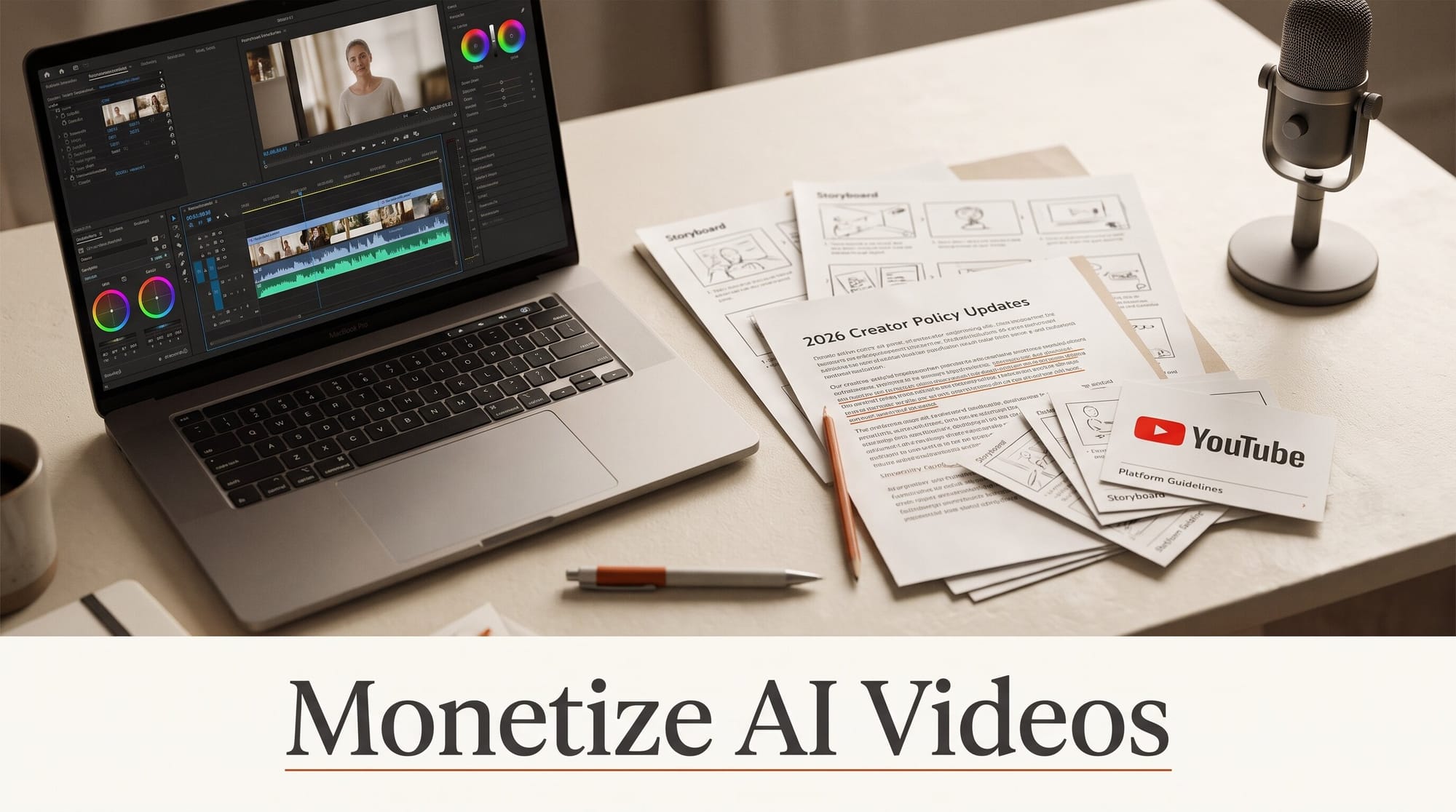
Yes, you can monetize AI videos in 2026. YouTube, TikTok, Facebook and Spotify all pay for work made with AI tools, and none of them bans AI by name in its payout rules. What they stopped paying for is the same video made 200 times. YouTube's Partner Program monetization policies now list "AI-generated content made with generic or unoriginal templates giving the impression of mass production" as ineligible, and TikTok, Meta and Spotify each have their own version of that rule. The line is not AI versus human. It is your input versus a template.
That distinction matters because the penalty is not a flag on one video. On YouTube, a channel whose uploads "feel interchangeable from video to video" is not allowed to monetize at all. Here is how each platform draws the line, what the numbers say about why it moved, and what to keep so your channel stays on the right side of it.
Background
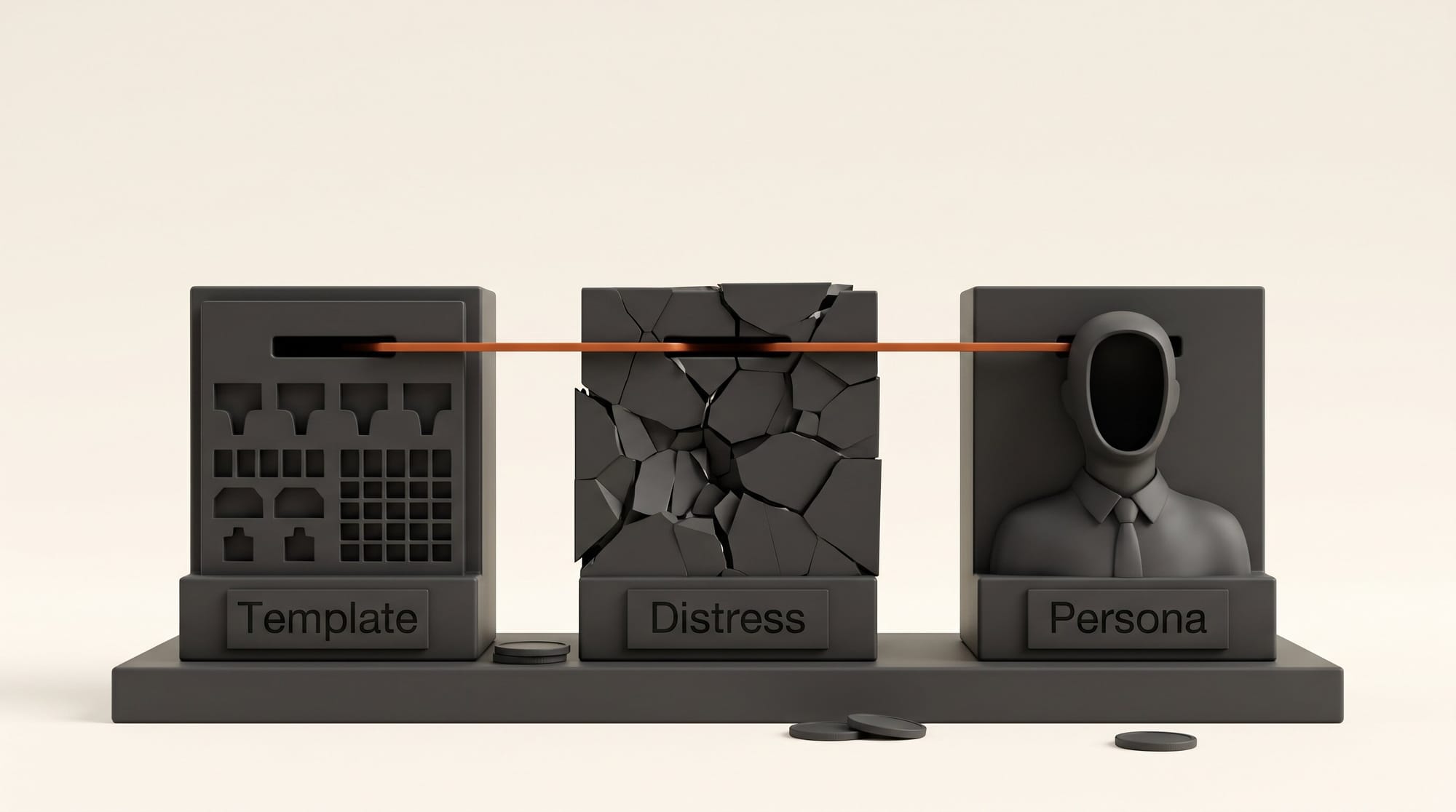
The rule is older than the AI boom. YouTube always refused to pay for repetitive uploads; on July 15, 2025 it renamed its "repetitious content" policy to "inauthentic content" and said it covers content that is "repetitive or mass-produced." A year later, on July 16, 2026, it published a clarification for every Partner Program channel. TechCrunch reported that the update splits inauthentic content into three groups: generic, repetitive or template-based videos; off-putting or distressing videos made to upset viewers; and AI personas discussing sensitive topics such as health and money. YouTube's trust and safety chief Matt Halprin put the reason plainly in a Creator Insider video: "AI can actually allow people to make a lot of videos."
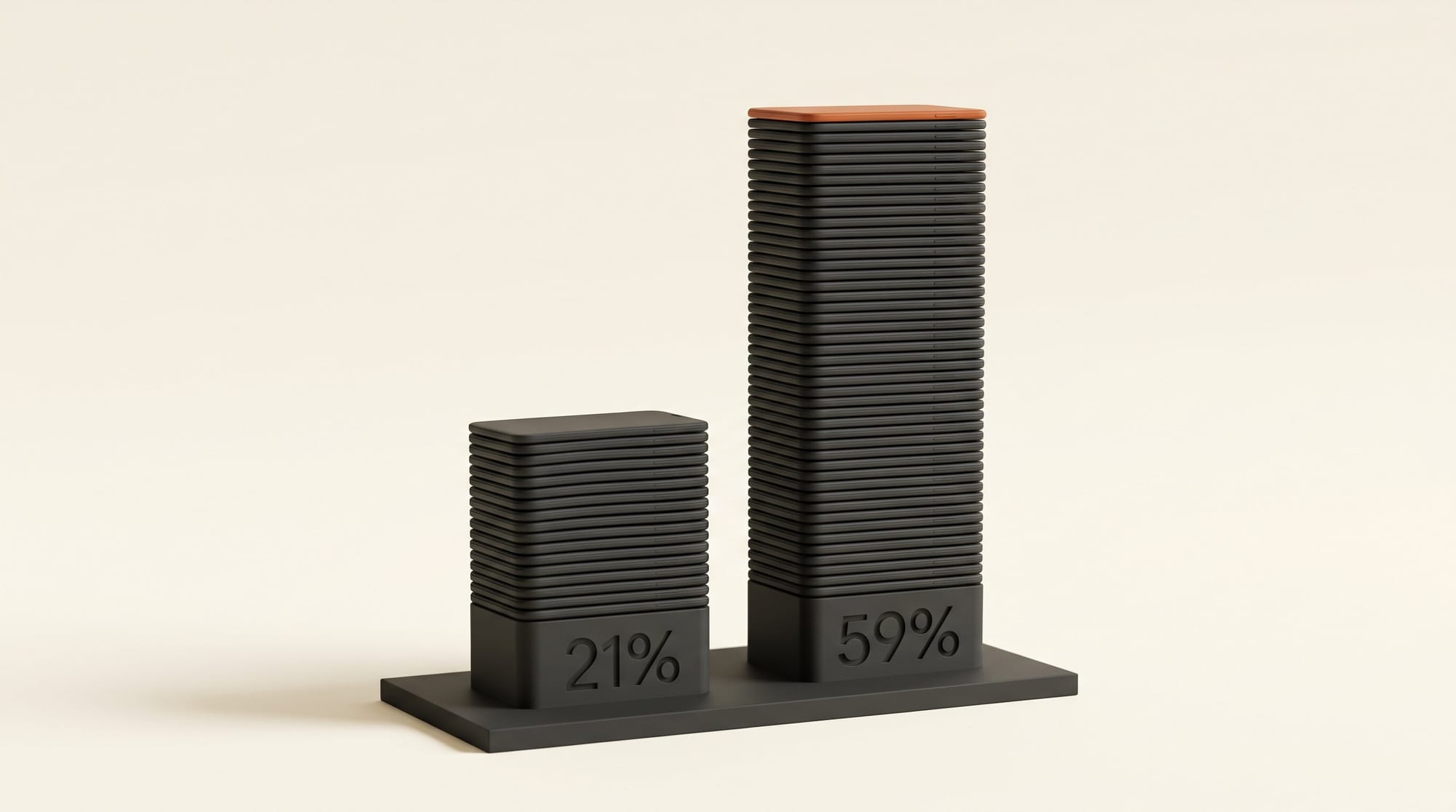
The scale is the reason the platforms acted. In its AI Slop Report (November 28, 2025, October data), Kapwing opened a new YouTube account and hand-checked the first 500 Shorts it was shown: 104 of them, 21%, were AI-generated slop, and 33% were "brainrot." The report also found the AI channel Bandar Apna Dost at 2.07 billion views, with an estimated income of about $4.25 million a year from Socialblade's figures. In June 2026 Kapwing ran the same test on TikTok and published The TikTok AI Slop Report: 294 of the first 500 For You videos, 59%, were AI slop, nearly three times YouTube's rate. Kapwing sells a video editor and classified the videos by hand, so treat the numbers as a snapshot, not a census. They still explain why every platform tightened the same rule within a year.
Deep Analysis
Read the four rulebooks side by side and the same test appears in each, worded differently. None asks which tool made the video. Each asks whether a person shaped it, and whether the next upload from the same account looks like this one with the nouns swapped.
YouTube judges the channel, not the clip
YouTube's policy page is specific about what is out. It names "image slideshows, templated storylines, or scrolling text with minimal or no narrative," videos where "characters are put in the same situation over and over again with the same outcome," and videos "that stitch together unrelated or inconsistent AI clips to surprise or shock viewers." AI personas that present as a human expert are out too: the page's examples are an AI "doctor," AI podcast hosts giving financial guidance, and AI personas giving legal advice.
It is just as specific about what is in. Using AI "to visualize a unique character and narrative you invented" is allowed, and so is using AI "to edit your video scripts or generate a unique background visual." The summary sentence is the one to remember: "If you use automated tools or templates to help create your content, the final product must still demonstrate your creative vision and provide educational or entertainment value."
The catch is the unit of judgment. When you apply, YouTube's eligibility page says automated systems and human reviewers review your channel as a whole, after you reach 1,000 subscribers plus either 4,000 watch hours in 12 months or 10 million Shorts views in 90 days. Halprin said any channel with too much content in the three categories will be unable to monetize, and YouTube has not defined "too much." One great AI short does not save a channel of 300 near-identical ones, and a few templated experiments can drag down a channel that is otherwise your own work.
TikTok and Facebook use the same test under other names
TikTok's Creator Rewards Program page never mentions AI in its rules. It pays for "original, high-quality content over 1 minute long" that reaches at least 1,000 For You views, from personal accounts with 10,000 followers and 100,000 views in the last 30 days, in eight countries including the United States and the United Kingdom. What it refuses is listed under ineligible content: "Unoriginal: Your account info or video content is copied from others or has minimal original input or edits," and "Low quality," which includes "low-quality images, or slide videos." Since anything the For You feed will not show cannot earn, an AI slideshow with a stock voiceover fails twice.
Meta's version arrived on March 12, 2026, in Rewarding Original Creators on Facebook. Original means content "filmed or produced directly by a creator," and Reels that use outside material still count when an on-screen creator presents something genuinely new. Unoriginal posts, meaning duplicates, minor edits, or reacting, narrating and stitching without adding value, are deprioritized in Feed and Reels. Accounts that keep posting mostly unoriginal material can be marked non-recommendable and demonetized. Meta says views and time spent on original Reels roughly doubled in the second half of 2025 against the same period of 2024. Like TikTok, the post does not mention AI at all.
The AI label is not the penalty
Many creators avoid the AI label because they assume it costs reach. On YouTube it does not. The altered or synthetic content page says "Disclosing AI content alone won't limit a video's audience or impact its eligibility to earn money." The label is required when the content seems realistic: a real person saying something they did not say, a realistic scene that never happened, or AI music that is the focus of the video. A fantasy world, a script outline, captions or audio repair need no label.
The risk sits on the other side. Creators who consistently skip the label "may be subject to manual application of a label, or penalties from YouTube," including suspension from the Partner Program. So the label is free and hiding it is not. We covered how YouTube now applies some labels on its own in YouTube Now Auto-Labels AI Videos; whether viewers react to a label is a separate question, answered in Do Audiences Care If You Use AI?
Music follows the same line
Spotify drew the same distinction first. On September 25, 2025 it said it had removed over 75 million spammy tracks in the previous 12 months and announced a spam filter aimed at mass uploads, duplicates, SEO hacks and artificially short tracks; flagged tracks stop being recommended. In the same post Spotify said "all music is treated equally, regardless of the tools used to make it." The one hard AI rule is about other people: vocal impersonation is only allowed when the impersonated artist has authorized it.
Put the four rulebooks together and the pattern is consistent. A tool is never the problem. Volume without variation, borrowed material without a voice, and a fake human expert are.
Impact on Creators
If you make AI-assisted videos, the practical question is not "will they detect the AI?" but "would a reviewer watching ten of my uploads in a row see a person behind them?" A series is fine. YouTube's own page says a channel can reuse the same intro and outro, and a series can follow the same characters, as long as each video has a distinct storyline or focus. What fails is the formula with the topic swapped: the same AI narrator reading a new list of facts over the same kind of stock-style clips.
Three habits keep you on the right side. First, put yourself in the work: your voice, your script, your research, your recurring character, your on-screen face or hands where the format allows. That is what YouTube calls "original, authentic insights or perspective" and what TikTok calls "original input." Second, label realistic AI footage and AI music every time; on YouTube it costs nothing and skipping it can cost the channel. Third, keep the working files: scripts with revisions, project files from your editor, the prompts and the rejected takes. If a review questions a video, the history of how you made it is the evidence, the same defence we recommend in Flagged as AI? Why Detectors Get Human Work Wrong.
If you run a faceless channel, the format is not banned, but it is the most exposed. Our faceless YouTube tutorial is built around a specific angle and a script you write and read aloud before anything is generated, which is the part that keeps a channel monetizable. Batch the production steps, never the ideas.
Key Takeaways
- None of the four big platforms refuses to pay because AI helped make a video; YouTube, TikTok, Facebook and Spotify all judge originality and variety, not the tool.
- YouTube reviews the whole channel, so a run of templated uploads can cost monetization on everything, including your best work.
- TikTok pays only for original videos over 1 minute with at least 1,000 For You views, and lists "minimal original input or edits" as ineligible.
- On YouTube the AI label does not reduce reach or earnings; consistently skipping it can lead to suspension from the Partner Program.
- AI personas giving health, money or legal advice cannot be monetized on YouTube at all.
What to Watch
The open question is "too much." YouTube has not said how many template-style uploads tip a channel over, TikTok has not said how much AI-generated footage counts as minimal original input, and Meta's originality post does not mention AI. Expect those thresholds to be set by enforcement before they are set in writing, which means the first wave of demonetized channels will show where the line sits. Watch the Creator Insider channel and TikTok's Creator Academy for updates.
The other thing to watch is detection. Platforms already read C2PA content credentials to label AI footage, and the same signal could one day feed originality checks. A creator who keeps labeling honestly and keeps proof of their own input is already prepared for either outcome.
Frequently Asked Questions
Can you monetize AI-generated videos on YouTube?
Yes. YouTube's monetization policies allow AI used to visualize a character and story you invented or to help write and edit scripts. What cannot earn is AI content made with generic templates that looks mass-produced, distressing content made to shock, and AI personas giving health, financial or legal advice.
Does labeling a video as AI hurt monetization?
Not on YouTube. Its disclosure page says labeling AI content alone will not limit a video's audience or its eligibility to earn. Creators who consistently fail to label realistic AI content can face penalties, including suspension from the Partner Program.
Does TikTok pay for AI videos in the Creator Rewards Program?
TikTok's program page does not ban AI by name. It pays for original videos over 1 minute with at least 1,000 For You views and excludes content that is copied or has minimal original input or edits, plus low-quality images and slide videos. A heavily AI-made video is judged by that originality test.
What is YouTube's inauthentic content policy?
It is the Partner Program rule, renamed from "repetitious content" on July 15, 2025, that blocks ad revenue for mass-produced or repetitive videos. A July 16, 2026 clarification groups it into template-based content, distressing content and AI personas on sensitive topics.
Is a faceless AI channel allowed to monetize?
Yes, if each video has a distinct story or focus and shows your own script, research or perspective. YouTube reviews the channel as a whole, so a faceless channel built on one repeated formula is the format most likely to be refused.