Starting May 2026, YouTube no longer depends solely on creator honesty to label AI-generated content. The platform has deployed an automatic detection system that identifies photorealistic AI video and applies labels without waiting for creator disclosure. According to YouTube's announcement, the update also moves labels to more prominent positions so viewers can actually see them.
What Changed With Label Placement
The visual change is the first thing creators will notice. YouTube previously surfaced AI disclosure labels inside the video description, where most viewers never look. The update repositions them:
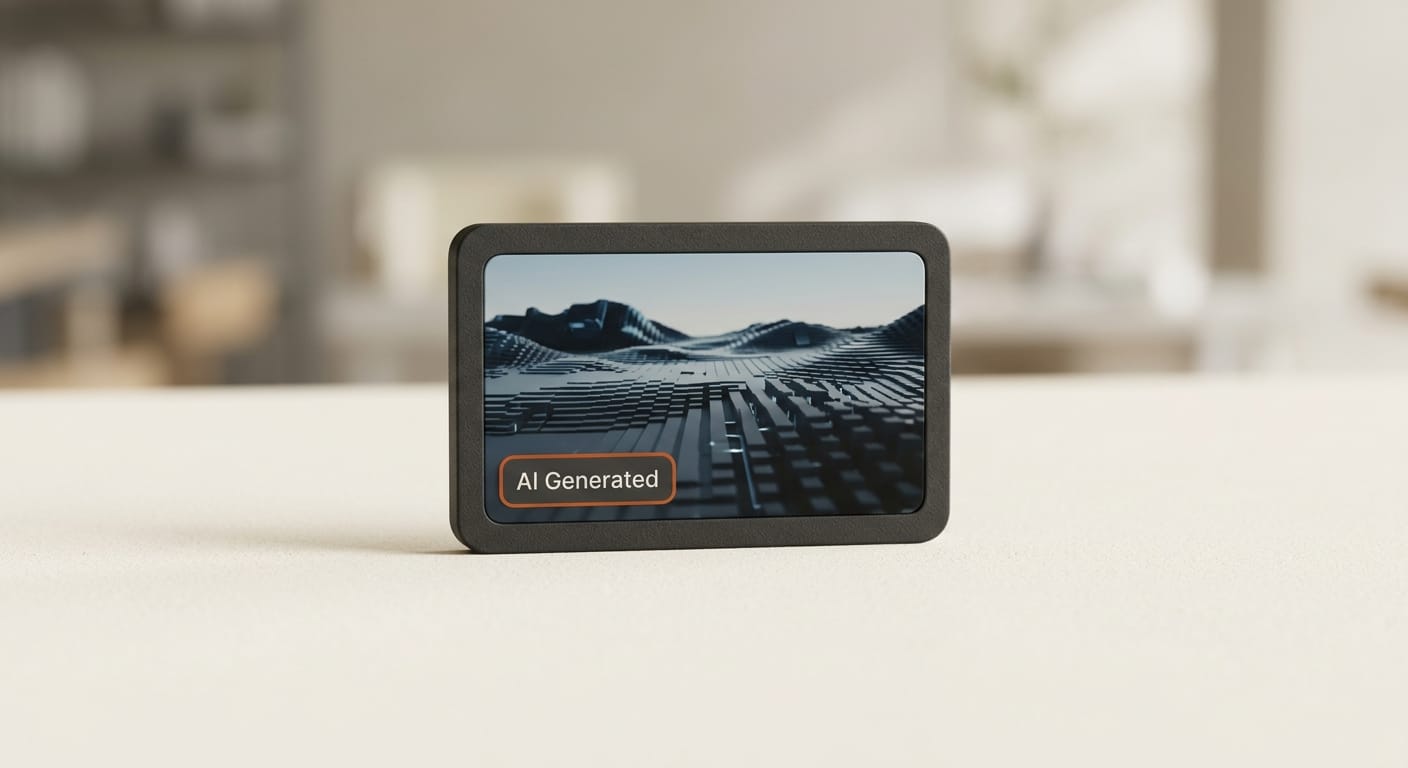
- Long-form videos: Label now appears directly below the video player, above the description field
- YouTube Shorts: Label appears as an overlay directly on the video during playback
This new placement applies to all content that is "meaningfully altered or created" in a photorealistic way using AI. Animated content, fantasy visuals, and minor AI-assisted edits (color grading, background removal, minor retouching) are still disclosed in the expanded description, not the prominent label slot. TechCrunch reported the change as part of YouTube's broader transparency push across the platform.
How Auto-Detection Works
The larger structural shift is enforcement. Before this update, AI labels only appeared when creators manually toggled the disclosure setting in YouTube Studio. Creators who skipped that step faced no technical consequence. That changes now.
YouTube uses internal signals to identify videos with significant photorealistic AI generation. If the system detects AI content that was not disclosed, it applies a label automatically. Creators retain the ability to review and update their disclosure status in YouTube Studio if they believe a label was applied incorrectly.
Two categories of content are locked and cannot be disputed by creators:
- Videos created with YouTube's own AI tools, specifically Veo and Dream Screen
- Videos that carry C2PA metadata indicating they were fully AI-generated
Outside these two categories, the dispute pathway in YouTube Studio remains available.
Which AI Tools and Formats Are Affected
The label targets "significant photorealistic AI" content. This includes fully AI-generated video scenes, realistic AI face replacement or deepfake-style modifications, AI-generated human likenesses used in place of real footage, and AI-altered environments that depict realistic-seeming events.
YouTube's own generation tools are subject to automatic labeling with no override. Google DeepMind's Veo, the video generation model that powers YouTube's Dream Screen feature and the YouTube Create app, produces content that the platform labels by default. Any video created through Veo-powered features carries this label regardless of creator action.
For content produced with third-party generation and editing tools, YouTube's internal detection handles identification. Videos whose creation involved tools that embed C2PA provenance metadata get the most reliable detection path. C2PA is an open standard for encoding content creation history into media files, adopted by Adobe, Microsoft, Nikon, and others. When a video carries valid C2PA metadata identifying it as AI-generated, YouTube reads that signal directly rather than relying on inference.
What This Means for Creator Channels
YouTube was direct that AI disclosure labels do not affect video recommendations or monetization eligibility. A labeled video is not penalized algorithmically, and the label alone does not disqualify a channel from the Partner Program. The policy is framed entirely as viewer transparency, not punishment.
That context is worth tracking over time. Current policy positions labels as neutral, but viewer behavior responds to labels in ways that affect engagement independently of algorithmic treatment. For channels where authenticity and documentation are central to the audience relationship, an unexpected label mid-video is a different signal than a creator disclosing it themselves in the description.
This update is part of a broader set of AI features YouTube rolled out in 2026. At Google I/O 2026, YouTube introduced Gemini Omni for Shorts remixing, an expanded likeness detection tool for all creators aged 18 and older, and Ask YouTube conversational search. The labeling update arrives alongside a platform that is actively expanding what creators can do with AI while simultaneously building identification infrastructure for viewers.
What to Do Now: 4 Steps
- Audit recent uploads for undisclosed AI content. Open YouTube Studio and review your last 30 videos. If any contain photorealistic AI-generated elements that were not disclosed, update the disclosure setting. Retroactive disclosure is supported and removes the risk of an automatic label being applied later.
- Enable the disclosure toggle in YouTube Studio. For videos with significant photorealistic AI elements, go to Video Details and enable "Contains altered or synthetic content." This is the field YouTube checks before deploying auto-detection.
- Check for auto-applied labels on existing content. YouTube Studio will surface videos where the system has applied a label automatically. If you believe a label was incorrectly applied, update the disclosure status. Keep notes on which tools you used and how they were applied, as this may be relevant when disputing an incorrect detection.
- Add C2PA metadata to your workflow where supported. If the tools you use support C2PA metadata embedding, enable it. This gives YouTube a reliable provenance signal and reduces the chance of mislabeling. Adobe Firefly embeds C2PA by default. Check whether your preferred video tools include this option.
Frequently Asked Questions
Does the AI label hurt my channel's performance?
YouTube states that AI labels do not affect recommendations or monetization eligibility. The label is a viewer-facing transparency measure, not an algorithmic penalty.
What exactly counts as "photorealistic AI" content?
Content that depicts realistic-seeming events, people, or places using AI generation or substantial AI alteration. Animated content, fantasy visuals, and minor AI-assisted adjustments like color correction or background cleanup are not subject to the prominent label. Those uses are disclosed in the expanded description only.
Can YouTube apply a label I did not choose?
Yes. The auto-detection system can label content that was not manually disclosed. Creators can dispute this by updating the disclosure status in YouTube Studio, with two exceptions: content made with YouTube's own AI tools (Veo, Dream Screen) and content with C2PA metadata indicating full AI generation.
I use AI video tools like Runway or Kling. Do I need to disclose?
If the output is photorealistic and replaces or substantially alters real-seeming footage, yes. YouTube's disclosure requirement applies to the content regardless of which tool produced it. Manually disclosing before publishing is better than having auto-detection apply the label after the fact.
How does this affect YouTube Shorts specifically?
Shorts get the most visible label placement: an overlay directly on the video during playback. Because Shorts move fast and viewers rarely open descriptions, YouTube placed the label on the video itself. This is where the change will be most visible to audiences.
Does this cover AI-generated voice narration?
AI voice that replicates or closely resembles a real, identifiable person's voice requires disclosure. Generic AI narration that is not intended to resemble a specific person falls under a different part of YouTube's synthetic media policy and should be disclosed in the description, though it does not trigger the prominent label placement under the current update.