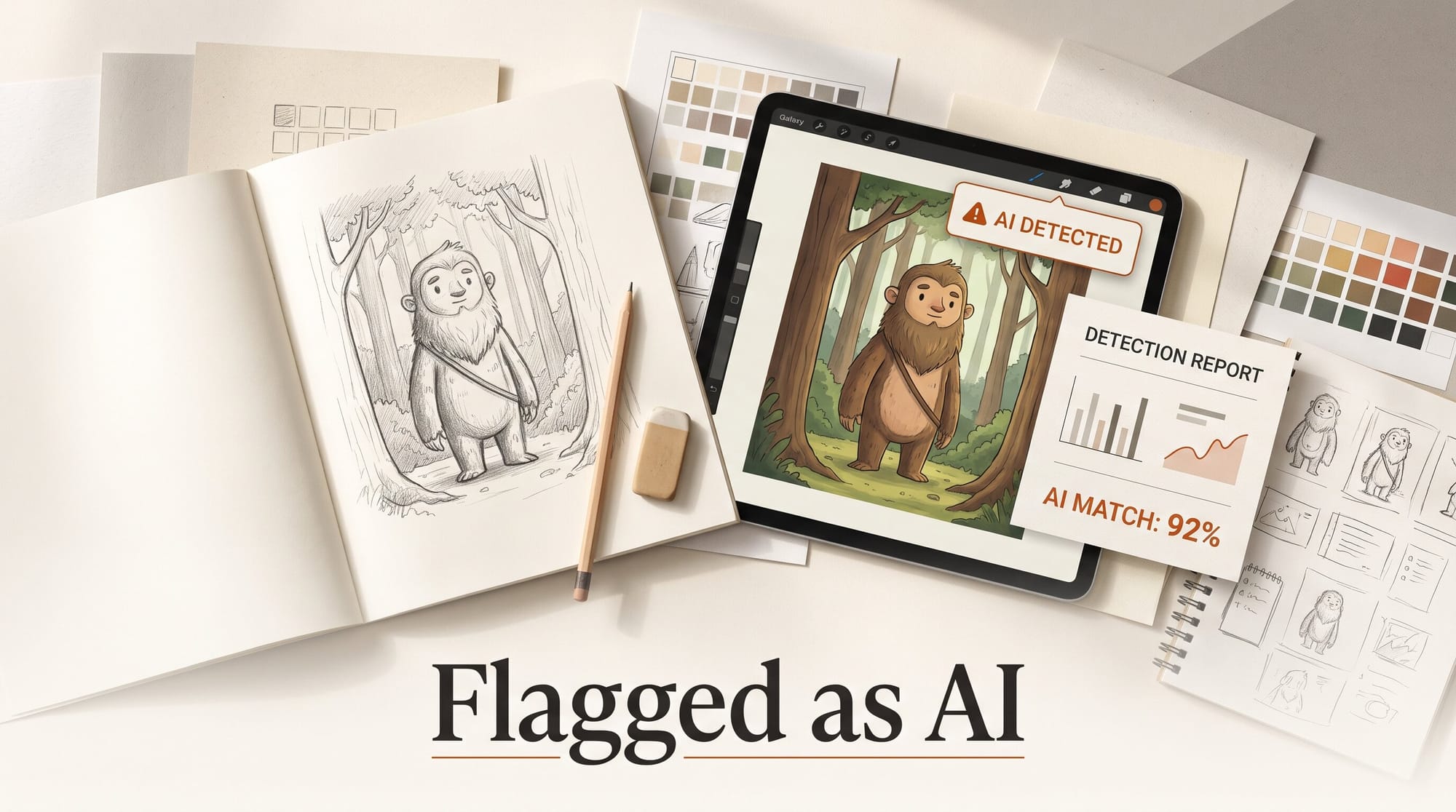
In a May 2026 test by NewsGuard, five popular AI image detectors called authentic news photos AI-generated 13.33% of the time, and one tool flagged 40% of them. When the real photos were only lightly edited, three of the five tools called 80% to 93% of them AI. If you write, draw, shoot or make music for a living, that is the tool your client, your audience or a platform may now use on your work. The pattern behind the errors is consistent: detectors judge how a file looks, not how it was made. So the only defence that holds up is a record of your process, kept from the first file.
This analysis reads the published error rates for text, image and music detectors, explains why human work trips them, and sets out what evidence actually settles an accusation.
Background
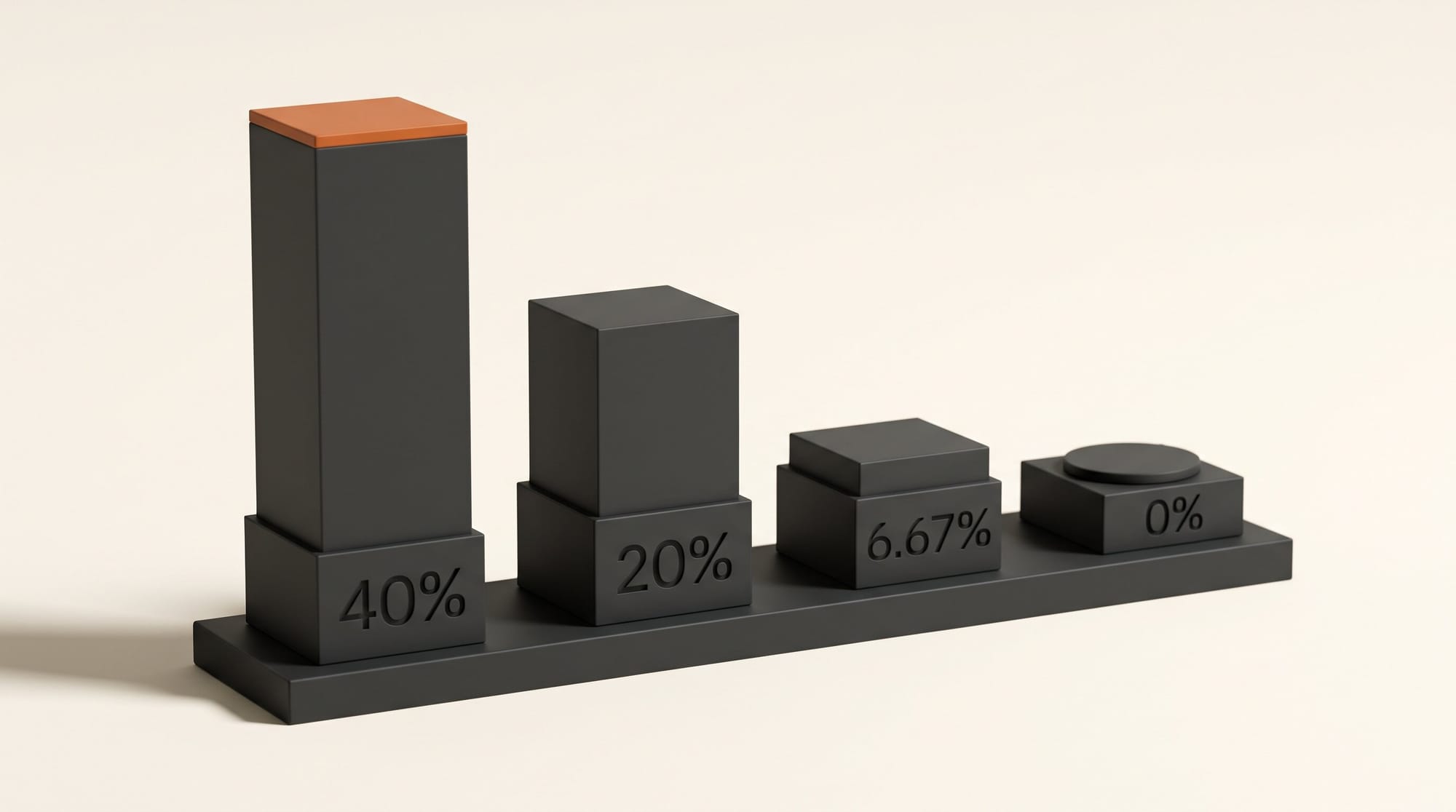
NewsGuard ran 15 authentic photos of the U.S.-Iran war, published by credible outlets, through Hive, AI or Not, ZeroGPT, Sightengine and ScamAI for a report published May 8, 2026. ScamAI labelled 6 of the 15 as AI-generated (40%), ZeroGPT 3 (20%) and AI or Not 1 (6.67%). Hive and Sightengine called all 15 real. Asked about errors, AI or Not's chief executive said "low image quality can sometimes affect the response." The test used news photos, but compression, resizing and editing happen to every image a creator posts.
The accusations are not limited to software. In October 2026 the illustrator Loish (Lois van Baarle), who has posted her art since 2003, was accused on TikTok of using generative AI on a piece she made in 2023 and had documented in process videos. "Now we're at a point where we can be accused of using AI for our art, even when documenting every step of our process," she wrote, as reported by Kotaku. Platforms are acting on detection too. Deezer now tags tracks its system detects as fully AI-generated and keeps them out of recommendations and editorial playlists, so a wrong call there costs listeners, not just reputation.
Deep Analysis
Across text, images and music, the published numbers point the same way: a detector can be accurate on clean benchmark files and still fail on the kind of work creators actually publish.
Text detectors punish plain, simple writing
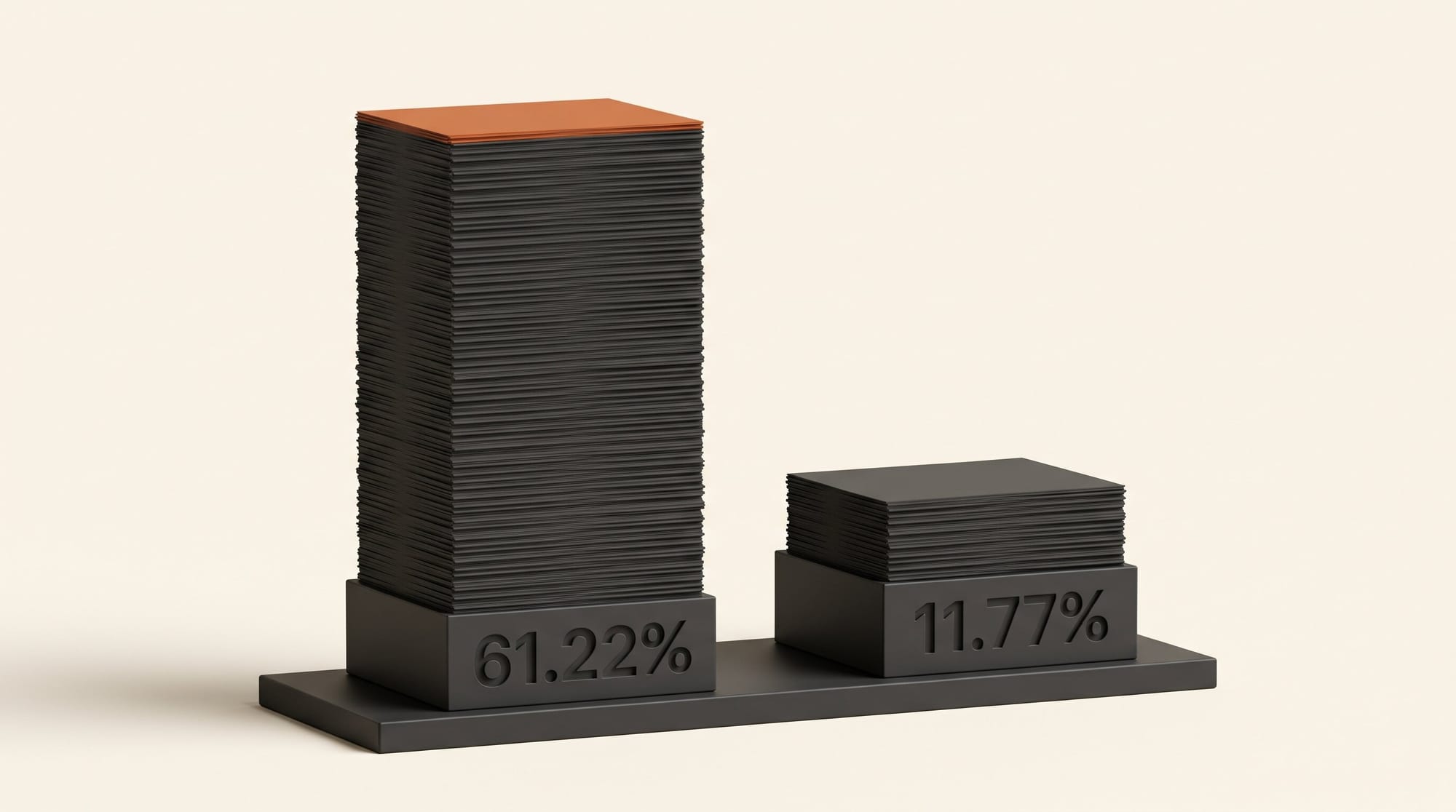
The clearest evidence comes from a Stanford study, "GPT detectors are biased against non-native English writers", published in the journal Patterns in 2023. The team ran seven widely used detectors on 91 human-written TOEFL essays and 88 essays by U.S. eighth graders. The detectors classified the eighth graders' essays correctly, but their average false positive rate on the TOEFL essays was 61.22%. 89 of the 91 essays (97.80%) were flagged as AI by at least one detector, and all seven agreed on 18 of them. The cause the authors identify is word choice: simpler, more predictable vocabulary reads as machine-like. When they had ChatGPT enrich the essays' vocabulary, the average false positive rate fell from 61.22% to 11.77%. In other words, the detectors rewarded the essays for sounding fancier, whether or not a person wrote them.
That matters for any creator who writes clearly on purpose: scripts, product copy, newsletters, captions in a second language. OpenAI launched its own AI text classifier in January 2023, said it caught 26% of AI-written text while wrongly labelling human text 9% of the time, and withdrew it in July 2023 for its low rate of accuracy. Turnitin's May 2023 update put its document false positive rate under 1% for documents with over 20% AI writing, which it described as flagging up to one human-written document in every 100. At the sentence level, about 4 in every 100 highlighted sentences may be human-written, and 54% of those false-positive sentences sit right next to actual AI writing. If you use AI for one paragraph and write the rest yourself, the sentences around that paragraph are the most likely to be flagged.
Editing is what trips image detectors
NewsGuard's second round matters most for photographers and designers. On authentic photos that had only been lightly edited, ScamAI flagged 93% as AI-generated, AI or Not 87% and ZeroGPT 80%. Even the two tools that cleared every untouched photo, Hive and Sightengine, flagged 27% of the lightly edited ones. A retouched portrait or a color-graded landscape is exactly that kind of file.
Vendor benchmarks look far better, and that gap is the point. Pangram's image detector, a research preview released July 29, 2026, reports a 0.16% false positive rate, about 1 in 625, on 10,000 human images collected before 2022. Those are clean, pre-AI web images, not the edited, compressed and resized files that circulate today. People are no more reliable than the software. A University of Chicago study, "Organic or Diffused", tested 13 expert artists experienced at spotting AI alongside the commercial detector Hive. Both did very well, but the experts produced more false positives, meaning they called more human art AI. If trained experts make that mistake, the commenter in your replies who is "sure" your piece is AI is guessing.
Labels read metadata, so honest edits get flagged
Some labels come from a different method: they read tags inside the file rather than guessing from pixels. That is more accurate, but it still flags human work. In May 2024 Meta began adding "Made with AI" labels to photos on its apps, and photographers complained that real photos touched up with basic editing tools were being tagged. On July 1, 2024 Meta renamed the label "AI info", but TechCrunch reported that the detection did not change: Meta still reads the C2PA and IPTC metadata that editing apps write, so a photo where you removed a stray object with Adobe's Generative Fill can still carry the label.
The reverse case is just as weak. Our Content Credentials export test found that 34 of 34 ordinary export steps either deleted the credential or broke it, and Google's SynthID Detector only finds watermarks from the tools that add them. A provenance tag proves AI when it is present. When it is missing, it proves nothing either way.
Music has the most accurate detector and the heaviest penalty
Deezer's July 2026 report shows why streaming services lean on detection: nearly 90,000 fully AI-generated tracks a day, more than 50% of daily deliveries on peak days, yet only 1 to 3% of streams, and up to 85% of streams on those tracks were found to be fraudulent in 2025. Deezer says its detector has an accuracy of 99.8% and, in its FAQ, that it may wrongly flag fewer than 1 in every 10,000 human-made tracks. That is the best published rate in any medium. At that rate, if human uploads are under 90,000 a day on those peak days, the errors would be fewer than about 9 human tracks a day (our arithmetic, not a Deezer figure).
The catch is what happens to those tracks. Deezer applies the tag at the album level, not the track level, so one flagged track can mark a whole release. Tagged music is removed from algorithmic recommendations and editorial playlists, and the July release describes no correction or appeal route for human artists. Deezer has also announced a listener switch that hides fully AI-generated music from search; our streaming rules comparison covers how each service treats tagged songs.
Impact on Creators
A detector score is a guess about style, so arguing with it on style ("my work has always looked like this") rarely ends an accusation. What ends it is evidence of process that a generator does not produce: earlier versions, source files and dated records. The rule is to keep that evidence as a habit before anyone asks, because it cannot be created afterwards.
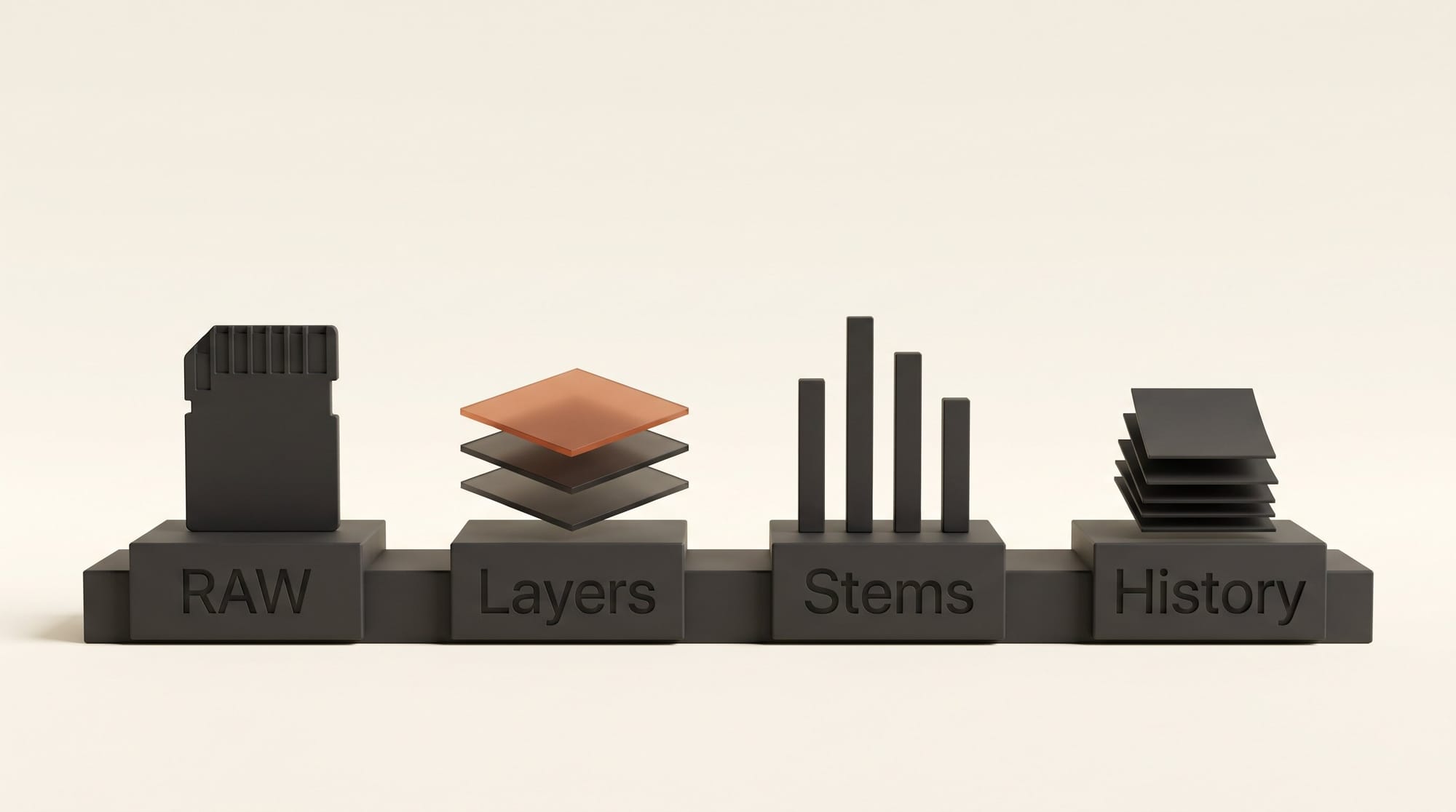
Writers: draft where version History is automatic, such as a Google Doc, and keep notes, outlines and research links. A document whose History shows hours of typing and revision is much stronger evidence than any detector score. If you use AI for part of a piece, say which part, because the sentences next to it are the ones Turnitin's data says get flagged.
Illustrators and designers: keep the layered file, not just the flattened export, plus early sketches with their dates. Procreate records a time-lapse of every step by default and can export the full-length video, which is persuasive. It is not conclusive: Procreate's handbook says a Private Layer will not appear in an exported time-lapse, and recording can be paused. Layers plus a time-lapse plus dated sketches together are much harder to dispute than any one alone.
Photographers: keep the RAW files and your edit history. A RAW file from your camera next to the posted JPG is the clearest answer to "this is AI." Know that generative edits such as object removal can add AI metadata, which is what Meta's label reads, so use them deliberately on work you want to present as unaltered.
Musicians: keep project files, Stems and dated session exports. If a distributor or streaming service tags a release, those are what you send. Since Deezer tags whole albums, check every track on a release, including features and samples, for AI-generated parts before delivery.
For finished images you can also add your own positive record. Adobe Content Authenticity, a free public beta since April 2025, attaches Content Credentials to up to 50 JPG or PNG files at once, with your name verified through LinkedIn and links to your Behance, Instagram, LinkedIn and X accounts. It does not prove you made the image by hand, and exports can strip it, but it ties the file to you at the point you publish.
Key Takeaways
- Detectors judge how a file looks, not how it was made, so clean writing and edited photos are flagged most.
- Published false positive rates run from 0.16% on clean vendor benchmarks to 93% on lightly edited real photos in NewsGuard's test.
- Metadata labels such as Meta's "AI info" can tag a real photo because an editing tool wrote AI metadata into it.
- Deezer's music detector has the best published error rate, but a wrong tag applies to a whole album and removes it from recommendations.
- The defence that works is process evidence kept from the start: version History, layered files, RAW files and Stems.
What to Watch
Three things will decide how often creators get caught in this. First, whether detector vendors publish error rates on edited and compressed files, the condition NewsGuard showed matters most, instead of only clean benchmarks. Second, whether platforms that act on detection, starting with Deezer as its search filter rolls out, add a correction route for human artists who are tagged by mistake. Third, whether Adobe Content Authenticity leaves beta and adds the video and audio support Adobe has said is coming, which would give musicians and video creators the same positive record photographers can make today. Until then, keep the files that show your process as carefully as you keep the finished work.
Frequently Asked Questions
Can an AI detector prove my work is human-made?
No. Every detector gives a probability based on how the file looks, and published tests show real work flagged at rates from under 1% to over 90% depending on the tool and how the file was edited. A "human" result is not proof either. Process evidence such as version History, layered files and RAW files is what settles a dispute.
Why did Instagram put an AI label on my real photo?
Meta's "AI info" label reads C2PA and IPTC metadata that editing apps write into the file. If you used a generative tool, such as Adobe's Generative Fill to remove an object, the photo can carry that metadata and get the label even though the photo itself is real. Meta renamed the label from "Made with AI" in July 2024 after photographers complained, but kept the same detection.
What is the best proof that I made my own art?
Several kinds of evidence together: the layered source file, dated early sketches, and a full-length time-lapse. A Procreate time-lapse alone is not conclusive, because Private Layers do not appear in an exported time-lapse and recording can be paused. Process videos shared over time, as Loish does, also help.
How accurate is Deezer's AI music detector?
Deezer says its detector has an accuracy of 99.8% and may wrongly flag fewer than 1 in every 10,000 human-made tracks. The tag is applied at the album level, and tagged music is removed from algorithmic recommendations and editorial playlists, so one flagged track affects the whole release.
What should I do if a client says my work is AI-generated?
Ask which tool they used and what score it gave, then share your process evidence: earlier versions, source files, RAW files or Stems. Point to published error rates, such as NewsGuard's 2026 test or the Stanford study where detectors flagged 61.22% of human essays on average. Agree in future contracts on what evidence you will provide, rather than on a detector score.