AI music and audio in 2026 is the most contested creative AI category. Suno and Udio are in court with the major labels. Deezer reported 44% of new uploads are AI-generated. ElevenLabs entered music with ElevenMusic. Google Flow Music launched on Lyria 3. The legal landscape is volatile, the tools are excellent, and the working music producer's path through this is the question this guide answers.
This is the working creator's complete guide to AI music and audio in 2026. Filtered for production use, organized by what part of the audio pipeline each tool covers. Every model below produces output that is or has been used in shipped commercial work in the last 90 days.
TL;DR -- Which AI audio tool for which job
- Best for full songs (text-to-music): Suno V5 for general music, Udio for vocal-forward tracks.
- Best for browser DAW workflow: Mozart AI Studio 1.0 for VST-supported browser DAW.
- Best for voice cloning at production quality: ElevenLabs for commercial work; Voicebox for open-source.
- Best for emotional TTS: Darwin-TTS for emotion without training.
- Best for sound effects: ElevenLabs Sound Effects, Sony Woosh for open-source.
- Best for podcast post: RODE RODECaster Studio, Adobe Podcast for cleanup.
- Best for music remix and style transfer: MiniMax Music 2.6.
- Best for sample variations: Splice Variations with creator payouts.
- Best for ComfyUI integration: Sonilo for frame-synced audio.
- Best zero-shot TTS in 600 languages: OmniVoice.
Quick comparison: leading AI music + audio tools
| Tool | Category | Pricing | Free tier | Commercial license |
|---|---|---|---|---|
| Suno V5 | Text-to-song | $10-30/mo | 10 songs/day | Yes (paid) |
| Udio | Text-to-song, vocal-forward | $10-30/mo | Limited | Yes (paid) |
| Google Flow Music (Lyria 3) | Text-to-song | AI Studio paid | Limited | Yes |
| ElevenMusic | Text-to-song | ElevenLabs subscription | Limited | Yes (paid) |
| Mozart AI Studio | Browser DAW | Free + paid | Yes | Yes |
| ElevenLabs (voice + SFX) | Voice cloning + SFX | $11-99/mo | 10k chars/mo | Yes (paid) |
| Voicebox | Open-source voice studio | Free (self-host) | Free | Open-source |
| Darwin-TTS | Emotional TTS | Free / Open | Free | Research / Open |
| OmniVoice | Open-source TTS, 600 languages | Free (self-host) | Free | Open-source |
| RODE RODECaster Studio | Podcast post hardware/software | Hardware + free SW | SW free | Yes |
| Splice Variations | Sample variations | Splice subscription | Limited | Yes (with payouts) |
| MiniMax Music 2.6 | Cover, style transfer | Pay-per-call | Limited | Yes |
| Sony Woosh | Open-source sound effects | Free | Free | Open-source |
Text-to-song generation
Suno -- Most-used commercial text-to-song
Suno V5 is the most-used commercial text-to-song platform in 2026. Generate a full song from a text prompt -- genre, mood, lyrics, vocal style -- in 30 to 60 seconds. The Pro tier ($30/mo) grants commercial-use rights and removes the daily generation cap.
The legal context matters: Suno's licensing talks with Universal and Sony stalled in 2026 over downloadable rights. The dispute is unresolved. Working creators can still ship Suno-generated music commercially per the Suno paid tier terms, but the longer-term legal landscape is uncertain. For high-stakes commercial work, document your prompt-and-iteration process and consider pairing Suno output with original human vocals to strengthen the human-creative-input claim.
Udio -- Vocal-forward text-to-song
Udio targets the vocal-forward end of the text-to-song market -- better at lead vocals, vocal harmonies, and lyric-rich songs than Suno's general capability. For singer-songwriter work and vocal-driven productions, Udio remains the strongest commercial option.
Google Flow Music (Lyria 3) -- The Google entry
Google Flow Music launched on Lyria 3 through AI Studio in 2026. For Google Workspace customers and AI Studio paying subscribers, Flow brings text-to-song into the Google ecosystem with the same compliance, audit, and integration story as Google's other commercial AI offerings. Quality is competitive with Suno V5; the differentiator is enterprise integration.
ElevenMusic -- ElevenLabs enters music
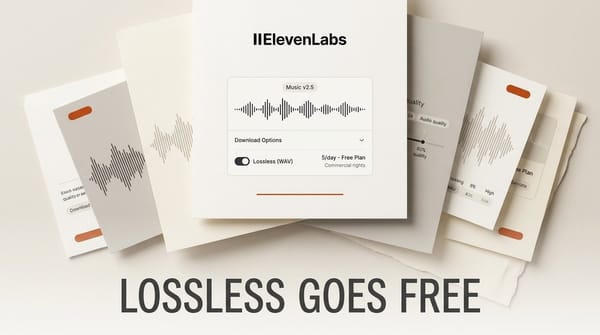
ElevenLabs launched ElevenMusic in 2026 -- a text-to-song app from the company that already dominates AI voice. The pairing is natural: generate the song, generate the vocals, generate the SFX, all through one provider's pipeline. For creators already on ElevenLabs subscriptions, ElevenMusic is included or low-friction to add.
Voice cloning and TTS
ElevenLabs -- Production voice cloning
ElevenLabs remains the de facto standard for AI voice cloning at production quality in 2026. Voice cloning crossed the AAA dialogue threshold last year; emotional control crossed it this year. ElevenLabs added on-premise and on-device voice AI for studios with strict IP rules.
Use cases: NPC voiceover for games, dialogue prototyping for film and TV, ambient barks and atmospheric VO that does not justify a session, audiobook narration, podcast voice replacement, language localization at scale. Critical caveat: voice cloning of real people requires explicit consent. Read your tier license carefully -- Personal prohibits commercial use; Creator and Pro permit it.
Voicebox and open-source TTS
Voicebox bundles seven open-source TTS engines into one studio interface. Quality is comparable to ElevenLabs on common languages. The trade-offs: slower than commercial APIs, no managed cloud, but free and unrestricted for commercial use. For studios with strict IP / airgap requirements, Voicebox plus open-source TTS is the practical path.
VoxCPM2 open-sourced a 2B-parameter TTS model with 30 languages. OmniVoice covers 600 languages with zero-shot TTS -- the broadest language coverage in any model. For multilingual content (audiobook localization, global podcast translation, regional video voiceover), OmniVoice is the right open-source pick.
Darwin-TTS for emotional speech
Darwin-TTS adds emotion to AI voice with no training required through a clever weight-merging technique. For audiobook narration, dramatic dialogue, and any work where emotional range matters, Darwin-TTS is the practical addition to the audio toolkit. Open-source, lightweight, integrates into existing pipelines.
Cross-model voice cloning comparison
For deeper analysis, our AI voice cloning 2026 comparison tests ElevenLabs against Voxtral and Fish Audio across the same prompts. Our broader analysis of open-source audio AI tracks the quality gap with commercial offerings.
Browser DAWs and music production
Mozart AI Studio 1.0 -- Browser DAW with VST
Mozart AI Studio 1.0 is the first browser DAW with full VST plugin support. For music producers who want to start a session anywhere without installing Logic, Ableton, or Pro Tools, Mozart removes the friction. AI assistance is built in for chord generation, melodic ideation, and arrangement suggestions.
The browser-DAW category is exciting because it democratizes high-quality music production tooling -- no $200 software install, no proprietary plugin format, work-from-anywhere on any device. Mozart leads, but expect Splice Studio and BandLab to compete aggressively in 2026.
Splice Variations and AI-powered samples
Splice Variations uses AI to remix and vary existing samples in the Splice library, with built-in creator payouts. The compensation model is the differentiator: Splice's licensing structure ensures the original sample creators are paid when their work is used as the seed for AI variations. This is the closest thing to a "fair AI music" production model in the market.
MiniMax Music 2.6 -- Cover and style transfer
MiniMax Music 2.6 added AI cover and style transfer. Use case: take an existing song, generate variations in different vocal styles, different genres, different tempos. For music video production specifically, this enables vocal versioning at scale -- same song, multiple language vocals, multiple performance styles.
Podcast and audio post-production
RODE RODECaster Studio
RODE RODECaster Studio handles AI-driven dialogue cleanup, transcription, and multi-voice mixing on a hardware-software stack designed for podcasters but increasingly used in indie video post. The tight hardware-software integration and free post-production app make it the most cost-effective production-grade audio post tool for solo creators in 2026.
Adobe Podcast (Enhance Speech)
Adobe Podcast Enhance Speech remains the simplest drop-in tool for cleaning up dialogue tracks from imperfect production recordings. Free tier handles most cases; paid tier scales for production volume. Works in any NLE through standard audio export.
Beehiiv AI podcast analytics
Beehiiv added AI podcast analytics in 2026 -- episode-level engagement, drop-off detection, and topic clustering. For newsletter-and-podcast operators, the integrated analytics matter more than any specific generation tool.
Sound effects and ambient audio
ElevenLabs Sound Effects
ElevenLabs Sound Effects pairs naturally with the broader ElevenLabs voice and music stack. Generate footsteps, doors, magical glints, ambient soundscapes -- all through one provider's pipeline. For game audio and indie video post, the integration is the key benefit.
Sony Woosh -- Open-source SFX
Sony Woosh is the first open-source sound effects foundation model from a major studio. Generate game audio, ambient layers, foley substitutes -- open-weights, commercial-friendly license, runs on consumer hardware. For studios that want SFX generation without per-call API costs, Woosh is the cost-conscious path.
PrismAudio for video-to-audio
Alibaba's PrismAudio turns silent AI video into stereo audio. For creators who use Wan 2.7, Hunyuan, or Skywork for video and need matching audio without separately scoring each clip, PrismAudio fills the video-to-audio gap.
Audio in ComfyUI
The ComfyUI audio ecosystem matured significantly in 2026:
- ComfyUI v0.19 added music nodes as first-class.
- Sonilo generates frame-synced audio for AI video. Music video pipeline in one ComfyUI graph.
- llama.cpp added audio support with Qwen3-Omni for local audio generation.
- Qwen3.5-Omni handles text, image, audio, and video in one model -- the most multi-modal open-weights option.
The legal landscape
The legal regime around AI music is the most contested creative AI domain in 2026:
- Suno and Udio in court: The licensing disputes with Universal and Sony are unresolved. Working creators can still ship paid-tier output commercially, but document your work and consider pairing with original human creative input.
- Voice cloning of real artists: AI voice clones targeted a folk musician on Spotify and YouTube in 2026. Platform takedowns are improving but remain reactive. Voice cloning of real artists without consent is a growing legal exposure.
- AI music detection at platforms: Deezer licensed AI music detection to a rights body. Streaming platforms are increasingly able to identify AI-generated tracks, with implications for royalty pools and recommendations.
- Industry fracture: Our analysis of the AI music war covers how one week in 2026 fractured the industry between platforms, labels, and creators.
- Splice's payout model: The Splice creator-payout structure for AI sample variations is the closest thing to a "fair AI" path the industry has produced. Worth tracking whether competitors copy this.
Working pipelines for 2026
Three pattern stacks for working music and audio creators in 2026:
- Indie musician: Suno or Udio Pro for full songs ($30/mo), Splice subscription for samples, Mozart Studio for arrangement work. Total: ~$50/mo for full songwriting and production stack.
- Video / film audio post: ElevenLabs Creator for voice + SFX ($22/mo), Adobe Podcast for cleanup (free), DaVinci Resolve 21 (free) for finishing. Total: $22/mo for video audio post stack.
- ComfyUI music video pipeline: Wan 2.7 for visuals, Sonilo for audio sync, MiniMax Music 2.6 via API for vocal variations. Open-weights stack for high-volume creator work. Per-clip cost approaches zero after compute.
- Podcaster: RODE RODECaster Studio (hardware) plus the free RODECaster app, Adobe Podcast for episode cleanup, ElevenLabs for any voice replacement work. Hardware-led stack, ~$500 one-time plus cheap subscriptions.
What's coming next
- Suno V6 and Udio V3: Both platforms typically iterate twice a year. Late 2026 releases likely. Expect closer to studio-quality lead vocals.
- Cross-modal music + video: Sonilo and similar tools that generate audio-from-video are early-stage. Expect tighter cross-modal models in 2026-2027.
- On-device music generation: The LM Studio acquisition of Locally AI signals interest in on-device LLM. Expect on-device music generation following the same trajectory.
- Real-time AI accompaniment: Live AI accompaniment that adapts to the human performer is in active research. First commercial product likely late 2026 or 2027.
- Cleaner legal regime: The Suno/Udio licensing disputes will resolve one way or the other in 2026-2027. The outcome shapes the long-term commercial landscape.
Frequently asked questions
Which AI music tool is best for songwriters in 2026?
Suno V5 Pro for general songwriting, Udio for vocal-forward work, Mozart Studio for arrangement and DAW work. Most working songwriters use a mix -- Suno or Udio for inspiration and B-side production, Mozart or a traditional DAW for primary arrangement, ElevenLabs or Splice for vocal and sample work.
Is AI-generated music safe to ship commercially in 2026?
On paid tiers of major platforms (Suno Pro, Udio commercial tier, ElevenMusic, Google Flow Music paid), yes. The commercial-use license is granted and litigated rights remain unsettled but currently support commercial use. For high-stakes commercial work (TV, film, major brand), consider pairing AI-generated music with original human creative input (human-recorded vocals, human-played instruments) to strengthen the copyright position.
Can AI replace musicians and audio engineers?
The current production reality: AI handles the boilerplate (cleanup, transcription, basic generation, sample variations) freeing musicians and engineers to focus on craft work. Demand for skilled musicians remains; the pricing on commodity audio work is collapsing. The shift is the same as in other creative AI domains: small teams ship more, craft expectations rise.
What is the cheapest AI audio production setup?
For songwriting: Suno Basic ($10/mo). For voice work: ElevenLabs Free (10k chars/mo) or Voicebox open-source. For podcast cleanup: Adobe Podcast Free. Total entry cost: $10/mo plus free-tier tools for an end-to-end audio production capability that ships work commercially. Most working audio creators settle on $30-50/mo across multiple tools.
Which open-source AI audio tools are production-ready in 2026?
Voicebox (voice cloning), OmniVoice (TTS in 600 languages), VoxCPM2 (open TTS), Darwin-TTS (emotional speech), Sony Woosh (sound effects), PrismAudio (video-to-audio), Sonilo (frame-synced audio in ComfyUI). All ship at quality competitive with commercial offerings on most workflows; the trade-off is setup time and lack of managed cloud infrastructure.
How does AI music detection at streaming platforms affect creators?
Platforms like Deezer can now identify AI-generated tracks. The implications: AI tracks may be excluded from premium playlists, royalty pools, or algorithm recommendations. For creators uploading AI-assisted music, the strategic move is transparency -- disclose AI use in metadata, document human creative input, and treat AI as one tool in your production rather than the entire production. Platforms increasingly distinguish "AI-assisted" from "AI-only" work.
Next steps
If you have not used AI music or audio tools in 2026, start with one tool from each pipeline stage: Suno Pro for music, ElevenLabs Creator for voice, Adobe Podcast for cleanup. Run real projects for two weeks, then layer in additional tools as needed.
For ongoing coverage, our AI voice cloning 2026 comparison covers the voice space deeper, our ComfyUI 2026 definitive workflow guide covers the open-source workflow runtime, and our weekly newsletter ships every Tuesday with what shipped this week and what is worth your time.