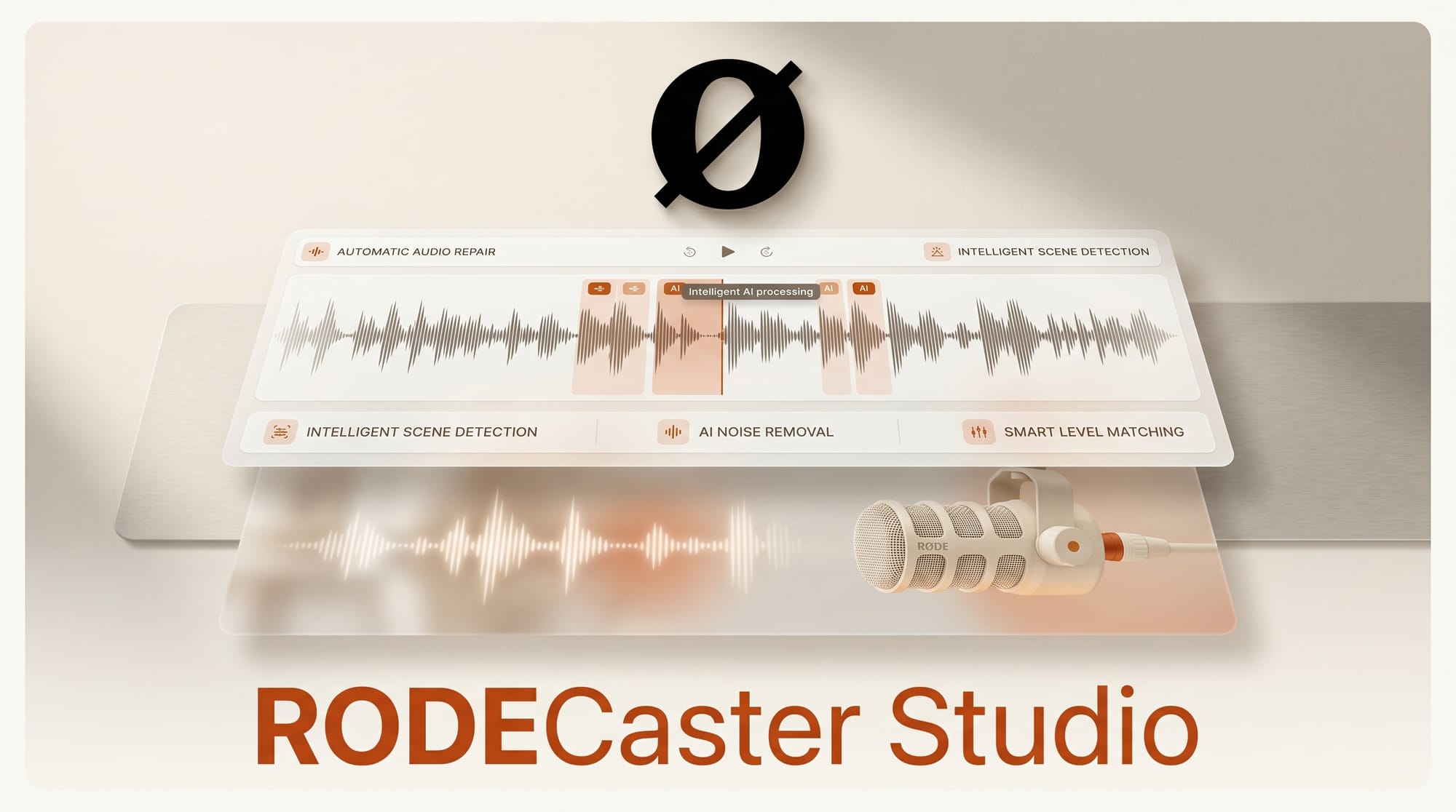
RODE announced RODECaster Studio at NAB 2026 on April 17, 2026 -- a new Mac and Windows desktop app that brings AI-powered editing to podcast post-production. The software generates word-level transcripts with speaker identification, then lets producers edit audio by editing text. A built-in RODE Assistant handles routine tasks via natural-language commands.
For the broader landscape, see our complete producer guide to AI music and audio in 2026.
What Happened
RODECaster Studio entered public beta on April 17, 2026, as part of RODE's NAB 2026 product showcase. The app targets podcasters and audio producers who record on RØDECaster hardware, pulling recordings directly from the device and processing them in a non-destructive editing environment. It syncs with RODE Cloud for project management across machines.
The announcement came alongside other RODE launches at the show, including the Sonaura MEMS microphone platform (a new 4mm x 5mm capsule co-developed with Infineon Technologies) and the RØDELink II UHF wireless system, but RODECaster Studio is the software-first piece and the most directly relevant to AI creative workflows.
Why It Matters
Podcast editing has historically required either manual timeline work in a DAW or a third-party tool like Descript. RODECaster Studio folds transcript-based editing directly into the RODE hardware ecosystem -- meaning a creator recording on a RØDECaster Quad or Pro II can import, edit, and export without switching apps or platforms.
The RODE Assistant is the standout feature. It responds to natural-language commands and automates the most tedious parts of audio cleanup: filler word removal, intro and outro trimming, and meaning-based edits that preserve the speaker's tone. The model also does AI-powered word replacement -- fixing a mispronounced sentence without re-recording -- and generates episode titles and summaries automatically.
For audio-first creators, this closes a gap that has kept many on Descript or manual workflows. RODE's hardware base (the RØDECaster line is widely used in home studios and broadcast) gives this app a ready installed audience from day one.
Key Details
- Platforms: Mac and Windows desktop
- Status: Available for beta testing as of April 17, 2026
- AI features: Transcript generation with word-level timestamps and speaker identification; dialogue editing by text; AI-powered word replacement (no re-recording required); filler word and silence removal; intro/outro trimming
- RODE Assistant: Natural-language command interface for editing tasks; auto-generates episode title and summary
- Import: Direct import from RØDECaster hardware; cloud sync via RODE Cloud
- Export: One-click presets for Spotify, Apple Podcasts, and YouTube
- Non-destructive: Multi-version output without affecting source files
- Pricing: Not yet announced
What to Do Next
Beta access for RODECaster Studio is open now at rode.com. If you're already on a RØDECaster device, the import workflow is the fastest path in -- connect your device, pull the sessions, and the transcript pipeline runs automatically.
For audio creators evaluating tools, it's worth comparing RODECaster Studio's transcript editing against what you're already using. The hardware-to-software pipeline is the clearest differentiator from Descript or other standalone tools. The word-replacement feature is the one to test first -- it addresses the single most common re-record scenario in podcast production.
AI audio continues to move fast in the creator space. RODE's move here follows a broader pattern of hardware companies adding AI software layers to lock in their installed base. If pricing stays competitive, RODECaster Studio could become the default post-production tool for the large population of creators already recording on RODE hardware.
Related on Creative AI News: Google Gemini 3.1 Flash TTS Beats ElevenLabs in Quality Benchmarks and Darwin-TTS Adds Emotion to AI Voice With No Training Required.