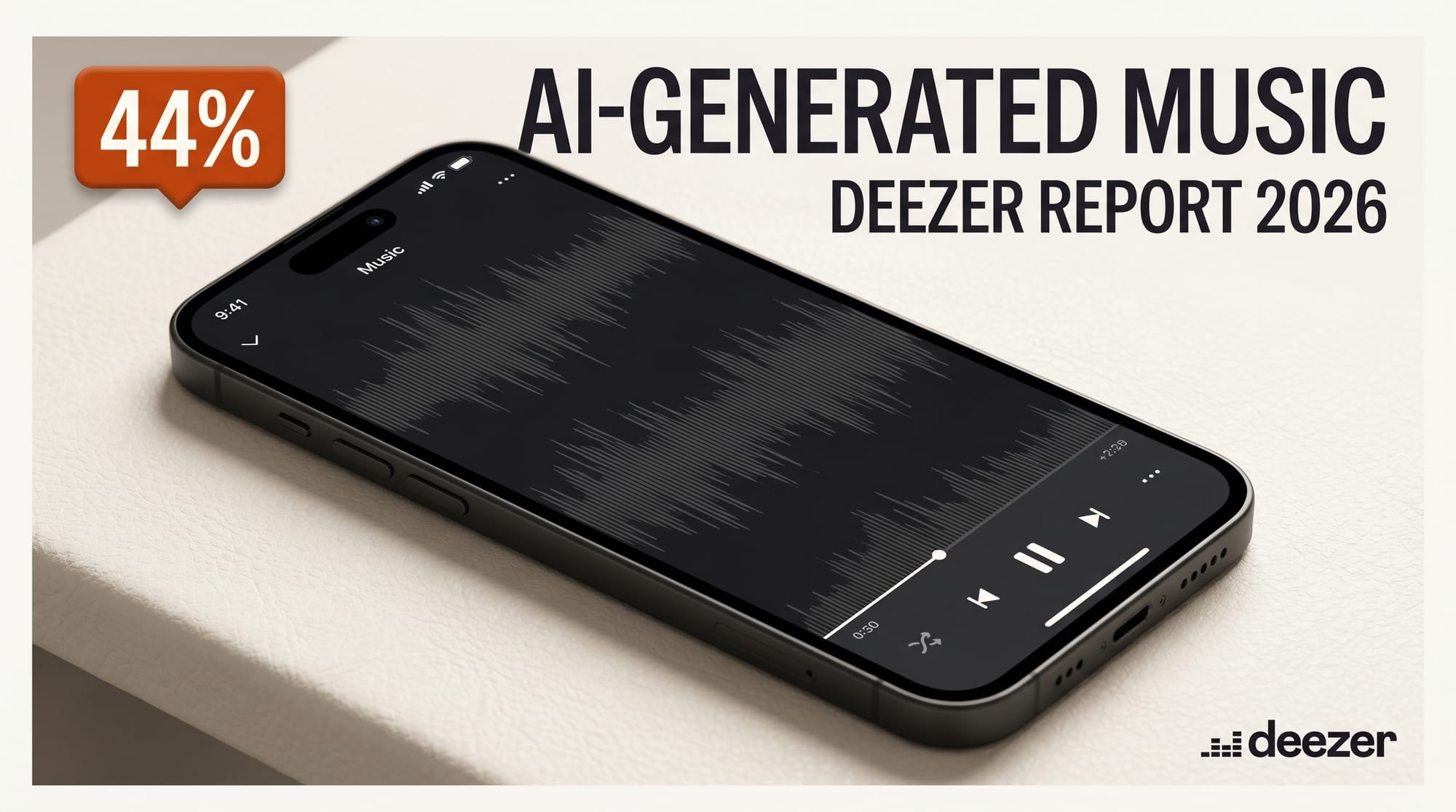
Deezer reported on April 20, 2026 that 44 percent of all new music uploaded to its platform is now AI-generated, up from 18 percent at the start of the year. The streaming service said it is receiving almost 75,000 AI-generated tracks per day and more than two million per month.
For the broader landscape, see our complete producer guide to AI music and audio in 2026.
What Happened
Deezer runs an in-house AI detection system that flags machine-generated uploads at ingestion. The new data is the first time the company has published a daily figure alongside the share of total catalog uploads. Consumption, however, tells a very different story. AI-generated tracks account for just 1 to 3 percent of total streams on the platform.
Deezer told TechCrunch that 85 percent of those AI-generated streams are detected as fraudulent and demonetized, typically stream-farming operations designed to siphon royalty payouts rather than songs listeners actually seek out.
Why It Matters
The gap between AI-upload volume and AI-stream volume is the clearest data point yet on how AI music is actually being used. Human audiences are not driving the flood. Financial incentive is. Every royalty pool that pays out per stream is a honeypot, and AI-generated filler is cheap enough that uploaders only need a fractional play rate to net a profit.
For creators, two takeaways follow. First, streaming platforms are going to tighten detection and payout gates this year, which means human musicians should expect more verification friction. Second, the share of genuine AI music from legitimate artists is buried inside that 1-3 percent consumption figure, which is a much smaller cultural footprint than headline upload numbers suggest.
Key Details
- Upload share: 44 percent of daily new uploads are AI-generated.
- Volume: ~75,000 AI tracks per day, ~2 million per month.
- Trend: Up from 18 percent at the start of 2026.
- Consumption: 1 to 3 percent of total streams.
- Fraud flag: 85 percent of AI-generated streams detected as fraudulent and demonetized.
- Detection: Deezer uses an in-house classifier at ingestion; has labeled AI tracks publicly since June 2025.
What To Do Next
If you release music on streaming, expect stricter verification. Deezer's 85 percent fraud rate on AI streams is the justification platforms need to demand ID verification, watermarked masters, or human-performance proof for payout. Artists releasing fully human recordings should build a paper trail now, including raw session files and performance video.
If you use AI tools inside a human-led workflow, labeling disclosures are coming. Get ahead of it by marking AI-assisted releases in your distributor's metadata fields; Deezer already surfaces the tag to listeners, and other platforms are likely to follow.