Deep Dive
Sep 9, 2026
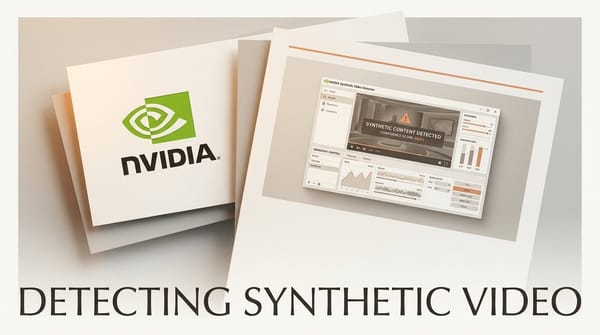
NVIDIA expanded AI for Media at IBC 2026, putting its Synthetic Video Detector into a streaming platform with 35,000+ deployments. The new 99.3% accuracy figure is measured along a different axis than July’s 92%, and the same announcement ships four ways to synthesize video.
Deep Dive
Sep 7, 2026
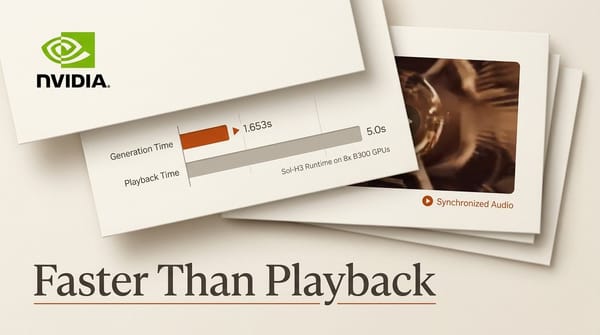
NVIDIA's SANA team published Sol-H3, an inference runtime that generates 5.17 seconds of MiniMax H3 video with synchronized audio in 1.653 seconds on 8 B300 GPUs. Faster than the clip plays, with caveats NVIDIA states plainly.

AI Tools
Aug 28, 2026
NVIDIA TensorRT Model Connect takes an open-weights model from checkpoint to optimized native inference in two commands. Free and open source.
Deep Dive
Aug 11, 2026
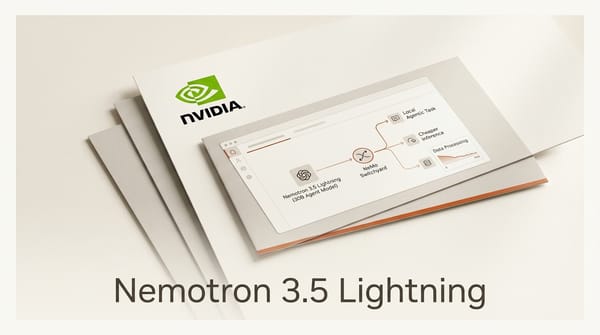
NVIDIA released Nemotron 3.5 Lightning, a 30B open-weights MoE model for always-on agents, alongside NeMo Switchyard, an open-source router that cuts agent cost by escalating only the hard steps to a frontier model.
Deep Dive
Aug 10, 2026
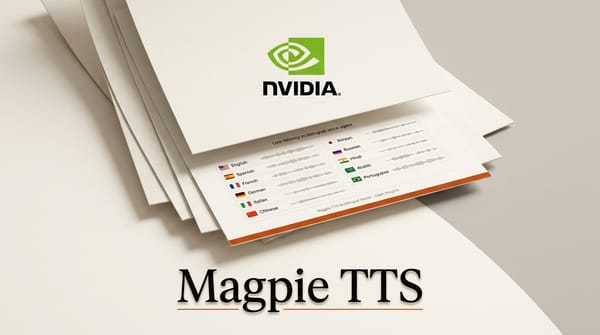
NVIDIA released Magpie TTS Multilingual, an open-weights text-to-speech model that speaks 12 languages and hits a 32ms time-to-first-audio, small enough to self-host inside a live voice agent.
Deep Dive
Aug 3, 2026
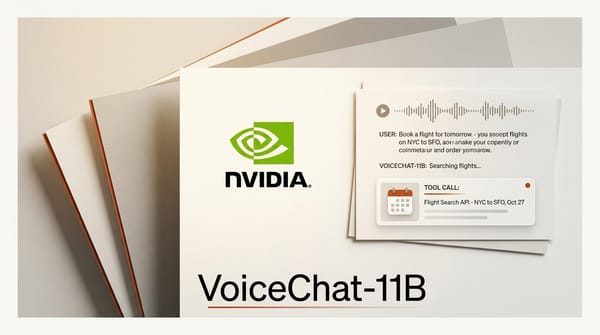
NVIDIA released open weights for VoiceChat-11B, the first open full-duplex voice model that calls tools mid-conversation. Here is how it works and how to self-host it.
Deep Dive
Jul 30, 2026
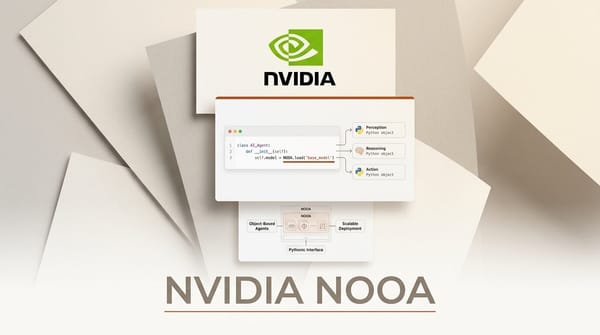
NVIDIA open-sourced NOOA, a model-agnostic framework that turns an AI agent into an ordinary Python object. Here is how it works, the benchmarks, and how to build your first agent.
Deep Dive
Jul 23, 2026
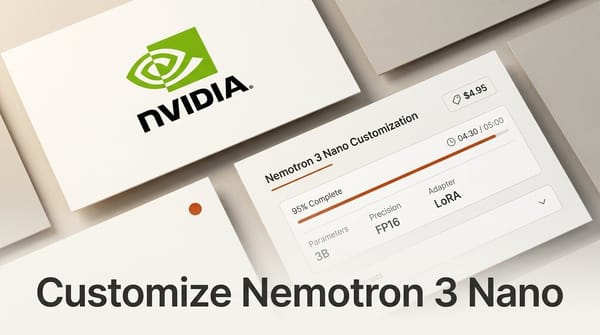
NVIDIA shows how to customize open-weight Nemotron 3 Nano on Prime Intellect Lab in minutes for under $5, lifting a task from 21.9% to 90.6% accuracy.
Deep Dive
Jul 23, 2026
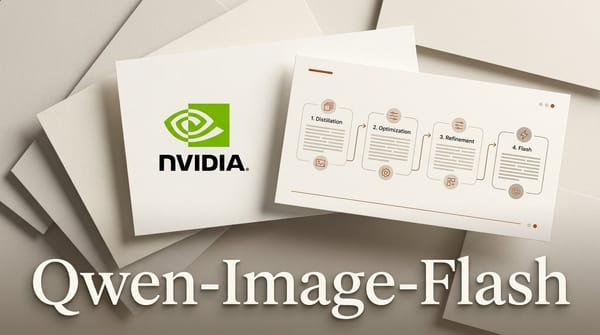
NVIDIA released Qwen-Image-Flash, a four-step distilled version of Alibaba's 20B Qwen-Image that keeps about 96 percent of the quality while cutting denoising steps more than 12 times.
Deep Dive
Jul 20, 2026
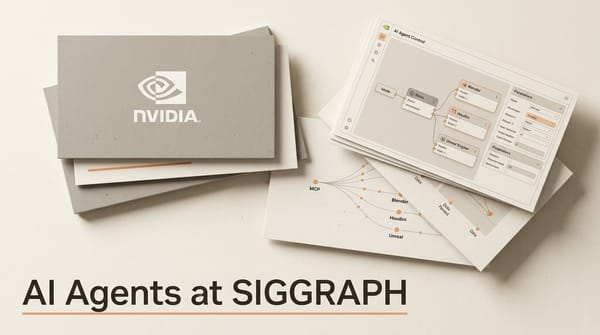
At SIGGRAPH 2026, NVIDIA and creative-software makers announced a coordinated wave of AI-agent integrations built on MCP, letting assistants operate inside Blender, Houdini 22, Unreal, Boris FX, Foundry, Adobe and Affinity.
AI
Jul 16, 2026
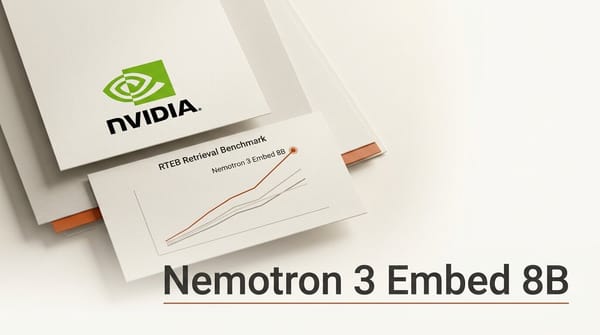
NVIDIA has released Nemotron 3 Embed, an open collection of text-embedding models whose 8B checkpoint ranks #1 overall on RTEB, the Retrieval Embedding Benchmark.
AI
Jul 7, 2026
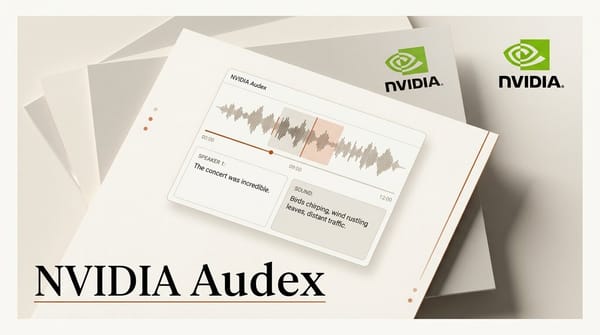
NVIDIA has released Audex, an open-weight audio-text model that does speech recognition, translation, text-to-speech, and general audio generation in one network.
Deep Dive
Jul 2, 2026
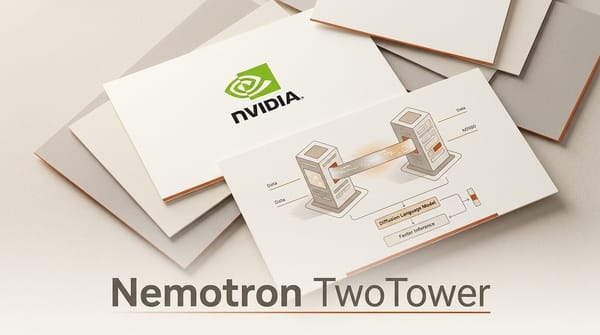
NVIDIA's Nemotron-Labs-TwoTower generates text 2.42x faster at 98.7% quality by adding a denoiser tower to a frozen autoregressive backbone, no retraining required.
NVIDIA
Jun 25, 2026
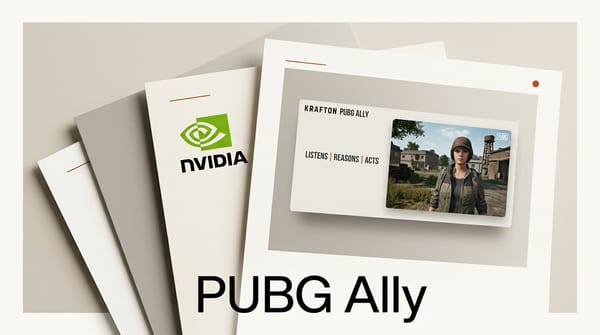
KRAFTON shipped PUBG Ally, a co-playable AI teammate that listens, reasons, and acts in real time, running a 2B model on the player GPU with NVIDIA ACE.
NVIDIA
Jun 16, 2026
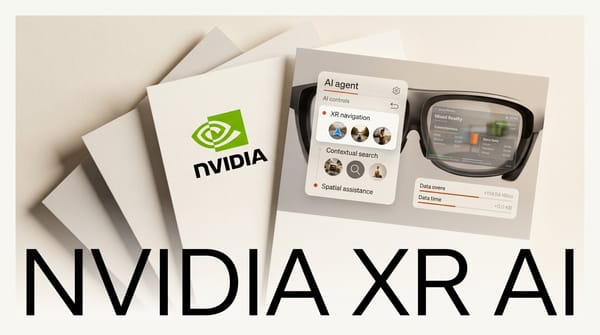
NVIDIA released XR AI on June 16, 2026, an open-source library for building AI agents on AR glasses and XR headsets, now in public beta.
Deep Dive
Jun 16, 2026
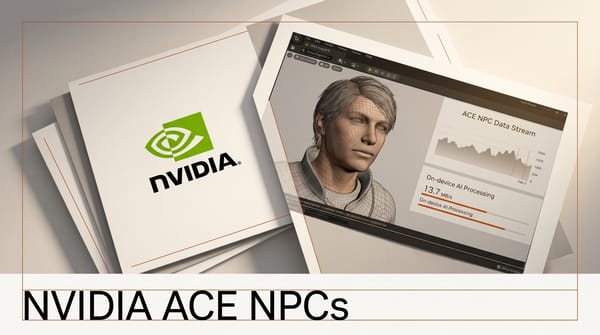
NVIDIA released the ACE Game Agent SDK and three Unreal Engine 5 plugins that let game creators build AI NPCs running on-device on the player RTX GPU, with no cloud calls or per-message cost.
NVIDIA
Jun 4, 2026
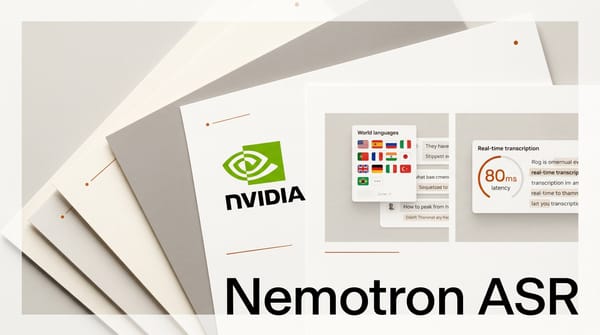
NVIDIA released Nemotron 3.5 ASR on June 4: an open 600M streaming speech model covering 40 language-locales with sub-100ms latency for voice agents.
Deep Dive
Jun 4, 2026
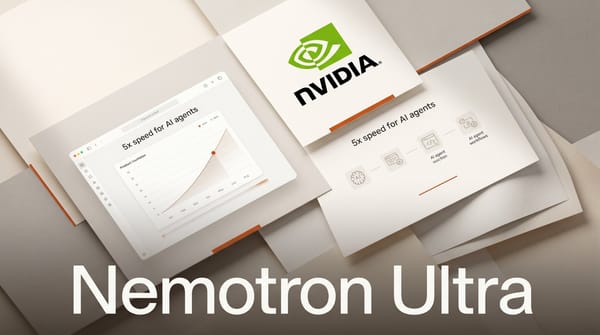
NVIDIA released Nemotron 3 Ultra on June 4, 2026, a 550B MoE model with 55B active parameters that delivers 5x faster throughput and 30% cost savings on agent tasks.
flux
Jun 3, 2026
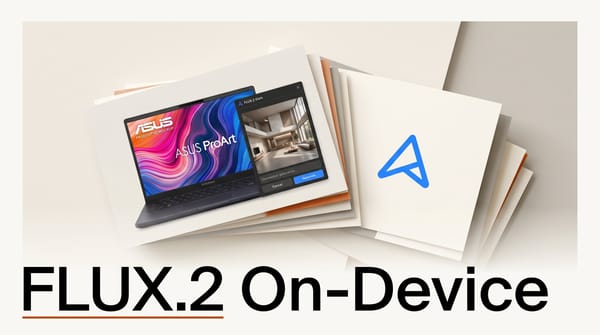
Black Forest Labs ships FLUX.2 klein 4B preloaded on ASUS ProArt RTX laptops with sub-5s offline image generation on 8GB VRAM.
quick-posts
Jun 2, 2026
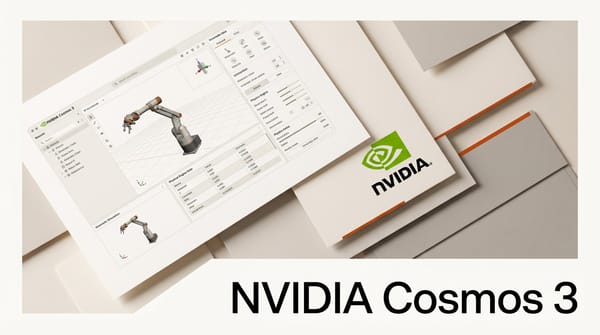
NVIDIA unveiled Cosmos 3 at CVPR 2026: an open physical AI foundation model paired with free vision synthesis and 3D reconstruction tools on GitHub.
NVIDIA
Jun 2, 2026
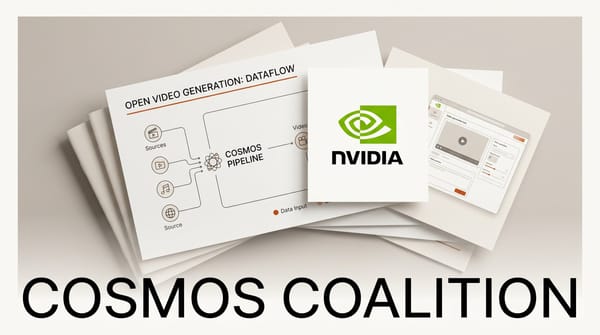
NVIDIA forms Cosmos Coalition with Runway, Black Forest Labs, and LTX to build open video generation infrastructure.
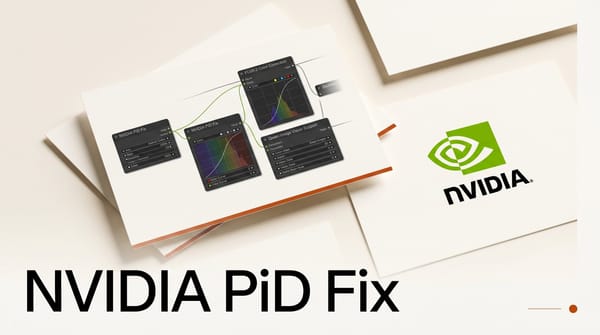
Image Generation
Jun 2, 2026
NVIDIA pushed new PiD checkpoints June 2 with a FLUX.2 color-fix variant plus Qwen-Image support, all on Apache 2.0 for direct 4K decode in ComfyUI.
AI Tools
Jun 1, 2026
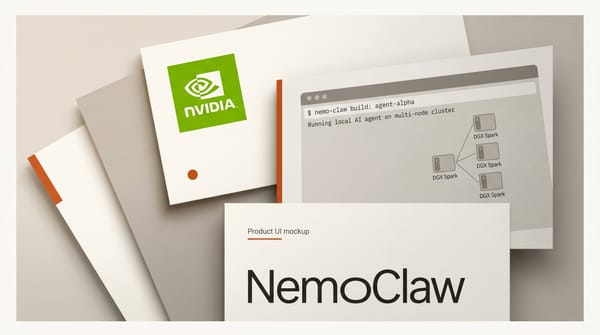
NVIDIA shipped NemoClaw on June 1, 2026, a single-command installer for local AI agents on DGX Spark hardware, with multi-node clustering up to 512GB pooled memory.
NVIDIA
Jun 1, 2026
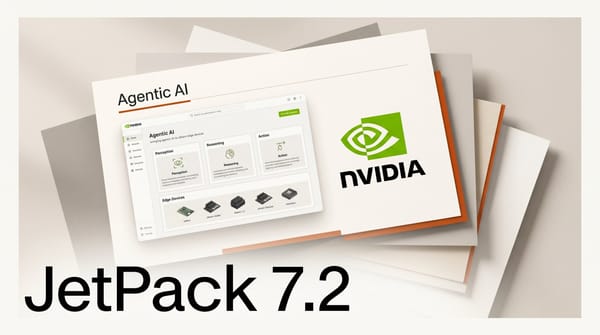
NVIDIA shipped JetPack 7.2 at COMPUTEX 2026 with NemoClaw agentic AI skills, CUDA 13 on Jetson Orin, and a 20% performance boost on AGX Orin 32GB reaching 241 TOPS.