Deep Dive
Oct 13, 2026
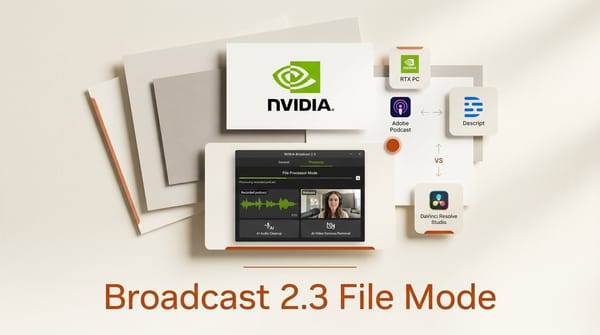
NVIDIA Broadcast, the free RTX app streamers use to clean up their mic and webcam live, can now fix recordings after the fact. Version 2.3 adds a File Processor Mode for MP4, M4A, MP3 and WAV files.
Deep Dive
Oct 1, 2026
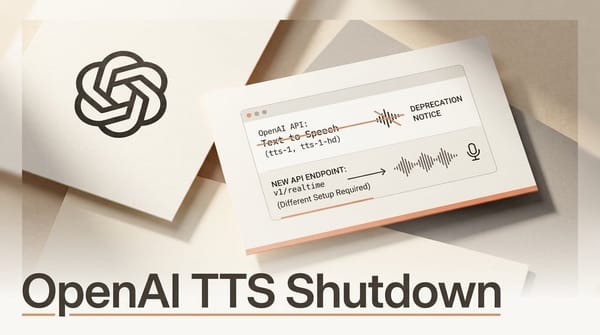
OpenAI shuts down tts-1, tts-1-hd and gpt-4o-mini-tts on January 6, 2027. The replacement, gpt-realtime-2.1-mini, cannot serve the speech endpoint, returns no MP3 and drops onyx, nova and fable. We priced the switch, audited 9 creator tools and tested a free local drop-in.
Deep Dive
Sep 30, 2026
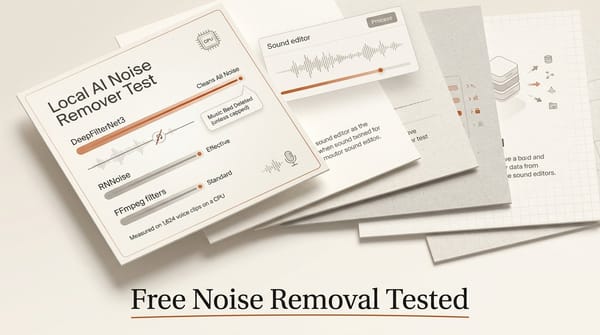
DeepFilterNet3 lifted speech quality on every noise we tested, from keyboard clatter to mains hum, on one CPU core. At its default setting it also removes a music bed almost completely, and the RNNoise inside OBS is the pre-2024 model.
Deep Dive
Sep 30, 2026
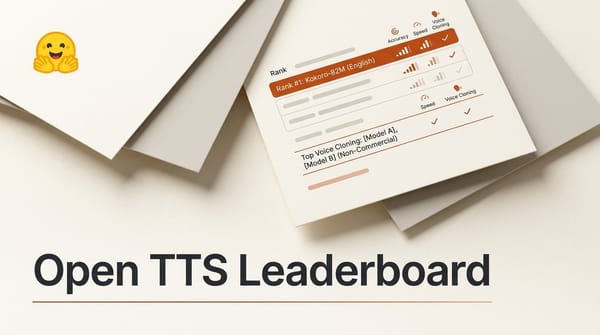
Hugging Face's new Open TTS Leaderboard puts the 82M-parameter Kokoro first in English. We read every model's license: in the multilingual and voice cloning views the #1 and #2 are non-commercial, and the first model you can ship is Qwen3-TTS at #3.
Deep Dive
Sep 29, 2026
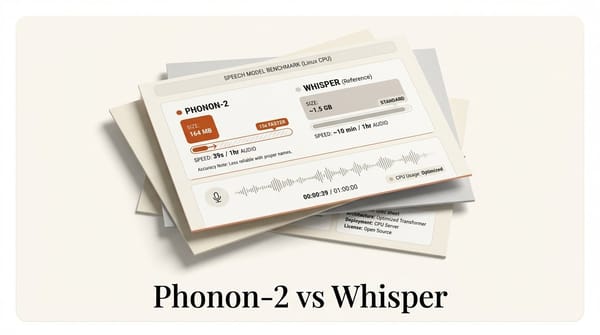
Fermion Research's Phonon-2, a 164 MB open English speech model released 29 September, transcribed an hour of audio in 39.3 seconds on our 6-thread Linux server, about 15x faster than Whisper large-v3-turbo, at level accuracy. Its hotwords fix for names only works on Macs.
Deep Dive
Sep 28, 2026
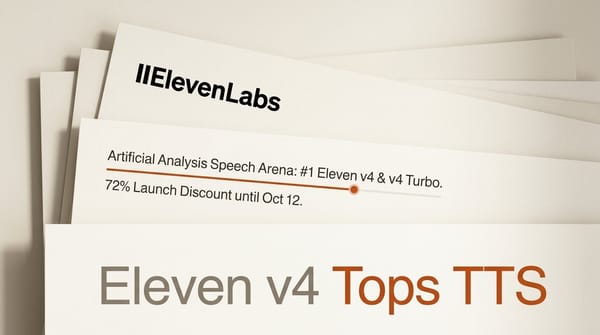
ElevenLabs' Eleven v4 took first place on the Artificial Analysis Speech Arena at 1319 Elo on launch day. It costs $0.022 per 1,000 characters until 12 October, then $0.08: here is who should switch now and who should wait.
Deep Dive
Sep 24, 2026
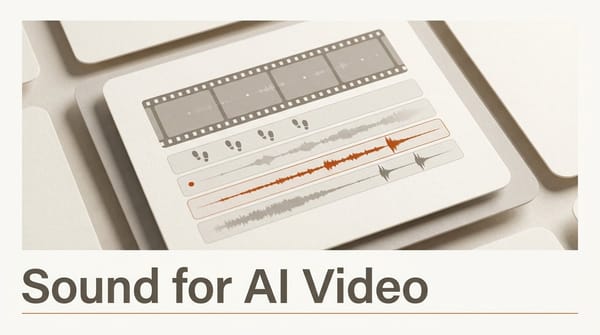
Most AI video clips come out silent. Here is how to add synced footsteps, ambience and impacts in about thirty minutes, and why the licence decides the tool before quality does.
Deep Dive
Sep 23, 2026
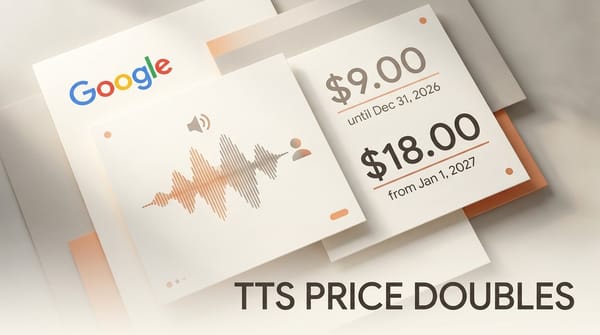
Google's new Flash TTS and Flash-Lite TTS lead Hume AI's Voice Design Benchmark. The launch price is promotional, and every tier doubles on 1 January 2027.
Deep Dive
Sep 23, 2026
Alibaba sold Qwen-Audio-3.1 with 70 to 95% price cuts. The biggest verifiable cut is on the older 3.0 Realtime Flash, whose audio output fell from $15 to $1.87 per million tokens.
Deep Dive
Sep 22, 2026
You can rescue a badly recorded interview in about fifteen minutes using free tools, and the hard part is not which tool you pick. It is the order you run them in. AI speech enhancers are destructive, and stacking two of them is how a usable take becomes a silent waveform.
Deep Dive
Sep 19, 2026
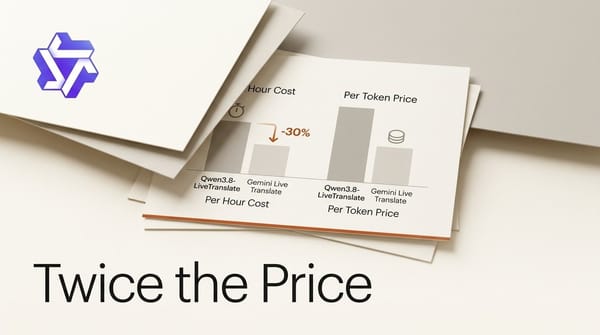
Alibaba released Qwen3.8-LiveTranslate on 19 September 2026, cutting average lag from 2.8 to 2.3 seconds across 60 languages. It charges more than twice Gemini's per-token price for audio and still costs about 30% less per hour. The number that decides your bill is not in the headline.
Deep Dive
Sep 18, 2026
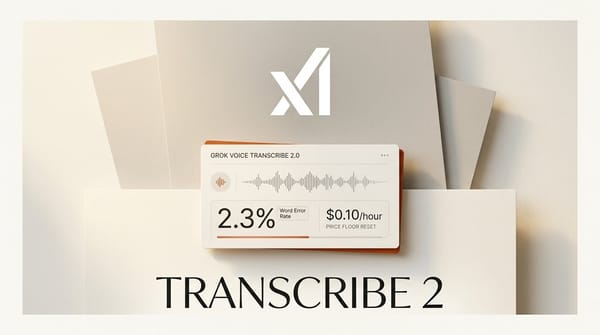
SpaceXAI shipped Grok Voice Transcribe 2.0 with two claims stacked on top of each other: twice as accurate as version 1.0, and first among 32 streaming models. Both are defensible. Neither is the reason the release matters.
Deep Dive
Sep 18, 2026
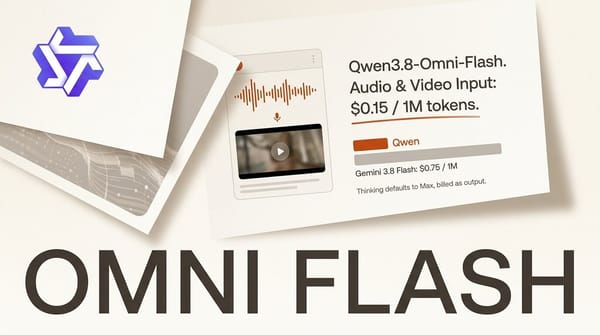
Alibaba's new omni model takes text, images, audio and video at $0.15 per million input tokens, exactly a fifth of Gemini 3.8 Flash. The number that decides your bill is not on the pricing page.
Deep Dive
Sep 17, 2026
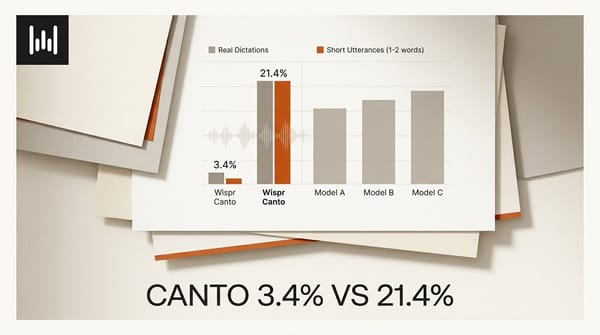
Wispr published Canto on 17 September 2026 with a 3.4% word error rate on real dictations, the lowest of six models. Its own charts also show 21.4% on short dictations, where three models tie exactly.
Deep Dive
Sep 14, 2026
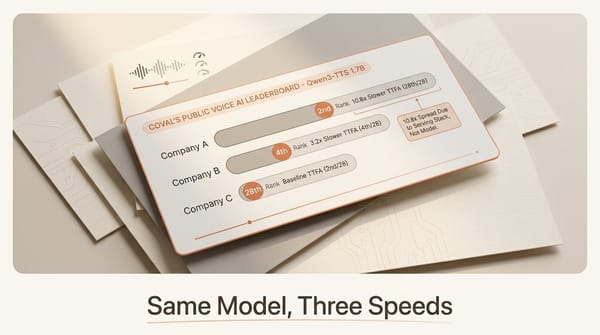
Nari Labs says it leads Coval's voice AI benchmarks. The live board shows something more useful: three companies serve the same Qwen3-TTS 1.7B weights and land at 2nd, 4th and 28th of 28, a 10.8x spread in time-to-first-audio.
Deep Dive
Sep 7, 2026
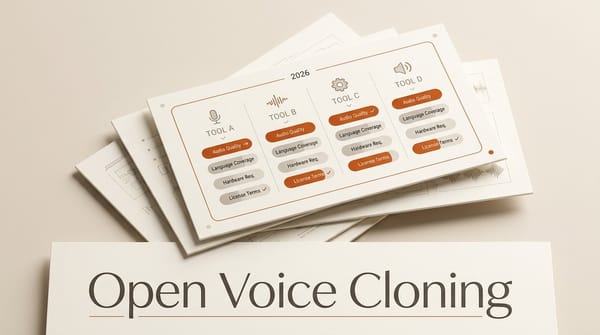
Breeze TTS 2 is the best-sounding open-weights voice model of the four here and the one you are least likely to be allowed to use. In open voice AI, license and hardware decide the pick long before audio quality does.
ai-audio
Sep 4, 2026
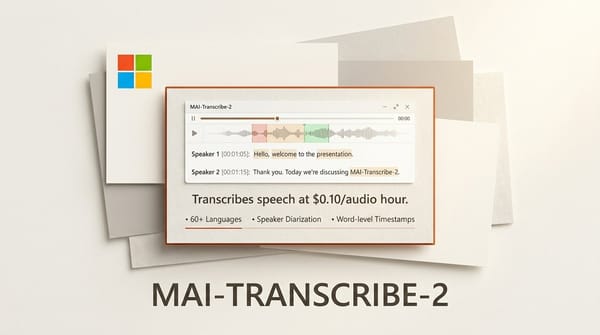
Microsoft AI released MAI-Transcribe-2, a speech-to-text model at $0.10 per audio hour across 60 languages, with speaker diarization and word-level timestamps built in.
Deep Dive
Aug 27, 2026
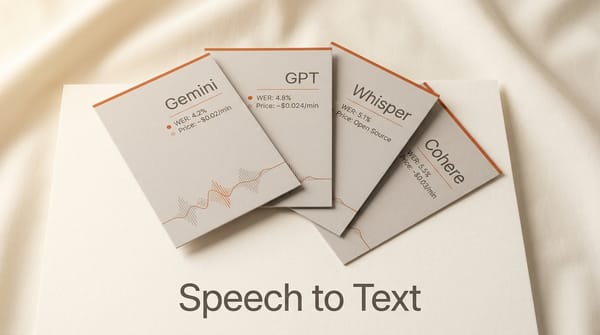
Gemini 3.5 Transcribe, GPT-4o Transcribe, Whisper, and Cohere Transcribe compared on accuracy, languages, streaming, diarization, and price so you can pick the right speech-to-text model.
ai-audio
Jun 11, 2026
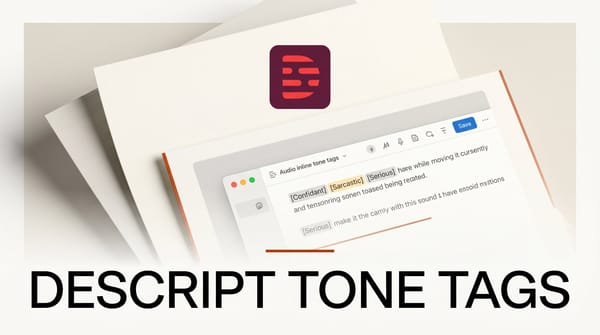
Descript shipped inline tone tags for ElevenLabs V3 speakers and a connector for Claude and ChatGPT on June 11, 2026, pushing further into directable AI editing.
Deep Dive
Jun 11, 2026
ElevenLabs Music v2 and Suno both make broadcast-ready tracks. The real 2026 choice is licensing risk versus creative control. Here is how they compare.
AI Tools
Jun 10, 2026
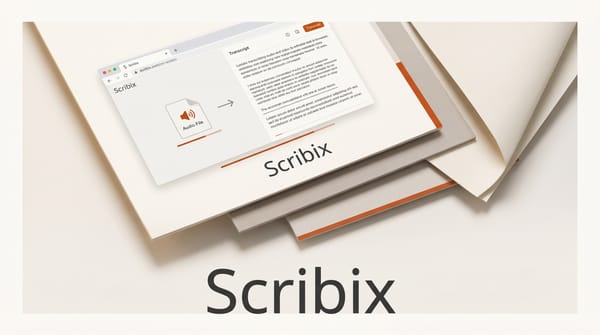
Scribix is a browser-based AI transcription tool that turns audio and video into editable text with speaker labels, word-level timestamps, and SRT or VTT export.
NVIDIA
Jun 4, 2026
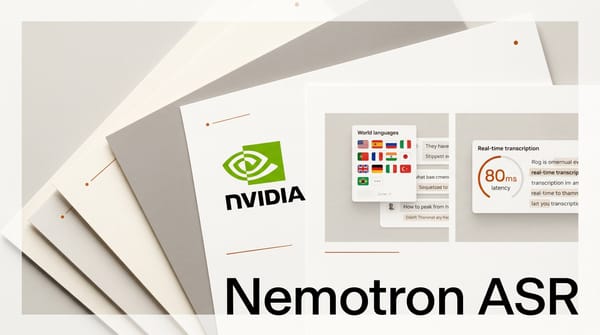
NVIDIA released Nemotron 3.5 ASR on June 4: an open 600M streaming speech model covering 40 language-locales with sub-100ms latency for voice agents.
AI Tools
Jun 4, 2026
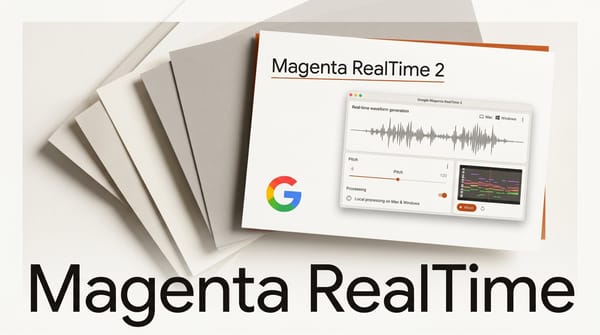
Google Magenta RealTime 2 runs live music generation locally on Mac and Windows, producing instrument tracks in real time from text prompts.
AI Tools
Jun 4, 2026
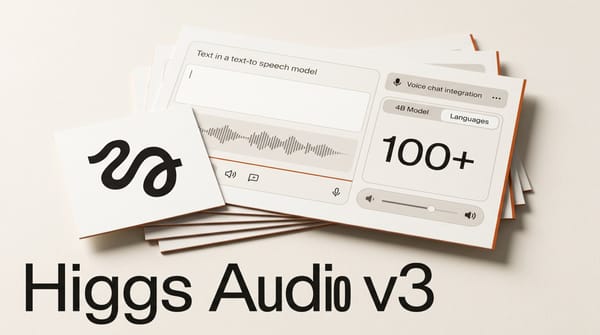
Boson AI has released Higgs Audio v3 TTS 4B, a 4-billion-parameter text-to-speech model built for voice chat. It supports 100 languages with zero-shot voice cloning and inline emotion control tokens.