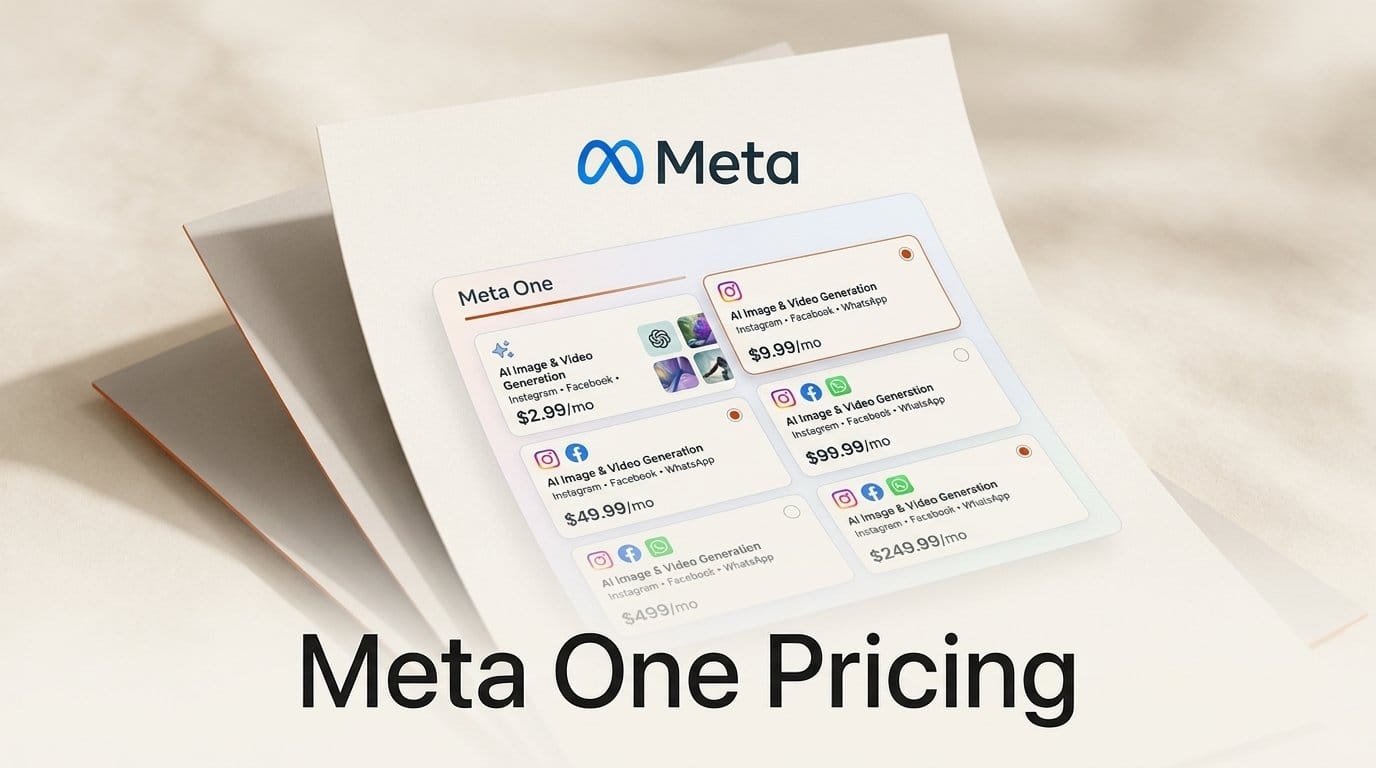
Meta launched Meta One globally on 15 September 2026, a subscription that puts AI image generation, AI video generation and Instagram's Restyle editing behind eight paid tiers running from $2.99 to $499 a month. The announcement names more than 50 features and cites 15 million subscriptions and trials to date. It does not name a single generation limit.
That omission is the story. Every tier above the free one is sold on the promise of more AI creation, and "more" is the most specific quantity Meta publishes. Asked directly for the numbers, the company declined to disclose exact usage limits, telling TechCrunch they could vary by country, surface and system conditions. For a creator deciding whether to move image and video work inside Instagram, that is the one number that determines the answer, and it is the one number nobody can quote.
What Meta One Actually Is
Meta One is a paid layer across Facebook, Instagram, WhatsApp and Meta AI rather than a new app or a separate account. Meta is explicit that the floor does not move: "The core experience across our apps and Meta AI has always been free, and that's not changing." What the subscription buys is headroom on the metered parts, plus a set of non-AI conveniences catalogued at launch such as 48-hour story visibility, anonymous story browsing and expanded chat pinning on WhatsApp.
The AI half of the bundle is built on Meta's Muse Image and Muse Video models. Subscribers get more room to create and edit images, generate video with Muse, and use in-app tools like Restyle on Instagram and voice effects. Business and creator tiers add the Meta Business Agent, which answers customer messages automatically.
The structural point is that none of this is new capability. Restyle, Muse generation and voice effects already existed inside the apps. What launched on 15 September is a price on how much of them you get, which is a different kind of event from a model release and is easy to under-read as one.
The Eight Tiers, Side by Side
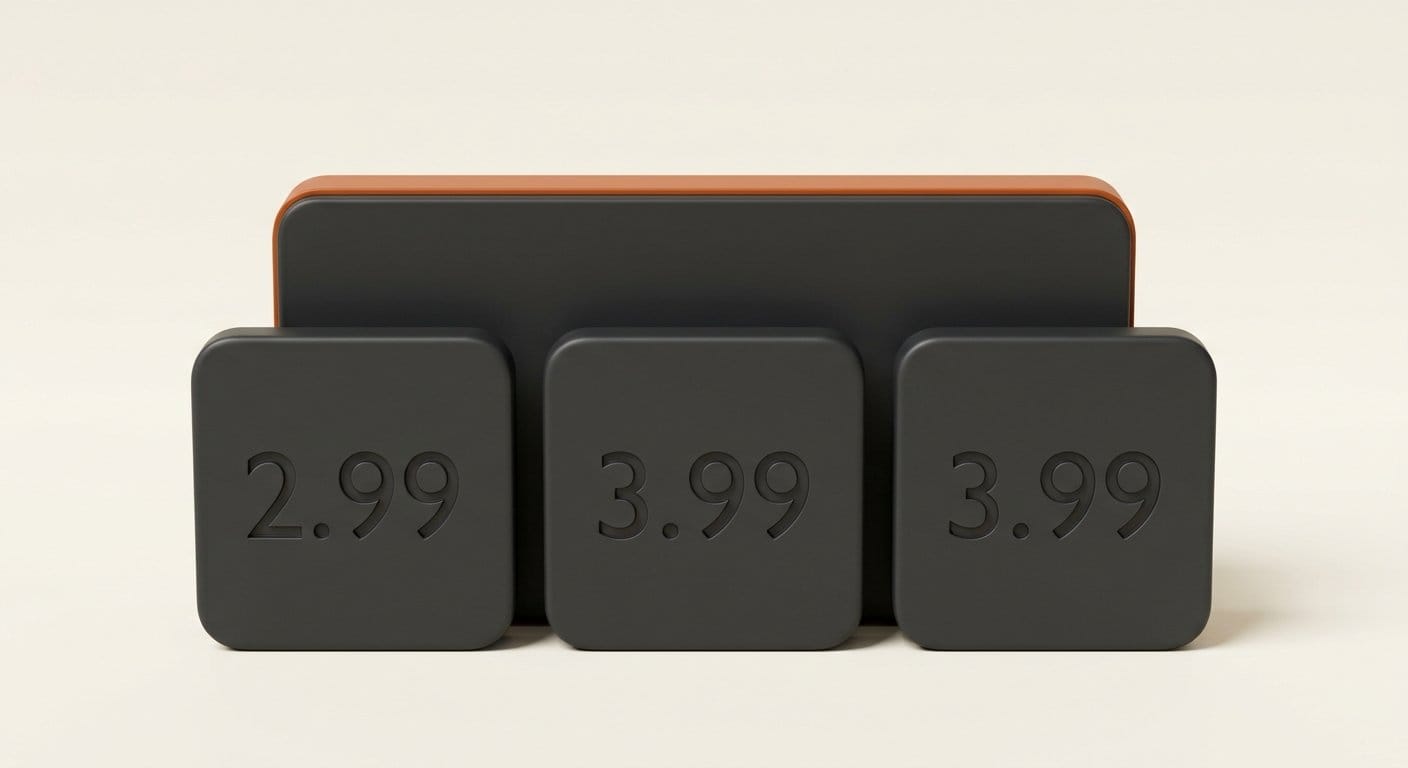
Meta splits the ladder into three groups: single-app plans, consumer bundles, and creator plus business bundles. The creator tiers carry "starting at" pricing, because as the official plans page notes, benefits, pricing and availability vary by region, app and account.
| Tier | Price per month | Group | AI creation benefit as stated |
|---|---|---|---|
| WhatsApp Plus | $2.99 | Single app | In-app AI features, WhatsApp only |
| Instagram Plus | $3.99 | Single app | In-app AI features, Instagram only |
| Facebook Plus | $3.99 | Single app | In-app AI features, Facebook only |
| Core | $7.99 | Consumer bundle | More media generation with Meta AI |
| Premium | $19.99 | Consumer bundle | Highest consumer creation headroom |
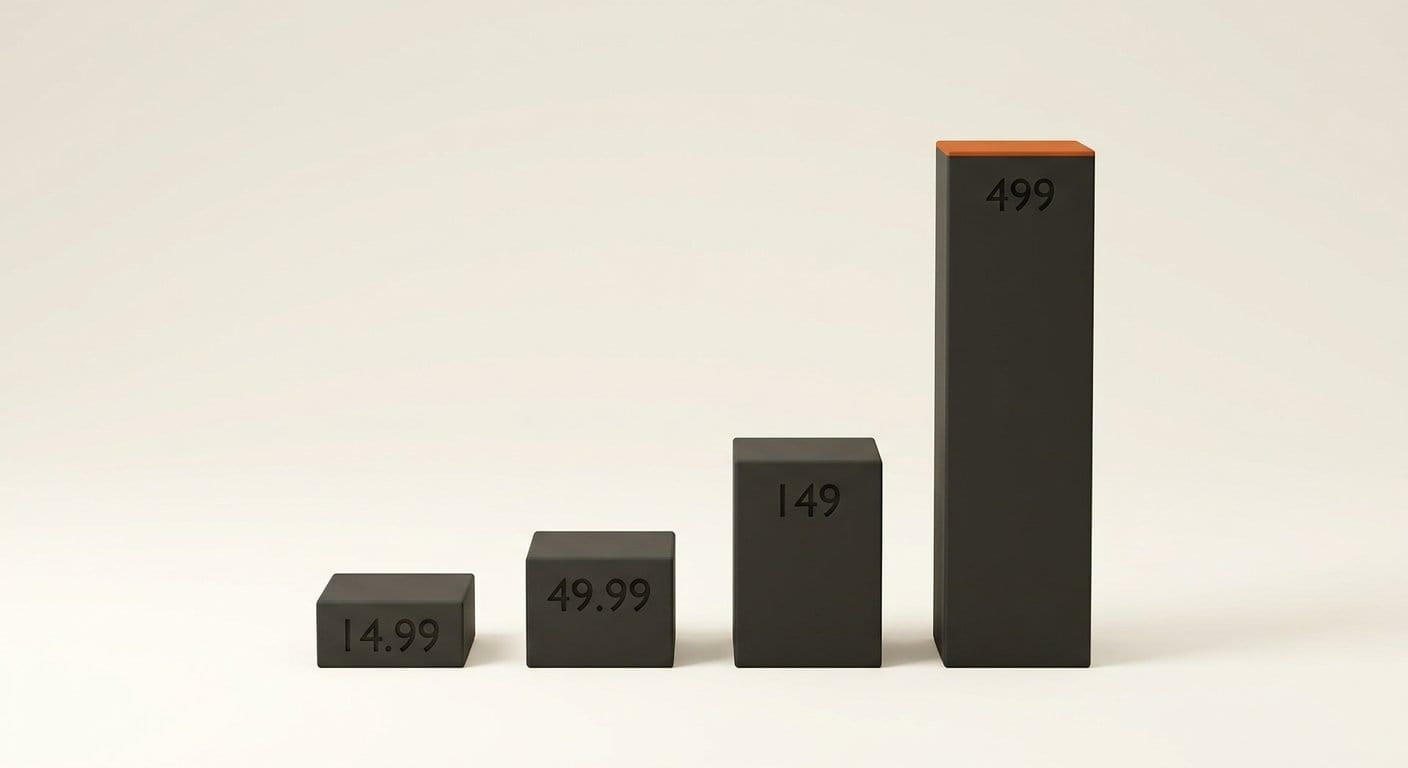
| Essential | from $14.99 | Creator and business | Creator tooling plus Business Agent |
| Advanced | from $49.99 | Creator and business | Higher limits, more seats |
| Expert | from $149 | Creator and business | Higher limits, more seats |
| Max | from $499 | Creator and business | Top stated tier |
Two things stand out. The first is the spread: the top tier costs about 167 times the bottom one, which is an unusually wide ladder for a consumer subscription and signals that Meta expects the business tiers to carry the revenue. Analysts quoted by TechCrunch forecast the subscription push could add $13.5B to $20B in revenue by 2028 to 2030.
The second is that the AI column is qualitative all the way down. Every other subscription a creator already pays for states its unit. This one states a direction.
The Number Meta Did Not Publish
Compare how the rest of the category prices generation. Credit systems are the norm precisely because generative media has a real marginal cost, and the vendor has to expose that cost to stop heavy users from eating the tier. When we covered Runway's team plan and its pooled credits, the entire design question was how many credits land in the shared pool and how fast a team burns them. When ElevenLabs put lossless Music v2.5 on every plan, the news was legible because the plan quotas were already public and you could see what moved.
Meta One gives you no equivalent. "More media generation with Meta AI" cannot be modelled. You cannot compute a cost per image, you cannot forecast whether a campaign fits inside Premium or needs Advanced, and you cannot tell whether the jump from $19.99 to $49.99 buys 2x the generation or 20x.
Meta's stated reason is that limits vary by country, surface and system conditions. That is plausible on its face: capacity genuinely differs by region, and a floating cap lets Meta protect infrastructure during demand spikes. But the practical consequence for a creator is that the product is sold on an axis the buyer cannot measure, and the cap can move after the purchase without the price changing. A published quota is a commitment. A variable one is not.
Treat any per-tier generation figure you see quoted elsewhere this week as unverified. As of the launch announcement, Meta has published none, and the honest answer to "how many images do I get for $19.99" is that it is not currently knowable from any primary source.
What Changes for Creators Who Post to Instagram
The reason this matters more than a typical pricing note is where it sits. Meta is not asking creators to adopt a new tool. It is metering generation at the point of publication, inside the apps where the audience already is. That is a distribution-side move, and distribution-side moves change default behaviour far more reliably than better models do.
The realistic effect is a split. Creators who generate occasionally and post natively will find the in-app path convenient enough that Core or Premium wins on friction alone, even without published numbers. Creators with an existing pipeline have no reason to move: a Midjourney v8.2 edit workflow or a Runway sequence produces an asset you upload, and uploading remains free and unmetered. Nothing announced on 15 September restricts external assets.
That is the single most important thing to hold onto. Meta One meters generation performed inside Meta's apps. It does not meter publishing. The free tier of Instagram still accepts whatever you made elsewhere, at whatever volume you make it.
The group with a genuine decision is the middle: creators who use Restyle or in-app video because it is fast, and who now have to decide whether that speed is worth a subscription priced against limits they cannot see. Coverage aimed at photographers, including PetaPixel's read of the launch, lands on the same tension.
How to Decide Whether to Pay
Because the quota is unpublished, the only sound method is to measure your own usage before subscribing rather than reasoning from the tier sheet. This takes about a week and costs nothing.
- Count your actual in-app generations for seven days. Log every Restyle, every Muse image, every in-app video. Most creators who assume they are heavy users are not. If the weekly count is under roughly ten, the free tier very likely already covers you and no tier is worth buying.
- Separate in-app generation from uploaded assets. Only the first column is metered. If most of your output is made in Midjourney, Runway, ComfyUI or Photoshop and then uploaded, Meta One is not pricing your workflow at all.
- Find your free-tier ceiling before you pay. Push a normal working day until you actually hit a limit. If you never hit one, you have no measured reason to upgrade. If you hit it on day two, you now know the free floor, which is the only quota number that exists.
- Start one tier lower than you think. With limits undisclosed and region-variable, the tier sheet cannot tell you where you land. Buy Core before Premium, Essential before Advanced, and let a real month of work move you up.
- Re-check the cap monthly. Meta reserves the right to vary limits by country, surface and system conditions, so the headroom you bought is not guaranteed to be the headroom you keep. Note the date you first hit a wall and compare next month.
- Keep the external pipeline warm. Do not decommission the tools that produce uploadable assets. They remain the only part of your stack with a quota you can read.
Frequently asked questions
How much does Meta One cost?
Plans run from $2.99 to $499 a month. Single-app plans are WhatsApp Plus at $2.99 and Instagram Plus and Facebook Plus at $3.99. Consumer bundles are Core at $7.99 and Premium at $19.99. Creator and business bundles start at $14.99 for Essential, $49.99 for Advanced, $149 for Expert and $499 for Max, with the creator tiers priced as "starting at" because they vary by region and account.
How many images or videos do I get on each tier?
Meta has not said. The launch announcement describes the benefit only as more media generation, and the company declined to disclose exact usage limits, saying they vary by country, surface and system conditions. No primary source currently publishes a per-tier quota.
Is Meta AI still free?
Yes. Meta states that the core experience across its apps and Meta AI remains free and that this is not changing. Meta One adds paid headroom on top of the free tier rather than moving existing free features behind a paywall.
Does Meta One meter images I made in other tools and uploaded?
No. The subscription prices generation performed inside Meta's apps, such as Muse Image, Muse Video, Restyle and voice effects. Assets created in external tools and uploaded to Instagram or Facebook are not part of what Meta One meters.
Which tier should a working creator start on?
Measure first. Log a week of in-app generations, then start one tier below your instinct, because the undisclosed and region-variable limits mean the tier sheet cannot predict where your usage lands. Creators whose output is mostly produced externally and uploaded may need no tier at all.
Where is Meta One available?
Meta says plans are available globally as of 15 September 2026, with the caveat that plan benefits, pricing and availability may vary by region, app and account.