H Company released Holo4 on 28 September 2026: two open-weight computer-use models that click, type, write code and call MCP or API tools from the same call. Holo4 27B is a dense model that scores 61.7% on OSWorld 2.0 at $1.22 per task. Holo4 35B-A3B is a Mixture of Experts with 3B active parameters that scores 30.9% at $0.61. Both have a 262,144-token context and both are on the H Models API today.
The headline says the small one is half the price. Two details in the fine print change which one you should build on. The first is the license: only the weaker model is Apache 2.0, and the flagship is research only. The second is cost per successful task, which is what an agent actually costs you. On long workflows that number favours the 27B. Below we set the two side by side, work out the real cost per success from H's own figures, and cover what it takes to run either one on your own hardware.
What H Company Released
Holo4 is the successor to Holo3.1, which H shipped in June. Both new models are post-trained from Qwen bases: the 27B on the Qwen3.8 dense architecture and the 35B-A3B on the Qwen3.5 MoE architecture. H trained them with supervised fine-tuning and reinforcement learning on a large set of environments, including about 10,000 tasks from its Agentic Task Factory, a pipeline that builds web apps, MCP servers and desktop environments from documentation alone. The Hugging Face announcement puts the pitch plainly: one model for every interface, so you do not need a GUI model for screens and a separate tool-calling model for APIs.
The release has four parts:
- Holo4 27B: dense, 27B parameters, 262K context, $0.40 per million input tokens and $3.00 per million output on the API.
- Holo4 35B-A3B: MoE, 35B total and 3B active, 262K context, $0.30 input and $2.00 output.
- Holotron4 Nano: a 30B-A3B model built on NVIDIA's Nemotron 3 Nano Omni with the same training recipe.
- Every benchmark trajectory: open on trajectories.hcompany.ai and as the Hcompany/trajectories dataset, so you can replay each step behind a score.
H also rebuilt its harness during training. The agent now keeps a memory across hundreds of steps and gets a shell on the desktop machine itself, and the step budget on OSWorld 2.0 grew from 200 to 500 with a run time of up to 6 hours.
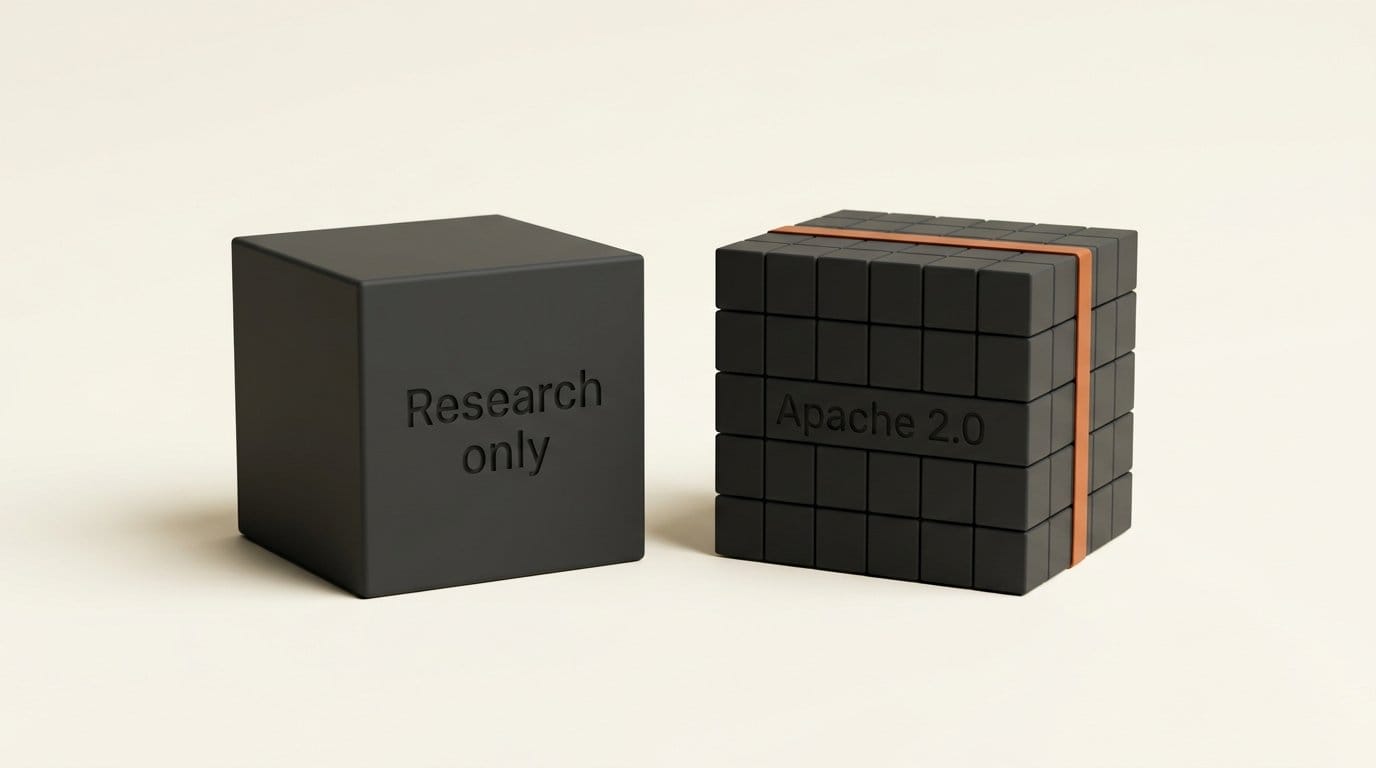
The License Split: Research-Only Flagship, Apache 2.0 Workhorse
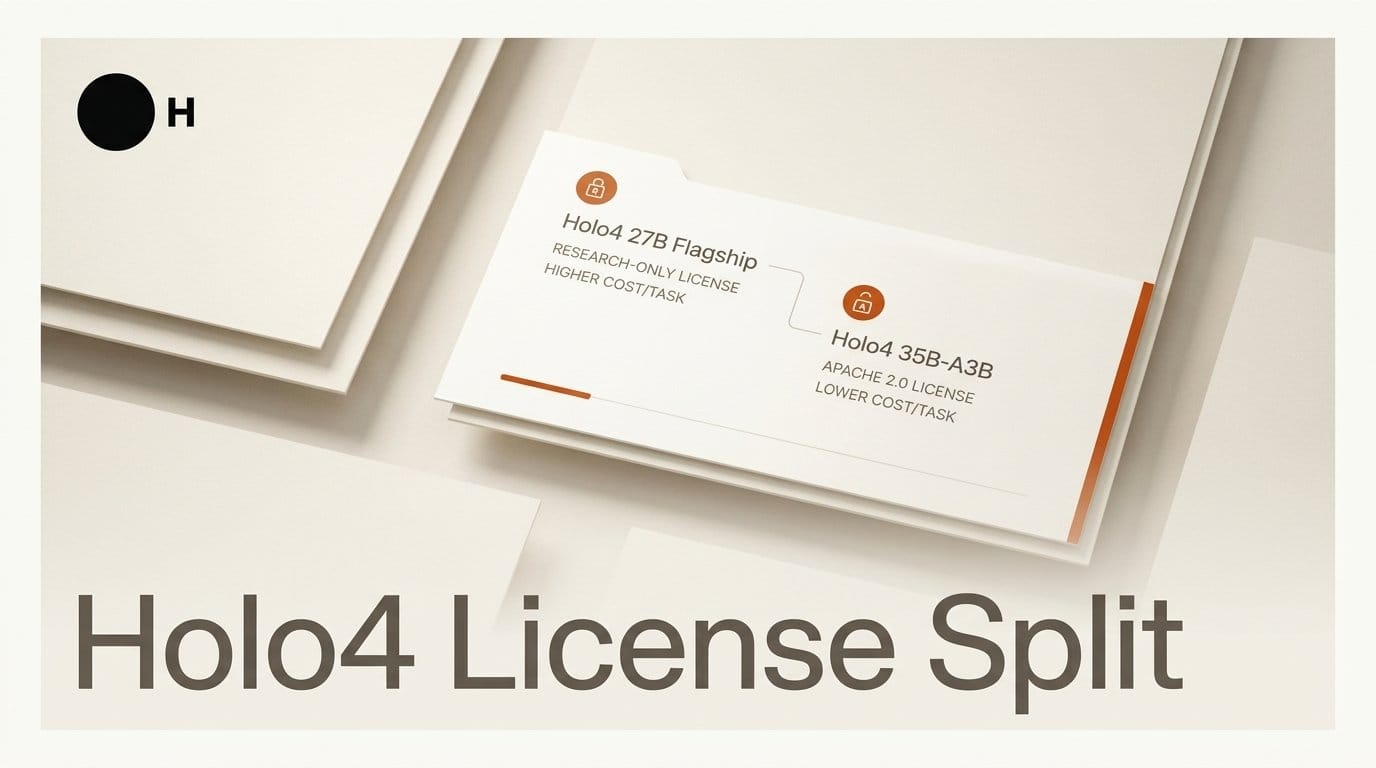
This is the detail most coverage will miss. The Holo4 27B model card releases the weights under CC BY-NC 4.0, which forbids commercial use. H's launch page labels it "Research only". The Holo4 35B-A3B card uses Apache 2.0, which allows it. Holotron4 Nano sits under the NVIDIA Open Model Agreement.
In practice that gives you three routes:
- Commercial product, self-hosted: Holo4 35B-A3B (or Holo3.1 35B-A3B, also Apache 2.0).
- Commercial product, best Holo4 accuracy: Holo4 27B through the paid API, at $0.40 in and $3.00 out per million tokens.
- Research, evals, personal experiments: either set of weights, run locally.
If you build automations for clients, run an agency, or ship an app with an agent inside it, you are on route 1 or route 2. Downloading the 27B weights into a paid product is not an option under the card's license.
Holo4 27B vs 35B-A3B: The Benchmarks
These are H's figures from its own harness, averaged over 2 to 4 runs (single runs on OSWorld 2.0 and ALE-CLI). The frontier column is public scores H copied from other sources, measured in different harnesses and at different effort levels, so read it as rough context, not a head-to-head.
| Benchmark | Holo4 27B | Holo4 35B-A3B | Qwen3.8 27B (base) | Frontier reference |
|---|---|---|---|---|
| OSWorld (computer tasks) | 85.2%, $0.08 | 80.8%, $0.05 | 84.3%, $0.22 | Fable 5 86.0% |
| OSWorld 2.0 score / success | 61.7% / 41.5%, $1.22 | 30.9% / 12.3%, $0.61 | 48.0% / 19.4%, $3.49 | Opus 5.5 81.8% / 48.7%, $8.48 |
| ALE-CLI score / pass | 44.1% / 19.4%, $0.82 | 30.9% / 13.5%, $0.29 | 43.5% / 19.0% | Opus 5.5 63.7% / 34.3%, $8.22 |
| AutomationBench | 45.4%, $0.05 | 34.5%, $0.02 | 40.3%, $0.09 | Opus 5 50.3%, $3.05 |
| AndroidWorld | 85.1%, $0.08 | 77.6%, $0.07 | 81.9%, $0.13 | Fable 5 88.8% |
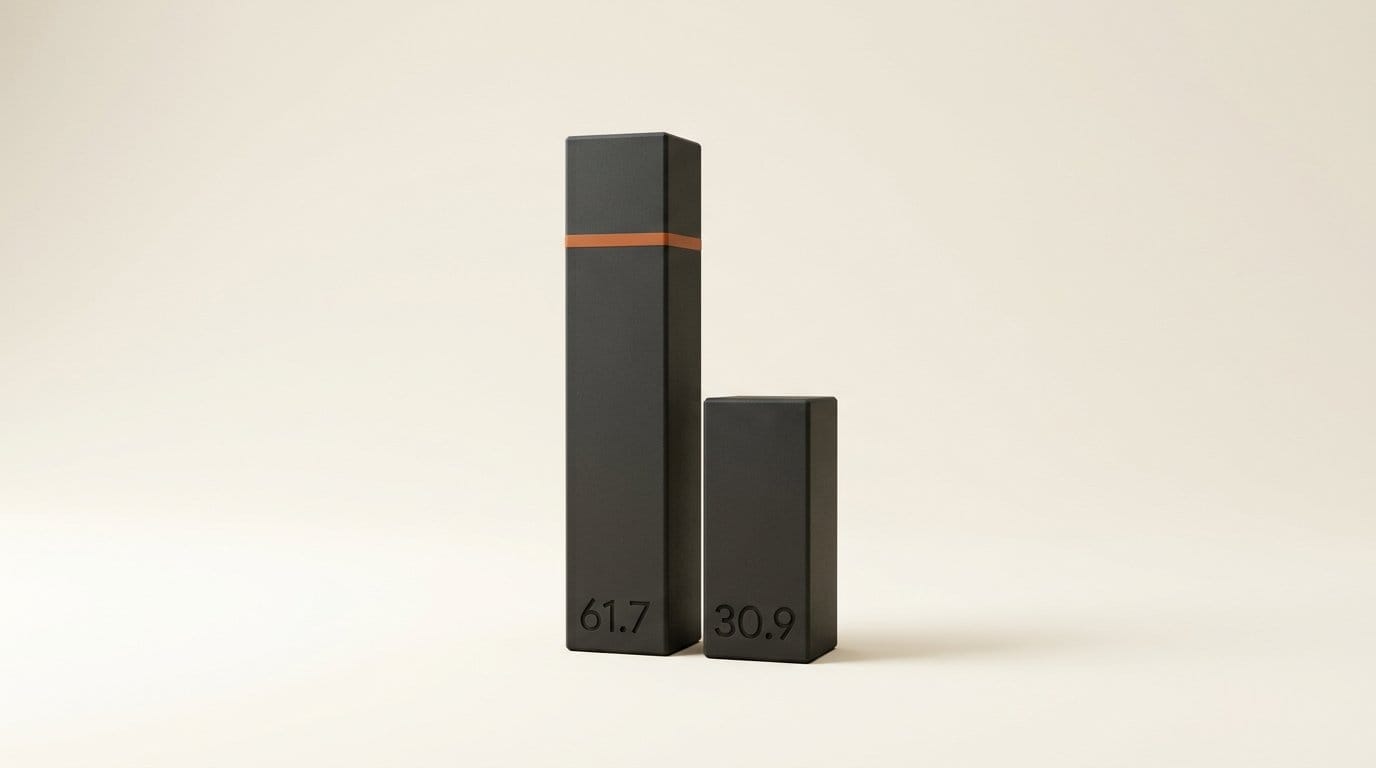
The pattern is clear. On short tasks (OSWorld, AndroidWorld) the two sizes sit within 4.4 and 7.5 points of each other. On long workflows the gap opens wide: 61.7% against 30.9% on OSWorld 2.0, where tasks run for hundreds of steps. The MoE model holds up on a quick form fill. It falls apart on a job that runs for hundreds of steps.
One generational note. In June, H reported 79.3% on AndroidWorld for Holo3.1 35B-A3B. Holo4 35B-A3B posts 77.6%. The harnesses differ, so this is not a regression you can prove, but for phone automation alone the new MoE model is not a clear upgrade.
Cost per Successful Task Flips the Ranking
H's table reports cost per attempted task. An agent that fails still bills you, so the number that matters is cost divided by success rate. We ran that on the two long-workflow benchmarks where H publishes both a success rate and a cost:
| Model | OSWorld 2.0 cost per task | Success rate | Cost per success | ALE-CLI cost per pass |
|---|---|---|---|---|
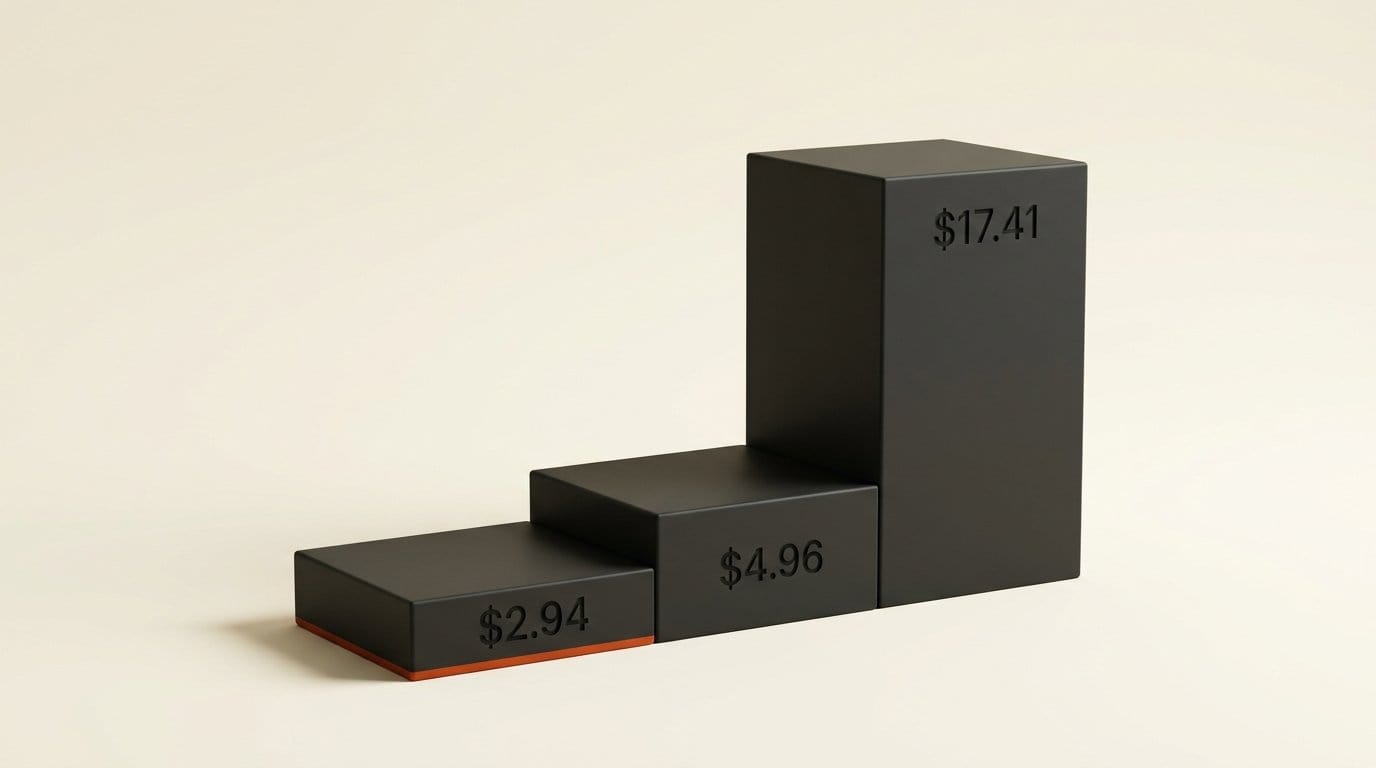
| Holo4 27B | $1.22 | 41.5% | $2.94 | $4.23 |
| Holo4 35B-A3B | $0.61 | 12.3% | $4.96 | $2.15 |
| Qwen3.8 27B | $3.49 | 19.4% | $17.99 | n/a |
| Claude Opus 5.5 | $8.48 | 48.7% | $17.41 | $23.97 |
On OSWorld 2.0 the "half-price" 35B-A3B costs 69% more per completed workflow than the 27B, because it finishes roughly one task in eight against two in five. On the shorter ALE-CLI Linux tasks the order reverses and the 35B-A3B wins at $2.15 per pass. The rule that falls out: the longer the job, the more the 27B pays for itself.
Against the frontier the gap is still large. Opus 5.5 completes 48.7% of OSWorld 2.0 tasks against 41.5% for the 27B, but at about six times the cost per success. Claude Opus 5.5 remains the better agent. Holo4 27B is the better deal when a 7-point lower success rate is acceptable and you can retry failures. The usual caveat applies twice here: H read the frontier costs off the providers' charts, and those runs used different harnesses.
The AutomationBench Caveat
H's AutomationBench number deserves a footnote, and to its credit H prints one. The 45.4% for the 27B is the score on all 600 public tasks, and 480 of those fall in the split H collected training data from. On the 120 held-out tasks the scores are 49.3% for the 27B and 31.7% for the 35B-A3B, against 40.3% for Qwen3.8 27B and 13.1% for Qwen3.6 35B-A3B. The held-out 27B number is actually higher, so the training overlap does not seem to inflate it. The 35B-A3B's jump over Qwen3.6 35B-A3B (13.1% to 31.7%) is the more striking result. H says it will report the official private-set score once Holo4 is evaluated there.
The same goes for ALE-CLI, the 105-task Linux split of Agents' Last Exam. H excluded attempts where the agent found reference answers left on the test machine: 2 of 105 for the 27B and 1 for the 35B-A3B. That is honest disclosure, and it is also a reminder of what a computer-use agent with shell access will do if you leave answers lying around.
Running Holo4 on Your Own Hardware
Both models ship in BF16, FP8, NVFP4 and 4-bit GGUF. H's local inference guide recommends vLLM 0.28 or newer for the safetensors builds and llama.cpp for the GGUF files. Weight sizes from the Hugging Face repos:
| Precision | Holo4 27B | Holo4 35B-A3B | Serve with |
|---|---|---|---|
| BF16 | 54.7 GB | 70.2 GB | vLLM |
| FP8 | 35.9 GB | 37.6 GB | vLLM |
| NVFP4 | 22.9 GB | 22.5 GB | vLLM on Blackwell |
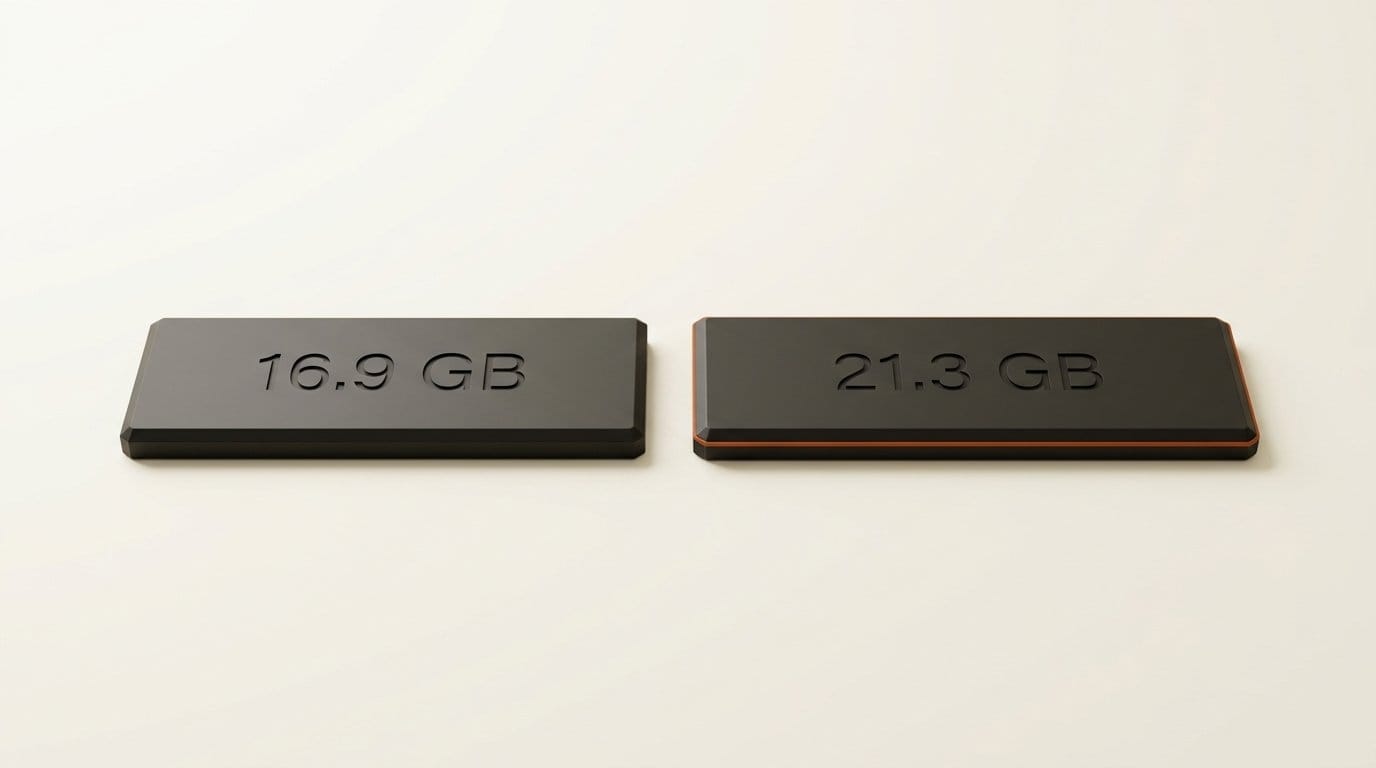
| Q4_K_M GGUF | 16.9 GB + 0.9 GB vision | 21.3 GB + 0.9 GB vision | llama.cpp |
Weights are the floor, not the total: the KV cache and image encoder come on top, and computer-use loops send several screenshots per step. For the same-size Holo3.1 35B-A3B GGUF, H's guidance is an M3 Mac or newer with at least 36 GB of unified memory. Plan for the same with the Holo4 35B-A3B GGUF. The 27B GGUF is smaller on disk, but a dense 27B model runs every parameter for every token, so it steps slower than a 3B-active MoE on the same machine.
The quickest start is the hosted route. The API is OpenAI-compatible, so the setup takes four steps:
- Create a key on H Platform and export it as
HAI_API_KEY. The free tier needs no card but only serves Holo3.1 35B-A3B at 10 requests per minute; Holo4 needs credits. - Install the official OpenAI client and set
base_urltohttps://api.hcompany.ai/v1/, as the Models API quickstart shows. - Send a screenshot plus your tool definitions with model
holo4-35b-a3bfor interactive loops, orholo4-27bfor long multi-step jobs. - To go local, serve the same model with vLLM or llama.cpp and point
base_urlathttp://localhost:8000/v1. The code does not change.
If you ran our Holo 3.1 local setup, swapping in the Holo4 35B-A3B weights is a repo and model-name change.
Which Holo4 Should You Pick?
- Selling an agent to clients, running it on your own GPUs: Holo4 35B-A3B. It is the only Holo4 you can self-host commercially. Keep its tasks short, since it finishes 12.3% of long OSWorld 2.0 workflows.
- Long workflows (a full CMS publish, a multi-app report, a FreeCAD build): Holo4 27B on the API. At $2.94 per completed OSWorld 2.0 task it is the cheapest route to a finished job in H's own figures.
- Short, repetitive browser or terminal tasks at volume: Holo4 35B-A3B on the API, at $2.15 per ALE-CLI pass.
- Anything where one failure is expensive: stay on a frontier model. Opus 5.5 still leads on long workflows by 7.2 points of success rate.
- Tinkering on a laptop: either GGUF. The 27B research license covers personal experiments, not a product.
Before you commit, replay a few failed runs on the trajectories site. Seeing where the 35B-A3B gives up on a long task tells you more about fit than any single percentage.
Frequently asked questions
Is Holo4 open source?
Both models are open weights, but with different licenses. Holo4 35B-A3B is Apache 2.0 and can be used commercially. Holo4 27B is CC BY-NC 4.0, labelled research only, so commercial use of the 27B goes through H's paid API.
How much does the Holo4 API cost?
Holo4 27B costs $0.40 per million input tokens, $0.04 cached and $3.00 output. Holo4 35B-A3B costs $0.30 input, $0.03 cached and $2.00 output. Both require credits; the free tier serves only Holo3.1 35B-A3B at 10 requests per minute.
How does Holo4 compare with Claude Opus 5.5 for computer use?
On OSWorld 2.0, Opus 5.5 scores 81.8% with a 48.7% success rate at $8.48 per task, against 61.7% and 41.5% at $1.22 for Holo4 27B. Opus 5.5 is more accurate; Holo4 27B is about six times cheaper per completed task. The frontier figures come from different harnesses.
Can I run Holo4 on a Mac?
Yes, with the Q4_K_M GGUF builds in llama.cpp. The 35B-A3B file is 21.3 GB plus a 0.9 GB vision projector. H recommends an M3 or newer with at least 36 GB of unified memory for the same-size Holo3.1 model, and the same sizing applies here.
Which apps can Holo4 control?
Anything with a screen, a shell, an API or an MCP server, on web, desktop and Android. H demonstrates it building an Eiffel Tower model in FreeCAD and reports 72.0% on its 17-app desktop test set for the 27B.
What is Holotron4 Nano?
A 30B-A3B model built by applying H's training recipe to NVIDIA's Nemotron 3 Nano Omni. It raises OSWorld from 21.0% to 76.3% over the base model and ships under the NVIDIA Open Model Agreement in BF16 and FP8.