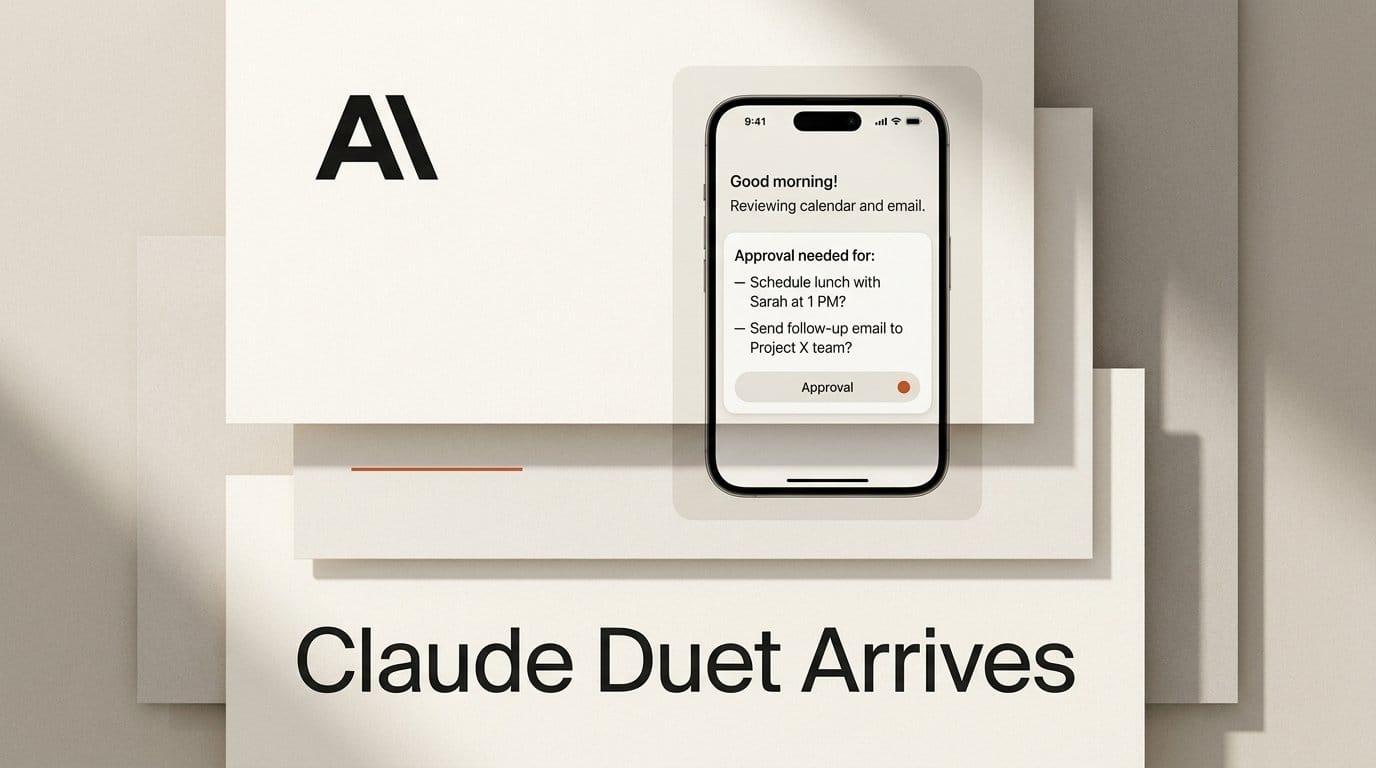
Anthropic launched Claude Duet on October 21, 2026: a standalone app for iOS, Android and claude.ai where Claude runs as a proactive agent. It sends a morning brief, checks your connected accounts every few hours, works on tasks in a cloud computer while your phone is off, and stops for your approval before it sends, pays, signs or deletes anything. It is a research preview behind a waitlist, open first to US Claude Pro and Max subscribers, runs on Claude Opus 5.5, and costs nothing extra, but it draws on the same usage limit as the rest of your Claude plan.
Duet is the fifth always-on assistant from a major AI company this year, after Google's Gemini Spark in May, xAI's Grok Bot in August, and Meta's Muse and OpenAI's dots in September. The Hacker News thread on launch day passed 200 points within hours, and most of the comments asked the same thing: how is this different from the others? This piece answers that for creators and small studios, using Anthropic's own pages and our earlier reviews of the competing agents.
What Anthropic shipped on October 21
Claude Duet is a separate app, not a new tab in the Claude app. Anthropic's launch article calls it "a new app where Claude works as a proactive agent" and says it is aimed at professionals and small business owners. On a phone it is its own iOS or Android app; on a computer it runs on the web at claude.ai.
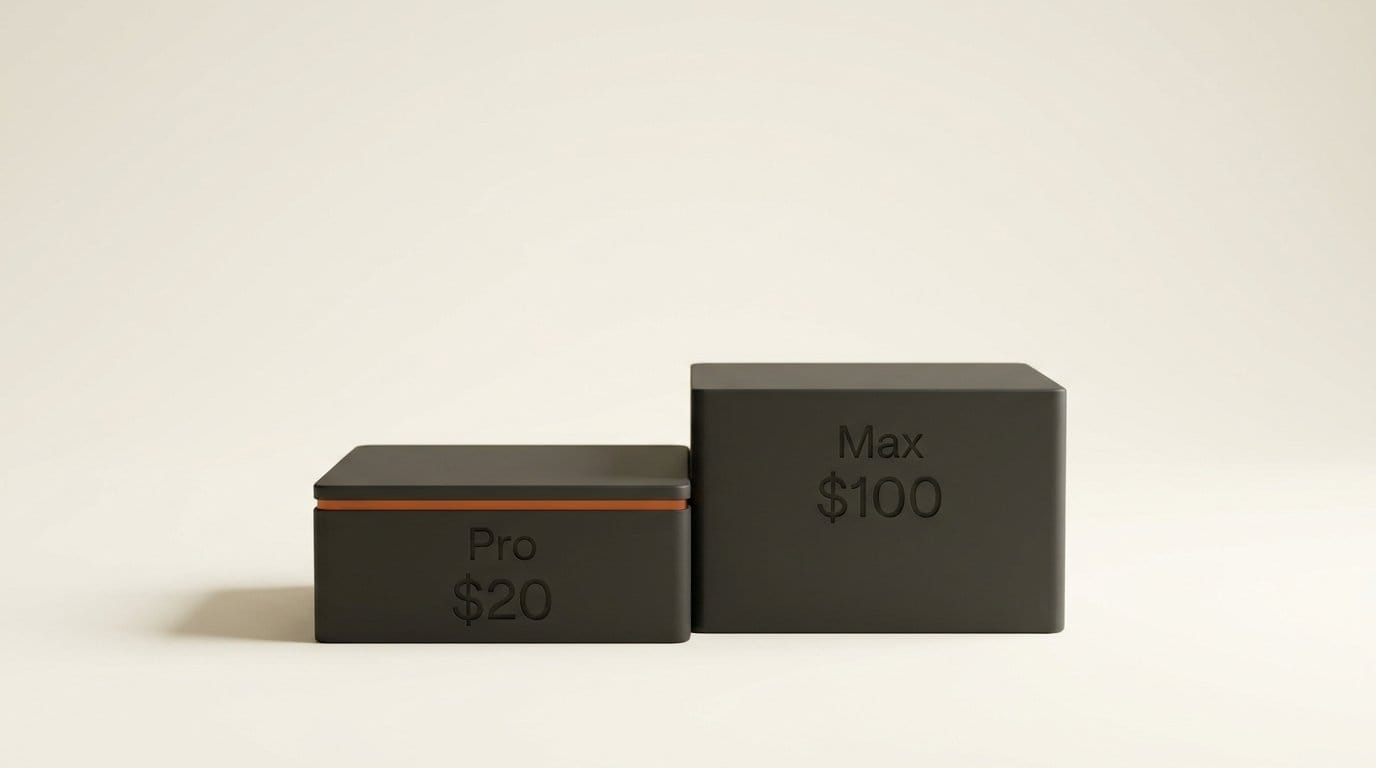
Access is by waitlist. The product page says it is "available in Pro and Max plans in the US" and that "Team and Enterprise plans are not included yet." According to Claude's pricing page, Pro costs $20 a month billed monthly, or $17 a month billed annually ($200 up front), and Max starts at $100 a month. Duet has no separate price: it is included in Pro and Max and "uses the same usage limits as the rest of Claude."
It carries over the memory, skills and connected apps you already set up in Claude, so anyone who has spent time with Claude Cowork does not start from zero. The model underneath is Claude Opus 5.5.
How Claude Duet works
Duet runs on three habits. First, a brief: "Each morning, it sends you a short brief on the most important items across your connected apps." Second, a check-in: Duet looks at your connected accounts every few hours and messages you when it decides something needs attention. Anthropic says the spacing is deliberate, so background checking does not burn through your plan too quickly.
Third, background work. Duet runs a virtual machine with its own browser, so a task keeps going after you lock your phone or close the laptop, and you get a notification when it finishes or needs a review. TestingCatalog adds that requests live in one ongoing text or voice thread, which covers both a two-minute ask and a project that runs for weeks.
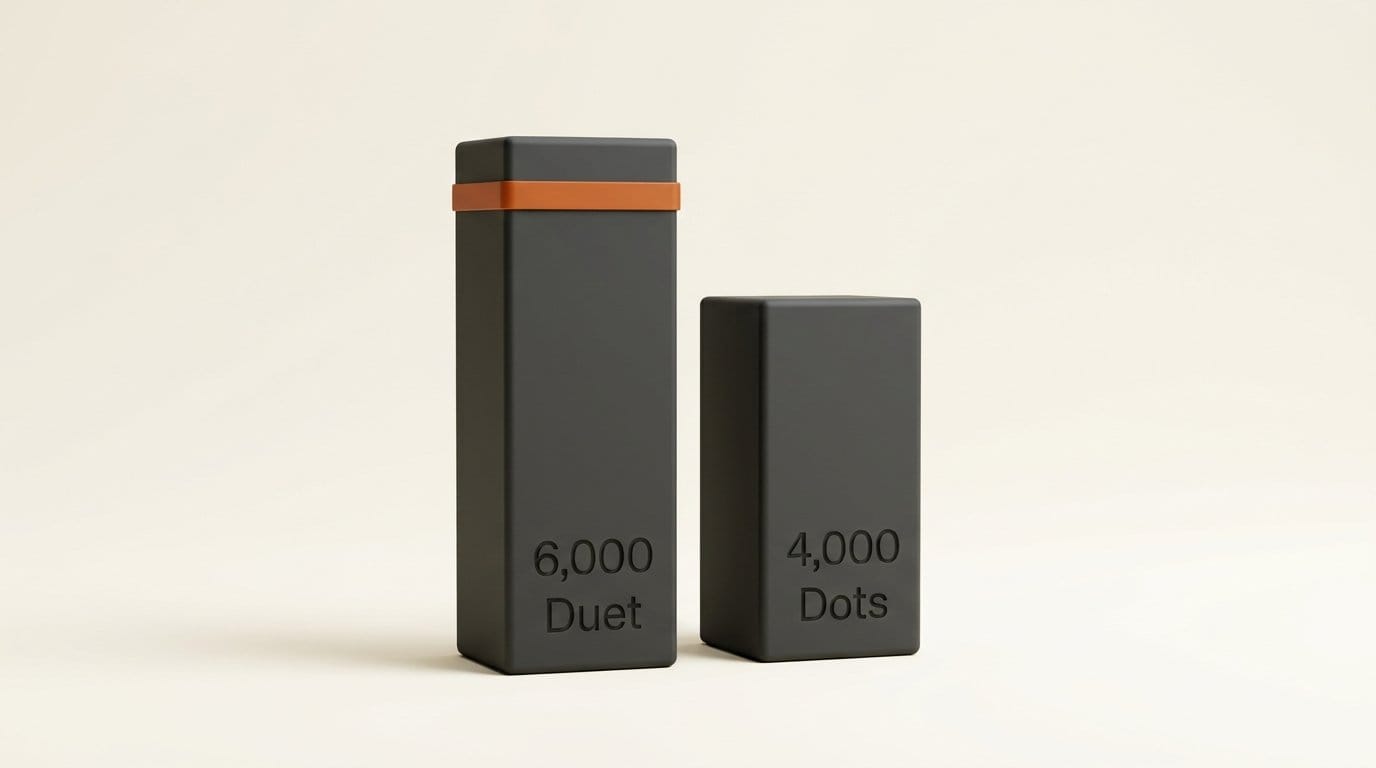
Its reach comes from the Claude Marketplace: "over 6,000 connectors and plugins." Anthropic's examples include Gmail, Slack, QuickBooks, Stripe, Gusto, LinkedIn, Docusign, HubSpot, Canva and Shopify. For purchases it can pay through Stripe's Link with a virtual card, which asks you to approve each spend, and it can check out with Shop Pay.
Anthropic lists what it is meant for: scheduling meetings, chasing unpaid invoices, preparing payroll, drafting job posts, building dashboards and forecasts, prototyping web apps, and "turning a product launch into a social campaign in Canva." Larger jobs such as a deck or a financial model "require more model turns and background work," so they cost more of your limit.
Claude Duet vs Dots, Muse, Grok Bot and Gemini Spark
The five agents work the same basic way: a cloud computer, connected apps, proactive check-ins and an approval step. They differ in who can get in, what it costs and how much you can see. The table uses each company's launch pages and our earlier reviews.
| Claude Duet | OpenAI dots | Meta Muse | Grok Bot | Gemini Spark | |
|---|---|---|---|---|---|
| Launched | Oct 21, 2026 (research preview) | Sep 29, 2026 | Sep 8, 2026 | Aug 11, 2026 (beta) | May 19, 2026 |
| Model | Claude Opus 5.5 | GPT-6 Astra | Muse Spark | Grok | Gemini 3.5 |
| Who can use it | US Pro and Max, waitlist | Pro and Business Premium, not EEA, UK or Switzerland at launch | US; small business tier US and Canada | Paid Cursor plans or a SuperGrok subscription | US Google AI Ultra at launch |
| Entry price | Pro, $20 a month | Pro plan; first dot included | Free with a weekly limit; $20 or $100 a month for more | Paid Cursor or SuperGrok plan | AI Ultra at launch |
| Apps it connects to | 6,000+ connectors and plugins | 4,000+ apps through plugins | 15 named business connectors, including Canva, Figma and Lovable | Signs into your apps and sites | Gmail, Workspace, MCP apps such as Canva |
| Can you watch its browser? | Not yet | Yes | Not stated | Not stated | Not stated |
| Where it lives | Its own app and claude.ai | Inside ChatGPT, plus Slack | Muse app, muse.ai, WhatsApp | Desktop and mobile apps | Google's cloud, inside Gmail and Workspace |
Three differences matter for a creator. OpenAI lets you open a dot's browser and watch it work, and its first month of dot usage does not count against your plan, according to SiliconANGLE's launch report. Duet cannot show you its browser yet. Muse is the only one with a free tier, and it has the scale: Meta told investors on October 21 that Muse has more than 10 million users, with shopping a top activity, TechCrunch reported. Duet's advantage is the size of its app catalog and the fact that it reuses the Claude setup you already have.
For background on each rival: our reviews of Muse for Small Business, Grok Bot and Gemini Spark go through approval rules and pricing in detail.
What a creator can hand off first
Duet is sold to small business owners, and a working creator is one: sponsor deals, invoices, a newsletter, client email and a launch calendar. Once you are off the waitlist, this is a sensible first week. Every step is something Anthropic lists as supported.
- Connect three apps, not thirty. Start with your email, your calendar and one money app (Stripe or QuickBooks). A smaller set makes the morning brief easier to judge, and you can disconnect any app later.
- Read the first three briefs before asking for anything. You learn what Duet thinks is urgent. Anthropic warns that it "may misread a thread or miscalibrate what's urgent," so use these days to correct it.
- Hand it the sponsor inbox. Ask it to flag every brand or partnership email and draft a reply to each. Drafting is free; sending waits for your tap.
- Ask for the invoice sweep. "Find unpaid invoices and draft reminders" is one of Anthropic's own examples. Check the amounts before you approve a single reminder.
- Try one Canva campaign. Connect Canva and ask Duet to turn your next video or product drop into a set of social posts, the use case Anthropic names. Edit the designs in Canva yourself before anything goes out.
- Keep big builds for later. A deck, a forecast or a web app prototype uses much more of your limit than a brief. Run one only once you know how fast your plan drains.
Duet is also a builder: Anthropic says testers use it for prototypes and web apps. For a creator that could mean a simple sponsor rate page or a booking form, described in plain words, without opening a code editor.
What Duet will not do without you
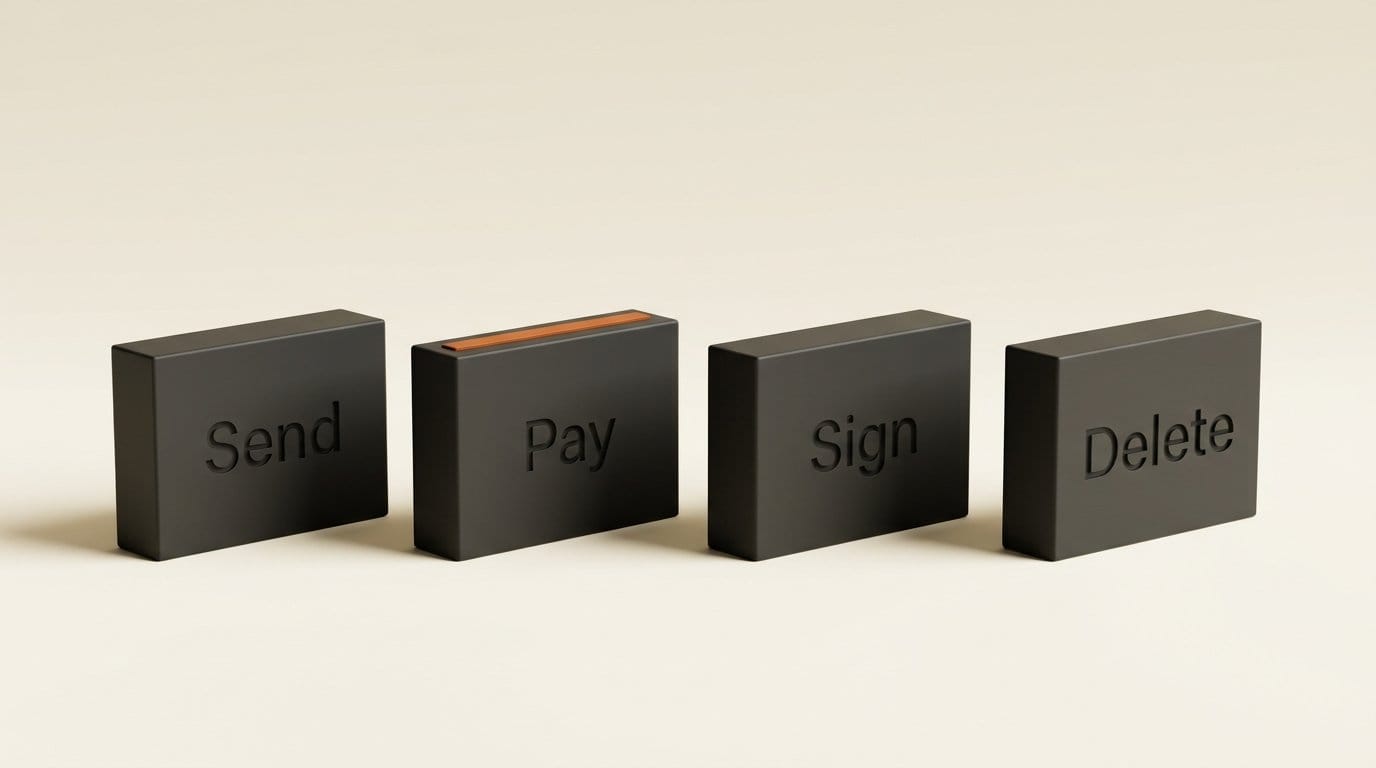
Duet drafts and prepares on its own. Before it does any of four things, it "shows you exactly what it's about to do and waits for your approval": send a message, pay for something, sign a document, or delete anything. Two actions stay off limits even with your approval: trading securities and moving money between accounts.
Anthropic adds a classifier that blocks the most sensitive information, such as card numbers and government ID, from being shared, and says health and personal finance details are only shared when you explicitly tell it to. The design follows the company's published framework for trustworthy agents and its prompt injection defenses, the attack where a malicious email or web page tries to give the agent orders.
That is a firmer rule than Muse's. In our Muse review, publishing and sending turned out to be a per-connector setting you can switch off, and Meta's help page says a sent email "cannot be reversed." On Duet, the four approval gates are part of the product, not a setting.
The catch: background checks spend your Claude limit
Duet is "included," but not free to run. Anthropic's article says the background checks count toward your plan's usage limits, and the same limit covers your normal Claude chats, Cowork tasks and Claude Code sessions. A Pro subscriber who already hits the limit in a busy week will hit it sooner with Duet checking accounts every few hours.
Compare that with OpenAI, where the first month of dot usage sits outside the plan allowance, and Meta, where Muse has a free weekly allowance. Anthropic publishes no Duet-specific allowance, so the only way to know what it costs you is to watch your usage meter in the first week.
The preview also has gaps that Anthropic states openly. Personal errands such as booking tickets are weaker, since the product targets work. You cannot watch its browser yet. It lives in its own app, so your Duet thread and your Claude chats are in two places. Coming soon, per the launch article: a visual Shopify storefront editor and signing in to sites with saved 1Password logins, with your permission.
Who should join the waitlist now
Join if you already pay for Claude Pro or Max in the US, already use Claude with your email and files, and spend an hour a day on admin rather than making things. Duet costs you nothing extra to try, and the setup you already have carries over.
Wait if you are on the free plan or outside the US: you cannot get in yet. Muse is the free option for US and Canadian creators who want to test an always-on agent today. If you already pay for ChatGPT Pro, a dot gives you a watchable browser and a first month outside your plan allowance, which is the easier way to learn whether an agent fits your week before you add a second one.
And if you hit your Claude limit most weeks already, move up to Max before you switch on Duet, or keep its connected apps to two.
Frequently asked questions
What is Claude Duet?
Claude Duet is Anthropic's proactive agent app, launched October 21, 2026 as a research preview. It sends a daily brief, checks your connected apps every few hours, works on tasks in its own cloud computer, and asks for approval before sending, paying, signing or deleting.
How much does Claude Duet cost?
There is no separate price. It is included in Claude Pro ($20 a month, or $17 a month billed annually) and Max (from $100 a month), and it shares those plans' usage limits, including the background checks.
Who can use Claude Duet?
US Claude Pro and Max subscribers, through a waitlist. Free, Team and Enterprise plans are not included yet, and Anthropic says it will email you when access is ready.
Does Claude Duet work with Canva?
Yes. Canva is one of the connectors Anthropic names, and its own example is turning a product launch into a social campaign in Canva. You approve anything before it is sent or published.
How is Claude Duet different from Claude Cowork?
Cowork waits for you to hand it a task. Duet starts conversations: it briefs you each morning, checks your accounts on its own and suggests what to do next. Duet also runs in its own app, while Cowork is now part of the main Claude app.
Is Claude Duet better than OpenAI dots or Meta Muse?
Not on every point. Duet has the largest connector catalog (6,000+) and firm approval gates. Dots let you watch the agent's browser and kept first-month usage outside your plan. Muse has a free tier and more than 10 million users. Pick the one that runs on the AI plan you already pay for.