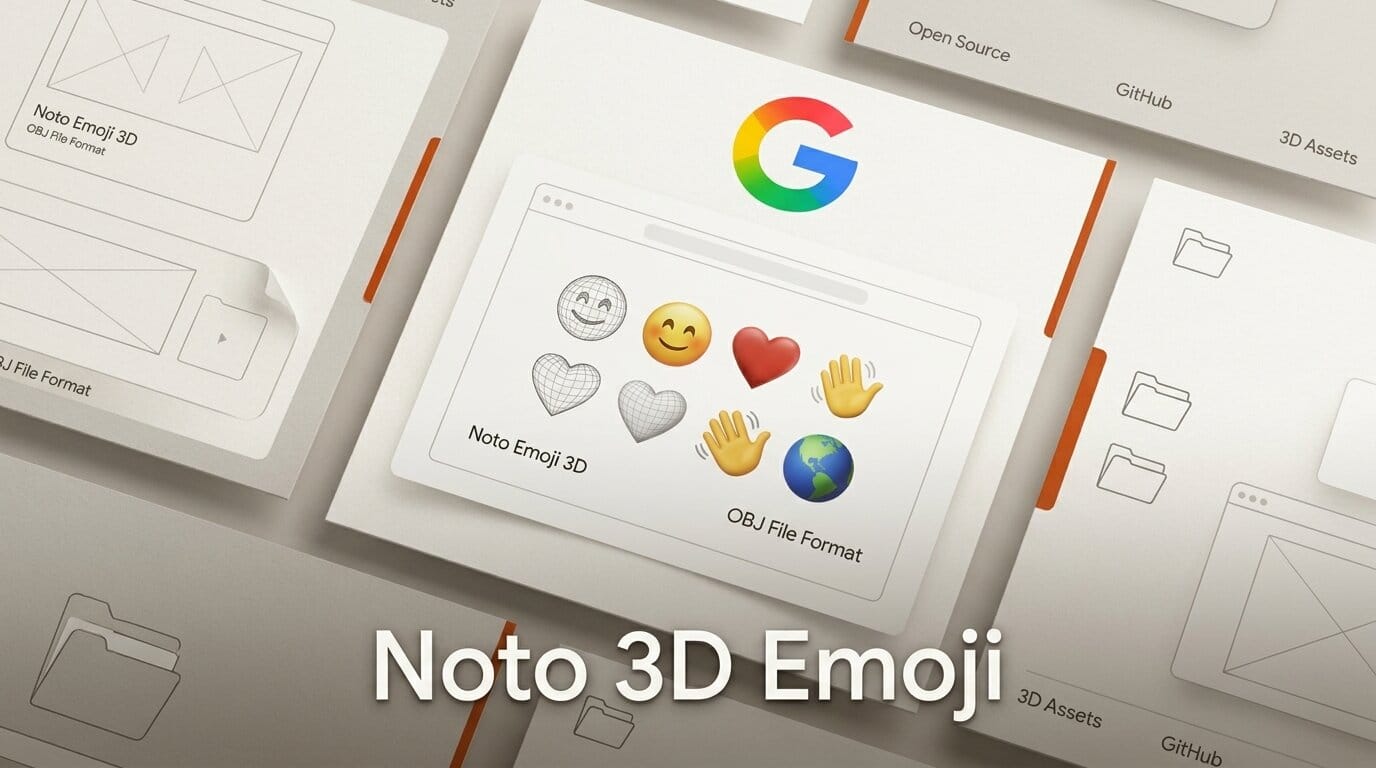
On July 17, 2026, for World Emoji Day, Google rebuilt its entire Noto emoji library as true three-dimensional models and handed the raw files to the public. All 3,977 characters were remodeled as glossy 3D objects, and Google is releasing them as raw .OBJ files so anyone can drop a waving hand, a birthday cake, or a rocket straight into a 3D scene. The company frames it as an invitation to "remix them, break them and stretch them into shapes," according to its official announcement. For designers, game builders, and video creators, this is the rare corporate asset drop that ships in a format you can actually open in Blender.
This is not a new sticker pack locked inside a phone keyboard. It is a full set of production-ready meshes from one of the most widely recognized emoji vocabularies on the planet, released for reuse. Below is what shipped, how it stacks up against every other emoji set, and a concrete workflow for putting these models to work today.
What Google Actually Released
The headline number is 3,977: every emoji in the Unicode-aligned Noto set, remodeled by hand as an actual 3D object rather than a flattened illustration. Google's emoji team describes them as hand-modeled meshes, not auto-extruded 2D art, which matters because a real mesh has clean geometry you can relight, rotate, and animate. The design breakdown published by 9to5Google details how the team also built an AI-powered contrast tool that analyzes each emoji at the pixel level to keep darker skin tones legible in dark mode, a long-standing accessibility gap in emoji rendering.
The distribution format is the important part. The models ship as .OBJ files, a decades-old, near-universal 3D interchange format that imports cleanly into Blender, Cinema 4D, Unity, Unreal, Godot, and virtually every other tool that touches 3D. Google's broader Noto project has always lived in the open on GitHub, where the existing 2D fonts and SVG assets are published under the SIL Open Font License and Apache 2.0; the Noto Emoji repository is the canonical home for the project's source assets. Anyone shipping a commercial product should read the license terms attached to the 3D drop before redistributing, since permissions can differ across models, textures, and modifications.
How Noto 3D Compares to Other Emoji Sets
Almost every major platform has a proprietary emoji style, but none of them hand you the underlying 3D geometry. Apple's emoji are glossy and semi-dimensional but locked to iOS and licensed tightly. Microsoft previewed fully 3D Fluent emoji back in 2021, then shipped flatter 2D versions to Windows because the COLRv1 color-font format lacked broad support, a cautionary tale documented in Emojipedia's overhaul comparison. What sets Google's release apart is not just the 3D look but that the meshes themselves are downloadable.
| Emoji set | Visual style | 3D source files | Reusable by creators |
|---|---|---|---|
| Google Noto 3D (2026) | Hand-modeled 3D | Yes, raw .OBJ | Yes, open-source assets |
| Apple | Glossy 2.5D render | No | No, proprietary |
| Microsoft Fluent | 3D-look, shipped 2D | No public meshes | Limited, art only |
| Samsung One UI | Flat illustrative | No | No, proprietary |
| Older Noto (2D) | Flat SVG | N/A (vector) | Yes, OFL / Apache |
The practical takeaway: if you have ever wanted a recognizable, universally understood 3D icon set for a product, a game, or a motion graphic, this is the first time a major vendor has published the actual models instead of a locked render.
Why Open-Sourcing 3D Emoji Matters for Creators
Emoji are a shared visual language, and shared languages are powerful precisely because everyone already knows them. A thumbs-up, a fire, a heart: these read instantly across cultures and need no legend. Until now, a creator who wanted that instant recognizability in a 3D context had to either model the shapes from scratch or scrape low-quality renders. Google just removed that friction for nearly 4,000 symbols at once.
The reuse cases are broad. Motion designers can drop animated emoji into explainer videos and lower-thirds. Indie game developers can use them as pickups, reaction bubbles, or UI accents without commissioning custom art. AR and VR builders can place spatial emoji as interactive props. Even a solo creator building a landing page can render a hero emoji at any resolution and lighting they want, because they control the mesh, not a fixed PNG. The Noto Emoji specimen on Google Fonts shows how broadly the family already spans, and the 3D drop extends that reach into spatial media.
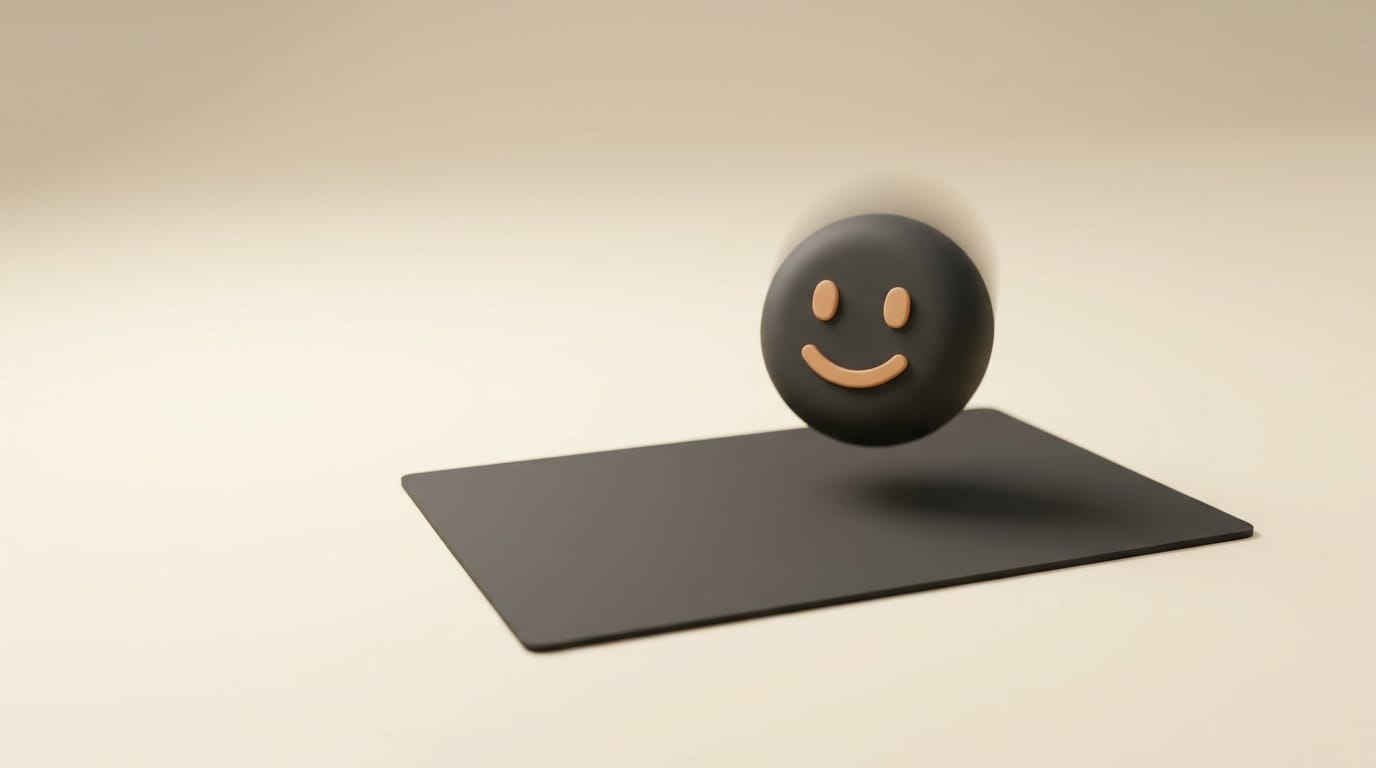
How to Use Noto 3D Emoji in Your Workflow
Here is a concrete path from download to a rendered result, using free tools. The whole loop takes well under an hour.
- Get the model. Pull the specific
.OBJfile you need from Google's Noto project channels. Grab only the emoji you plan to use rather than the full set to keep your project lean. - Import into Blender. In Blender, use File, then Import, then Wavefront (.obj). Blender's OBJ import documentation covers scale and axis settings if the model comes in rotated or oversized. Set forward axis to negative Z and up axis to Y if the orientation looks off.
- Assign materials. OBJ files carry geometry and UVs but simple material data. Rebuild the glossy look with a Principled BSDF shader: raise the specular and lower the roughness for that signature emoji sheen.
- Light and pose. Add a soft area light and an HDRI for reflections. Rotate the emoji to camera, or rig a simple bounce animation for social video.
- Export for your target. Render a transparent PNG sequence for video, bake to a glTF for the web or a game engine, or keep it in-scene for a fuller 3D composition.
What this enables: a repeatable pipeline where a single free asset becomes a thumbnail graphic, a video sting, a game pickup, and a web hero image, all from the same source mesh. If you want your emoji to move, Google's separate Noto animated emoji library is a useful reference for timing and motion style.
The Rollout Timeline and Caveats
On phones, the 3D set is not instant. Google says Noto 3D will roll out across its products "starting with Pixel phones, later this year," per its consumer announcement, and Android 17's June 2026 release did not include them. History suggests patience: Microsoft's 3D Fluent emoji took years to reach most Windows users. So while your friends may not see the new 3D style in their messages for months, the creator-facing win, the downloadable meshes, is available to build with now. The two tracks are separate: keyboard rollout is gated by OS updates, but the open-source assets are not.
Frequently Asked Questions
Are Google's Noto 3D emoji really free to use?
The Noto project has historically been open-source, with fonts under the SIL Open Font License and tools and image resources under Apache 2.0. Google has stated the 3D models are being released to the community. As with any asset, check the exact license attached to the 3D files before shipping a commercial product, since terms can vary for models, textures, and redistribution.
What file format are the 3D emoji in?
They ship as raw .OBJ files, a universal 3D interchange format. OBJ imports into Blender, Cinema 4D, Unity, Unreal, Godot, and nearly every 3D application, which is why this release is so easy to build on.
How many emoji are included?
All 3,977 characters in Google's Noto emoji set were remodeled as 3D objects, covering the full Unicode-aligned vocabulary from faces and hands to food, animals, and symbols.
Can I use these emoji in a game or app?
Yes. Because you get the actual meshes, you can import them as game assets, UI elements, AR props, or animated graphics. Confirm the license permits your specific commercial use and any redistribution before shipping.
When will the 3D emoji appear on my phone?
Google says the rollout starts with Pixel phones later in 2026, then expands across its products. Wide adoption across every platform and messaging app typically takes longer, so treat the keyboard rollout and the downloadable asset drop as two separate things.
How do I get the glossy emoji look in Blender?
Import the OBJ, then assign a Principled BSDF material with low roughness and raised specular for the reflective sheen. Add an HDRI environment for realistic reflections, which is what sells the toy-like 3D emoji aesthetic.