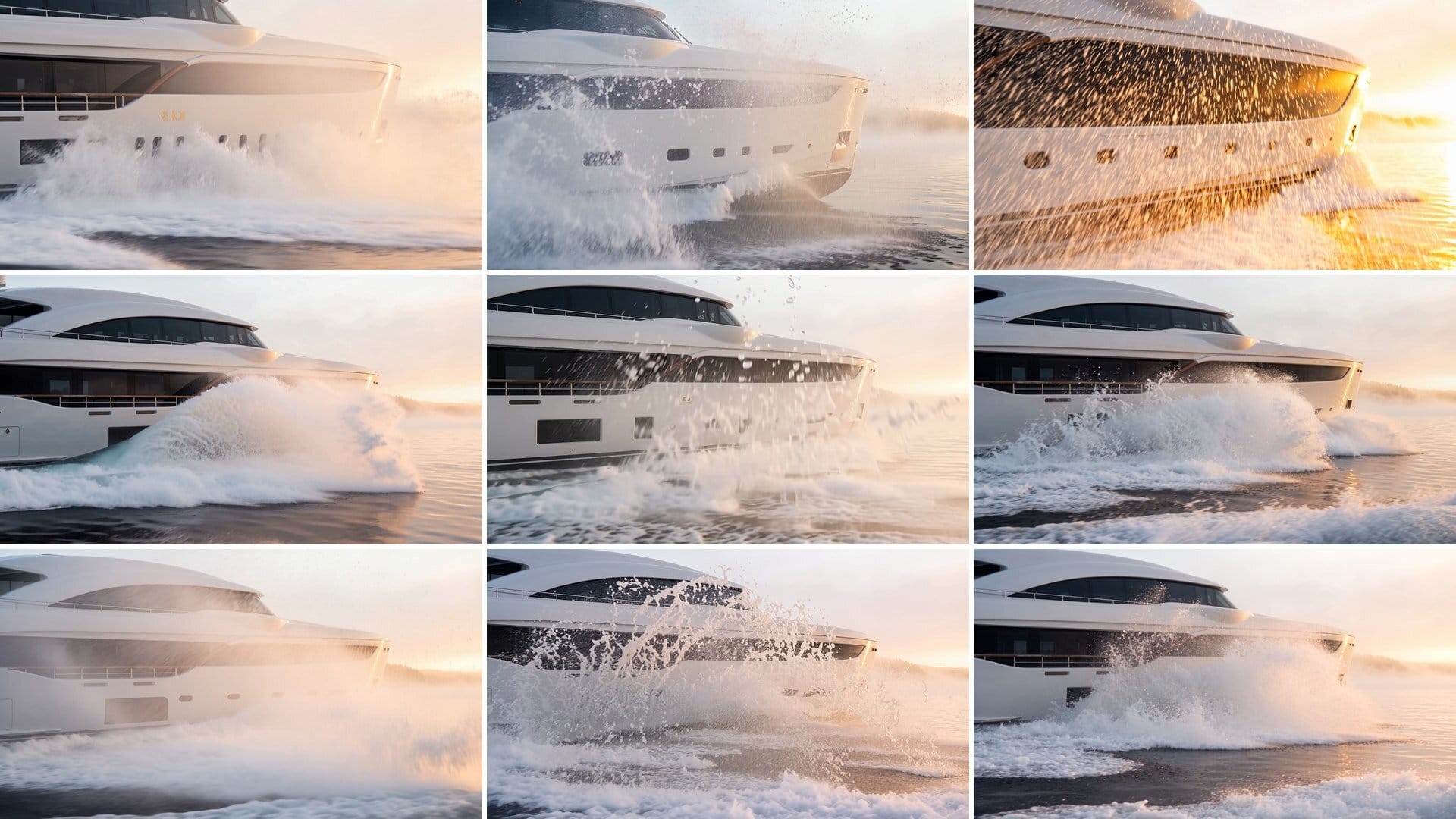
Seedance 2.5 followed a hard 10-second shot more closely than any of nine AI video models given the same start image and the same prompt, scoring 9.5 out of 10 for 160 credits on Higgsfield. FLUX.3 Video came second with 8.5 for 80 credits, and Kling 4.0 scored 7 for just 10 credits, the best value in the test. The test was published by the Design Code YouTube channel on October 31, 2026, and it scored only the first result from each model, with no retries.
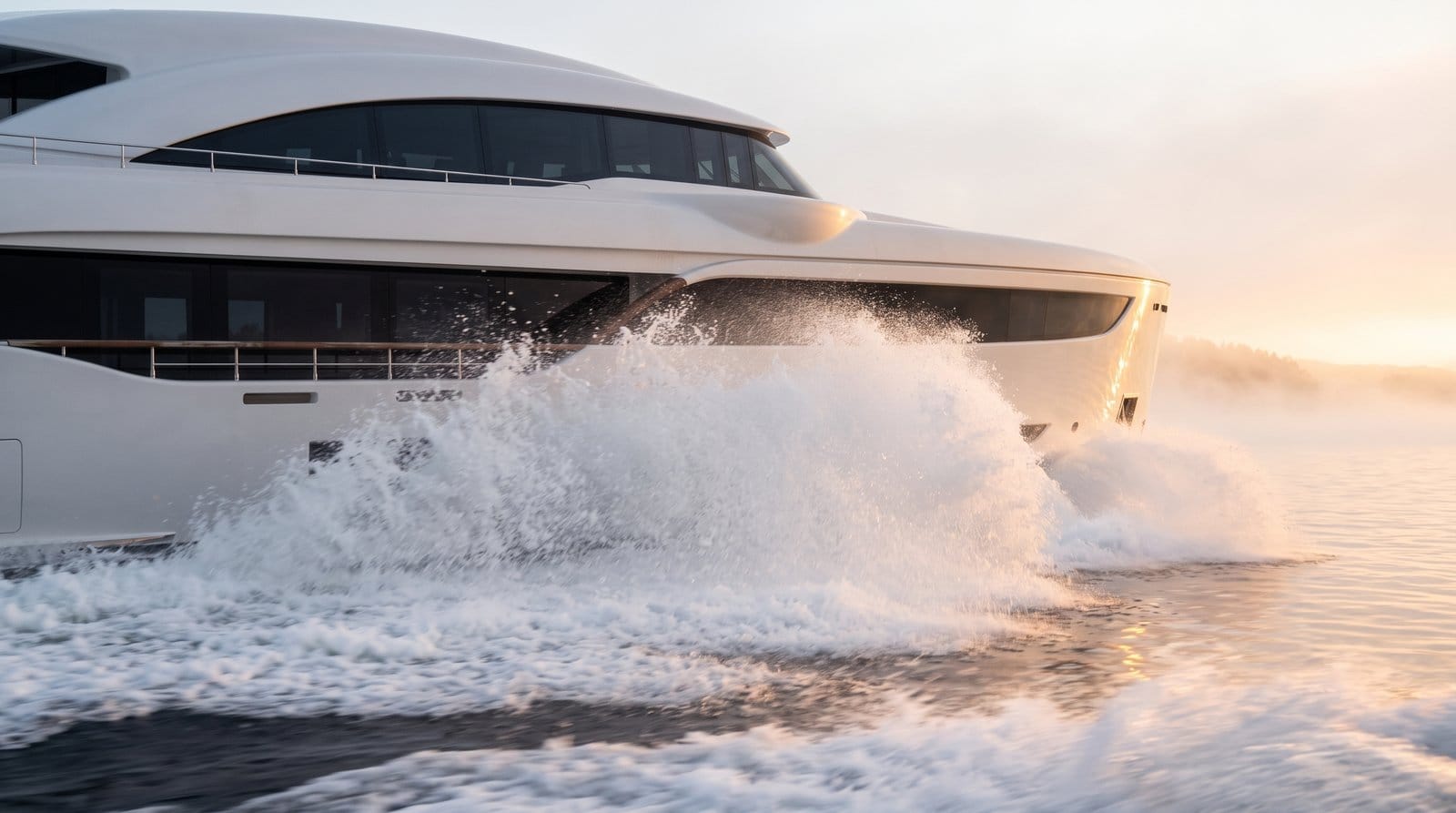
The shot is a white yacht racing through low dawn sun, a burst of spray off the bow, a ramp into extreme slow motion and back to real time, all in one take. That combination tests three things a creator actually needs from a video model: does it start on your image, does it keep the subject's shape, and does it do what the prompt says at the second it says it. The video is sponsored by Higgsfield, where all nine models ran. The scores below are the ones given in the video; this page lays them out side by side and adds what they mean for your own clips.
The shot every model had to make
Every model got the same start image, the same prompt, 10 seconds, 16:9, and 1080p where the model offered it. Models with a start-frame option began on the image. Seedance 2.0 and 2.5 have no start frame on Higgsfield, so the image went in as a reference instead, which matters for the results below.
This is the prompt, word for word:
Real live-action footage, not CGI. One continuous tracking shot, 10 seconds, no cuts. The camera starts on the first frame exactly: low beside the forward hull of a long white yacht at speed in low dawn sun through thin fog, 0.5 m above the water and 4 m off her side, 24mm. It races alongside at exactly her speed and never turns, rises or pulls back. 0 to 4 s: real-time speed, the sea streaking past in motion blur, spray streaming back from the bow wave. 4 to 5 s: the bow wave bursts into a dense, opaque sheet of white spray, backlit by the sun. 5 to 8 s: the shot ramps down into extreme slow motion; heavy droplets hang in the light in front of the dark glass band and begin to fall. 8 to 10 s: it ramps back to real time and she runs on. 180-degree shutter in real time, 1,000 fps high-speed footage in the slow motion. The yacht keeps exactly her shape. No mast, no radar, no antennas, no people, no text, no other boats.
Notice how the prompt reads like a shot list for a camera operator: lens, height, distance, and what happens in each second. That is what makes it testable. A vague prompt cannot be scored; a prompt with timings can.
How each clip was scored
The prompt asks for 10 things, from starting on the image and holding the camera steady to the timing of the spray, the length of the slow motion and keeping the yacht's shape. Each was worth 1 point, or 0.5 if it was only partly there. Audio was not scored, and only the first result from each model counted.
Two settings were changed to keep the test fair. Kling 3.0 turns Enhance on by default, which can rewrite your prompt, so it was switched off. And Higgsfield remembered a count of four from the image step, so the count went back to one before each video, so each run paid for one clip, not four.
All nine results
Credits are what one 10-second clip cost on Higgsfield at the settings used. What a credit costs you depends on your plan; see Higgsfield pricing.
| Model | Score | Credits | What it got right | What it missed |
|---|---|---|---|---|
| Seedance 2.5 | 9.5 | 160 | Slow motion from exactly 5 to 8 seconds; water that looks real up close | Snaps into slow motion instead of easing in |
| FLUX.3 Video | 8.5 | 80 | Bigger waves, slow motion that lands on the big wave; the most cinematic clip | Slows only part of the way, not the full 3 seconds |
| Kling 4.0 | 7 | 10 | Starts exactly on the image; camera stays still | Wave top looks artificial, burst comes early, 1 second of slow motion instead of 3 |
| Gemini Omni Flash 1.1 | 6.5 | 45 | The smoothest move into slow motion | Droplets look like glass beads and vanish in one frame |
| Seedance 2.0 | 6.5 | 120 | Very real water | Does not start on the image, slows down almost at once, camera pulls back |
| MiniMax H3 | 6 | 20 | Very sharp; it renders at 2K | Bow wave is a glassy curl that moves like a solid; the burst only comes at 6 seconds |
| Grok Imagine 1.5 | 5.5 | 80 | Good-looking spray | Cuts to another camera and a different boat at the big wave |
| Wan 3.0 | 5 | 35 | The most natural boat movement: the bow lifts and lands on time | Camera pulls back; the yacht slows down instead of the shot going into slow motion |
| Kling 3.0 | 4.5 | 25 | Starts on the image | Writes characters on the hull despite "no text", jitters, no slow motion |
The spread is wide: 10 to 160 credits for one clip, and 4.5 to 9.5 points. Price and score do line up at the top, but not below it. Seedance 2.0 cost 120 credits and scored the same 6.5 as Gemini Omni Flash 1.1 at 45, and Grok Imagine 1.5 cost eight times as much as Kling 4.0 for a lower score.
Seedance 2.5 won, FLUX.3 looked best, Kling 4.0 was the bargain
Seedance 2.5 is the only model that put the slow motion exactly where the prompt asked and held it for the full three seconds. Up close, the water reads as water. Its one flaw is the speed change: it snaps into slow motion rather than ramping. It is also the most expensive model here, which is why the test went on to use it for a full commercial rather than for drafts.
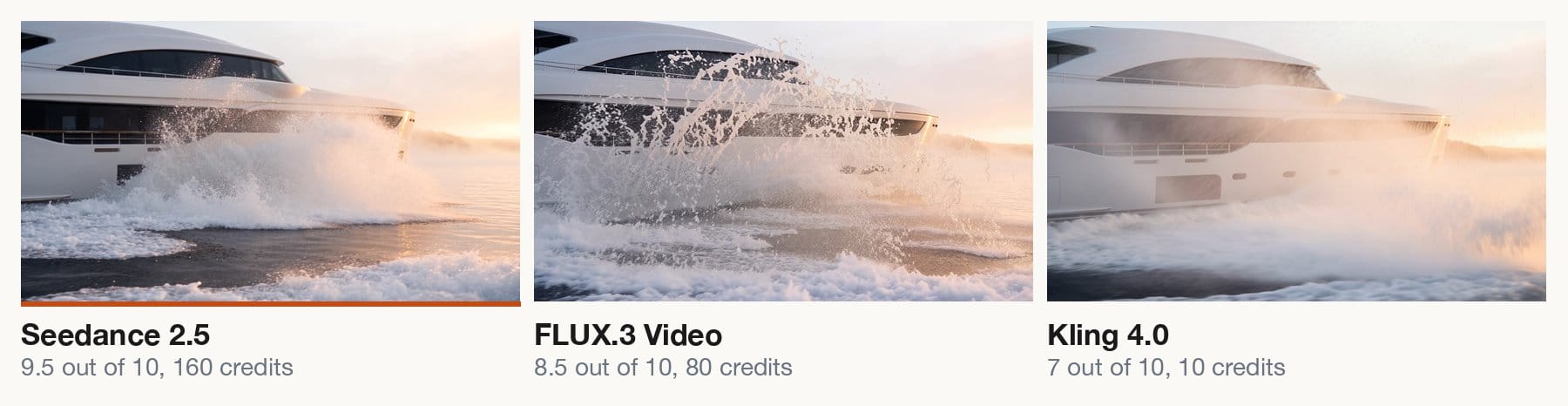
FLUX.3 Video, from Black Forest Labs, produced the most dramatic clip: bigger waves, and a slow motion that lands right on the burst. It loses points because it eases back out too soon. If the look matters more than the exact timing, it is the better buy at half the credits of Seedance 2.5. Our earlier piece on FLUX 3 Video's launch covers its clip lengths and audio.
Kling 4.0 is the surprise. At its launch price of 10 credits it started exactly on the image and kept the camera still, the two things many models failed. The slow motion is too short and the wave top looks a little synthetic, but at 10 credits you can run sixteen takes for the price of one Seedance 2.5 clip.
Newer versions beat the older ones by a lot
Two models appeared in an old and a new version, and in both cases the upgrade was the biggest single jump in the test.
- Seedance 2.0 to 2.5: 6.5 to 9.5. The water is just as real in both, but 2.5 stays much closer to the start image and puts the slow motion where it was asked for. It costs 40 credits more.
- Kling 3.0 to 4.0: 4.5 to 7. 4.0 keeps the hull clean and the camera still, and at its launch price it is cheaper than 3.0, 10 credits against 25.
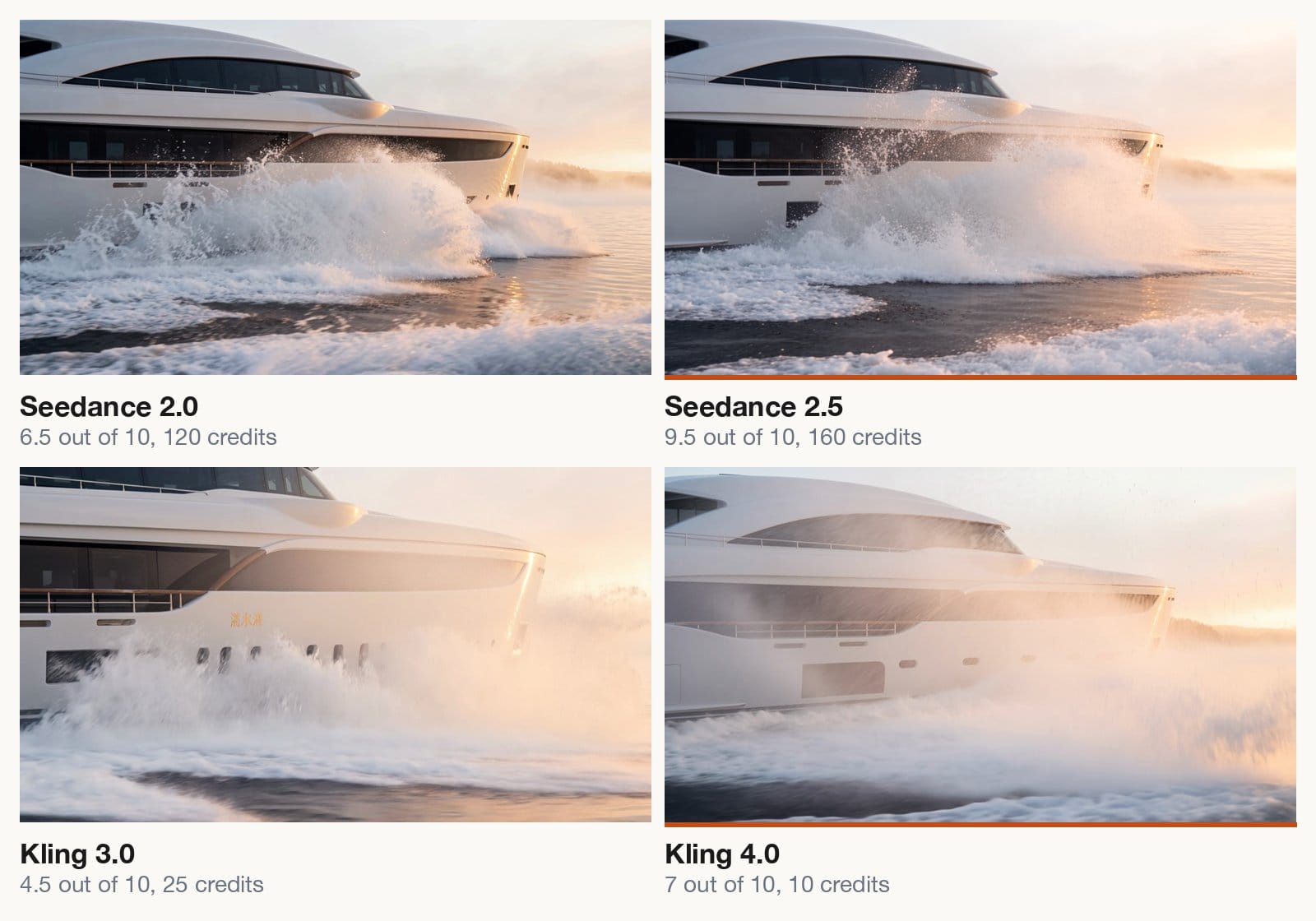
The practical lesson: when a model ships a new version, re-test before you keep paying for the old one. Model menus on platforms like Higgsfield often keep the older version listed next to the new one, and the older one is not always cheaper.
Which model to use for your shot
This was one prompt and the first result from each model, so treat it as a result for this kind of shot: fast action, water, and a timed speed change. For that kind of shot:
- When the timing has to be exact (a product reveal on a beat, a slow-motion moment you planned around), use Seedance 2.5.
- When you want the most dramatic look for fewer credits, use FLUX.3 Video.
- When you are drafting many takes on a budget, use Kling 4.0, then re-run the winner on a stronger model. Check the price first: 10 credits was its launch price.
- When the subject's own motion matters most (a car, a boat, a body moving with weight), look at Wan 3.0, which moved the yacht most naturally even though it ignored the slow motion. We covered it in Wan 3.0 in ComfyUI.
- For one continuous take, avoid Grok Imagine 1.5 on this kind of prompt: it cut to a different camera mid-shot.
For a broader look at what each clip costs per second across platforms, see our AI video price per second guide.
Run the same test on your own shot
You do not need nine models to use this method. Three is enough to find out which one fits your kind of shot, and the steps are the same in any app that offers several video models.
- Make the still first. Images cost far less than video. In the test, four 2K images from Nano Banana 2.1 cost 8 credits for the batch. Keep generating until the angle and light are right.
- Use that still as the start frame. Where a model only takes reference images, expect it to drift from your framing, as both Seedance versions did.
- Write the prompt as a shot list. Camera position, lens, and what happens in each second. Add what must not appear: text, extra people, extra objects.
- Turn off prompt enhancement so every model reads the same words.
- Set the count to one before you press Generate. Apps often remember the count from your last image run.
- Read the price on the button. Length and resolution change it: Gemini Omni Flash 1.1 went from 30 to 45 credits for the same 10 seconds when the quality went from 720p to 1080p.
- Score against your own prompt, one point per thing you asked for, before you decide which clip you like.
Then spend on the winner. In the test, Seedance 2.5 made a full 30-second commercial in one request, with 13 storyboard stills as references, at 1080p for 480 credits; it was then cut, graded and mixed in an editor. Every clip, including the MiniMax H3, Gemini and Grok runs, is shown in the video, so you can judge them yourself.
Frequently asked questions
What is the best AI video model for slow motion?
In this test, Seedance 2.5. It was the only one of nine models that went into slow motion at exactly 5 seconds, held it for 3 seconds and came back at 8, as the prompt asked. FLUX.3 Video placed its slow motion well but did not hold it as long.
Is Kling 4.0 worth it?
For drafts, yes. It scored 7 out of 10 for 10 credits at its launch price, started exactly on the start image and kept the camera still. Its slow motion lasted 1 second instead of 3, so for a finished shot with exact timing a stronger model did better.
How many credits does a 10-second AI video cost on Higgsfield?
In this test, from 10 credits (Kling 4.0 at launch price) to 160 credits (Seedance 2.5) for one 10-second clip at 1080p where available. Resolution and length change the price, so check the number on the Generate button before you run it.
Why did Seedance not start on the image?
On Higgsfield, Seedance 2.0 and 2.5 take the image as a reference rather than a start frame. The model uses it as a guide for the look but does not have to begin on it. Seedance 2.5 stayed much closer to the image than 2.0.
Can I trust a one-prompt test?
As a guide for similar shots, yes; as a universal ranking, no. Each model got one try, so a lucky or unlucky first result counts fully. The value is that every model got exactly the same image, prompt and settings, and that the scores follow the prompt's own requirements.