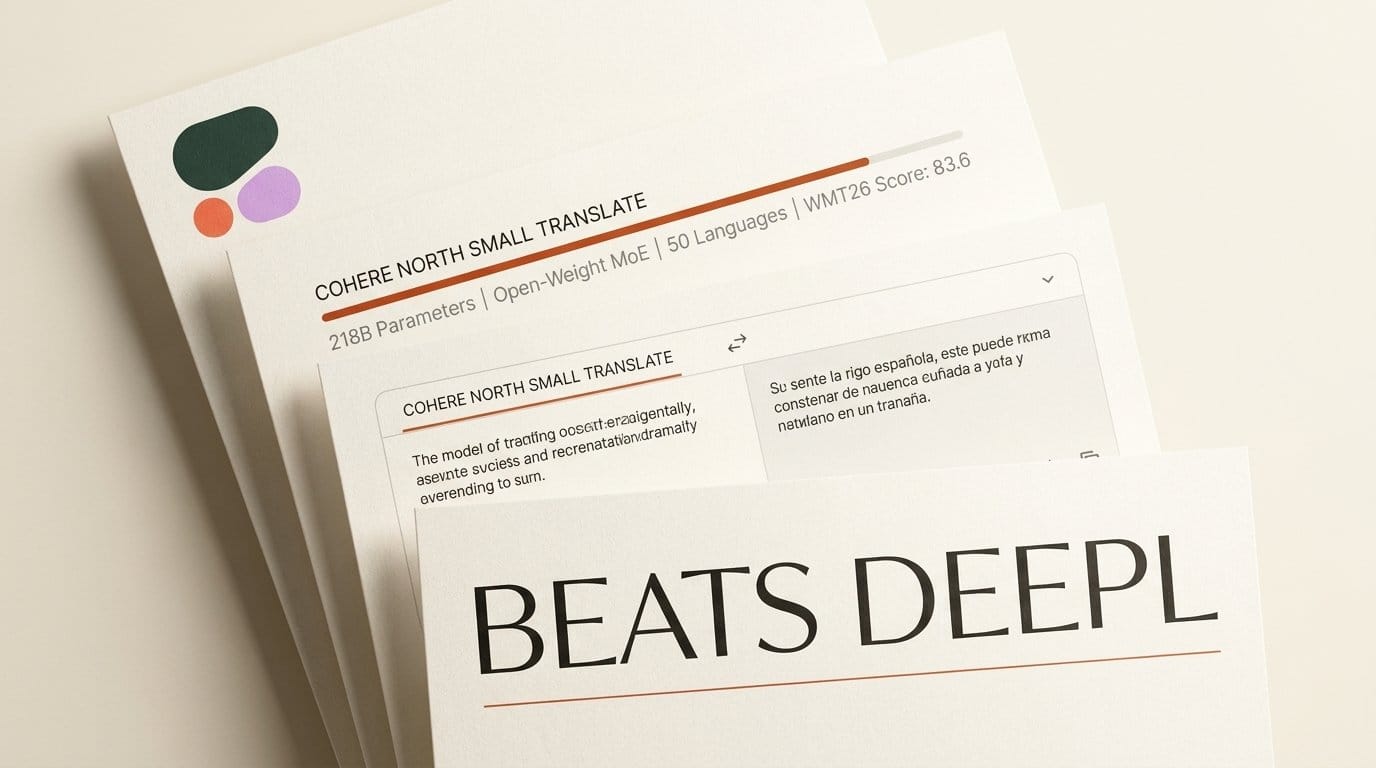
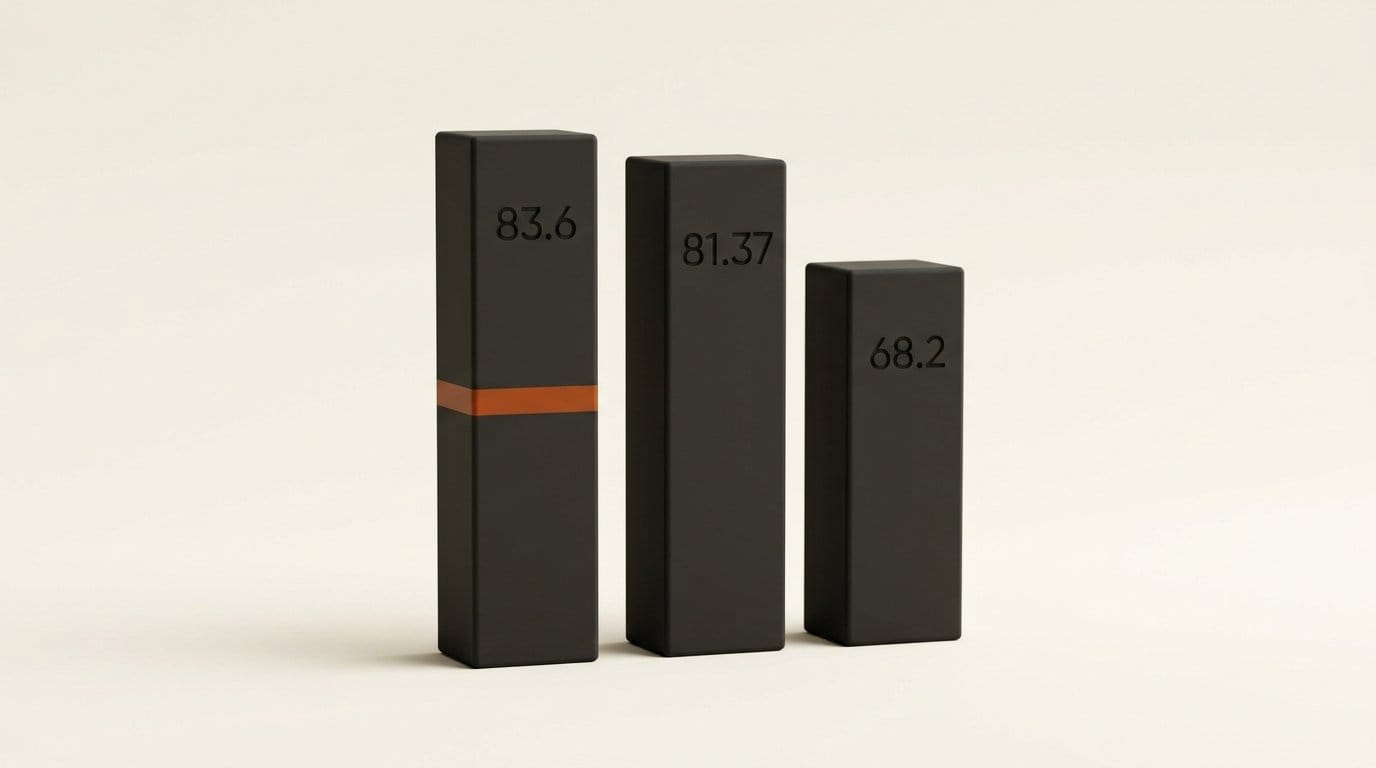
Cohere released North Small Translate 1.0 on 10 September 2026, a 218-billion-parameter machine translation model that scores 83.60 on WMT26 across 50 languages. DeepL NextGen scores 81.37 on the same evaluation. Google Translate scores 68.20. The weights are published on Hugging Face, and the license is CC BY-NC 4.0, which means you cannot use them in anything you sell.
That last clause is the entire story for anyone localizing video for money. This is the best-scoring translation model you can download this weekend, and it is also the one you are least able to put into a paid pipeline. The gap between those two facts is where the actual decision lives, and almost none of the launch coverage went near it.
What Cohere Actually Shipped
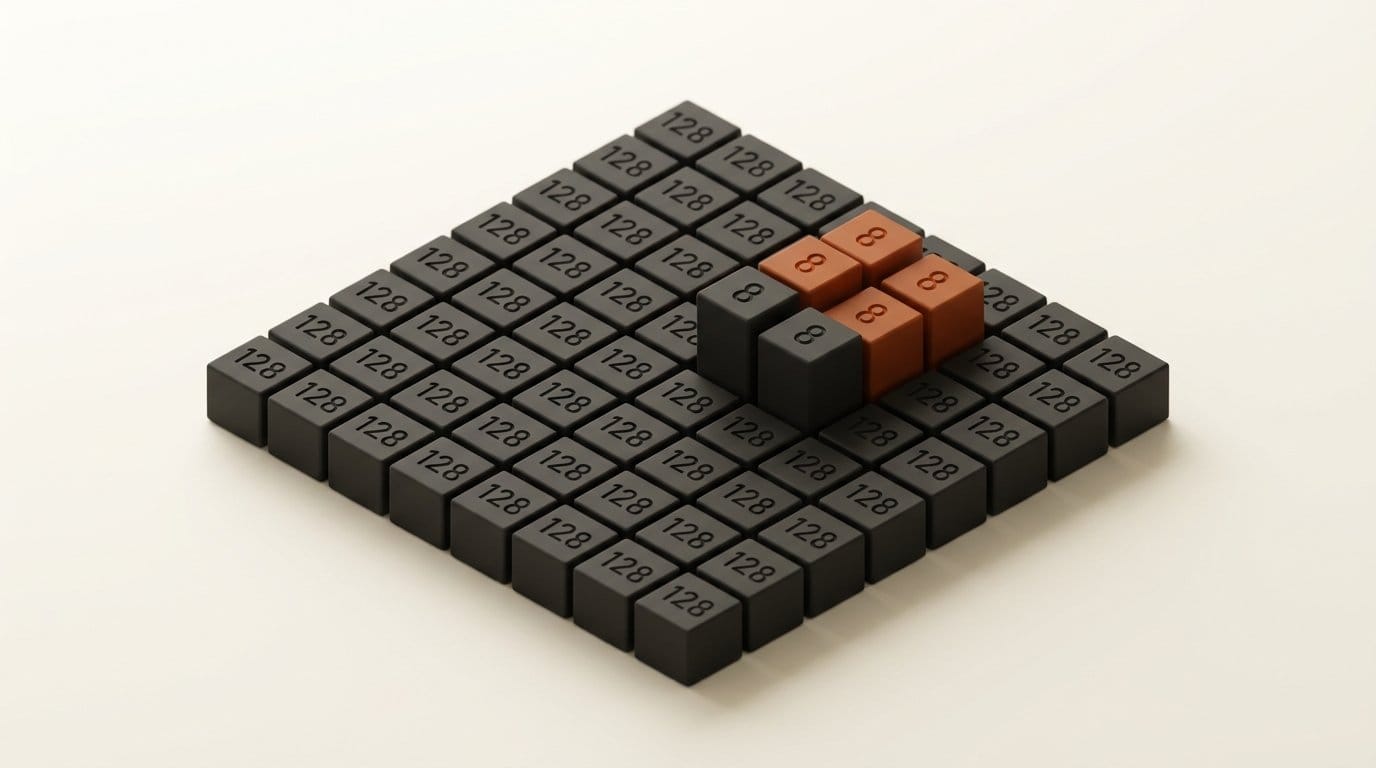
North Small Translate is a sparse mixture-of-experts model: 218 billion total parameters with 25 billion active per token, roughly 11.5% of the weights firing on any given pass. The model card puts 128 experts in the router with 8 activated per token plus shared experts, a sigmoid router with top-k normalization, and attention that interleaves 4096-token sliding windows with global layers at a 3:1 ratio.
It is text-only in both directions. Context is 16K tokens in and 16K tokens out, which matters more than it sounds like it should, and I will come back to that. It is the first translation model in Cohere's North family, extending a multilingual line that runs from Tiny Aya through Command A Translate.
The model was built with RWS, the localization company whose Language Weaver research teams and staff linguists shaped the training and evaluation. That partnership is not a footnote. It is the commercial distribution channel, and it explains the license.
The Benchmark Table, and Who Scored It
Here is the WMT26 comparison as Cohere published it, with the agentic variant that runs a self-revision pass on top of the base model.
| Model | WMT26 score | Weights available |
|---|---|---|
| North Small Translate (agentic) | 84.36 | Non-commercial |
| North Small Translate | 83.60 | Non-commercial |
| Qwen 3.5 397B A17B | 81.56 | Open |
| DeepL NextGen | 81.37 | Closed, commercial API |
| Gemma 4 31B | 79.46 | Open |
| GLM 5.2 FP8 | 76.50 | Open |
| Google Translate | 68.20 | Closed, commercial API |
Read the provenance before you read the ranking. MarkTechPost noted that these are Cohere's own runs with GPT-5.6-Sol acting as the judge. That is a vendor grading its own homework using a third party's model as the referee. It does not make the numbers wrong, and a 15-point margin over Google Translate is far too large to be scoring noise. But the 2.23-point margin over DeepL is exactly the size of gap that a different judge model, a different prompt, or a different language mix could erase.
Two other reported numbers are more interesting than the headline, because they are harder to game. On Cohere's long-context evaluation the model scores 48.9, against 21.3 for Google Translate and 19.4 for Gemma 4 31B. And on cost, Cohere puts a task at $0.000676 using 661 tokens on average, against $0.038928 for Gemini 3.1 Pro Preview on high reasoning. That is a 57x cost ratio. For batch subtitle work across a back catalogue, the cost line matters more than two points of WMT26.
The License Is the Product Decision
The weights ship under CC BY-NC 4.0 with an acceptable-use addendum layered on top. The model card is blunt about the consequence: if you want commercial use, contact Cohere's sales team. Downloading the files is also gated behind a contact-information form.
Non-commercial is a stricter constraint than most creators assume. It does not only block reselling the model. A reasonable reading blocks the monetized output too: if you dub your channel into Spanish with these weights and that channel runs ads, you are using the model in commercial activity. Nobody has litigated the edge of CC BY-NC against AI model output, and that ambiguity is itself the problem. You cannot build a client deliverable on a license whose boundary you would have to defend.
Compare that to the two closed models in the table. DeepL scores 2.23 points lower and sells you a commercial API with terms your accountant has already seen. For a freelancer quoting a localization job on Monday, the 81.37 you are allowed to invoice against beats the 83.60 you are not.
What This Changes for Video Localization
Translation is the least discussed and most load-bearing step in the AI dubbing stack. The chain is transcribe, translate, synthesize, then sync. Transcription got good enough to ignore, and voice synthesis got the attention because it is the part that sounds impressive. Translation quality is what actually decides whether the dub reads as native or as a machine, because every error downstream of it gets faithfully spoken aloud in a convincing voice.
That is why a 2-point WMT26 move is worth reading closely rather than dismissing. It lands on the step whose errors are least recoverable. A mistranslated idiom delivered in a flawless cloned voice is worse than the same error in obviously robotic audio, because the listener has no cue that the pipeline failed.
The 16K output ceiling is the practical wall. A one-hour interview transcript runs well past 16K tokens, so long-form work has to be chunked. Chunking a transcript is where terminology drifts, speaker labels wander, and pronoun agreement breaks across boundaries. Cohere's long-context score of 48.9 suggests the model handles within-window coherence better than the alternatives, but 16K is still 16K. Budget engineering time for a chunker that carries a glossary and the last few lines of context across the seam.
One more integration detail that the coverage skipped: output arrives with structural markers, and Cohere's model card says to parse it with their melody library rather than reading the raw string. If you wire this into an existing pipeline expecting clean text out, that is your first bug.
The Three Ways to Actually Run It
There are three access paths, and they are not interchangeable.
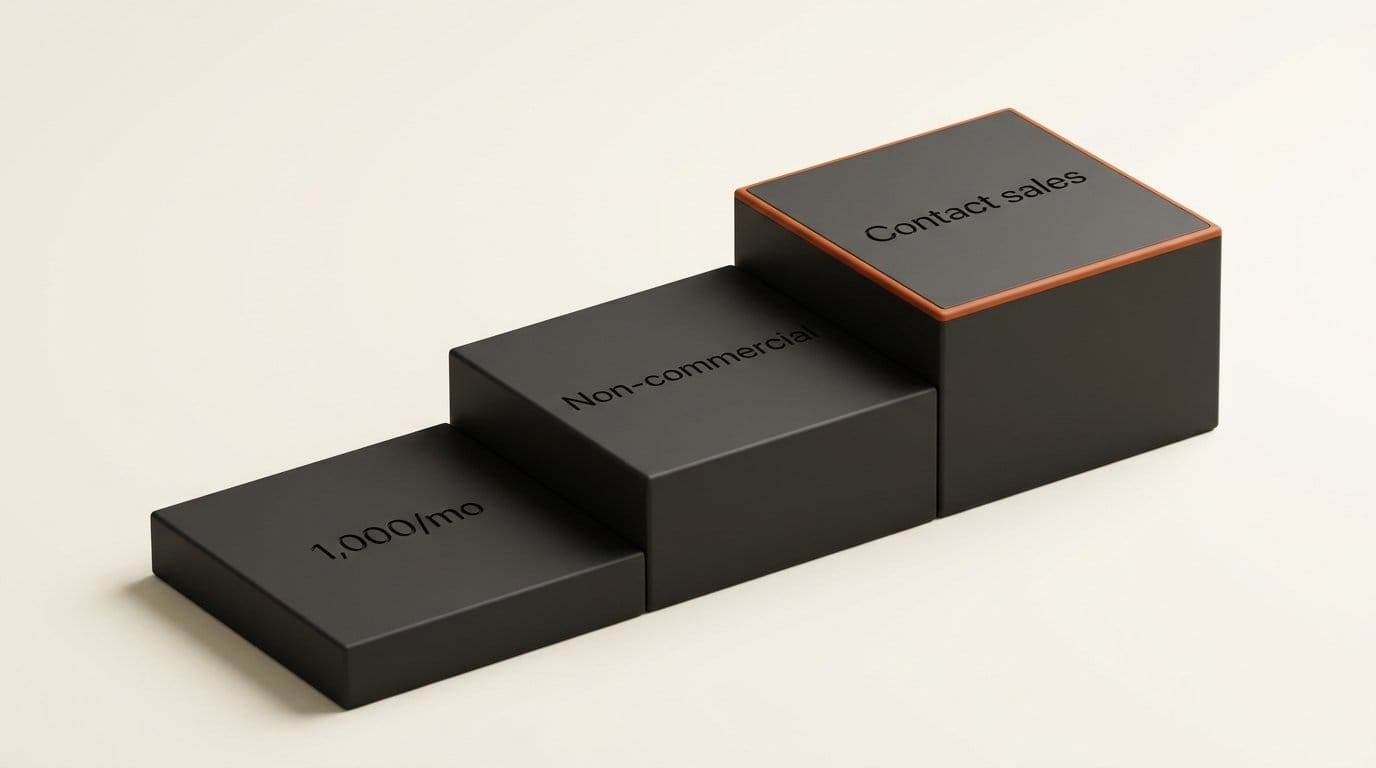
The free Cohere API. Good for evaluation, not for production. Cohere's rate limit documentation caps trial keys at 1,000 API calls a month and 20 requests a minute, and for newer model variants the docs say to contact sales before any production use. You can benchmark your own language pair on your own content this way, which is the only benchmark that should decide anything.
Self-hosting the weights. Legitimate for research, personal projects, and internal experiments that never touch revenue. A 218B sparse model is not a laptop workload, so factor real GPU cost against the 57x-cheaper-per-task claim before assuming self-hosting saves money at your volume. Check the current Cohere pricing terms before committing either way.
Commercial licensing. This is the RWS route. RWS sells Language Weaver as an enterprise translation platform, and its Language Weaver Pro tier is described on RWS's own site as a 100B-plus parameter model built in collaboration with Cohere, with RWS claiming superior accuracy against DeepL and Gemini. Treat that comparison as a vendor claim in the same way as Cohere's table. The relevant point for a creator is structural: the commercial path is an enterprise sales conversation, not a credit-card API signup.
The shape of this release is a funnel. Open weights generate the benchmark headline and the Hugging Face traffic, the non-commercial license prevents anyone from monetizing that for free, and the enterprise tier collects the revenue. It is a coherent strategy. It is just not a strategy that leaves an independent creator with a free production option.
Try It This Weekend
A 30-minute test that produces a real answer instead of a vibe:
1. Take a 3-minute clip you have already transcribed, in a language pair you actually ship. Not a benchmark sentence pair.
2. Get a trial key and translate that transcript through North Small Translate, then through whichever engine you use today.
3. Read both outputs aloud. Mark every line where the meaning shifted, a proper noun broke, or the register moved from how a person in that market speaks.
4. Count the marks. If the difference is under a couple of lines on 3 minutes of content, WMT26 is telling you something that does not apply to your material, and the license question is moot.
5. If the difference is real, the next question is a business one, not a technical one: what does a commercial license cost against what localization earns you.
Frequently asked questions
Can I use North Small Translate for a client project?
Not under the published weights license. CC BY-NC 4.0 restricts the model to non-commercial use, and the model card directs commercial users to Cohere's sales team. Client work is commercial activity, so that path requires a negotiated license or the RWS Language Weaver route.
Is it actually better than DeepL?
On Cohere's own WMT26 run, by 2.23 points, with GPT-5.6-Sol as the judge. That is a real but narrow margin produced by the vendor, on an evaluation the vendor selected. Run your own language pair on your own content before treating it as settled.
How many languages does it support?
More than 50, including English, Spanish, French, German, Japanese, Korean, Arabic, Russian, Hindi, Vietnamese, Ukrainian, and both Simplified and Traditional Chinese, plus coverage across Europe, Asia, and Africa. Language coverage is not the same as equal quality per language, and the 83.60 figure is an average across all of them.
What hardware do I need to self-host it?
It is a 218B-parameter sparse model with 25B active per token, so it is a multi-GPU server workload rather than anything that runs locally on a workstation. If your goal is cheap self-hosted translation, price the GPU hours against the per-task cost of a hosted API before assuming the download is the cheaper option.
Why does the 16K context limit matter for video work?
A long-form transcript exceeds 16K tokens, so anything past roughly 20 to 30 minutes of speech has to be split into chunks. Chunk boundaries are where terminology drifts and pronouns break, so you need a chunker that carries a glossary and trailing context across the seam.
Is there a free way to try it?
Yes. Cohere's trial keys allow 1,000 API calls a month at 20 requests a minute, which is enough to translate sample transcripts and compare against your current engine. Trial access is for evaluation, and the docs point newer model variants at sales before production use.