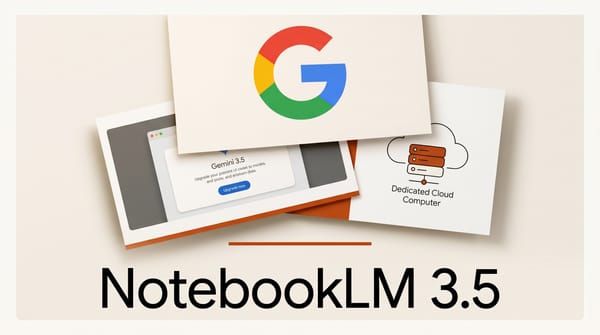
NotebookLM Gets Gemini 3.5 and a Cloud Computer Per Notebook
NotebookLM gains Gemini 3.5 plus a per-notebook secure cloud computer with 100+ skills. Outputs include PDFs, spreadsheets, and slide decks.
NotebookLM gains Gemini 3.5 plus a per-notebook secure cloud computer with 100+ skills. Outputs include PDFs, spreadsheets, and slide decks.
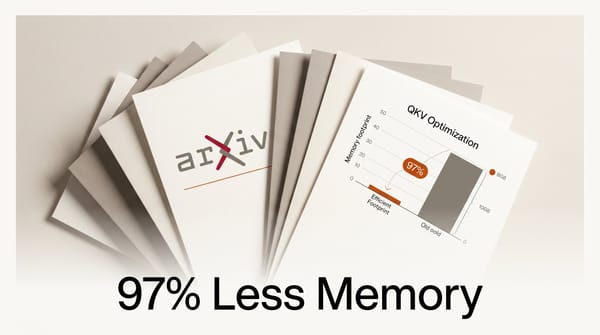
New ICML 2026 research shows transformer models can share attention projections, achieving up to 96.9% KV cache reduction with minimal accuracy loss.

Adversarial Flow Distillation (AFD) from NUS, LIGHTSPEED, and UCL enables training autoregressive video AI models from closed-source teachers without accessing their weights.

Hidden in Plain Tokens: a gradient-free audio watermarking technique accepted to ICML 2026, embedding provenance signals into AI-generated audio without model retraining.
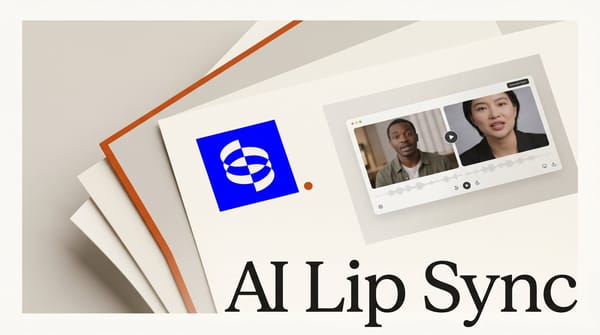
A parameter-free inference technique from UNSW and Griffith University stabilizes lip sync and identity in AI talking-head video without any model retraining.
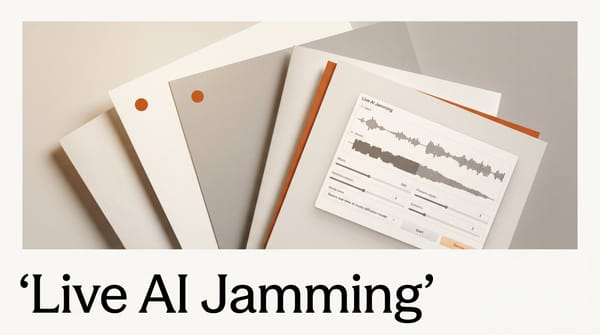
Researchers from UC San Diego and Google Research published Live Music Diffusion Models on May 21, 2026, demonstrating that diffusion-based music generation can run interactively in real time on consumer hardware.
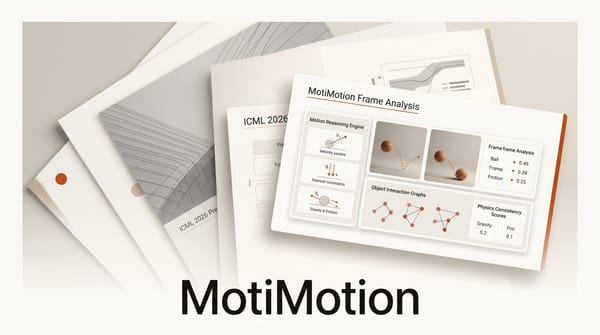
Researchers published MotiMotion on May 21, 2026, a video generation framework accepted to ICML 2026 that adds a reasoning layer above motion trajectories.
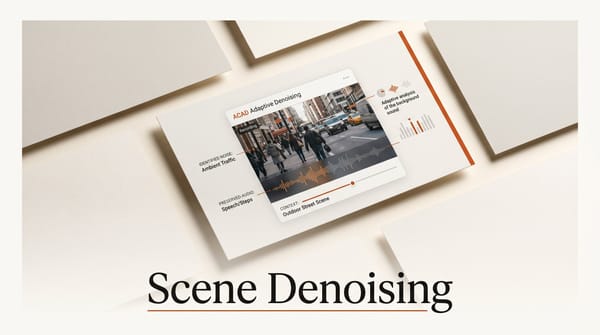
Researchers at Tampere University published a preprint introducing ACAD, an AI system that adapts what it treats as noise based on the acoustic scene it detects.
An OpenAI reasoning model autonomously disproved the Erdos unit distance conjecture, a geometry problem unsolved since 1946. Fields medalist Tim Gowers calls it a milestone in AI mathematics.

Warp-as-History converts camera movements into pseudo-history context that frozen video models follow without retraining, new encoders, or test-time optimization. Code is public on GitHub.
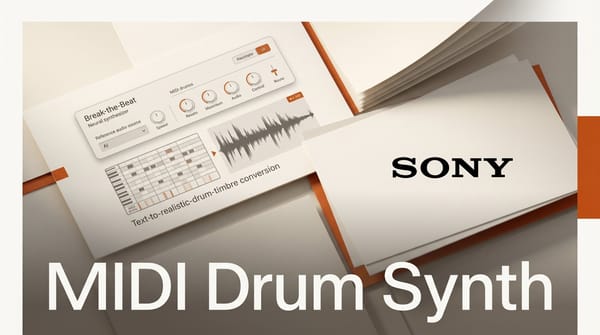
Break-the-Beat! is a new AI model that renders drum MIDI patterns as realistic audio using a reference recording for timbre. Researchers released a demo with dozens of examples spanning Speed Metal, Funk Rock, and electronic drum kits.
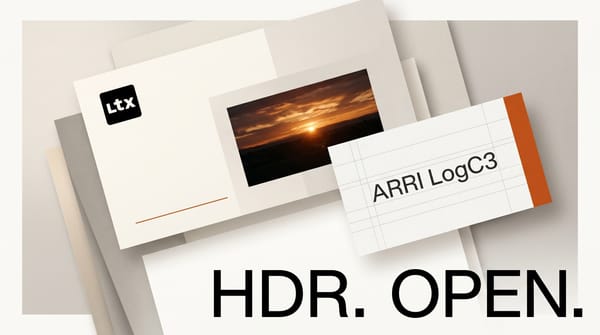
Lightricks just shipped an HDR extension to its LTX-2.3 video model as a gated HuggingFace LoRA. ARRI LogC3 encoding, 16-bit EXR sequences, peak white configurable to 4000 nits.
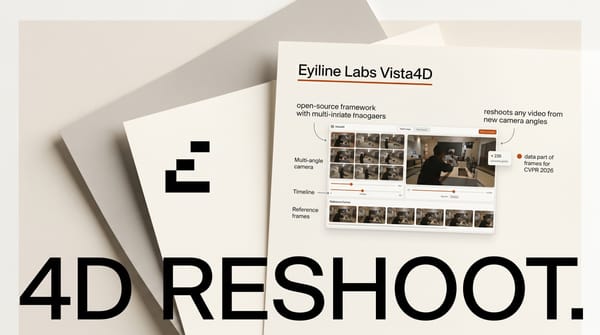
Eyeline Labs released Vista4D, an open-source framework that reshoots existing video from new camera angles using a 4D point cloud plus video diffusion.
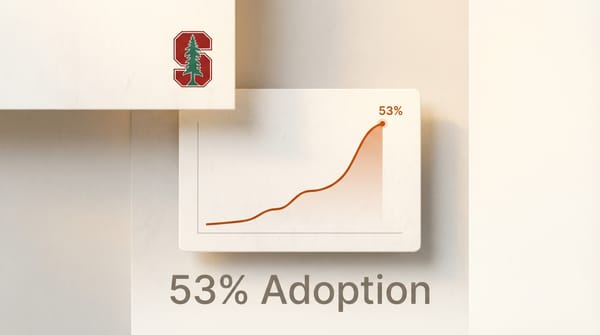
Stanford HAI's ninth annual AI Index Report reveals that generative AI reached 53% global adoption in three years, while the creative AI sector faces a transparency crisis and environmental reckoning.

In Q1 2026, MCP integrations surpassed 1,000, Cursor shipped agent workspaces, and Windsurf released SWE-1.5 free. The single-tool era of creative AI is ending. The agent era has arrived.

In April 2026, a creator with a $1,200 desktop PC and a 12GB graphics card can generate publication-quality images in under 10 seconds, produce video clips, run a conversational AI, and compose music without sending a single byte to the cloud.

Three major label settlements, a landmark UK court ruling, and new US Copyright Office guidance reshaped the rules for AI-generated content in the past 12 months. This research guide breaks down what creators can and cannot do with AI tools in 2026.
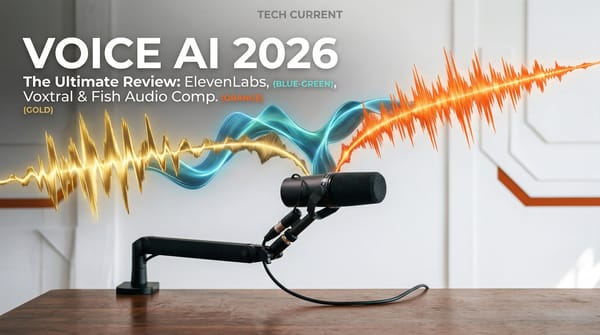
The AI voice cloning market reaches $4.06 billion in 2026. We compare ElevenLabs, Voxtral TTS, and Fish Audio S2 on quality, pricing, latency, and self-hosting to help creators choose the right tool.
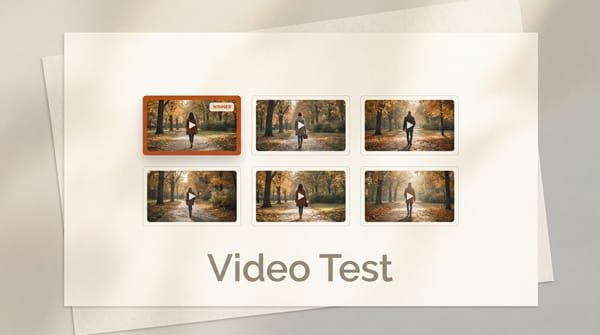
Six AI video generators tested with identical prompts. Runway Gen-4.5 Turbo, Kling 3.0, Veo 3.1, Pika 2.2, Hailuo 2.3, and LTX Video 2.3 scored across visual quality, motion coherence, speed, and cost.
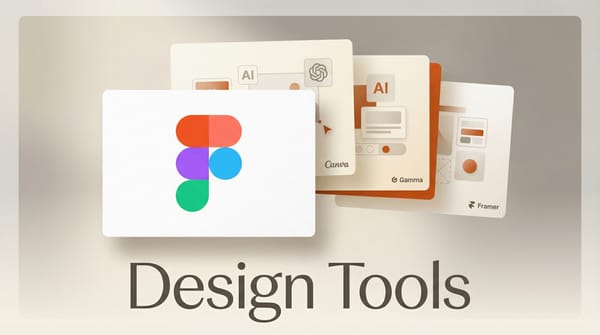
Gamma hit 100 million users. Figma shipped AI agents. Canva integrated Leonardo AI. Framer launched shaders and a Server API. A data-driven comparison of the four platforms reshaping design in Q1 2026.
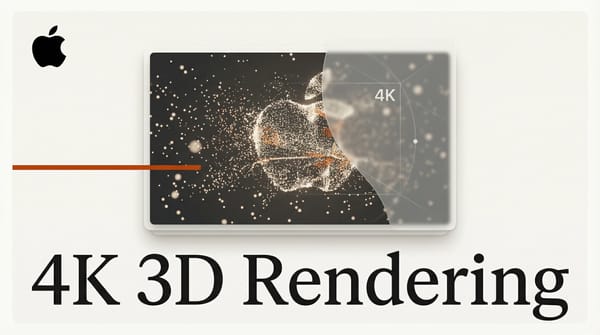
Apple researchers published LGTM on March 28, 2026, a method that enables 4K-resolution 3D scene rendering using Gaussian Splatting without requiring per-scene optimization.
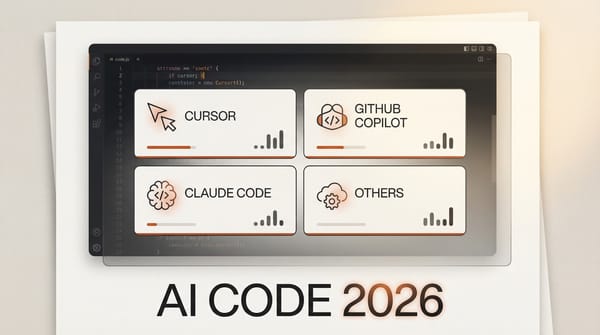
Cursor hit $2 billion in annualized revenue in February 2026, just three months after crossing $1 billion. No SaaS company in history has doubled that fast. Here is the full breakdown of every AI coding tool, their pricing, benchmarks, and who is winning.

The five largest AI newsletters now reach more than 8 million inboxes combined. We analyzed subscriber counts, revenue models, platform choices, and the strategies separating winners from the thousands that disappeared.
The 3D Gaussian Splatting tools market hit 1.2 billion dollars in 2024 and is on track for 7.8 billion by 2033. AI 3D generation crossed a threshold in early 2026 with open-source models producing production-quality meshes in seconds.