
Anthropic Now Has More Business Customers Than OpenAI
For the first time, more businesses pay for Anthropic than OpenAI, according to May 2026 spending data from Ramp showing 34.4% vs 32.3% business adoption.
For the first time, more businesses pay for Anthropic than OpenAI, according to May 2026 spending data from Ramp showing 34.4% vs 32.3% business adoption.
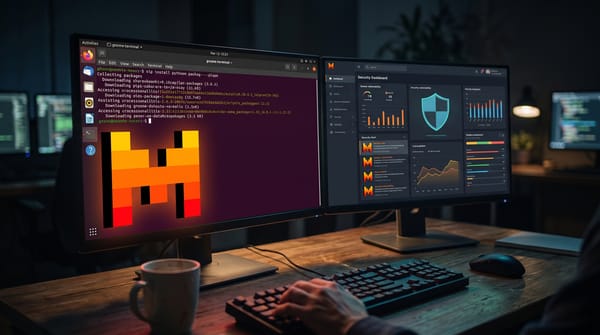
mistralai==2.4.6 was backdoored in the Mini Shai-Hulud supply chain attack. PyPI quarantined the project. Here is what to check and do if you build with Mistral's Python SDK.
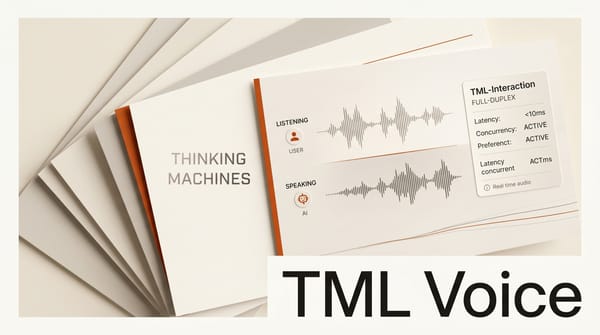
Mira Murati's Thinking Machines shipped TML-Interaction-Small, a 276B full-duplex voice model that listens and speaks simultaneously, beating GPT-Realtime on latency and interaction quality.
Anthropic adds four capabilities to Claude Managed Agents: dreaming (self-improving memory), outcomes (quality grading), multiagent orchestration, and webhooks. Harvey saw a 6x completion improvement; Wisedocs cut review cycles by 50%.
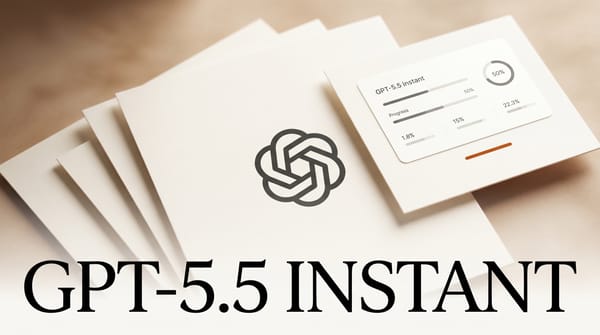
OpenAI replaced GPT-5.3 Instant with GPT-5.5 Instant as ChatGPT's default model, citing 52% fewer hallucinated claims and a new memory source viewer.
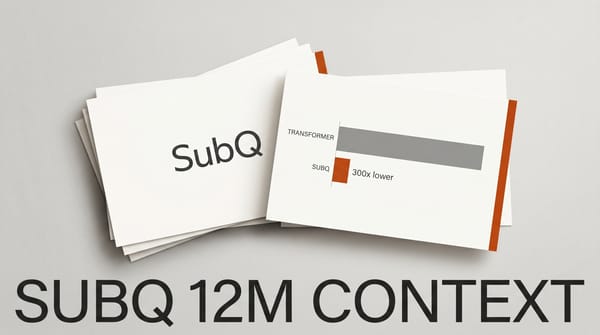
Subquadratic SubQ launched May 5 with a 12M token context window and an OpenAI-compatible API. Headline claim: 300x lower cost than Claude Opus on RULER 128K.
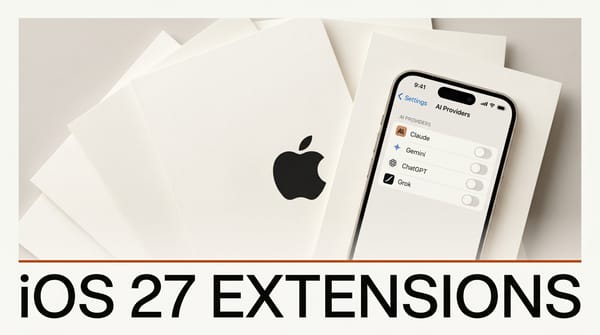
iOS 27 Extensions lets you swap in Claude, Gemini, ChatGPT, or Grok for Apple Intelligence tasks (Writing Tools, Image Playground, Siri). Comparison + setup workflow + pricing math for working creators using iPhone, iPad, and Mac in 2026.
Anthropic is closing a $50 billion round at an $850 to $900 billion valuation, the largest private AI raise in history and the company's final financing before a late-2026 IPO.
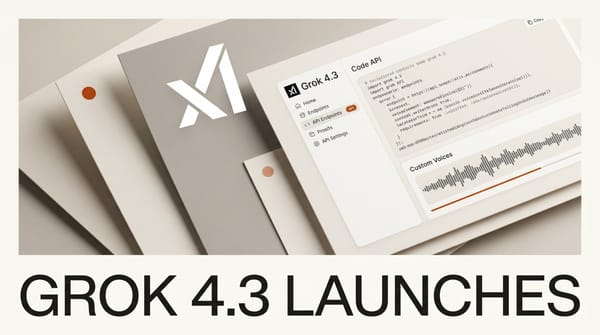
xAI pushed Grok 4.3 to the public API on April 30 and bundled Custom Voices, a one-minute voice cloning workflow, at no per-voice surcharge. The release consolidates text, voice, and creative agents on a single xAI bill.
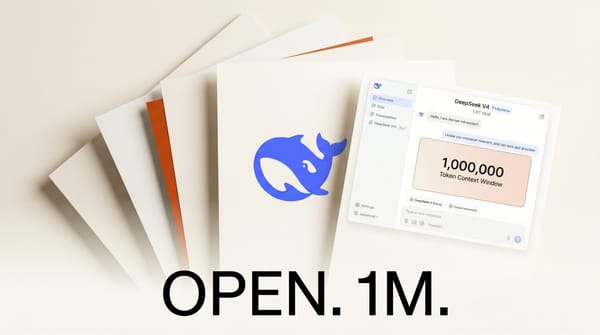
DeepSeek V4 Preview ships MIT-licensed 1.6T and 284B MoE models with 1M context at sub-$0.30 per million output tokens. What it means for creators.
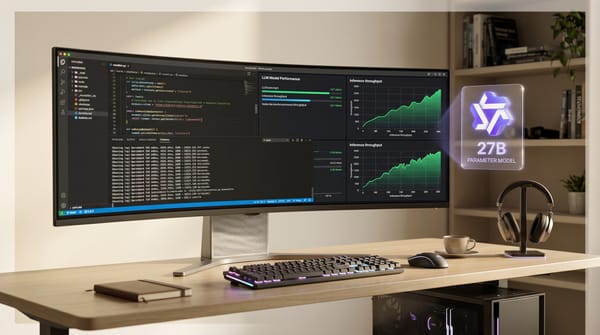
Alibaba released Qwen3.6-27B on April 22, 2026. The 27B dense open-weight model beats its larger 35B-A3B sibling on coding, agent, and vision benchmarks.
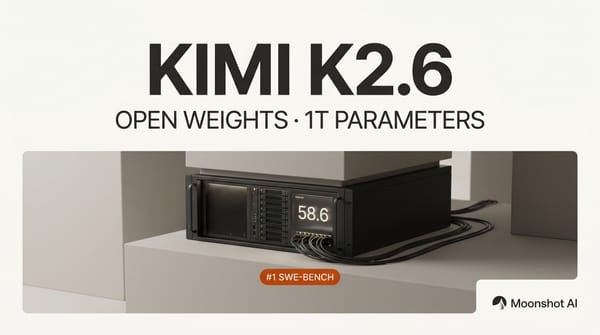
Moonshot AI's Kimi K2.6 scores 58.6 on SWE-Bench Pro, placing first above GPT-5.4 and Claude Opus 4.6. Full architecture breakdown, benchmark analysis, and what the open-weight license actually allows.
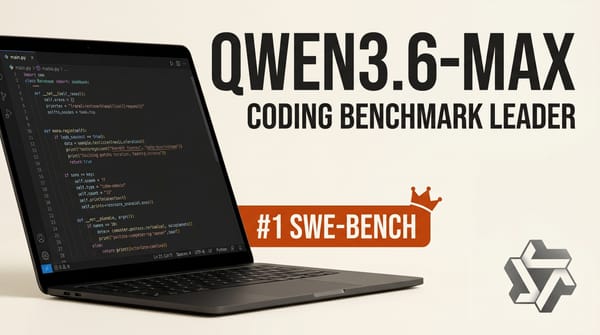
Alibaba released Qwen3.6-Max-Preview on April 20, 2026, topping six programming benchmarks including SWE-benchPro. Here is what it means for creators building AI workflows.
Arcee AI releases Trinity-Large-Thinking under Apache 2.0, ranking #2 on PinchBench behind Claude Opus 4.6 at just $0.90 per million output tokens.
PrismML emerged from stealth and open-sourced Bonsai 8B, a true 1-bit large language model that fits 8.2 billion parameters into just 1.15 GB of memory, roughly 14x more compressed than comparable 16-bit models.
H Company released Holo3, a vision-language model optimized for GUI agents that sets new state-of-the-art on the OSWorld-Verified benchmark, beating proprietary models with only 3B active parameters.
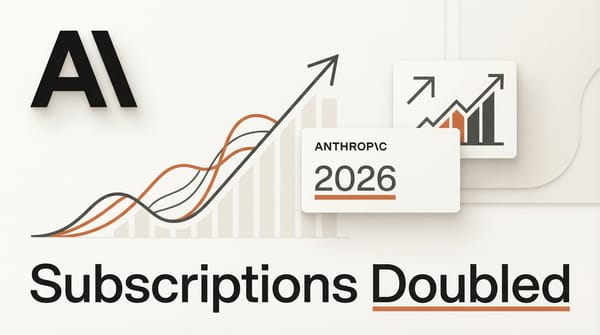
Anthropic confirmed that Claude paid subscriptions have more than doubled in 2026, with credit card data showing record subscriber growth in January and February.
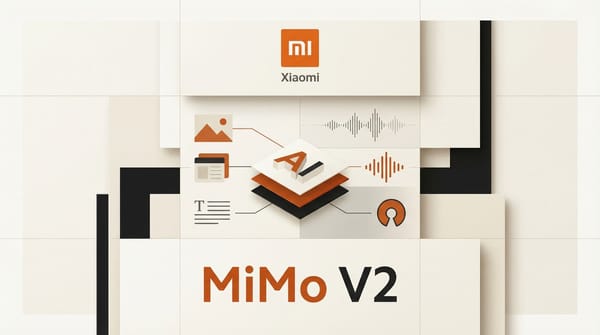
Xiaomi has launched the MiMo-V2 family, featuring a multimodal model that processes audio, images, and video alongside a TTS engine capable of contextual emotion and singing synthesis.
Anthropic has published the largest multilingual qualitative AI study ever conducted, interviewing 81,000 people across 159 countries in 70 languages about what they want from AI.
MiniMax, the company behind the Hailuo video generation platform, released M2.7 with 10 billion activated parameters and built-in self-improvement capabilities.
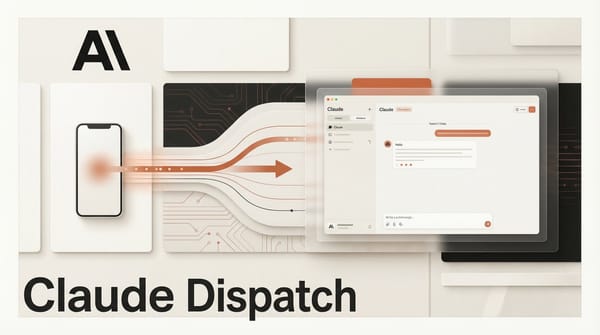
Anthropic has launched Dispatch, a new research preview for Claude Cowork that lets users send AI tasks from their phone and have Claude execute them on their Mac desktop.
OpenAI released GPT-5.4 mini and GPT-5.4 nano on March 17, bringing the capabilities of its flagship GPT-5.4 model to significantly smaller, faster, and cheaper packages.
Mistral launched Forge at NVIDIA GTC, a platform that lets enterprises train frontier-grade AI models from scratch using their own proprietary data.
Researchers from CMU, Princeton, Together AI, and Cartesia AI published Mamba-3, a state-space model architecture that matches transformer performance while running inference 7x faster.