On May 6, 2026, Anthropic announced four new capabilities for Claude Managed Agents: a self-improving memory system called "dreaming," a quality-grading layer called "outcomes," native multiagent orchestration, and webhooks for downstream workflow automation. Together, these features push Claude from a single-turn assistant into something closer to a self-managing creative team you can direct rather than operate step by step.
The practical implications for creators building LLM-powered workflows are significant. A content production pipeline running on Claude Managed Agents can now learn from its own past runs, evaluate its own output quality, and dispatch parallel research agents without any custom scaffolding from the developer. Harvey, the legal AI platform, saw a 6x completion rate improvement when dreaming was enabled. Wisedocs, a document processing company, reported 50% faster review cycles using outcomes. Netflix uses the multiagent system to analyze logs across hundreds of builds simultaneously.
Dreaming: Agents That Learn While You Sleep

The most conceptually novel feature is dreaming. Standard memory systems in LLM agents accumulate raw observations during a session. Over time this creates noise: conflicting entries, outdated assumptions, low-quality captures that dilute the useful signal.
Dreaming is a scheduled background process that runs between sessions. The agent reviews its memory store, extracts recurring patterns, removes duplicates, and restructures what it knows into a higher-quality representation. When the next session starts, the agent has a cleaner, more accurate mental model of its task domain.
Developers get two modes: automatic memory updates, where the agent applies changes without review, and manual review, where proposed changes surface in the Claude Managed Agents console before being committed. The manual mode is useful when accuracy requirements are high, such as creative brand guidelines or editorial voice notes that must stay exactly on-spec.
Dreaming is currently in research preview. Access requires an application at the Claude Managed Agents request form. It is particularly valuable for long-running or multiagent scenarios where the same agent handles similar tasks repeatedly over weeks or months.
Outcomes: Built-in Quality Grading

Outcomes solves a problem every creator who uses LLM automation eventually hits: outputs that are grammatically correct but wrong in ways that are hard to specify in a prompt. Brand voice drift, missing structural requirements, failure to follow a format guide.
The mechanism is a second agent acting as a grader. You write a rubric describing what good output looks like. When the primary agent completes a task, the grader evaluates the result against that rubric in its own context window. If the standard is not met, the grader identifies the specific changes needed and feeds them back for revision.
Benchmark gains from Anthropic's testing show up to 10 percentage points improvement over standard prompting, with the largest gains on complex tasks. File generation improved by 8.4% for .docx outputs and 10.1% for .pptx. Wisedocs, which uses outcomes for document quality checking, reported 50% faster review cycles. Spiral and Every, the AI-native media companies, combine outcomes with subagent runs: subagents run on Claude Opus for generation quality, with a Haiku-powered lead agent coordinating and evaluating.
For creative workflows, this is directly applicable to tasks like:
- Newsletter sections that must match a publication's house style
- Social captions that need to stay within platform character limits and tone guidelines
- Design briefs or scripts that follow a specific structural template
- Product descriptions that require specific SEO patterns without sounding mechanical
Full documentation is at platform.claude.com/docs/en/managed-agents/define-outcomes. Outcomes is available in public beta now.
Multiagent Orchestration: Your Agent Gets a Team
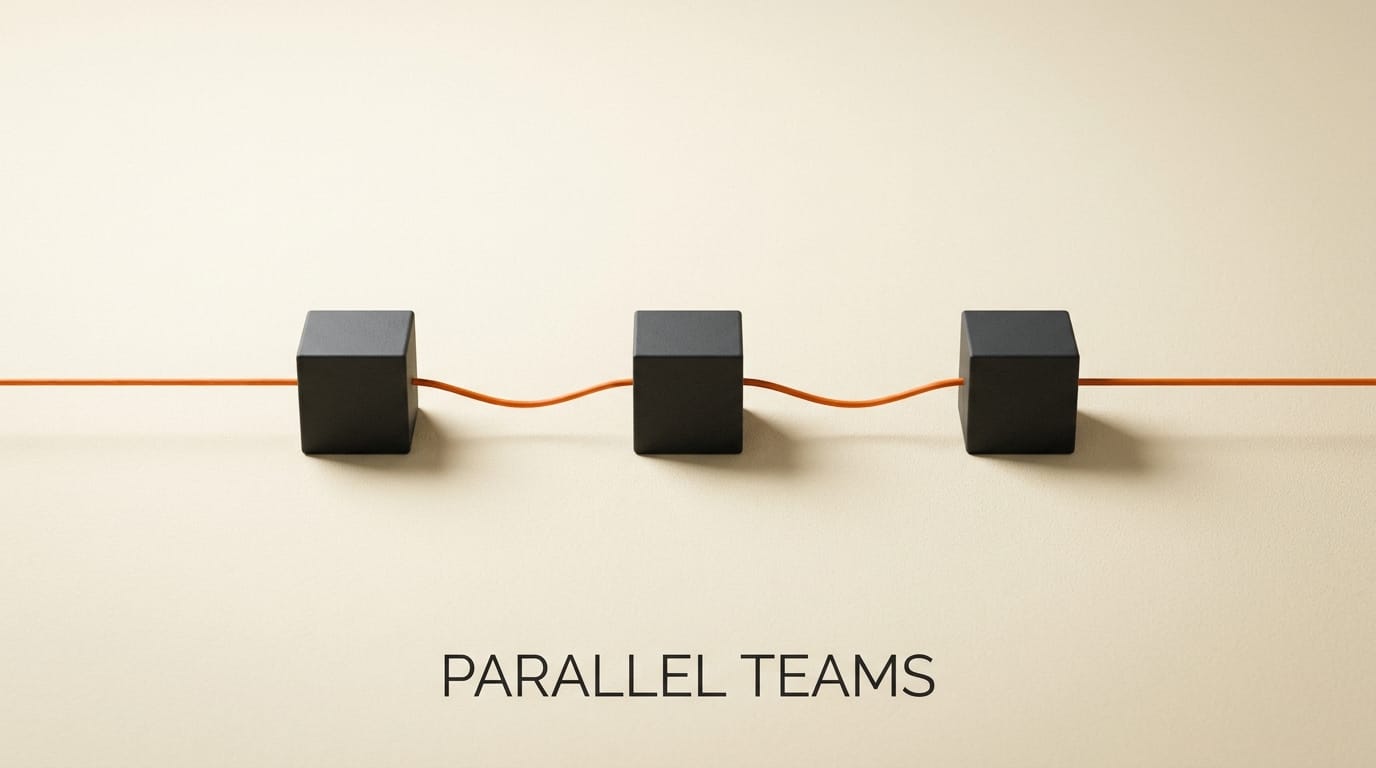
Multiagent orchestration is the most immediately powerful of the four announcements for production workflows. A lead agent receives a task, breaks it into sub-problems, and delegates each one to a specialist agent. Each specialist has its own model selection, system prompt, and tool access. All specialists work in parallel on a shared filesystem, so outputs from one specialist are immediately available to others without manual data passing.
The Claude Console shows the full delegation order and reasoning trace, which makes debugging possible at a level that custom orchestration frameworks rarely provide out of the box.
Netflix uses this architecture to analyze logs across hundreds of builds simultaneously, compressing work that would otherwise be sequential into a parallel scan. For content creators, the same pattern applies to multi-source research: a lead agent assigns one specialist to scan recent news, another to check competitor content, a third to pull social performance data, and combines the findings into a brief without the creator touching any individual step.
This matters because it removes the primary reason developers have leaned on external orchestration libraries. Frameworks like LangGraph and LlamaIndex exist largely to fill the gap where LLM APIs do not natively manage parallel execution or agent handoffs. Managed Agents handles both natively, with tighter Claude integration and full traceability in the console.
Managed Agents vs. Direct API: What Changes
| Capability | Direct Claude API | Custom Orchestration Framework | Claude Managed Agents |
|---|---|---|---|
| Memory persistence | Manual implementation required | Framework-dependent | Built-in, cross-session |
| Self-improvement | Not available | Not available | Dreaming (research preview) |
| Output quality grading | Custom eval code | Custom eval code | Outcomes grader (beta) |
| Parallel agent execution | Custom threading | Built-in (varies) | Multiagent orchestration (beta) |
| Traceability | Custom logging | Varies by framework | Claude Console, full delegation trace |
| Downstream triggers | Custom polling or events | Framework-dependent | Webhooks (beta) |
Webhooks: Closing the Automation Loop
The fourth feature is webhooks, now in public beta. When an agent task completes, Claude can POST a notification to a URL you specify. This allows downstream systems to trigger automatically: a content calendar tool updates the row, a Slack message fires, a CMS draft status changes, or a second agent picks up the output for further processing.
Without webhooks, polling is the only option. You check whether the agent finished, wait, check again. Webhooks replace that pattern with a push notification, which is the standard pattern for production automation. Documentation is at platform.claude.com/docs/en/managed-agents/webhooks.
How to Use This in Your Creative Workflow
The combination of dreaming, outcomes, and multiagent orchestration describes a new category of tool: a creative AI system that gets better at your specific work over time, evaluates its own quality against your standards, and runs parallel sub-tasks without you managing the pieces.
Three workflow patterns worth testing this week:
- Content research pipeline: Set up a lead agent that receives a topic brief. Assign specialist agents to pull news (Tier 1), scan community discussions (Tier 2), and check what competitors have already covered (Tier 3). The lead synthesizes a research brief. Add an outcomes rubric that checks for source diversity and topic freshness. Enable dreaming so the agent learns which sources consistently produce quality material for your beat over time.
- Newsletter quality check: Run your newsletter draft through an outcomes-enabled agent with a rubric that checks for word count targets, link density, tone alignment, and required section structure. The grader flags deviations before you send.
- Brand voice monitoring: For studios or agencies maintaining multiple client voices, use dreaming to maintain a per-client memory store. The agent learns each client's preferences from past feedback and applies them without you re-prompting every session.
If you are already using Claude's creative connectors for Blender, Adobe, and Ableton, the managed agents layer is the production infrastructure that makes those integrations run autonomously rather than on demand.
Access and Pricing
Outcomes, multiagent orchestration, and webhooks are available in public beta now at platform.claude.com. Dreaming is in research preview; access requires an application at claude.com/form/claude-managed-agents. Anthropic has not published separate pricing for Managed Agents features beyond standard token consumption.
Frequently Asked Questions
What is dreaming in Claude Managed Agents?
Dreaming is a scheduled background process that runs between agent sessions. It reviews the agent's accumulated memory, identifies patterns, removes duplicates, and restructures the memory store for higher quality. The result is an agent that improves at your specific tasks over time without you manually updating its instructions.
How is Claude Managed Agents different from the standard Claude API?
The standard Claude API gives you a single request-response interface. You handle memory, evaluation, parallelism, and orchestration yourself. Managed Agents provides all four natively: persistent cross-session memory, the outcomes quality-grading layer, multiagent parallel execution, and webhook triggers for downstream automation. Less infrastructure code, more time on the actual task.
Can I use outcomes with any type of creative output?
Yes. The rubric is a plain-text description of what good output looks like for your use case. It can cover structural requirements (section lengths, required headings), tone requirements (brand voice notes, prohibited phrases), or quality requirements (source minimum, link density). Any criteria you can describe in writing can be used as an outcomes rubric.
Is multiagent orchestration available for API access or only through the Claude Console?
Multiagent orchestration is available via the Managed Agents API, documented at platform.claude.com/docs/en/managed-agents/multi-agent. The Claude Console provides a visual trace of agent delegation and reasoning for debugging, but the feature itself is fully API-accessible for programmatic integration.
How does dreaming handle sensitive creative material in memory?
Dreaming offers a manual review mode where proposed memory changes surface in the Claude Console before being committed. For sensitive brand guidelines, proprietary creative frameworks, or confidential client work, the manual mode lets you audit what the agent intends to retain before it becomes part of the active memory store.
Related deep dives