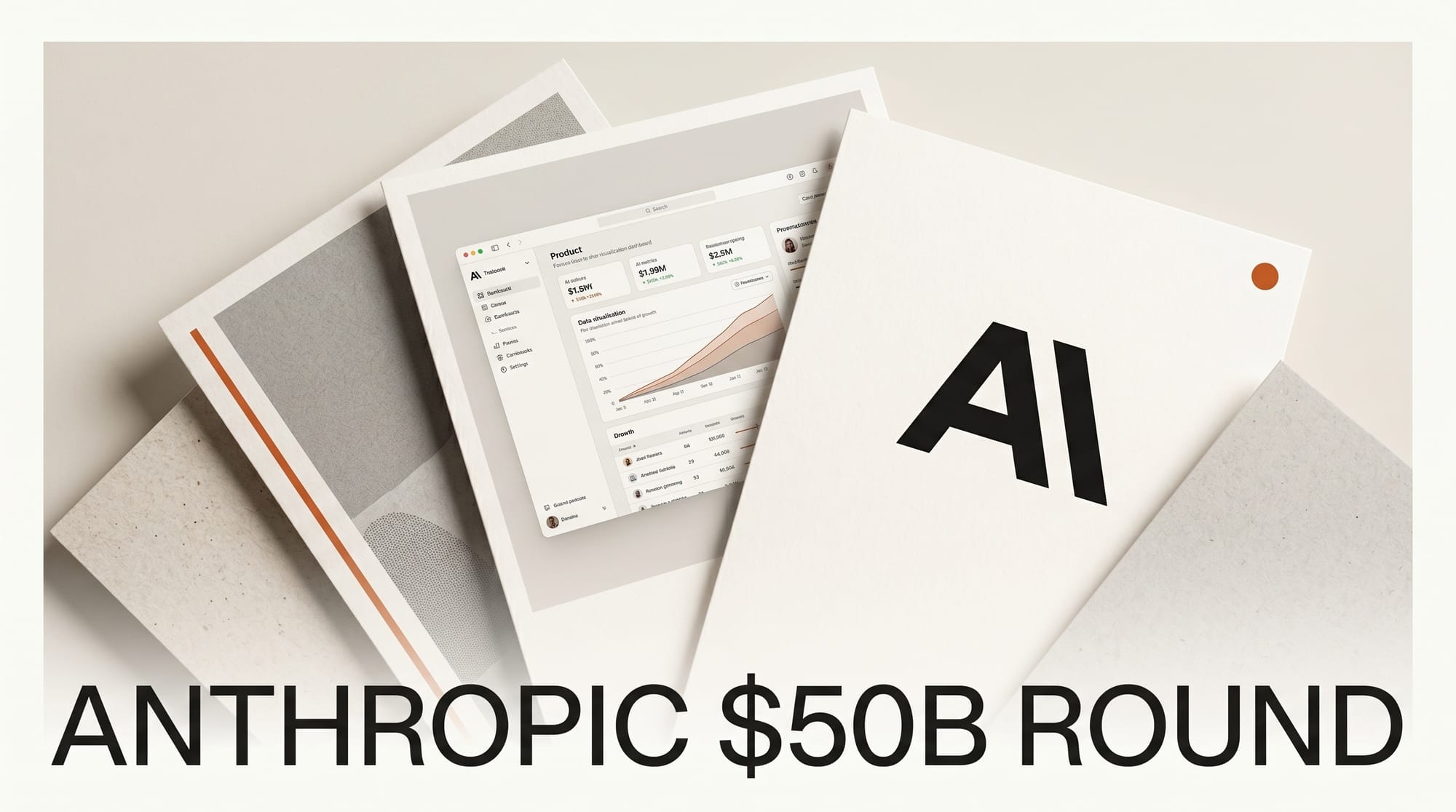
Anthropic is closing what would be the largest private funding round in AI history, with a $50 billion raise at an $850 to $900 billion valuation reported by TechCrunch on April 30, 2026. Investors received a 48-hour allocation deadline. If the round closes at the top of that range, Anthropic will become the most valuable private AI company in the world, edging past OpenAI's $852 billion post-money figure from earlier this year.
What Happened
The round arrives 18 months after Amazon committed an additional $4 billion to Anthropic and roughly two years after Google extended its strategic compute and equity partnership. Those two cloud partners have together pledged 10 gigawatts of compute capacity and over $65 billion in cumulative investment, anchoring Anthropic's training and inference footprint across AWS Trainium and Google TPUs.
This is a different kind of round. Where the Amazon and Google rounds were strategic, the $50 billion ask is structured as a final private financing before a late-2026 IPO. Anthropic sent allocations to existing financial investors and a tight set of new sovereign and growth funds, with Goldman Sachs, JPMorgan, and Morgan Stanley reported to be in discussions as IPO underwriters. According to The Next Web, the company's annualized revenue run rate has reached at least $30 billion, and sources cited by both outlets place the real figure closer to $40 billion. Enterprise customers represent roughly 80 percent of that revenue.
Why It Matters
This round reframes how to read Anthropic's trajectory. The capital is not buying research breakthroughs, it is buying compute capacity for an enterprise customer base that already represents 80 percent of revenue. Investors are pricing Anthropic as a contracted-revenue software business with a defensible path to a $60 billion run rate, not a frontier research lab betting on AGI optionality. The $900 billion target sets the public-market comparable for OpenAI's expected debut six months later and pulls forward the moment when AI labs trade on revenue durability rather than capability claims.
For creators and developers, the implication is direct: capacity decisions during constrained windows will favor the enterprise customers paying $1M-plus annual contracts. Claude Pro rate limits will continue to tighten when Mythos cybersecurity workloads or Fortune 500 deployments squeeze inference capacity. The creative-tools push (Adobe, Blender, Autodesk, Ableton connectors) is now confirmed as a wedge into enterprise, not a parallel consumer business.
Key Details
The compute ceiling is the real story
Anthropic's stated use of capital is unusually narrow for a round this size. The company is buying compute. Its cybersecurity model, Mythos, is currently capacity-constrained in production, and the White House has informally limited the model's broader rollout citing insufficient inference capacity for federal workloads. That framing matters: an AI lab whose constraint is electrons rather than algorithms has a different cost structure than one constrained by training breakthroughs. The marginal dollar of investment maps cleanly to a marginal token of inference, a marginal customer, and a marginal dollar of revenue.
The 80 percent enterprise revenue split tightens that loop further. Enterprise customers run sustained workloads with predictable throughput, which is exactly the kind of demand that justifies long-term compute commitments. If Anthropic can convert $50 billion in fresh capital into roughly 4 to 6 gigawatts of additional compute over the next 24 months, the company has a defensible path to a $60 billion run rate without needing a model breakthrough. That is the operating thesis investors are buying.
Enterprise concentration: a feature and a constraint
According to disclosures circulated to investors, more than 1,000 enterprise customers now spend over $1 million annually on Anthropic services. That number drives the $40 billion run rate calculation: if the average $1M+ enterprise account is in the $5M to $10M range, the top tier alone explains the bulk of revenue. The remaining 20 percent comes from API self-serve, Claude.ai consumer subscriptions, and partnerships like the Claude Creative Connectors suite with Adobe, Blender, Autodesk, and Ableton.
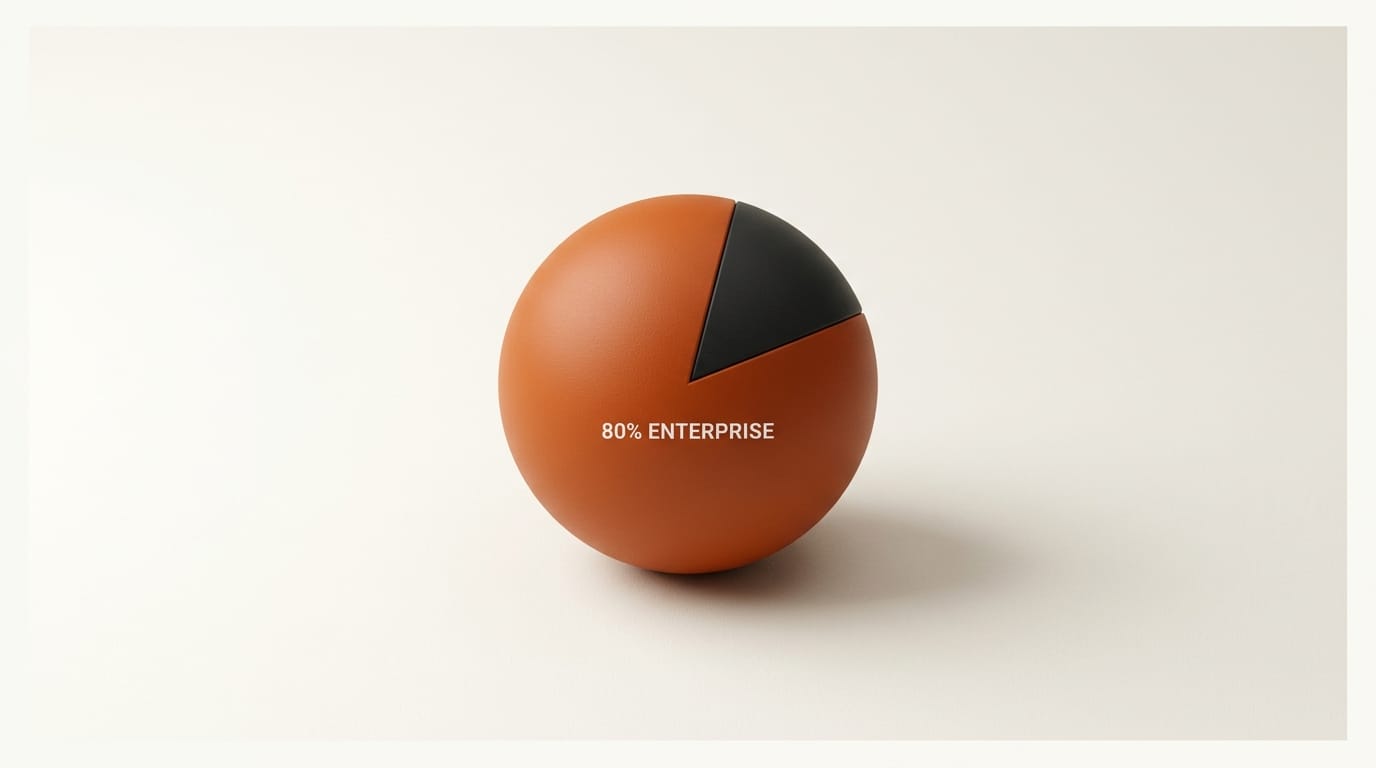
Concentration of this kind has two implications. First, it tells you the IPO will be priced as a software-and-services business with predictable contracted revenue, not a frontier research lab with optionality on AGI breakthroughs. Second, it tells creators and individual developers what to expect. When 80 percent of revenue comes from enterprise, capacity decisions will favor enterprise during constrained periods. Claude consumer subscriptions and Claude Pro have already seen rate-limiting tighten during peak windows over the last quarter.
Path to IPO and the underwriter triangle
The reported underwriting trio of Goldman Sachs, JPMorgan, and Morgan Stanley is a deliberate choice. These three banks have led every major AI-adjacent IPO of the cycle and have the institutional sales books to absorb a debut at $900 billion plus or minus. A late-2026 listing aligns with the second half of OpenAI's reported IPO timeline, setting up a head-to-head public-market comparison between the two leading frontier labs within roughly six months of each other.
For context, OpenAI CFO Sarah Friar recently flagged spending and IPO timing concerns that pushed the company's window into 2026. Anthropic's timeline appears more compressed and more confident. That confidence is not arbitrary: an enterprise-heavy revenue base produces cleaner public-market financials than a consumer-heavy one, which is why Anthropic can move first while OpenAI is still resolving questions about its restructuring and debt-funded compute spending.
The $900B comp: what it implies for the rest of the stack
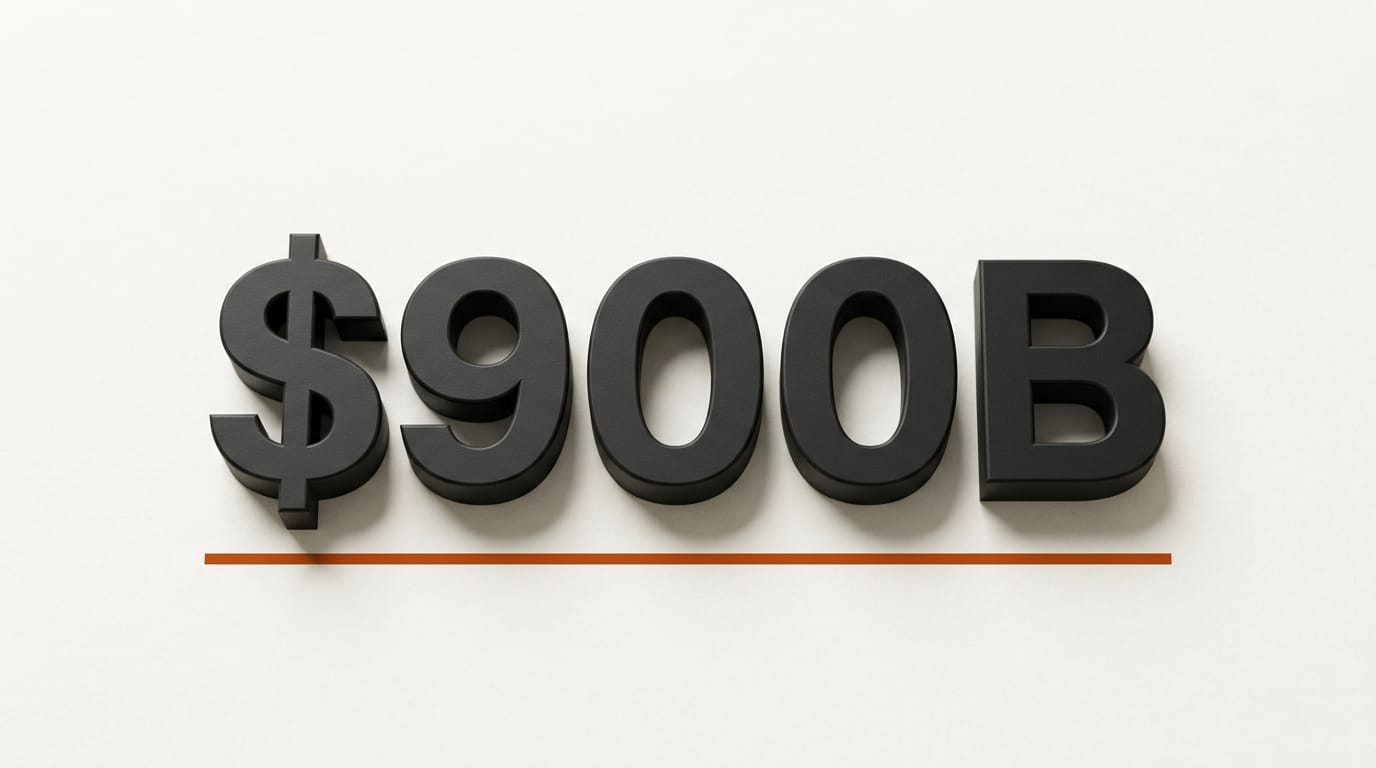
If Anthropic closes at $900 billion against a $40 billion run rate, the implied multiple is roughly 22 times revenue. That is rich relative to enterprise SaaS comparables but in line with frontier AI peers (OpenAI's $852B against a reported $25B run rate is roughly 34 times). The valuation discipline visible in this number suggests investors are differentiating between AI labs based on revenue durability rather than headline capability claims.
Below the frontier tier, the implications cascade. Mistral, DeepSeek, Qwen, and the open-weight cohort each have to argue for their valuation either by undercutting on price (DeepSeek pursued this with its V4 Preview launch under MIT) or by carving out vertical creative or coding niches. The price-per-token spread between Claude Opus 4.7 and the open-weight challenger cohort will widen if Anthropic uses IPO proceeds to expand distribution into Fortune 500 procurement, which is exactly the playbook the round suggests.
What the 48-hour allocation deadline signals
A 48-hour close window on a $50 billion round is unusually fast and is meaningful in itself. It signals oversubscription, a tight investor list, and a company that wants to deny competitors the optics of a slow or syndicated raise. Sequoia, Lightspeed, and Spark Capital are reportedly leading the round on the new-money side; the bulk of the allocation is going to existing holders pro-rata. The structure protects Anthropic's cap table heading into an IPO and limits dilution to founders and early Series investors, both of whom have signaled they want to avoid a messy public-market debut.
What to Do Next
For creators using Claude inside daily workflows, the $50 billion round resolves a question that has been getting louder over the last quarter: will Anthropic continue to invest in the creative tooling layer or pivot toward enterprise? The answer the round implies is that creative tooling is a wedge into enterprise, not a separate business. The Claude Blender connector and the broader creative connector suite are part of how Anthropic acquires individual users who later show up inside enterprise procurement decisions.
The practical effect for individual creators should be positive. More compute means lower latency on agentic loops inside Claude Code, fewer rate-limit interruptions on long Claude Opus 4.7 sessions, and headroom for the Claude Design research preview to graduate into a generally available tool. The risk is in the timing: until additional compute lands, creative subscribers should expect rate-limiting to remain tight during peak workdays, and price increases on Claude Pro and Claude Max are likely as Anthropic optimizes margin into the IPO.
Key Takeaways
- The reported $50 billion round at $850 to $900 billion would be the largest private AI raise in history and would put Anthropic ahead of OpenAI by valuation.
- Capital is earmarked principally for compute. Mythos capacity is the binding constraint; the round is structured to remove it.
- Revenue run rate is $30 to $40 billion annually, with 80 percent enterprise concentration and over 1,000 customers spending $1M+ per year.
- The round is positioned as a final private raise before a late-2026 IPO, with Goldman Sachs, JPMorgan, and Morgan Stanley reported as underwriter candidates.
- Implied valuation multiple is roughly 22 times revenue, more disciplined than OpenAI's reported 34 times, signaling investors are pricing on durability not capability.
What to Watch
Three windows over the next 90 days will determine whether the round delivers on its operating thesis. First, watch for any official Anthropic statement on Mythos availability tiers; a public capacity expansion announcement would confirm that the compute ceiling is being lifted on schedule. Second, watch enterprise contract announcements, particularly with U.S. federal agencies and large financial institutions where Mythos is the differentiator. Third, watch Anthropic's customer page for changes in the highlighted logos, which historically updates in advance of investor communications.
The longer-tail signal to track is pricing. Anthropic has held Claude Opus 4.7 at $15 per million input tokens since launch, well above DeepSeek and Qwen comparables. If the company holds that price into the IPO, expect investors to read it as confidence in a defensible enterprise wedge. If pricing drops to compete with the open-weight cohort, the IPO narrative changes from durability to growth-at-cost. Either path has implications for everyone building on top of Claude, so the next earnings-adjacent disclosure window will matter more than the round itself.