OpenAI's two-year partnership with Apple broke down publicly on May 14, 2026. TechCrunch and Bloomberg reported that the AI startup enlisted an outside law firm to explore legal options against Apple, including a possible breach-of-contract notice. The dispute centers on the iOS 18 integration that put ChatGPT inside Siri: OpenAI believed the deal would drive billions in annual subscription revenue. Instead, the result was described internally as a "dud," with users strongly preferring the standalone ChatGPT app over the constrained Siri implementation.
For creators who rely on AI tools across iPhone, iPad, or Apple Silicon Macs, this dispute lands at a critical moment. Apple is already preparing iOS 27, expected at WWDC on June 8, with a new "Extensions" system that lets users swap ChatGPT for Google Gemini or Anthropic's Claude across Siri and Apple Intelligence features. The ChatGPT exclusivity era on Apple devices may be ending faster than the industry expected.
What Happened
Apple and OpenAI struck a deal ahead of the iOS 18 launch in 2024 to integrate ChatGPT with Siri as the default model for complex queries. OpenAI anticipated the arrangement would funnel iPhone users toward paid ChatGPT subscriptions through in-app prompts that an internal OpenAI estimate projected could "generate billions of dollars per year," according to 9to5Mac citing sources familiar with the matter.
The integration underperformed. Users who want ChatGPT open the standalone app directly, bypassing Siri entirely. Apple's implementation is constrained to small pop-up windows and requires users to explicitly invoke ChatGPT by name rather than routing general AI queries through it automatically. An unnamed OpenAI executive summarized the frustration directly: "We have done everything from a product perspective. They have not." No final decisions have been made and OpenAI still hopes to resolve the dispute outside court.

Why It Matters for Creators
AI tools have become integral to creative workflows across iOS: voice queries, Writing Tools in Notes and Pages, Image Playground for quick visuals, and API access for custom automations all route through the central AI layer Apple manages. If the OpenAI relationship frays further, three things shift for creators:
- ChatGPT's Siri placement could shrink. If OpenAI sends Apple a breach notice, Apple has little incentive to expand the integration before contract renewal or litigation resolves. Features that should have launched with iOS 18 may remain stalled.
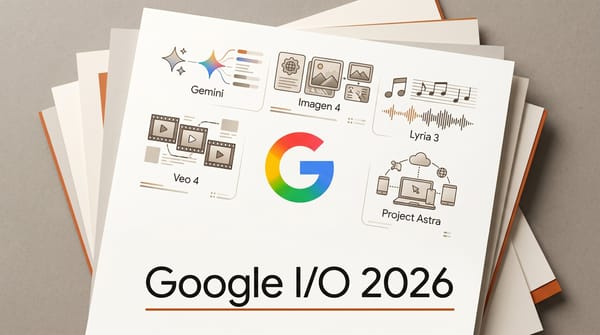
- Apple is accelerating alternatives. The company signed a deal with Google to use a Gemini-based model for Apple Intelligence in iOS 27. That shift opens the door to Google's Imagen 4 and Veo 4 reaching creators through Apple's native AI layer.
- OpenAI's hardware ambitions create new tension. OpenAI acquired the hardware startup co-founded by former Apple design chief Jony Ive, positioning OpenAI as a potential device competitor. Apple now has strategic reasons to reduce its AI dependencies on OpenAI technology.
iOS 27: The End of ChatGPT Exclusivity
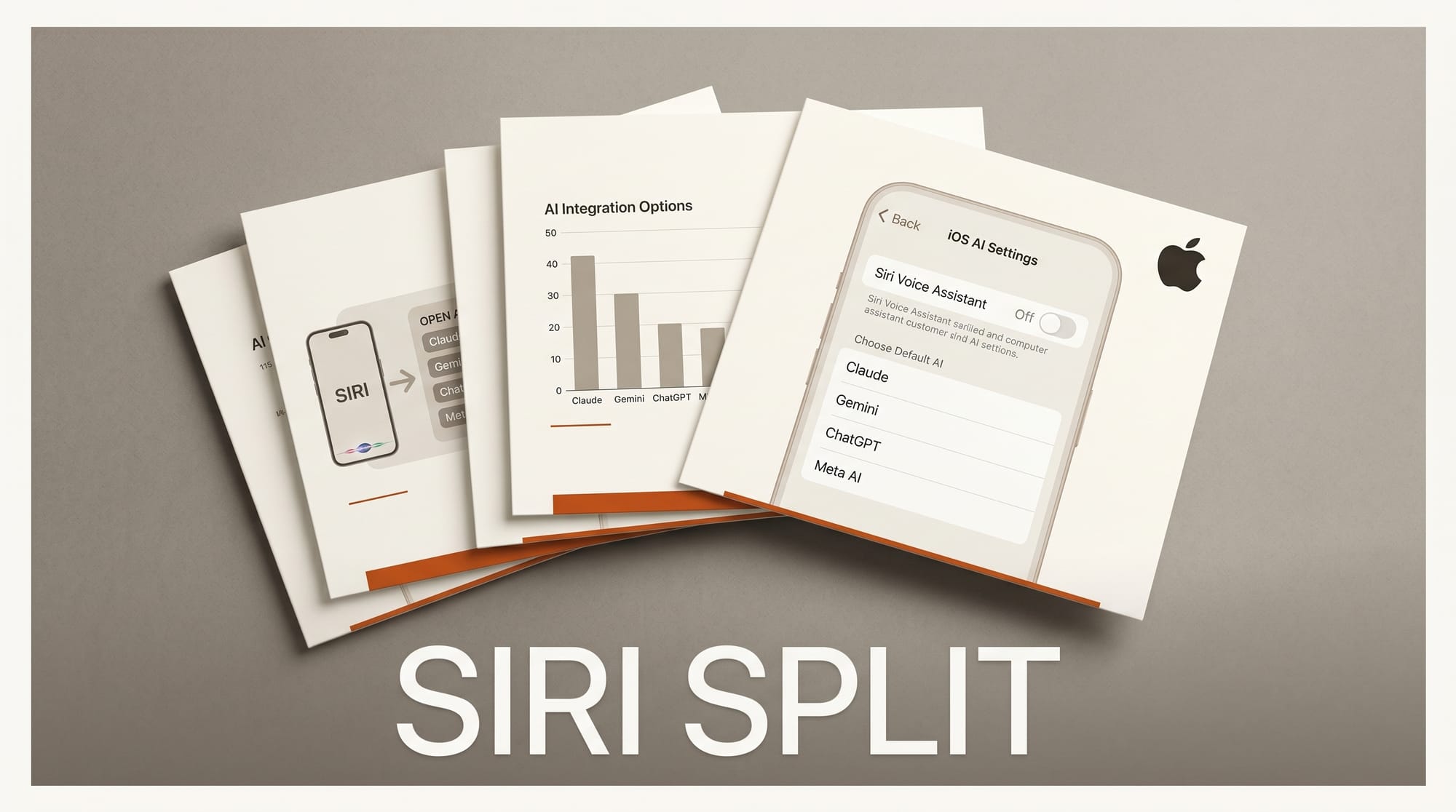
Apple is building an Extensions system for iOS 27 that plugs third-party AI apps directly into Siri and Apple Intelligence features. MacRumors first reported that iOS 27 would let users choose Claude or Gemini as their default AI instead of ChatGPT. 9to5Mac confirmed the feature, noting extensions will surface through Siri, Writing Tools, and Image Playground.
A separate Siri redesign confirmed for iOS 27 turns the assistant into a full chat-based agent with a dedicated app, directly competitive with standalone AI apps. Tom's Guide notes that Siri will use one voice for native responses and a distinct voice when routing to a third-party AI, giving users clarity about which model is answering.
ChatGPT vs. Claude vs. Gemini on iOS: What Creators Should Know
| Feature | ChatGPT (OpenAI) | Claude (Anthropic) | Gemini (Google) |
|---|---|---|---|
| Siri integration now (iOS 18) | Default (disputed) | Not yet | Not yet |
| Siri integration (iOS 27 target) | Via Extensions | Via Extensions | Via Extensions + Google deal |
| Image generation on device | GPT Image 1 (DALL-E successor) | Not native | Imagen 4 (announced Google I/O 2026) |
| Video tools | Sora (web only) | Not available | Veo 4 (announced Google I/O 2026) |
| Long-form writing and editing | Strong (GPT-5.5) | Best-in-class (Claude 4) | Capable (Gemini 2.5 Pro) |
| Workflow coding for creators | Codex (strong) | Claude Code (strong) | Gemini Code Assist |
What Creators Should Do Now
- Stop relying on ChatGPT via Siri for production work. The Siri integration was always constrained. This dispute signals it will not expand before contract resolution. Use the standalone ChatGPT app for reliable, full-featured access.
- Try Claude for writing and editing workflows. Claude 4 consistently outperforms GPT-5.5 on long-form creative tasks. See our detailed comparison of Claude vs. ChatGPT for creator workflows.
- Watch WWDC on June 8. Apple's Extensions announcement will clarify exactly which AI models plug into which iOS 27 features. This is the most important AI announcement for iOS creators in 2026.
- Install Gemini and Claude apps alongside ChatGPT. All three are free to download. Running all three on iOS costs nothing and ensures you are ready to test whichever model Apple surfaces through Siri Extensions first.
FAQ
Is OpenAI definitely suing Apple?
Not yet. As of May 14, 2026, OpenAI has engaged outside legal counsel to explore options including sending Apple a breach-of-contract notice. No lawsuit has been filed and OpenAI has stated it still hopes to resolve the dispute outside court.
Will ChatGPT be removed from iPhone?
Not imminently. The iOS 18 ChatGPT-Siri integration remains active. However, the dispute signals OpenAI's placement within Siri will not be expanded or renewed on favorable terms, and iOS 27's Extensions system will let competitors reach the same integration layer.
What was the original OpenAI-Apple deal?
Apple integrated ChatGPT into Siri as part of iOS 18, launched in 2024. Siri could route complex queries to ChatGPT, and OpenAI gained distribution access to hundreds of millions of iPhones with in-app subscription prompts. OpenAI expected this to drive billions in annual subscription revenue. The result fell substantially short of projections.
How does iOS 27 change the picture?
iOS 27, expected to be revealed at WWDC on June 8 and released in September 2026, introduces an Extensions system where users can replace ChatGPT with any installed AI app for Siri queries and Apple Intelligence features. Apple has also separately signed a deal with Google for Gemini. If users can access Claude or Gemini through Siri without a separate app, the subscription-conversion premise of the OpenAI deal no longer holds.
Which AI is best for image generation on iPhone?
Currently, ChatGPT with GPT Image 1 is the most capable image generation tool available through an iOS app. In iOS 27, Google's Imagen 4 may become accessible through Siri and Image Playground via the Extensions system, offering a second high-quality option. Claude does not yet offer native image generation.
Does this affect Mac creators on Apple Silicon?
Yes. Apple Intelligence and Siri run on Apple Silicon Macs as well as iPhone and iPad. Any changes to the ChatGPT integration or the introduction of iOS 27-style Extensions would apply to macOS 27. Mac creators using AI Writing Tools or Siri for workflow queries should follow the same diversification advice above.