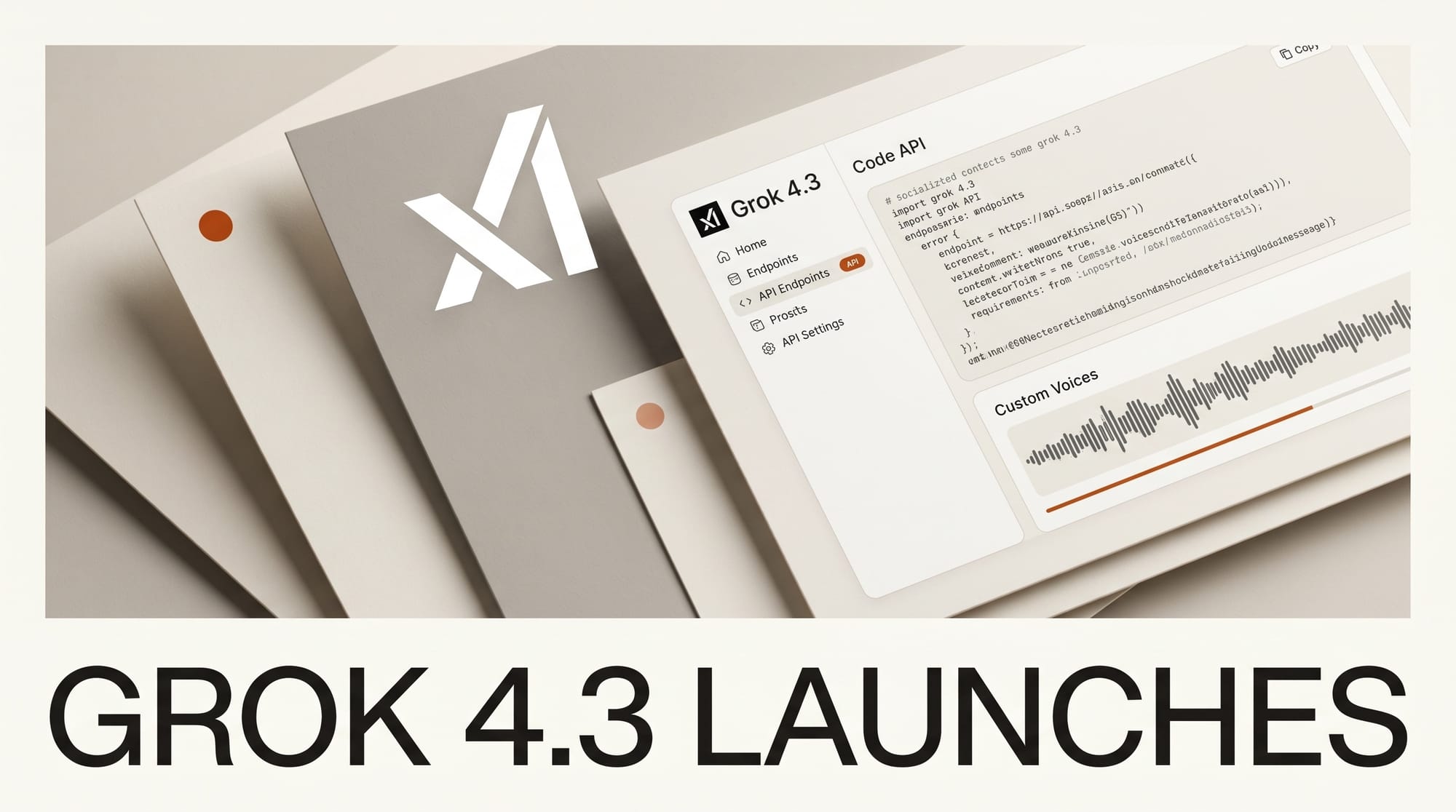
xAI pushed Grok 4.3 to its public API on April 30, 2026, pricing the model at $1.25 per million input tokens and $2.50 per million output tokens with a one million token context window. The same release window added Custom Voices, a voice-cloning suite that turns roughly one minute of recorded speech into a production-ready voice model in under two minutes, available at no per-voice surcharge across the Text-to-Speech and Voice Agent APIs.
What Happened
Grok 4.3 had been in restricted access since April 17 inside the SuperGrok Heavy subscription at $300 per month. The April 30 step is the move that matters for builders: the public API release at docs.x.ai opens the model to any developer at per-token pricing, ending the multi-week premium-only window xAI has used on every prior Grok release. Custom Voices ships at the same time and shares the API rollout calendar, which is the clearest signal yet that xAI sees voice as a first-class surface for its model line rather than an add-on.
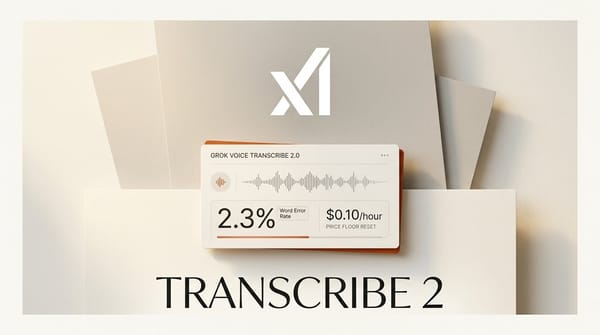
The release also extends the Grok product line that xAI has been building in 2026. The Grok Voice Agent API launched in mid-April with Speech-to-Text at $0.10 per hour batch and $0.20 per hour streaming, plus five built-in TTS voices. The Grok Imagine Agent followed two weeks later with multi-step creative orchestration. Grok 4.3 plus Custom Voices closes the loop: a developer can now run text reasoning, image and video generation, voice transcription, voice synthesis, and a cloned brand voice all on one xAI account with one billing relationship.
Why It Matters
This release consolidates xAI as a single-vendor creator stack covering text, image, video, voice, and cloned brand voices on one bill. The pricing posture, $1.25 input and $2.50 output per million tokens, undercuts Claude Opus 4.7 and GPT-5.5 on output-heavy workflows by 30 to 60 percent. For agencies billing client work against API spend, that gap is meaningful enough to swing default-vendor decisions on long-form narration, podcast, and video-voiceover pipelines.
The Custom Voices economics are the bigger story. No per-voice surcharge means a brand can clone every executive, every recurring character, and every regional voice variant for the same flat platform fee. ElevenLabs and OpenAI both charge per-voice or per-minute, so this is a structural pricing change, not a feature parity move. The trade-off is the absence of persistent memory in Grok 4.3, which is a real workflow gap for multi-session creator agents.
Key Details
Pricing math: where Grok 4.3 actually wins
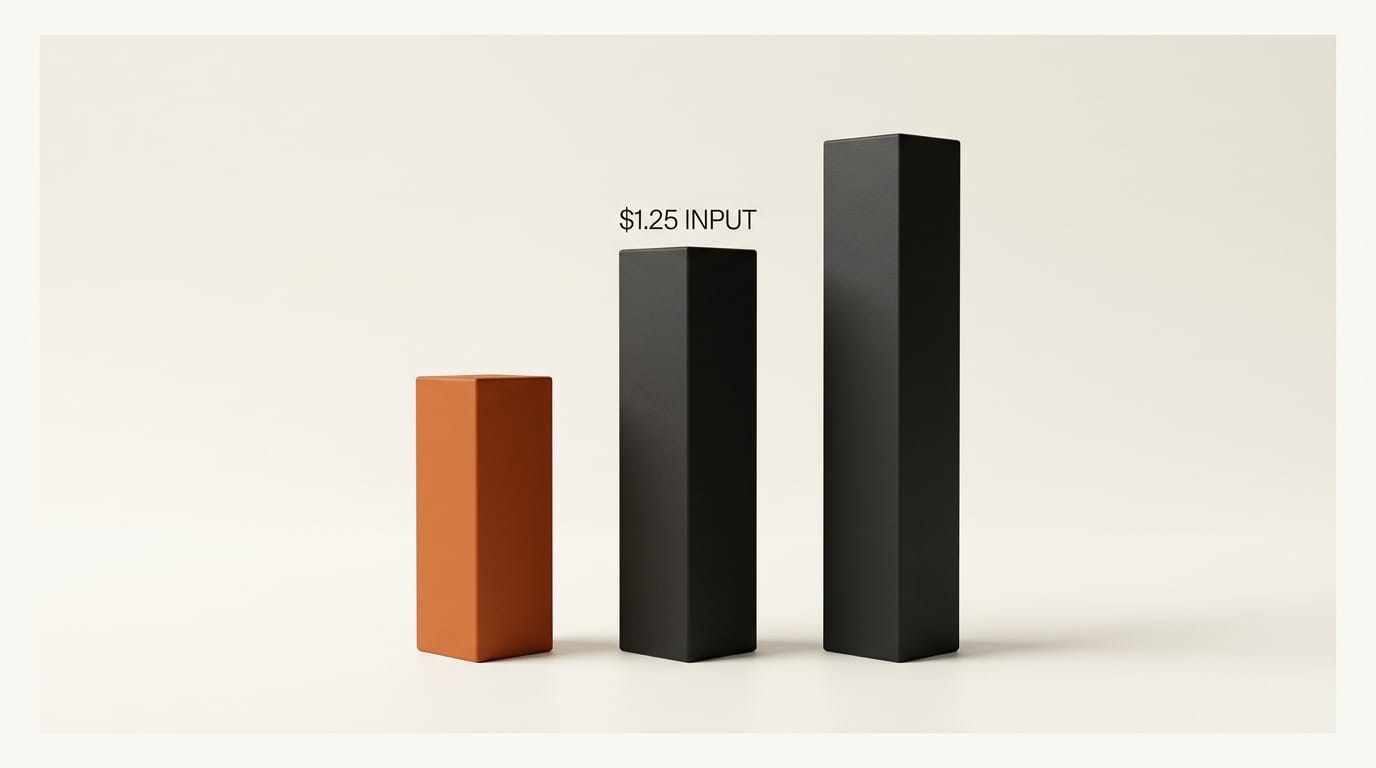
The headline number is the spread. At $1.25 per million input tokens, Grok 4.3 lands roughly halfway between DeepSeek V4 Preview at the open-weight floor and Claude Opus 4.7 at the frontier-closed ceiling. The output price of $2.50 per million is the more interesting datapoint; it is below Gemini 2.5 Pro and significantly below GPT-5.5 and Claude Opus on long generations. For workflows where the model writes substantially more than it reads (script drafting, long-form blog generation, captioning across full episodes), the output price drives the bill.
The one million token context window is table-stakes at this tier in 2026, but xAI's claimed 207 tokens per second output speed is not. Independent benchmarks running Grok 4.3 against the major closed models on coding and reasoning tasks place it competitive on standard suites and slightly below the frontier on more-complex reasoning. The reviewers flag the absence of persistent memory across sessions as a gap; for now Grok 4.3 is a stateless model, and any sustained workflow has to manage memory in application code.
Custom Voices and the cloning timeline
The voice-cloning workflow itself is the part of the release that creators should test first. xAI's documented flow asks the developer to record approximately one minute of natural speech in the xAI console, verify voice ownership through a consent prompt, and wait roughly two minutes for the cloned model to be ready. That cloned voice becomes available through the same TTS API endpoint as the five built-in voices (Ara, Eve, Leo, Rex, Sal) at the same $4.20 per million characters rate, with no separate per-voice subscription.
Compare that to where the voice-cloning market sat eighteen months ago. Cloning a voice typically required a multi-hour studio session, a separate data-prep workflow, and a per-voice license fee or subscription tier on the cloning provider. The compression of all of that into a single console flow with one minute of audio resets the cost-and-effort curve for narration-heavy workflows. xAI's voice guide documents that Custom Voices work with the same expressive markers (laugh, sigh, whisper) that the built-in voices accept, so a cloned host voice can carry the same emotional range across long-form scripts.
The bundling thesis: why xAI is moving creative AI to one bill
The strategic significance of the April 30 release is not the model or the voice cloner individually. It is the bundling. With Grok 4.3 plus Custom Voices on the API, xAI has assembled a creator stack that previously required three or four vendors: a frontier text model, a TTS provider, a voice cloner, and a voice-agent runtime. Each of those was its own contract, billing relationship, and rate-limit ceiling.
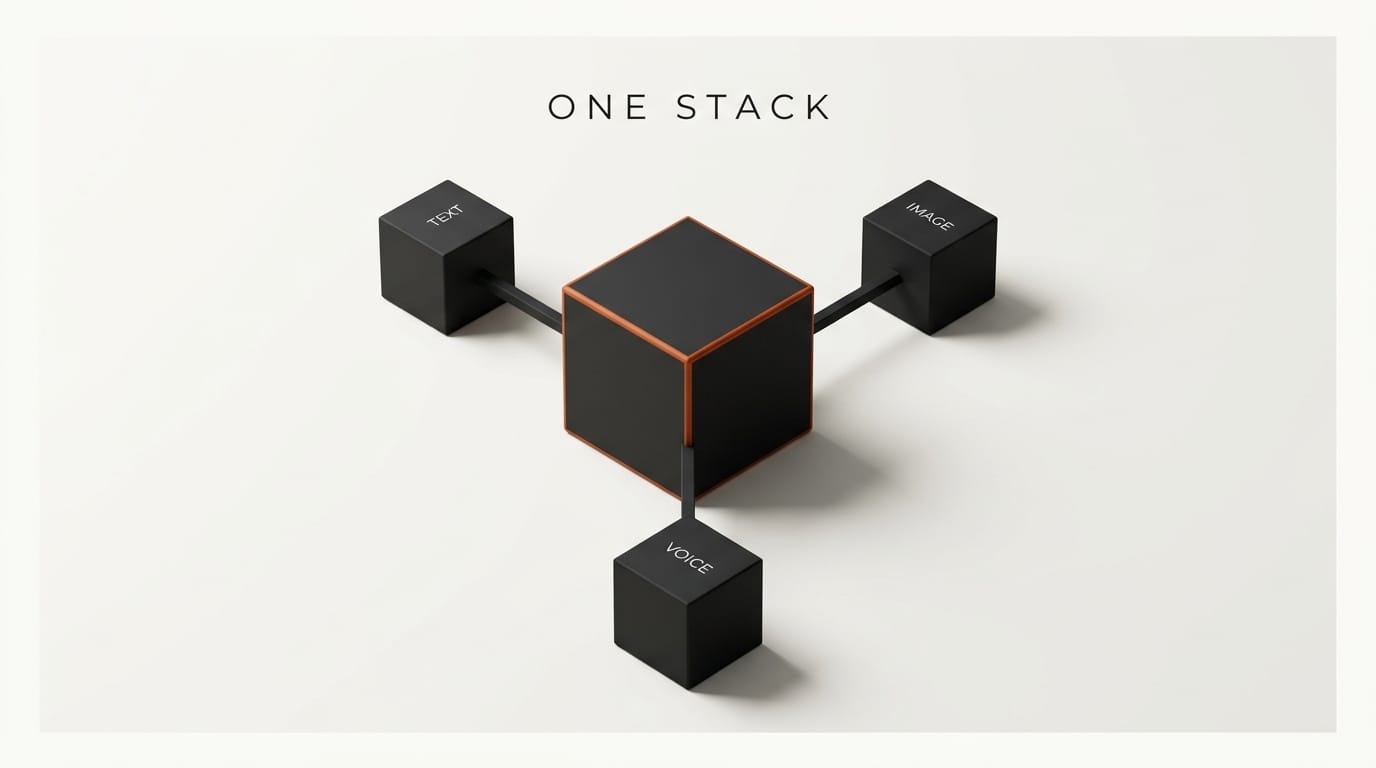
For creators building narration-heavy products (audio courses, podcast pipelines, in-game character voicing, generative video with synced audio), single-vendor consolidation has real economics behind it. The Voicebox open-source voice studio showed how dispersed the underlying engines are; rolling them into one billing surface cuts integration overhead and makes it easier to negotiate volume discounts. xAI is the first foundation lab whose primary chat model is general-purpose to make this consolidation play, and the early pricing is aggressive enough that it should pull at least some volume away from incumbents.
The expressive markers and what they enable
xAI's TTS API supports inline markers like [laugh], [sigh], [whisper], and [breath] that change vocal delivery on the fly. These are not unique (ElevenLabs and Hume both offer similar tags), but the combination of expressive markers with a sub-two-minute clone pipeline at $4.20 per million characters changes what mid-budget creators can do. A documentary-style YouTube channel can now produce host narration in their own cloned voice with realistic emotional range without any additional VO recording sessions, at a per-episode cost in the cents range. The implication for content velocity is more interesting than the implication for any single benchmark.
One caveat worth pricing in: voice cloning at this speed and price tier raises the consent-and-attribution stakes. xAI requires a consent recording during the clone setup, but the larger ecosystem question (impersonation risk, deepfake liability, dataset rights) is not solved at the API layer. Creators using Custom Voices for commercial work should layer their own attestation and watermarking workflows on top.
What to Do Next
For creators already running production audio pipelines, the test is straightforward: clone your host voice, run a 10-minute narration script with two or three expressive markers, and benchmark the result against your current TTS provider on consistency, latency, and cost. Custom Voices at $4.20 per million characters is below the per-character rate of most enterprise TTS providers and well below most cloning subscriptions; if the quality matches your reference, the consolidation case writes itself. For creators not yet using TTS, Grok 4.3 plus Custom Voices is a useful first step into AI audio because the ramp does not require a separate vendor evaluation.
The bigger creator-impact question is whether Grok's content moderation posture matches your project. xAI has historically positioned Grok as more permissive on edgy content than Claude or Gemini. That can be useful for satire, fiction, and adult-targeted creative work, but it requires a deliberate choice about brand alignment for creators whose audience expects mainstream-platform safety norms.
Key Takeaways
- Grok 4.3 is on the public API at $1.25 per million input tokens and $2.50 per million output tokens with a 1M token context window and 207 tokens-per-second output speed.
- Custom Voices clones a voice from approximately one minute of speech in under two minutes, at no additional per-voice charge across the TTS and Voice Agent APIs.
- Combined with the prior Grok Voice Agent and Imagine Agent releases, xAI now offers a single-vendor creator stack for text, image, video, voice, and cloned brand voices.
- Pricing aggressively undercuts Claude Opus 4.7 and GPT-5.5 on output-heavy workflows; the absence of persistent memory is the cleanest competitive gap.
- Expressive markers (laugh, sigh, whisper, breath) work with cloned voices, enabling emotionally-consistent long-form narration in a creator's own voice for cents per episode.
What to Watch
The 90-day window will tell you whether Custom Voices replaces or augments existing voice infrastructure for creators. Watch for case studies from podcast networks and audio-course publishers; those are the audiences where the math is most attractive and the production discipline is most rigorous. If ElevenLabs or rival closed-cloning providers respond with matching price drops or longer free tiers, that is the signal that xAI's pricing has reset the market.
The longer-tail signal to track is whether xAI extends the Custom Voices flow to multilingual cloning at the same price point. The current TTS API documents 25-plus languages on the built-in voices; whether a cloned voice retains its character across non-English output is a real product question that has not been benchmarked publicly. If xAI ships verified multilingual cloning before competitors, that becomes a strong differentiator for international podcast and education brands. Either way, the consolidation thesis is the framing creators should use to evaluate the release: this is xAI making the case that one bill, one console, and one model line is enough to run the whole creative AI stack.