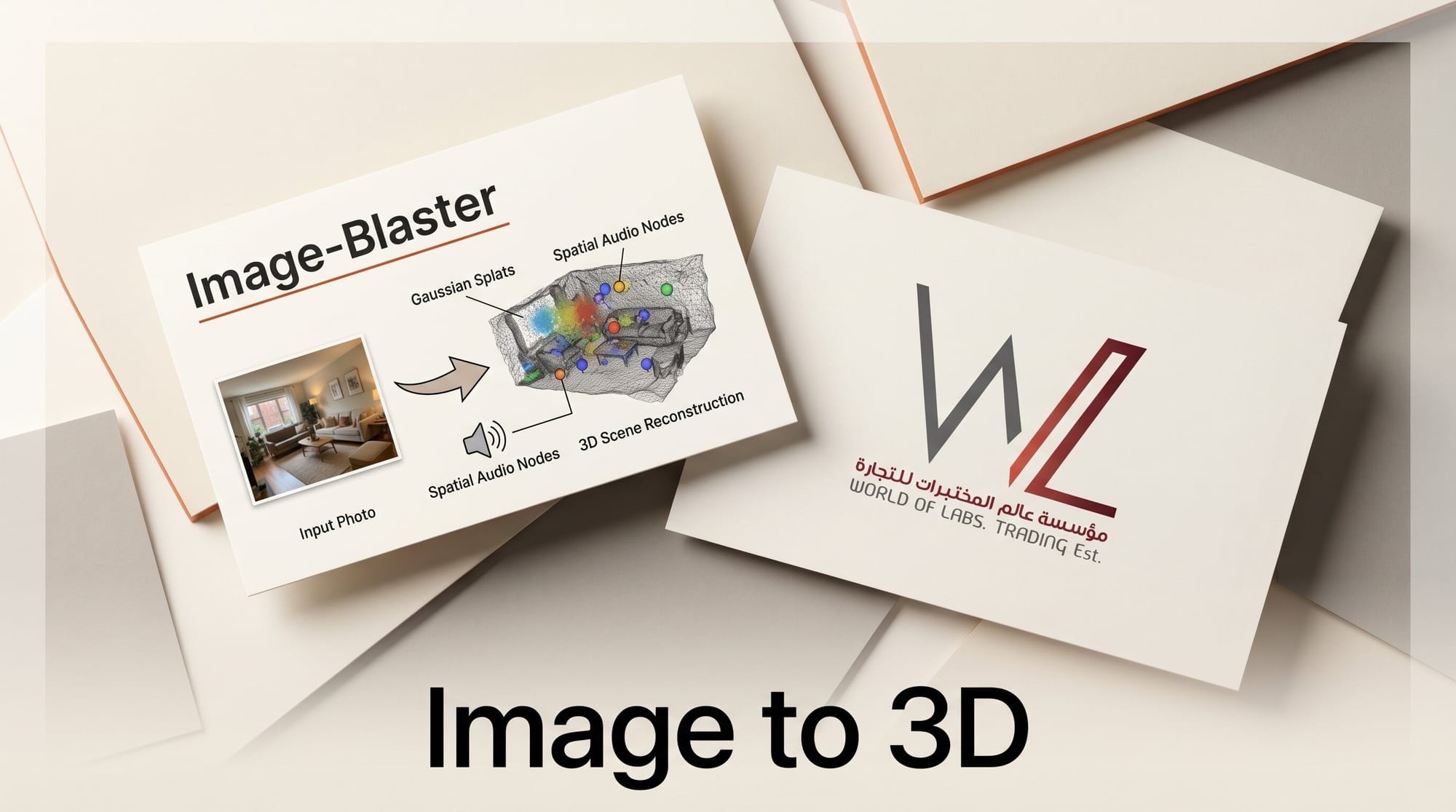
On May 14, 2026, developer Neil Sonkin released image-blaster, an open-source toolkit that turns a single input image into a fully meshed 3D environment with physics objects, lighting, and sound effects in under five minutes. The project chains World Labs Marble 1.1, Tencent Hunyuan 3D, ElevenLabs SFX, and nano-banana into a single Claude Code skill released under MIT license. The repo crossed 1,500 stars on GitHub trending within 24 hours of the announcement.
Try It This Weekend
Clone the repo, install Claude Code, and drop a reference image into the input directory:
git clone https://github.com/neilsonnn/image-blaster

cd image-blaster

claude
Then prompt: "blast it and confirm each step with me." The pipeline identifies dynamic objects in the image, exports them as .glb and .obj meshes, removes them from the source to generate a clean Gaussian splat (.spz) of the static environment, then layers ambient and physics-triggered .mp3 audio. The full output drops into Unity, Unreal, Godot, Blender, Maya, or a Three.js scene with no additional cleanup.
Why It Matters
Image-to-3D pipelines have existed for two years through tools like Pixal3D and Tripo 3.1, but they hand back a single mesh. Image-blaster is the first toolkit to deliver a fully populated scene: separate mesh assets for interactive objects, a splat background for the static world, and matching ambient and physics audio in one prompt. The pattern is also the most concrete example yet of agentic Claude Code skills orchestrating multiple paid generation APIs through one local script.
Key Details
The toolkit uses five model APIs in sequence. World Labs Marble 1.1 generates the static splat environment, FAL hosts the Hunyuan 3D model that creates the object meshes, ElevenLabs generates the SFX layer, and nano-banana or gpt-image-2 handles image cleanup between steps. Hunyuan 3D output is configurable from 40,000 to 1.5 million faces, with PBR materials enabled by default and three style presets (Normal, LowPoly, Geometry-only).
Users supply their own API keys for World Labs, FAL, and ElevenLabs. The repo is TypeScript and runs on Bun. World Labs cofounder Fei-Fei Li shared the project on the day of release, signaling official acknowledgment from the lab whose Marble model sits at the center of the pipeline.
What to Do Next
Indie game devs, 3D artists, and AR prototypers should test image-blaster against a reference image from a current project before next week. The five-minute runtime makes it practical to prototype five or ten scenes in a single session. Combine the output with parallel Claude Code sessions to iterate on variants in batch. The project is under active development with 72 commits to main, so subscribe to repo releases for the next feature drop.