Google made Gemini 3.8 Live with Live Avatar generally available in Gemini Enterprise on 24 September 2026, a day after Meta showed Muse Realtime Avatar at Connect. Both turn a voice agent into a talking, lip-synced face that answers in real time. The two launches landed on top of products that already ship: Runway Characters and HeyGen's LiveAvatar.
Read the pricing pages and session docs rather than the launch posts and the picture changes. The avatar that won Meta's own preference test cannot be bought. The one you can buy from Google bills about $0.39 for every minute the avatar speaks, and by default its video sessions end after two minutes. This piece puts the four products, plus Anam as a budget reference, side by side on the numbers each vendor publishes.
What Google Shipped on 24 September
Live Avatar is a response mode of the gemini-3.8-live model, which Google released on 15 September with voice only. The Google Cloud announcement says the avatar version is now available "with US and EU endpoints, with provisioned throughput, enterprise compliance, and strict data governance." It keeps the features of the voice model: barge-in, tool calls that run in the background while the avatar keeps talking, and live camera or screen-share input.
Setting it up is a small change to a Live API session. The Live Avatar configuration guide sets response_modalities to ["VIDEO"], names a prebuilt avatar in avatar_config (the sample uses one called "Ben") and pairs it with a prebuilt voice such as "Puck". Google does not publish a count or a gallery of the preset avatars; the docs say only "a variety of built-in avatars."
Custom avatars are the part creators will want and the part they are least likely to get. The docs say "Custom avatars are only available to select customers. To request access, reach out to your Google Cloud account team." For those who get access, the reference image must be at least 704 x 1280 pixels, portrait 9:16 by default, PNG recommended, under 5 MB. Google says all audio and video output carries a SynthID watermark.
One limit that matters for independent builders: the avatar is not in the consumer Gemini API. The AI Studio model page for gemini-3.8-live lists output as "Text and audio" and says "Audio is the supported response modality." To use the face, you need a Google Cloud project on the Gemini Enterprise Agent Platform.
The Price: $0.39 per Speaking Minute
Google prices the avatar in tokens, like everything else in Gemini. The Gemini Enterprise Agent Platform pricing page lists "Output: video (avatar)" at $1.00 per million tokens, and further down gives the conversion: "Avatar Video Output: 6,192 tokens /second of video." Audio runs at 25 tokens per second, and audio output costs $12.00 per million tokens.
Our arithmetic from those two lines:
- Avatar video: 6,192 tokens x $1.00 per million = $0.0062 per second, or $0.37 per minute.
- Spoken audio: 25 tokens x $12.00 per million x 60 = $0.018 per minute.
- Together: about $0.39 per minute of the avatar talking, before text and reasoning tokens.
The important clause sits next to the conversion rate: "Video output charges only apply when the avatar is actively speaking; users are not billed for idle time (when avatar is listening)." While the user talks, you pay only for their audio input, about $0.0045 a minute at $3.00 per million tokens. The page also warns that past turns are "re-processed and billed in every new turn," so long conversations cost more per turn than short ones. That context cost depends on your window setting and is not in the figures above.
The Two-Minute Default
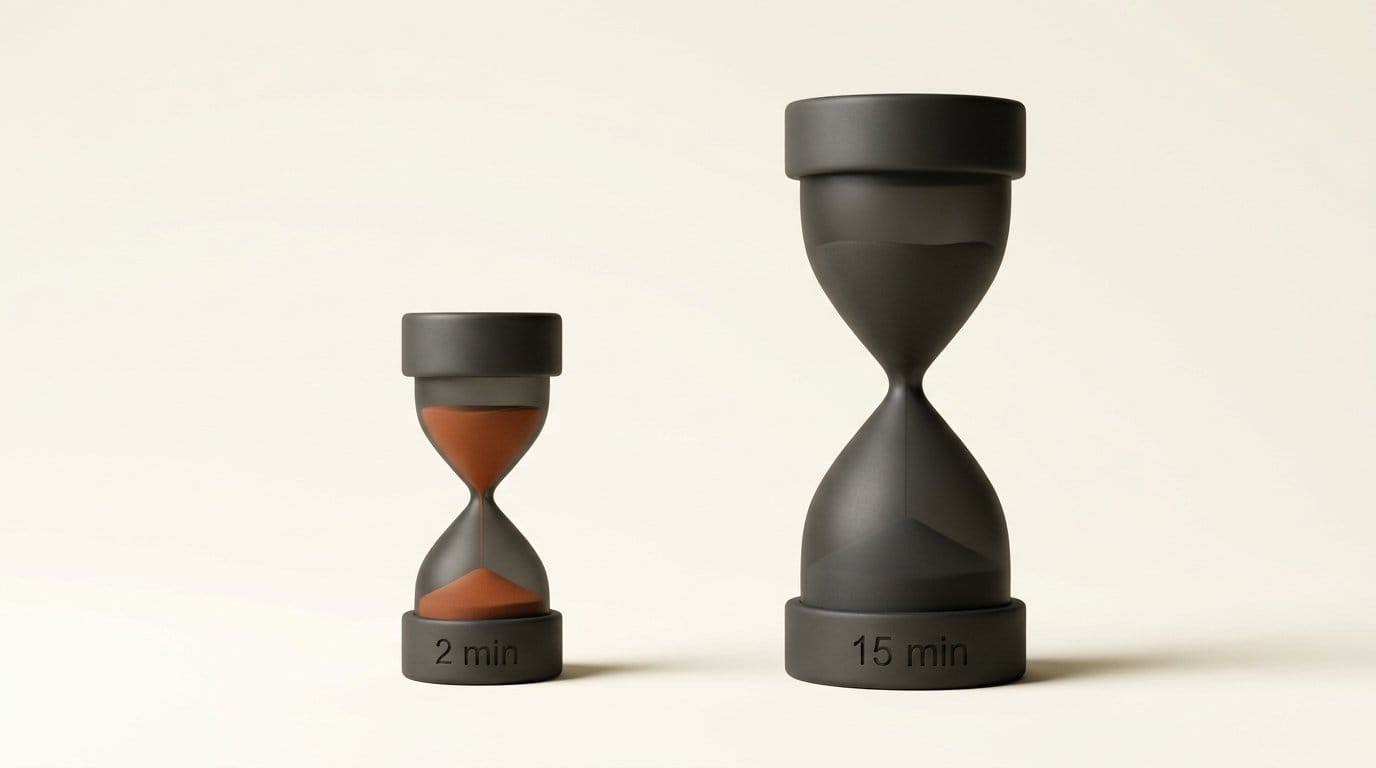
The session limits are stricter than the launch posts suggest. Google's session management docs say: "Without context window compression, audio-only sessions are limited to 15 minutes, and audio-video sessions are limited to 2 minutes due to token limits. Exceeding these limits will terminate the session."
The same page gives the workaround. Context window compression extends a session "to an unlimited amount of time," but the WebSocket connection itself lasts "around 10 minutes," after which your client must reconnect with a session resumption handle inside a window of roughly 10 minutes. So a 20-minute tutoring call is possible, but only if you build compression and reconnection into the client from day one. A demo copied straight from the quickstart will cut out at two minutes.
The Gemini 3.8 Audio model card is blunter: "Gemini 3.8 Live with Live Avatar and Gemini 3.8 Live Extended Thinking with Live Avatar can support a few minutes of continuous interaction, rather than extended hours." The card also lists a 24K output-token limit "With Live Avatar", against 64K without it. At the pricing page's 6,192 tokens per second, 24K tokens would be under four seconds of video, so the two documents cannot be counting the same token. Google has not explained the difference.
Real-Time Avatars Compared
The table uses each vendor's own published figures. Per-minute prices marked "our arithmetic" are derived from credit rates; latency figures measure different things, so read that row as "what the vendor claims", not as a ranking.
| Gemini 3.8 Live Avatar | Meta Muse Realtime Avatar | Runway Characters | HeyGen LiveAvatar | Anam | |
|---|---|---|---|---|---|
| Can you buy it? | Yes, Gemini Enterprise (Google Cloud) | No API, no price, no date | Yes, Runway Dev API | Yes, API with free tier | Yes, API with free tier |
| Price per minute | ~$0.39 while speaking, ~$0.005 while listening (our arithmetic) | Not published | $0.20 plus $0.02 per session (our arithmetic) | $0.18 Full mode, $0.09 Avatar Only on Essential (our arithmetic) | $0.11 to $0.16 overage by plan |
| Session limit | 2 min by default; longer with compression and reconnects | "As long as the conversation does" | 5 min hard cap | 2 min free, 20 min Essential, 60 min Business | 3 min free to 2 h on Growth |
| Stated latency | No figure published | ~870 ms, end of user turn to first byte | 1.75 s server-side, end of speech to response | <300 ms median time to first frame | 180 ms (vendor claim) |
| Custom face | Allowlist only | Any reference image (research demo) | One image | One image or 2 min of footage | Yes, 1 on the free plan |
| Watermark | SynthID | Meta Video Seal | Not stated | Free tier only | Removable from Explorer ($49) |
Sources for the non-Google columns: Runway's developer pricing ("2 credits upfront, then 2 credits per 6 seconds", credits at $0.01) and its session docs ("Sessions have a maximum duration of 5 minutes"); the LiveAvatar plan list (2 credits per minute in Full mode, $99 for 1,100 credits on Essential); and Anam's pricing page.
Meta's Avatar Won the Test and Has No Price
Meta's research post is the most technically specific of the four. Muse Realtime Avatar "streams 448x768 portrait video at 25 frames per second with approximately 870 ms of latency as measured from the end of a user's turn to when they receive the first byte of the synchronized voice-and-video response." It renders photos, illustrations, animals and household objects, and Meta says 12 real-time sessions fit on a single GB200.
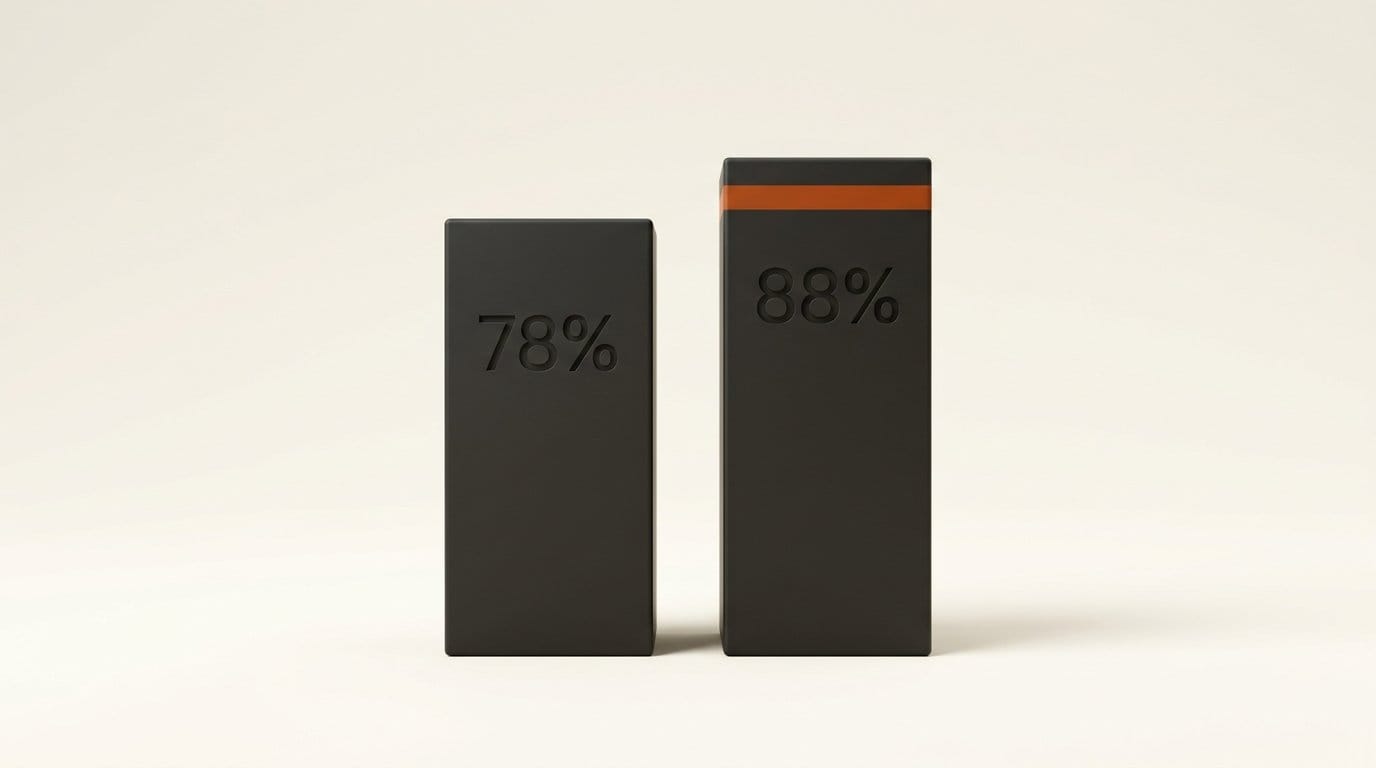
Meta ran a preference study against the two products you can actually buy. Raters held two- to three-minute conversations with matched avatar identities. The chart on the post puts Muse ahead of Runway Characters 78% to 22% and ahead of HeyGen LiveAvatar 88% to 12%. The text adds one honest caveat: "The mannerism comparison with Runway Characters was not statistically distinguishable from parity." It is Meta's own test, of Meta's own model, with no public protocol.
None of that is available to a builder. The post closes with "All examples in this blog post illustrate model capability and do not all reflect avatars available in the Muse app," and Meta's developer pricing page lists Muse Spark, Muse Image and Muse Voice Transcribe, but no avatar model. For now it is a feature of Meta's consumer agent and a benchmark the paid products will be measured against.
When Google's Idle-Time Discount Wins
Google charges more per speaking minute but nothing for the avatar's video while it listens. Runway, by our reading of its per-6-second rate, bills the whole session. That makes the talk ratio the deciding number.
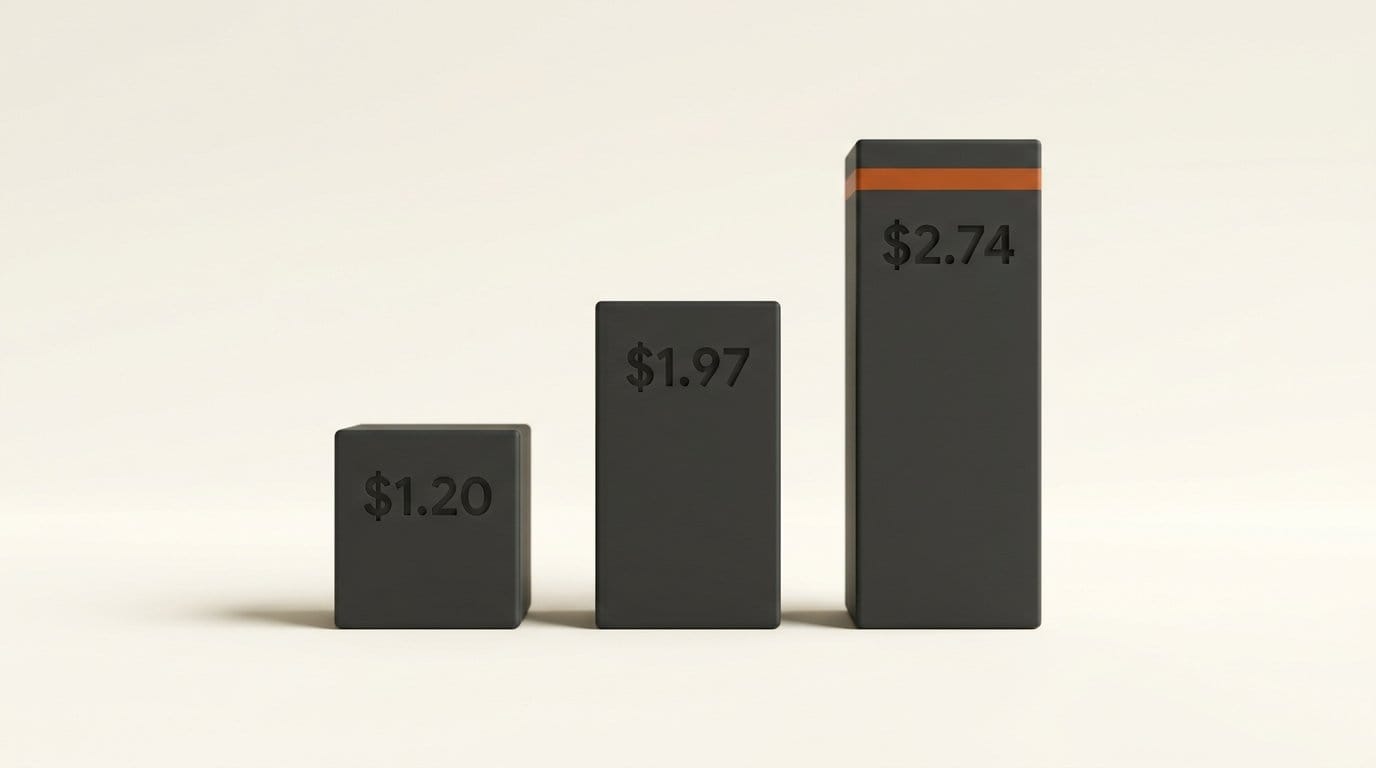
At $0.39 a speaking minute, Google is cheaper than Runway's $0.20 only when the avatar talks less than 51% of the time, and cheaper than HeyGen's $0.18 Full mode below 46% (our arithmetic, text tokens excluded; HeyGen's rate is the Essential plan's $99 spread across its 1,100 credits). Some examples for a 10-minute conversation on Google:
- Intake or support agent, avatar talks 30% of the time: about $1.20.
- Balanced conversation, 50%: about $1.97.
- Tutor, course guide or product demo, 70%: about $2.74.
A listening-heavy agent, such as a claims intake that watches the user's camera, is where Google's billing rule pays off. A presenter-style avatar that explains a course module or walks through a product talks most of the time, so it costs roughly twice as much on Google as on Runway or HeyGen. Runway also cannot run it past five minutes in one session.
97 Languages or 24?
Google's own pages disagree on the language count. The launch post says the avatar "can seamlessly transition across 97 languages without degrading video fidelity," and the Cloud blog says the model "understands and speaks 97 languages." The Live API overview on the same platform says "Converse in 24 supported languages," and the voice configuration page lists the same 24 languages.
No page reconciles the two numbers. The likely reading is that the model understands far more languages than the Enterprise endpoint officially supports for spoken output, but that is our inference, not Google's statement. If your audience is outside the 24 listed languages, test lip-sync in that language before you promise it to anyone.
How to Choose, Step by Step
- Decide how long one conversation must run. Under five minutes, all four paid options work. Over five, drop Runway. Over two, plan compression and reconnection on Google, or pick a HeyGen or Anam tier with a longer cap.
- Estimate the talk ratio. Time a real script. Under about 45%, price Google first. Above it, Runway, HeyGen and Anam are cheaper per minute.
- Check whether you need your own face. Runway and HeyGen build one from a single image today. Google needs an allowlist request through a sales team.
- Check where you can get an account. Google requires a Cloud project on the Enterprise platform; the others sell credits or plans directly, and HeyGen and Anam have free tiers for a first test.
- Test latency yourself. The published numbers measure different moments (first byte, first frame, server-side only), so a 60-second call on your own network tells you more than any spec sheet.
What to Do Next
If you are building an avatar that mostly listens, such as an intake form, a support desk or a coach that watches your camera, open a Google Cloud project and try the prebuilt "Ben" avatar in the console's Stream realtime page, with context compression switched on from the first session. If your avatar mostly talks, like a course presenter, a product explainer or a character for a stream, start with HeyGen's free tier or Runway's pay-as-you-go credits, and treat Meta's numbers as the quality bar to hold them to until Muse ships an API.
Frequently asked questions
Can I use Gemini Live Avatar in AI Studio or the regular Gemini API?
No. The consumer Gemini API page for gemini-3.8-live lists text and audio output only. Live Avatar runs on the Gemini Enterprise Agent Platform in Google Cloud, with US and EU endpoints.
How much does Gemini Live Avatar cost per minute?
About $0.37 per minute of avatar video plus $0.018 per minute of spoken audio, so roughly $0.39 per minute while the avatar speaks. Google does not bill video while the avatar listens. Text, reasoning and re-processed context tokens are extra.
Why does my Live Avatar session stop after two minutes?
Google's docs limit audio-video sessions to two minutes when context window compression is off. Turn compression on, and handle the roughly 10-minute WebSocket limit with session resumption, to keep a conversation going.
Can I make a custom avatar of myself with Gemini?
Only if Google adds your organisation to an allowlist through its Cloud account team. You also need a portrait reference image of at least 704 x 1280 pixels and the consent and rights for the face and voice you use.
Is Meta's Muse Realtime Avatar available to developers?
Not yet. Meta has published the research and a preference study but no API, price or release date, and its developer pricing page lists no avatar model.
Which real-time avatar has the lowest latency?
The vendors measure different things, so the numbers cannot be ranked directly. Meta reports about 870 ms to the first byte of a response, Runway 1.75 seconds server-side, and HeyGen under 300 ms to the first frame. Google publishes no figure.