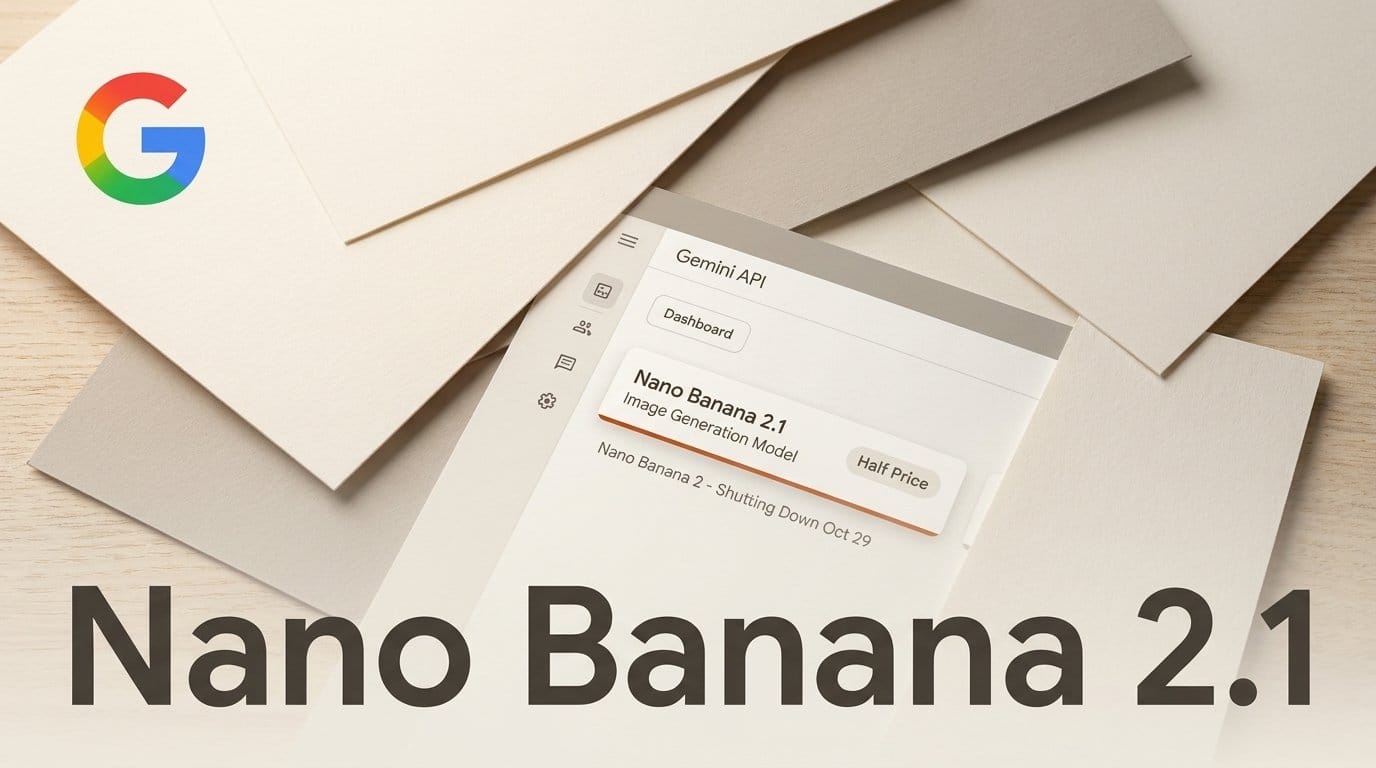
Google released Nano Banana 2.1 (model code gemini-nano-banana-2.1) on October 6, 2026, announcing it from the main Google account on X at 16:00 UTC instead of in a blog post. It is an update to Nano Banana 2 (Gemini 3.1 Flash Image), and in the Gemini API it costs half as much per picture: image output is $30 per million tokens against $60, which works out to $0.0336 for a 1K image, $0.0504 for 2K and $0.0756 for 4K.
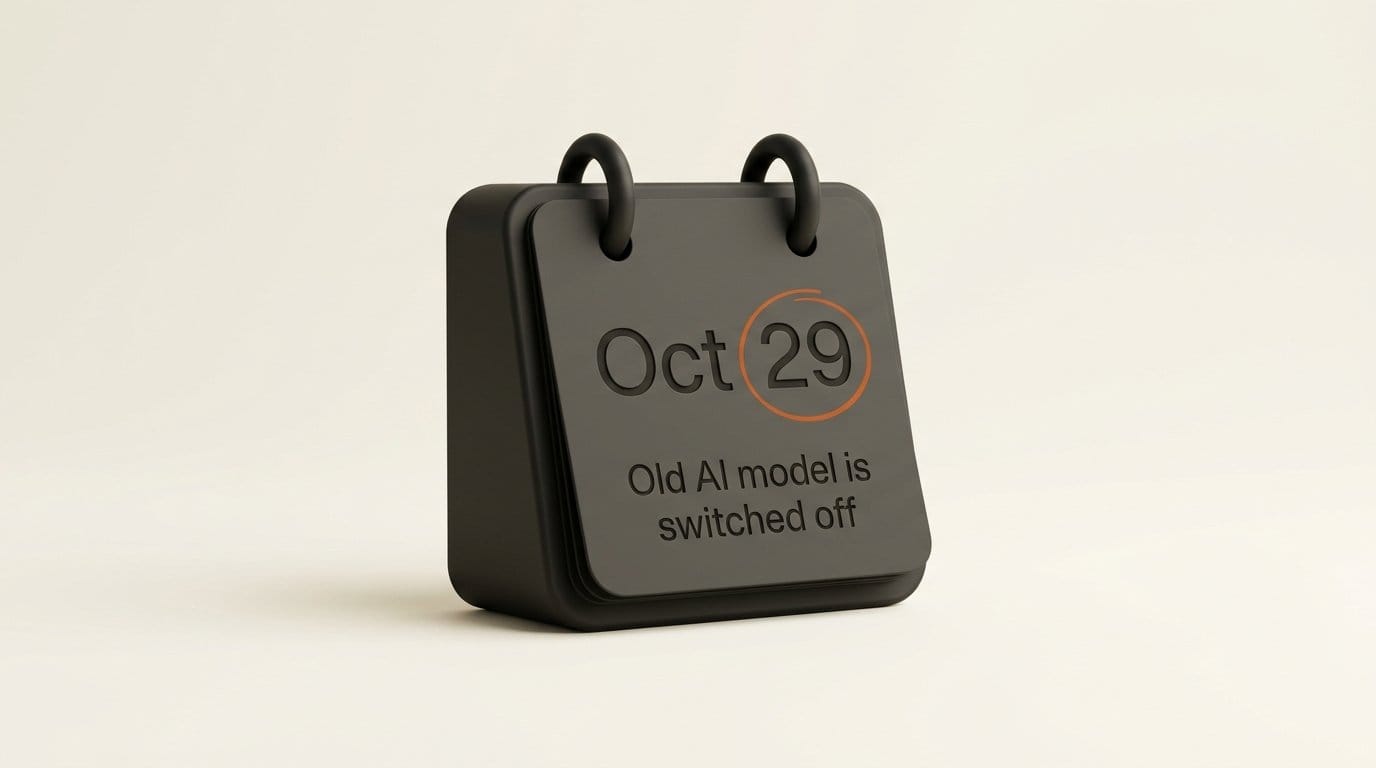
The price cut comes with a deadline. Google's deprecations page gives gemini-3.1-flash-image a shutdown date of October 29, 2026, 23 days after launch, and names Nano Banana 2.1 as the replacement. Anything you built on Nano Banana 2 has to move this month. The move is mostly good news, with three settings that can quietly change your bill.
What Google shipped on October 6
Google's post says Nano Banana 2.1 "outperforms our previous models across the board, with notable leaps in visual design, mask-based editing, and subject consistency." The Google AI Studio account pointed developers to ai.studio the same minute. The model page lists what changed:
- Better quality and realism at 1K, 2K and 4K output, with 1K as the default.
- A fix for tiling artifacts on the extreme ratios (1:4, 4:1, 1:8 and 8:1) at 2K and 4K.
- Better text rendering and infographic layout.
- Up to 14 reference images, with consistency for up to 4 characters and fidelity for up to 10 objects.
- Grounding with Google Web Search and Google Image Search.
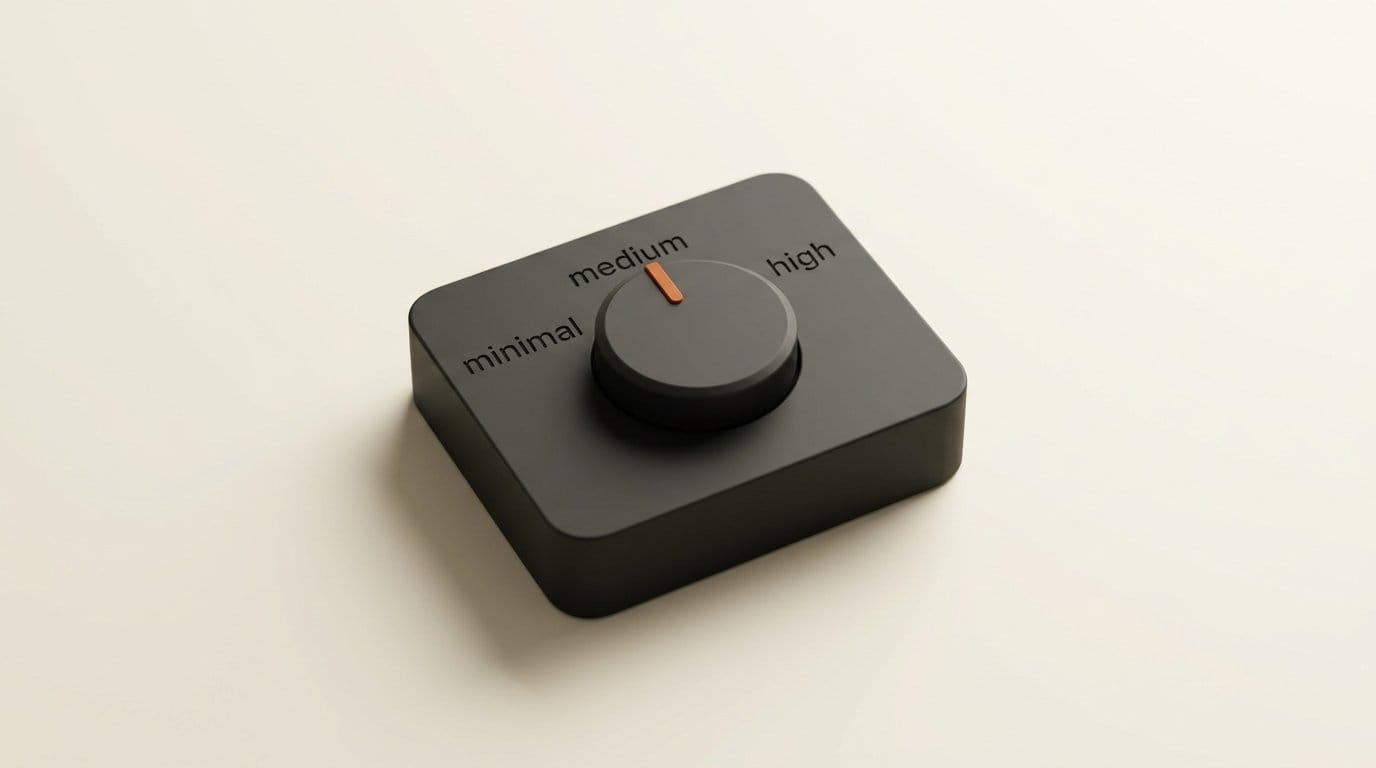
- Three thinking levels:
minimal,medium(the default) andhigh.
It takes text, images, video and PDF as input, with a 131,072-token input limit and a 32,768-token output limit. Batch API is supported. Flex and Priority inference, function calling, structured outputs and context caching are not. It is a stable model ID from day one, not a preview.
Outside the API, it is live in more places than one. Google's Robby Stein posted that it is rolling out in AI Mode in Search, where you tap the banana icon under the search box, and Search Engine Roundtable confirmed it working there the same afternoon. Enterprise teams get it through the Gemini Enterprise Agent Platform model page, and it is also listed on OpenRouter.
Nano Banana 2.1 vs the rest of the Nano Banana family
Every price below comes from the Gemini API pricing page, standard (non-batch) tier. The Arena scores are from the text-to-image and image edit leaderboards as of October 6, 2026.
| Model | 1K image | 2K image | 4K image | Input per 1M tokens | Default thinking | Arena text-to-image | Arena image edit | API shutdown |
|---|---|---|---|---|---|---|---|---|
Nano Banana 2.1 (gemini-nano-banana-2.1) | $0.0336 | $0.0504 | $0.0756 | $1.50 | medium | 1328 (#5) | 1428 (#6) | None announced |
Nano Banana 2 (gemini-3.1-flash-image) | $0.067 | $0.101 | $0.151 | $0.50 | minimal | 1261 (#11, web search) | 1387 (#14, web search) | October 29, 2026 |
Nano Banana 2 Lite (gemini-3.1-flash-lite-image) | $0.0336 | 1K only | 1K only | $0.25 | minimal | 1250 (#15) | Not in top 20 | None announced |
Nano Banana Pro (gemini-3-pro-image) | $0.134 | $0.134 | $0.24 | $2.00 | Always on, not adjustable | 1248 (#16, 2K) | 1390 (#12, 2K) | None announced |
Three things stand out. First, Nano Banana 2.1 now costs exactly what Nano Banana 2 Lite costs at 1K, while scoring 78 points higher on text-to-image and offering 2K and 4K. Lite keeps a much cheaper input price, $0.25 against $1.50, which only matters if you send many reference images.
Second, the new Flash-tier model is ahead of Google's own Pro model on both boards: 80 points ahead on text-to-image and 38 ahead on editing, at 38% of Pro's 2K price. Pro still holds features 2.1 does not have: up to 5 character references and 3 dedicated style references, against 2.1's 4 characters and no style slot.
Third, it is not the best image model on Arena. OpenAI's GPT Image 2.5 variants and GPT Image 2 (medium) hold the top three places on both boards, with GPT Image 2 at 1383 on text-to-image and 1462 on editing. Nano Banana 2.1's 1328 also rests on 5,312 votes with a margin of 9 points, and its rank spread of 4 to 6 means it is statistically level with MAI-Image-2.6 and Grok Imagine Image 2.0. Treat the rank as early.
The three catches in the migration
The image price halved, and the token counts did not change: a 2K image is 1,680 output tokens on both models, according to the resolution tables in the image generation guide. The rate per token is what moved. Three other rates moved the other way.
1. Thinking now defaults to medium, and costs more per token. Nano Banana 2 supported minimal and high and defaulted to minimal. Nano Banana 2.1 adds medium and makes it the default. Text and thinking output is billed at $7.50 per million tokens on 2.1, against $3 on Nano Banana 2. Every 1,000 thinking tokens therefore cost $0.0075, about 22% of a 1K image. Google says the interim "thought images" are not charged, but the thinking tokens are. If you swap the model string and change nothing else, each call thinks more than it did before, at a higher rate, and takes longer.
2. Input costs three times as much. Input is $1.50 per million tokens against $0.50. For a short text prompt this is a rounding error. For editing with many references it is not, because each reference image is input. Google does not publish a per-image input token count for 2.1. For Nano Banana Pro it lists $0.0011 per input image at $2 per million, which is 560 tokens. If 2.1 counts images the same way, 14 references add about $0.012 to a call, so even then the output still dominates.
3. There is no 512px size. Nano Banana 2 offered 0.5K images at $0.045. Nano Banana 2.1 starts at 1K. A pipeline that asks for 0.5K will need its image_size changed. The upside: 2.1's cheapest 1K image, at $0.0336, already costs less than Nano Banana 2's 512px preview did.
What a 10,000-image month costs
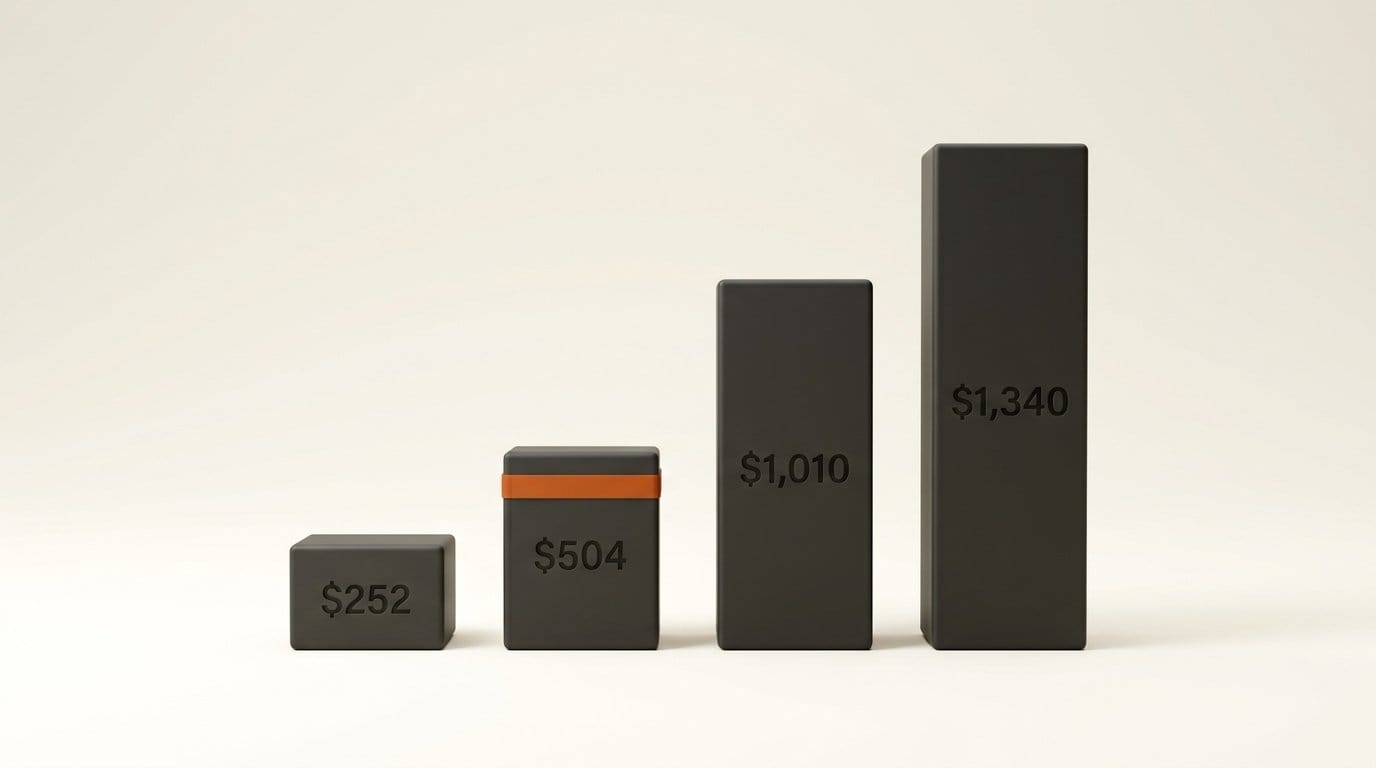
Take a creator tool or content pipeline that renders 10,000 images a month at 2K. Image output alone, before thinking and input tokens, costs:
- Nano Banana Pro: $1,340
- Nano Banana 2: $1,010
- Nano Banana 2.1: $504
- Nano Banana 2.1 on the Batch API: $252, since batch image output is $15 per million tokens ($0.0168 at 1K, $0.0252 at 2K, $0.0378 at 4K)
The batch line is the one most teams leave on the table. Thumbnails, product shots, social variants and anything else that does not have to be back in seconds can wait for a batch job. At 4K the gap is wider still: $0.151 per image on Nano Banana 2 against $0.0378 on 2.1 batch, a quarter of the price.
Grounded prompts carry a separate charge. Search grounding gives 5,000 free requests a month, shared across all Gemini 3.x models, then costs $14 per 1,000. One grounded request costs about 40% of a 1K image, so a weather-map or live-data workflow should count lookups as well as images.
How to migrate before October 29
The change is one string, but test it before you ship. A safe order:
- Find every call. Search your code, environment files and no-code automations for
gemini-3.1-flash-image. The old preview IDgemini-3.1-flash-image-previewshut down on June 25, 2026, so anything still using it is already failing. - Swap the model string to
gemini-nano-banana-2.1. - Pin the thinking level. Set it explicitly so the bill does not change behind your back: start with
minimalto match Nano Banana 2, then testmediumon the prompts where quality matters. - Replace 0.5K requests with
"1K". - Re-run a fixed prompt set of 20 to 50 prompts: text-heavy layouts, a 4:1 or 8:1 banner, a multi-character scene with references and a few mask edits. Compare against your saved Nano Banana 2 outputs before switching production.
- Move non-urgent jobs to batch for the half price.
In Google's Python SDK, the request looks like this, using the field names from the image generation guide:
interaction = client.interactions.create(
    model="gemini-nano-banana-2.1",
    input=prompt,
    generation_config={"thinking_level": "minimal"},
    response_format={
        "type": "image",
        "aspect_ratio": "16:9",
        "image_size": "2K",
    },
)
If you only use Nano Banana through the Gemini app, AI Mode or a third-party tool, there is nothing to do. Tools built on the Gemini API face the same October 29 deadline, and you will see 2.1 when they switch.
Who should switch now, and who should wait
Switch now: anyone on Nano Banana 2 in the API. You have no choice after October 29, and the new model is cheaper and ranks higher. Use the remaining weeks to test rather than to wait.
Test it against Pro: teams paying $0.134 per 2K image for Nano Banana Pro. On Arena, 2.1 now outscores it at well under half the price. Keep Pro for the jobs that need its 3 style references or a fifth character reference, and check your own brand work, because Arena voters are not your art director.
Stay on Lite: high-volume 1K jobs that send many references, where the $0.25 input price beats $1.50. Our earlier piece on Nano Banana 2 Lite covers where that model fits.
Look elsewhere: if top Arena quality is the only thing that matters, OpenAI's GPT Image 2 family still leads both boards.
Frequently asked questions
What is Nano Banana 2.1?
Nano Banana 2.1 is Google's image generation and editing model released on October 6, 2026, model code gemini-nano-banana-2.1. It replaces Nano Banana 2 (Gemini 3.1 Flash Image) as Google's fast, low-cost image model, with better text rendering, character consistency and mask-based editing.
How much does Nano Banana 2.1 cost?
In the Gemini API, image output is $30 per million tokens: $0.0336 per 1K image, $0.0504 per 2K and $0.0756 per 4K. Batch jobs cost half that. Input is $1.50 per million tokens, and text and thinking output is $7.50 per million.
When does Nano Banana 2 shut down?
Google lists October 29, 2026 as the shutdown date for gemini-3.1-flash-image in the Gemini API, with gemini-nano-banana-2.1 as the recommended replacement.
Is Nano Banana 2.1 better than Nano Banana Pro?
On Arena as of October 6, 2026, yes: 1328 against 1248 on text-to-image and 1428 against 1390 on image editing. Pro still supports more character references and dedicated style references, so test your own work before dropping it.
Does Nano Banana 2.1 support 512px images?
No. It generates at 1K, 2K and 4K only. Nano Banana 2's 0.5K option does not carry over, but a 1K image on 2.1 costs less than a 0.5K image did on Nano Banana 2.
How do I control thinking in Nano Banana 2.1?
Set thinking_level in generation_config to minimal, medium or high. The default is medium, and thinking tokens are billed, so set it explicitly.
Where can I use Nano Banana 2.1 without the API?
It is rolling out in AI Mode in Google Search (the banana icon under the search box) and is available to try in Google AI Studio. Enterprise customers can use it on the Gemini Enterprise Agent Platform.