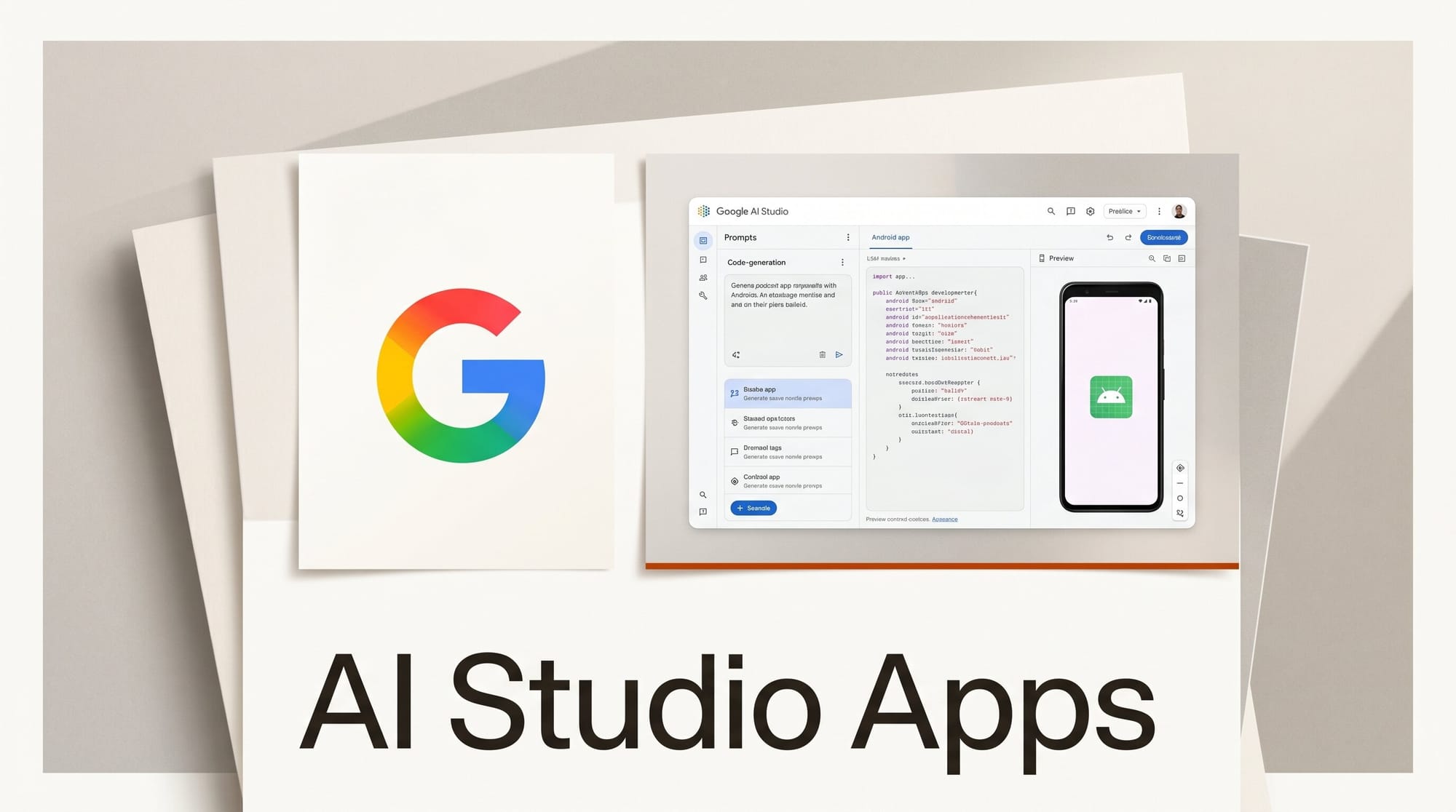
Google AI Studio's prompt-to-Android-app builder hit 250,000 generated apps in its first seven days, AI Studio lead Logan Kilpatrick said Monday. Roughly 99 percent of those builders had never written a line of Android code before, a milestone that lands one week after Google unveiled the feature at I/O 2026.
Try it: build your first Android app in 30 minutes
Open ai.dev/apps and type a one-sentence description of what you want: "a workout tracker that logs sets, reps, and weight, with a weekly summary chart." AI Studio scaffolds a full Kotlin and Jetpack Compose project, opens it in an embedded Android Emulator inside your browser, and lets you iterate by chatting. When you like the result, connect your phone over USB and AI Studio pushes the APK to your device using the integrated Android Debug Bridge. ZIP export and a direct GitHub push are both one click.
Why it matters
The 250K figure is large because the barrier to native Android development collapsed in one shipping cycle. Setting up Android Studio, installing the SDK, configuring an emulator, and learning Gradle used to be a weekend project before "Hello World." The official Android Developers post describes a browser-only flow that skips all of that. For creators who want a personal utility app (a counter, a habit tracker, a wedding planner) without learning a stack, this is the first prompt-driven mobile builder that ships native code, not a wrapped WebView.
Key details
Generated apps use Google's recommended stack: Kotlin, Jetpack Compose UI, and standard Android APIs for Camera, GPS, Bluetooth, and accelerometer. AI Studio can also call the Gemini API from inside the generated app, which makes AI-powered mobile features one prompt away. Per 9to5Google's reporting, builds publish to Google Play's internal testing track from inside AI Studio: it creates the app record, packages the bundle, and uploads. For advanced debugging, export to Android Studio or hand the project to Google Antigravity for agentic refactoring. The same release week added free Cloud SQL and Firestore for the backend half of any app you build.
What to do next
Pick one personal utility you have always wanted on your phone and ship it this week. Firebase Auth, Firestore, and App Check land next, which closes the loop on apps that need real users. If you already have an iOS or React Native app you want on Android, the new Migration Assistant in Android Studio handles the port from AI Studio's export.