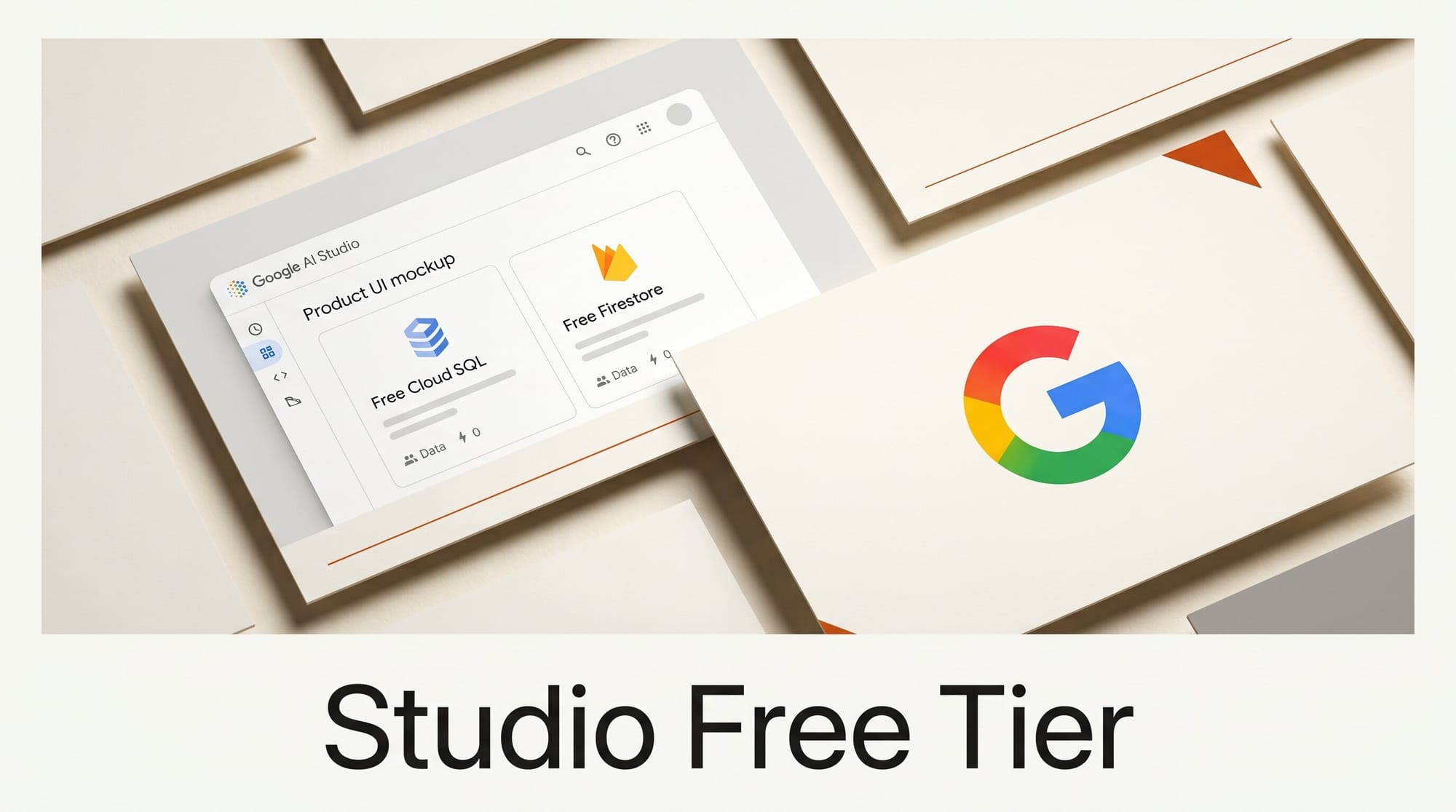
Google rolled out a major upgrade to its AI Studio vibe coding integration on May 21, 2026, adding Cloud SQL for PostgreSQL as a relational database option alongside Firestore. New users can now deploy up to two full-stack apps to a free Google Cloud Starter Tier with no billing account required.
The change builds on the vibe coding launch from March, which paired Gemini-generated apps with Firebase Auth, Cloud Run, and Firestore. The May 21 update adds relational storage, tighter Workspace integration, and an agent that picks the right database automatically based on the prompt.
Try It: Ship a Full-Stack App for Free
Open AI Studio in your browser, describe a tool you want to build (a project tracker, a guest book, a habit logger). The agent detects when the app needs persistent data and offers to set up a database. Click Enable Firebase, or accept the Cloud SQL prompt, and AI Studio provisions the backend, generates the schema, writes the data access code, and configures Google Sign In. One more click deploys the result to Cloud Run on the Starter Tier. No credit card. No Google Cloud account. The app runs at a public URL within minutes.
Why It Matters
The biggest gap in earlier AI Studio builds was statelessness. Vibe coded apps generated cleanly, then lost data the moment the tab closed. With persistent storage in the loop, the agent can now build apps with login flows, shared records, and multi-session state. The free two-app ceiling lowers friction enough that creators can prototype against real backends instead of testing with localStorage. Google framed the change in its Firebase I/O update as the bridge between hobby builds and production apps.
Key Details
The Cloud blog post names the new components: Cloud SQL for PostgreSQL developer edition (scales to zero when idle, arriving next month), Firestore for document storage, Firebase Auth as the single sign-in flow for Google Workspace data such as Sheets, Calendar, and Gmail, and Cloud Run for hosting. AI Studio's agent automatically picks Firestore for document workloads and Cloud SQL for relational schemas, but a prompt can override the choice. The Starter Tier deploys without a billing account; upgrading to a standard Google Cloud project preserves all provisioned resources.
What to Do Next
Open AI Studio and burn one of the two free apps on a real use case: an internal directory, a feedback collector, a personal CRM. Audit the schema the agent generates and the Firestore Security Rules it drafts before sharing the URL publicly. Creators already using Antigravity 2.0 can move AI Studio apps into the multi-agent runtime to add longer-running workflows or background jobs once the Starter project is upgraded.