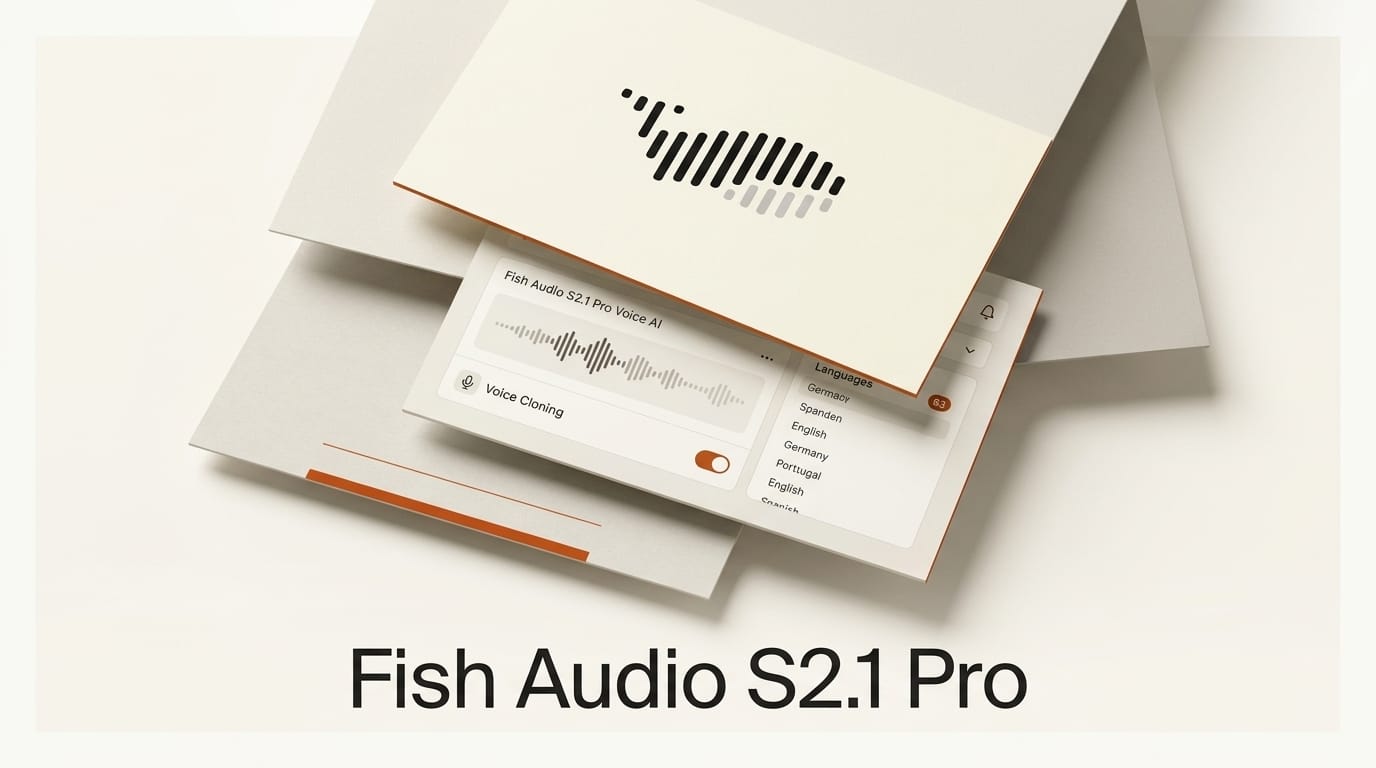
Fish Audio, the voice AI startup behind the open-source Fish Speech project, raised $52 million in seed funding on July 28, 2026, and used the moment to make its flagship S2.1 Pro model free to every developer through August 31. The round, led by Coreline Ventures and Capital Today, backs a company that already reports more than 8 million users and over $21 million in annual recurring revenue. For creators, the headline is not the money. It is that production-grade voice cloning across 83 languages, at roughly 90ms latency, is now available at no cost through a public API.
What Fish Audio Actually Shipped
Two things landed at once: a funding announcement and a product move. The company positioned itself as a direct challenger to better-known voice startups, and SiliconANGLE reported the round at $52 million led by Coreline Ventures and Capital Today, with participation from 359 Capital, Play Time, HF0, Parable, and Carya Venture Partners. Fish Audio was co-founded by CEO Rissa Cao and chief scientist Shijia Liao, a former Nvidia video researcher who trained the first models on a single GPU in his bedroom.
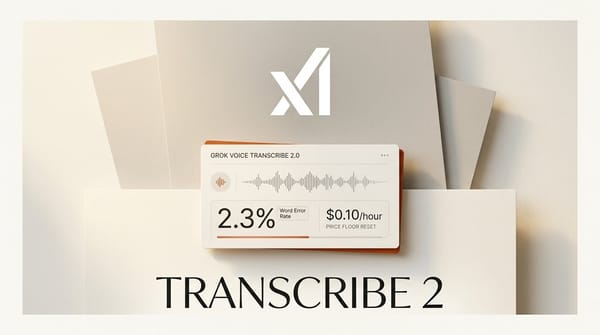
The product side matters more for anyone making audio. According to Fish Audio's own S2.1 Pro announcement, the new model carries a 61 percent win rate against the previous S2 Pro in head-to-head listening tests, delivers roughly 70 to 90ms time-to-first-audio, and more than doubles throughput under high concurrency. It supports 83 languages with word-level emotion control, and the API is free under a fair-use policy with no hard character cap through August 31, 2026.
The traction numbers give the free offer weight. Fish Audio reports more than 8 million users, over $21 million in annual recurring revenue, and upward of 15,000 natural-language controls that let you steer tone, pacing, and emotion at the word level. That is not a research demo. It is a shipping product with a real user base, which is what makes a free tier through the end of August worth building against rather than waiting out.
S2.1 Pro vs ElevenLabs and the Field
The obvious comparison is ElevenLabs, which recently raised $500 million at an $11 billion valuation. Fish Audio is not trying to match that scale yet. It is competing on price, latency, and an open-source foundation that the incumbents do not offer. The S2 model page describes a dual-autoregressive architecture trained on more than 10 million hours of audio across 80-plus languages, and the developer models overview lists the tiers a builder can call.
| Capability | Fish Audio S2.1 Pro | Fish Speech (open source) | ElevenLabs |
|---|---|---|---|
| Languages | 83 | 80-plus | 70-plus |
| Time-to-first-audio | ~70 to 90ms | Depends on your hardware | Low, hosted only |
| Voice cloning | Yes, from reference audio | Yes, self-hosted | Yes, paid tiers |
| Open source | No (hosted API) | Yes, self-hostable | No |
| Cost to start | Free through Aug 31, 2026 | Free (compute is yours) | Paid, limited free tier |
The practical takeaway: if you want the best-sounding hosted model with zero setup, S2.1 Pro is free right now. If you want full control and no vendor lock-in, the open-source path exists and is genuinely usable.
How to Clone a Voice With Fish Audio
Voice cloning on the hosted API is a short loop. The developer portal exposes the endpoints, and the free tier includes cloning from reference audio. A typical creator workflow looks like this:
- Record or export 15 to 60 seconds of clean reference audio of the target voice, mono, with no background music.
- Create an API key from the developer portal and note the S2.1 Pro model ID.
- Upload the reference clip to create a voice model, then confirm the returned voice ID.
- Send a text-to-speech request with your script, the voice ID, and any word-level emotion tags you want applied.
- Stream or download the returned audio, then iterate on the emotion controls until the delivery matches your intent.
Because time-to-first-audio sits near 90ms, the model is fast enough for interactive uses like agent voices and live narration drafts, not just batch rendering.

Open Source or Hosted: The Fish Speech Question
Fish Audio's open-source project, Fish Speech, has more than 31,000 stars on GitHub and is one of the most-used open TTS stacks available. The weights for the newer generation are published on Hugging Face, and the official Fish Speech documentation covers self-hosting. That open foundation is also why the model already runs in third-party engines. We covered how audio.cpp 0.4 runs Fish S2 locally on CUDA with no Python dependency, which means you can prototype on the free hosted API and later move the same model in-house without rewriting your pipeline.

What This Enables for Creators
For a solo creator, the meaningful change is cost and reach. Multilingual narration that used to require a paid subscription and per-character billing is, for now, free across 83 languages. That opens practical projects: dubbing a tutorial into five languages, giving a consistent branded voice to a video series, prototyping character voices for a game, or building a voice agent without committing to a per-minute contract on day one. If your workflow already involves editing recorded speech, a generated voice layer pairs well with tools like our roundup of open-source Descript alternatives for cleanup and assembly. Start on the free hosted tier to validate quality, then decide between staying hosted or self-hosting Fish Speech once your volume is clear.
Frequently Asked Questions
Is Fish Audio S2.1 Pro really free?
Yes, the S2.1 Pro API is free to every developer under a fair-use policy with no hard character cap through August 31, 2026. Paid plans exist for production service-level guarantees and latency commitments after that.
How many languages does S2.1 Pro support?
It supports 83 languages, including English, Japanese, Chinese, Korean, Spanish, Arabic, French, German, Portuguese, and Russian, with word-level emotion control.
Can I clone a voice with the free tier?
Yes. Voice cloning from a reference audio clip is available through the API, including on the free tier. You upload a short reference sample and receive a reusable voice ID.
How does Fish Audio compare to ElevenLabs?
ElevenLabs is larger and better funded, having raised $500 million at an $11 billion valuation. Fish Audio competes on price, sub-100ms latency, and an open-source foundation that ElevenLabs does not offer. For hobby and prototype work, the free S2.1 Pro tier is hard to beat.
Can I run Fish Audio's models offline?
Yes. The Fish Speech project is open source and self-hostable, and the S2-generation weights are published on Hugging Face. Third-party engines already run the model locally, so you are not locked into the hosted API.
What is the latency for real-time use?
Time-to-first-audio is roughly 70 to 90ms on the standard API, with more than double the throughput of the previous generation under high concurrency, which is fast enough for interactive agent voices and live narration.