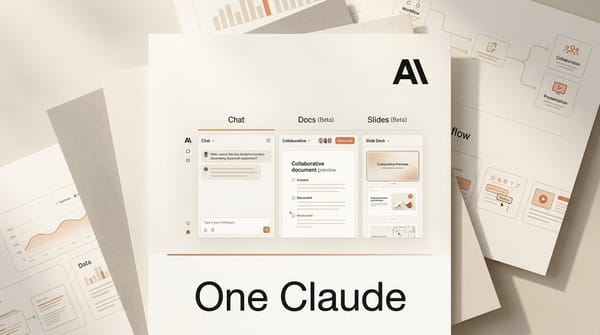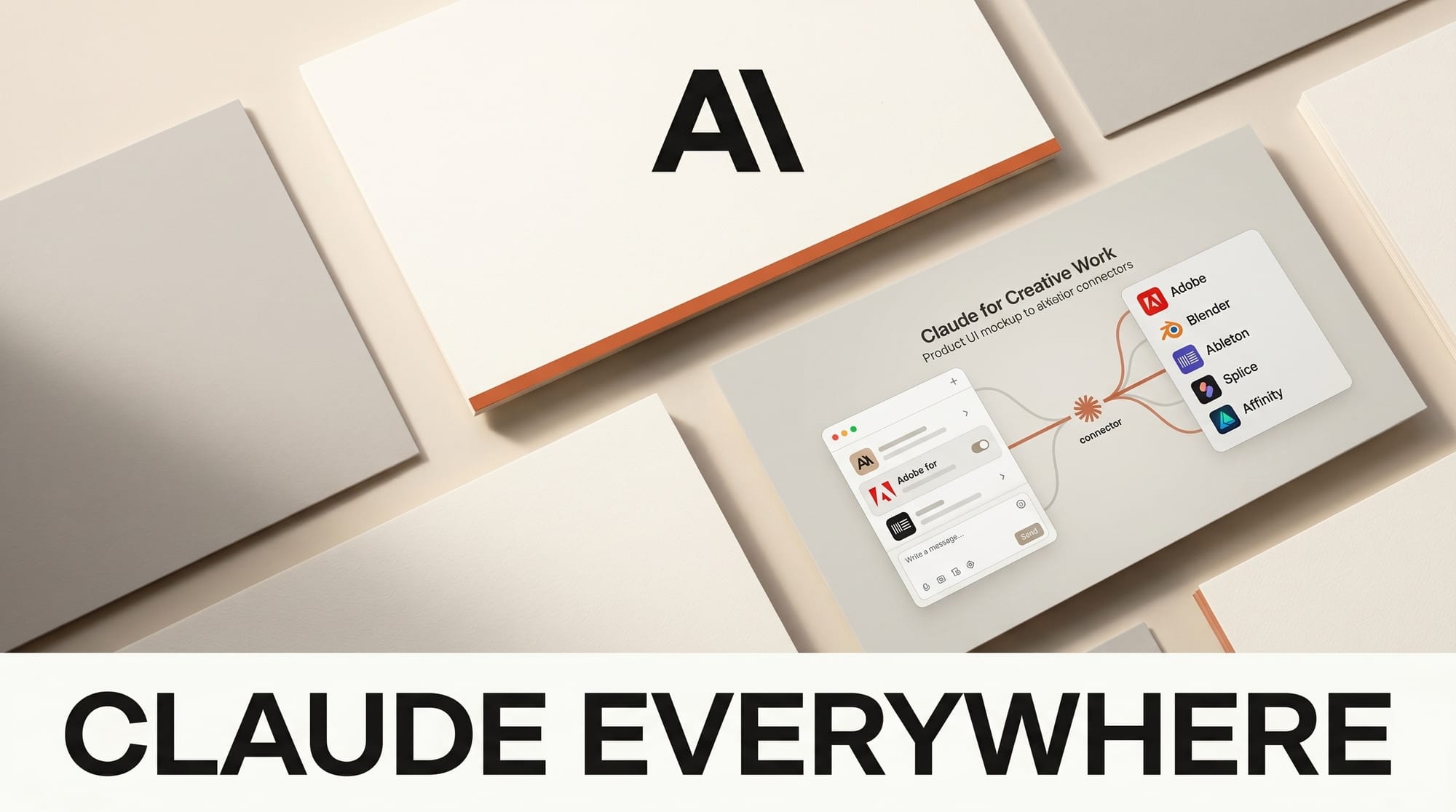
Anthropic shipped Claude for Creative Work on April 28, 2026: a suite of eight connectors that wire Claude directly into Adobe Creative Cloud, Blender, Ableton, Autodesk Fusion, Resolume, SketchUp, Splice, and Canva-owned Affinity. It is the first time a frontier lab has launched a named-app integration set this broad for creative professionals, paired with a Blender Development Fund patronage and education partnerships at RISD, Ringling, and Goldsmiths. Industry coverage from 9to5Mac and No Film School framed the launch as the broadest creative-tool integration set a frontier lab has shipped. The shift in posture matters more than any single connector: instead of pulling creators into a chat window, Claude now lives inside the tools they already pay for.
Background
Anthropic announced Claude for Creative Work the same week it shipped Claude Design, an experimental visual workspace, and one week after the Anthropic Economic Index reported that creatives were the cohort most concerned about AI displacement and the cohort least likely to feel productivity gains from existing tools. Read together, the three releases are a coordinated thesis: text-only Claude was a bad fit for creative work, and Anthropic is repositioning the model around the surfaces creators actually use.
The connectors run on the open Model Context Protocol (MCP), which means they are not a private Anthropic API but a standard interface any MCP-compliant client can implement. That decision matters for two reasons. First, the same Adobe or Blender connectors should work with future Claude releases without rewrites. Second, competitors who adopt MCP can interoperate, which is a different bet than the proprietary plugin ecosystems Adobe Firefly and Microsoft Copilot have pursued. The protocol is the leverage; the connectors are the proof.
Education and ecosystem signals reinforce the launch. Anthropic joined the Blender Development Fund as a Corporate Patron, with funding earmarked for the Python API that the Blender connector calls. Programs at Rhode Island School of Design, Ringling College of Art and Design, and Goldsmiths University of London put Claude into curricula at three schools that explicitly train working creative professionals. None of this is incidental: it is a long-game push to make Claude part of the default toolchain in audio, 3D, and design education.
Deep Analysis
From sidecar to control surface
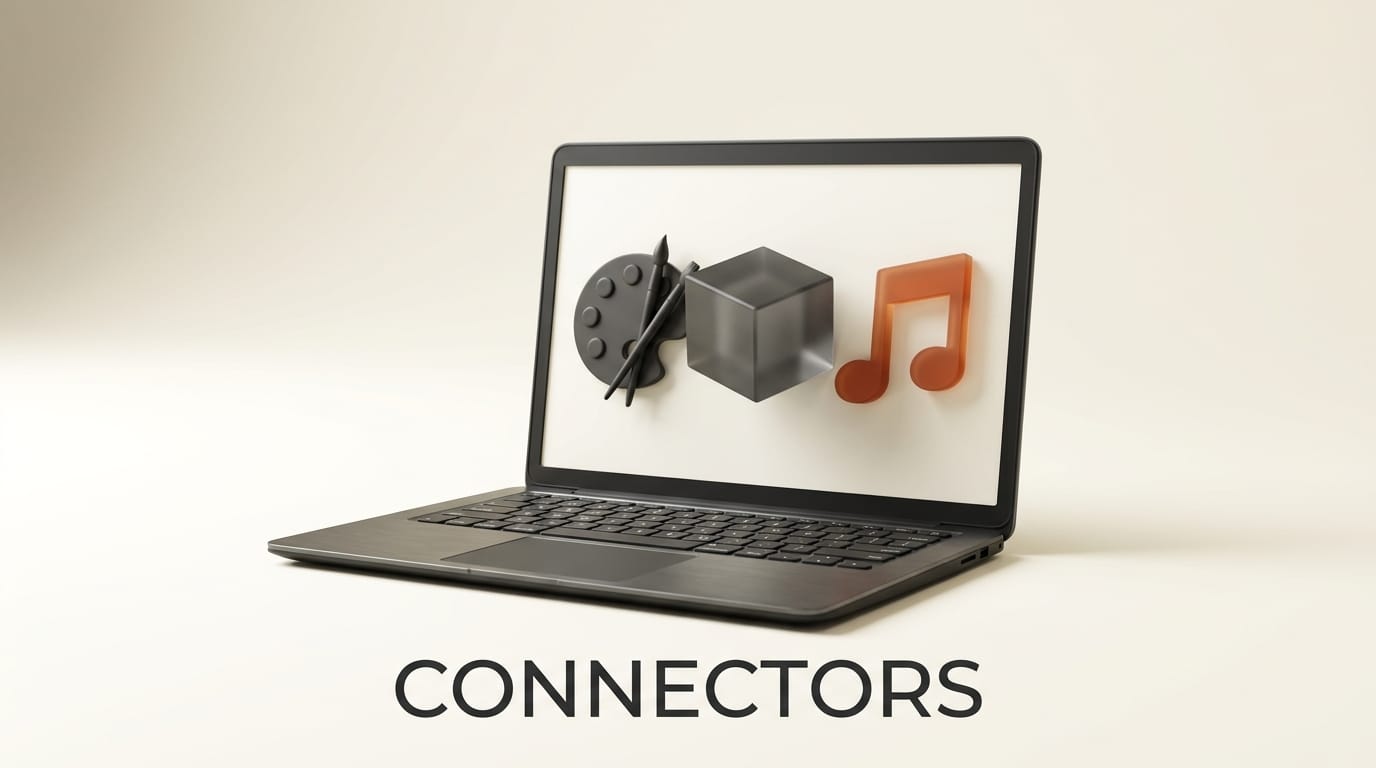
The single biggest workflow change is the unit of interaction. With chat-only Claude, the creator opened a tab, described a task, copied output, switched apps, pasted, and iterated. The friction was real and well-documented in our coverage of AI coding tools, where developers solved the same problem with IDE-native agents like Cursor and Claude Code. Creative work was waiting on the same shift, and these connectors deliver it. Claude can now read open files in Photoshop, scrub Splice for samples by mood, batch-process assets in Affinity, and chain actions across multiple apps inside a single conversation.
The competitive frame is sharp. Adobe's Firefly Assistant brings Adobe's models inside Adobe's apps. Microsoft Copilot brings Microsoft's models inside Microsoft's apps. Anthropic's pitch is the inverse: bring Claude to whatever the creator is already running, including Adobe's apps. For studios with mixed toolchains, that "go where I work" posture is meaningfully different from "consolidate on our suite."
The MCP architecture and why it matters
Each connector is an MCP server exposing tools and resources Claude can call. That separation is what lets the same plumbing work for Photoshop, Blender, and Splice without bespoke per-app integration code on the model side. It also means third-party developers can extend the surface: a studio that runs custom rigging tools in Houdini can write its own MCP server and Claude consumes it the same way it consumes Anthropic's.
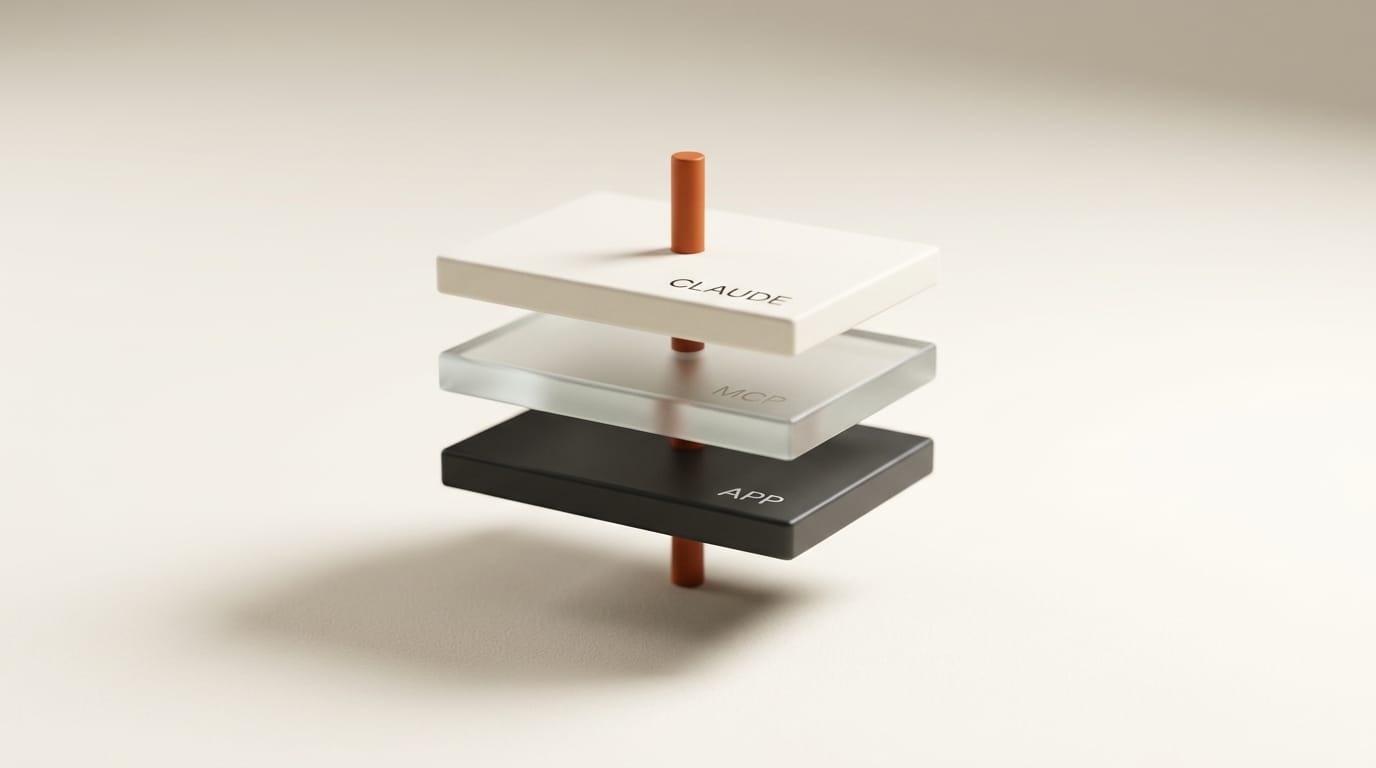
This is the same architecture pattern ComfyUI rode to a $30M Series B at a $500M valuation: a node-based runtime where every model becomes a programmable building block. The bet across both ecosystems is that creators will pay for orchestration and control, not for any single model. If Anthropic is right, the connectors stop looking like Claude features and start looking like load-bearing infrastructure for AI-augmented creative work.
Eight connectors, ranked by creator-fit
Not every connector lands with the same impact. Ranked by how cleanly they match production workflows we cover:
- Blender is the strongest fit. The Python API surface is mature, the open-source community will iterate fast, and the Anthropic patronage signals long-term investment. Expect community workflows within weeks.
- Ableton reaches the largest professional music-production cohort and pairs naturally with the broader AI music stack. Connect Claude to Ableton plus Splice and the "find me a pad that sits in this mix" prompt becomes a real workflow rather than a vibes test.
- Adobe Creative Cloud is the broadest by reach (50-plus apps including Photoshop and Premiere) but the most constrained by Adobe's own AI roadmap. The connector cohabits with Firefly Assistant; expect friction at the boundaries.
- Splice is a quiet sleeper. Sample search and licensing rights have been a bottleneck for AI-augmented music; an LLM that can browse Splice intelligently changes the producer workflow more than another model release would.
- Affinity (by Canva) is the design-tool dark horse. Designers who left the Adobe subscription model now have a credible AI-augmented alternative. Watch for switching numbers in Q2.
- Autodesk Fusion opens up parametric CAD to natural-language iteration. Architectural and product-design firms have been waiting for this exact integration.
- SketchUp targets the architecture and interior-design cohort. Less production-volume than Adobe but a deeply specific user base.
- Resolume Arena and Wire serves VJs and live-visual creators. Lower volume but the most novel use case: live performance with an AI agent in the loop.
The Blender patronage as ecosystem strategy
The Blender Development Fund contribution is the move that distinguishes this launch from a typical product announcement. Anthropic is funding the Python API surface that its own connector consumes, which directly improves the open-source platform that competes with Autodesk and Maya. That is a long-term ecosystem play, not a marketing budget line. Compared to Runway's ecosystem-over-product pivot or ComfyUI's partner-node program, Anthropic is signaling that the open creative stack is where creative-AI volume will accumulate, and they want to be inside that stack rather than fighting it.
Impact on Creators
For musicians on Ableton with Splice subscriptions, the daily workflow that previously meant tabbing between a DAW, a sample browser, and ChatGPT now collapses into one conversation. The Splice plus Ableton plus Claude combination is the first AI-augmented music production pipeline that operates inside the tools real producers already pay for, rather than asking them to migrate to a generative DAW. Pair this with Sonilo's frame-synced audio generation and the music-video stack is the most mature creative-AI use case shipping in 2026.
For 3D artists in Blender, Fusion, or SketchUp, the connector turns the model into a scripting collaborator. "Bake all the lighting and export PBR maps for these eight materials" becomes a single instruction. The benchmark to watch is whether community workflows replace the manual GUI clicks for routine production work; if they do, the per-asset cost of 3D production drops noticeably.
For designers in Adobe and Affinity, the immediate win is batch operations and brief-to-comp speed. The longer-term test is whether Anthropic's "live in the tool you use" posture beats Adobe's "use our consolidated stack" pitch. The educational partnerships at RISD, Ringling, and Goldsmiths give Anthropic a multi-year lead on the cohort that graduates into the next wave of design hires.
For VJs and live performers running Resolume, the implications are weirder and possibly larger. AI in a live performance context is not about prompt-and-wait; it is about responsive control. Whether Claude can keep up with that loop will determine whether this is a niche curiosity or a new performance category.
Key Takeaways
- Posture shift, not feature ship. Anthropic is positioning Claude as infrastructure that lives inside the tools creators already use, rather than as a destination they must visit.
- MCP is the leverage. The connectors are an open-protocol implementation, which makes them composable with future Claude releases and any third-party MCP server.
- Eight connectors, three winners early. Blender, Ableton plus Splice, and Affinity are the highest-fit launch slots for working creators in 2026.
- Education and patronage matter. The Blender fund and the RISD/Ringling/Goldsmiths programs are bigger long-term moves than the connectors themselves.
- Adobe must respond. Firefly Assistant is now competing with a model that lives inside Adobe's own apps via the new connector. Expect a counter-move at Adobe MAX.
- The Anthropic Economic Index gap closes. Last week's data showed creatives felt left behind by AI productivity gains. This week's connectors are the first credible answer.
What to Watch
Three signals over the next 90 days will tell us whether this launch lands or stalls.
First, community adoption in Blender. Open-source ecosystems either accept new infrastructure within weeks or quietly route around it. Watch the Blender community's GitHub activity around the connector, the new Python API contributions, and whether independent MCP servers for Houdini, Maya, and Cinema 4D appear without Anthropic prompting. If the answer is yes, MCP becomes the de facto standard for creative-AI integration.
Second, Adobe's response. The Firefly roadmap was already aggressive; the Claude connector challenges Adobe's "use our stack" framing inside Adobe's own apps. Expect either a deep Firefly Assistant feature push or a partnership announcement that brings Anthropic models into Firefly directly. Either response is a Q2 inflection point.
Third, whether other frontier labs follow. OpenAI's Codex and Google's Workspace AI both have the budget and reach to build named-app integrations; whether they ship MCP-based connectors or proprietary integrations will determine whether the open protocol wins. The next 60 days are the decisive window.