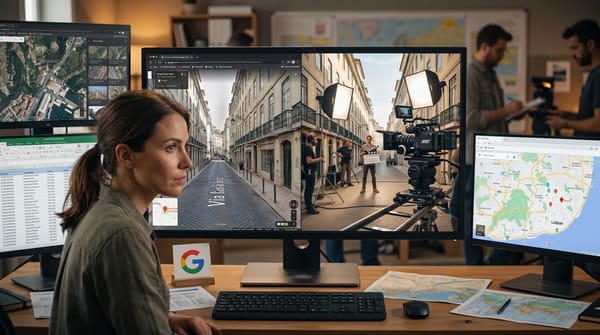
Google Maps AI Adds Film Location Scouting via Street View
Google Maps Imagery Grounding lets creators place AI-generated visuals in real Street View scenes, announced at Cloud Next 2026. Film crews can now scout locations from their desk.
Google Maps Imagery Grounding lets creators place AI-generated visuals in real Street View scenes, announced at Cloud Next 2026. Film crews can now scout locations from their desk.
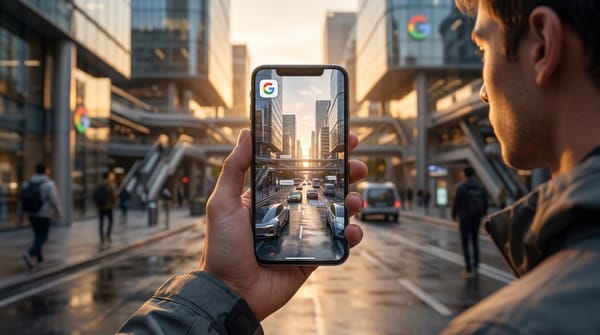
Researchers from Google, Cornell, and Stanford built CityRAG, an AI that generates navigable city walkthrough videos from a single street photo matched to real-world geography.

ByteDance’s Seedance 2.0, ranked #1 for image-to-video on the Artificial Analysis leaderboard, is now available via the Runway API for developers.
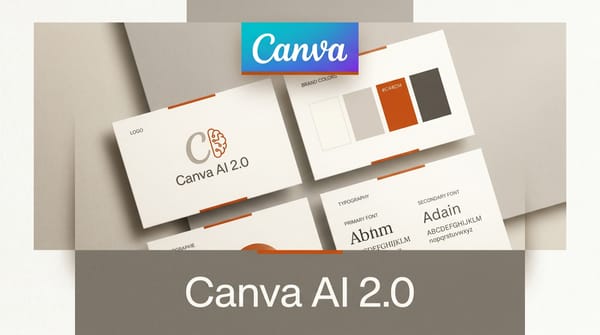
Canva launched Canva AI 2.0 on April 16, 2026 at Create in Los Angeles, upgrading its AI assistant into a fully agentic design engine with tool orchestration, persistent memory, and workflow integrations.
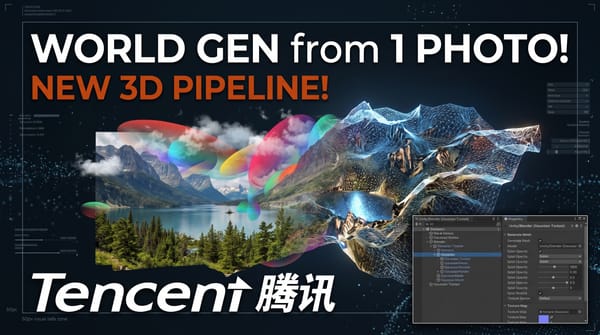
Tencent open-sourced HY-World 2.0 on April 16, 2026, a multi-modal framework that turns text or images into navigable 3D environments with meshes and Gaussian Splattings ready for Unity, Unreal Engine, and Blender.

Google added Nano Banana 2-powered personalized image generation to the Gemini app on April 16, 2026, letting subscribers create images grounded in their own Google Photos library without writing detailed prompts.

Alibaba's Happy Oyster generates navigable 3D environments and interactive video from text prompts, letting creators walk through and direct AI-built worlds in real time.
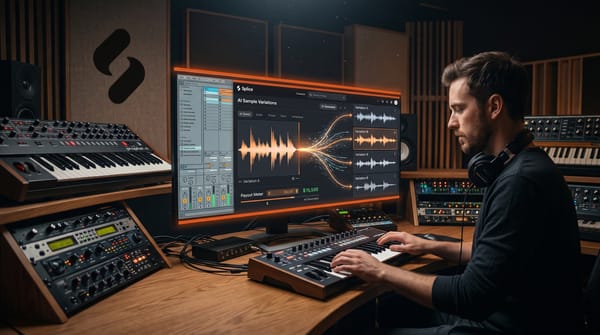
Splice launched Variations and Craft on April 15, 2026, letting producers remix any sample from its 3-million-sound library while automatically compensating the original creator.
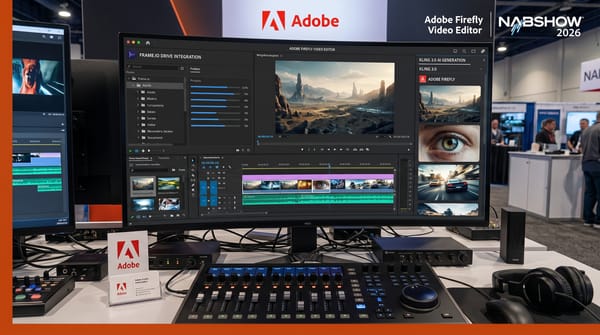
Adobe Firefly Video Editor adds Kling 3.0 AI video models, Frame.io Drive, and Enhance Speech at NAB 2026, giving creators a full AI production pipeline.
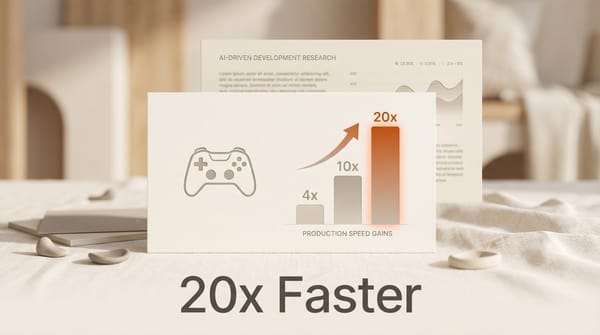
Game studios reorganizing around AI are completing prototypes 4x faster and generating UI assets up to 20x faster, according to new Wharton research.

OpenAI launched a new $100/month ChatGPT Pro tier on April 9, delivering 5x more Codex usage than Plus and filling the gap between the $20 and $200 plans.

Suno licensing negotiations with Universal Music Group and Sony Music have stalled over a core disagreement: whether users can download and share AI-generated songs outside the platform.

PrismAudio, developed by Alibaba FunAudioLLM team, generates spatial stereo audio directly from silent AI video files in an average of 0.63 seconds.

LM Studio acquired Locally AI, a mobile app for running large language models on iPhone, iPad, and Mac, expanding its local AI platform across devices.

Anthropic announced Claude Mythos Preview, a model so capable at finding software vulnerabilities that the company is refusing to release it publicly.
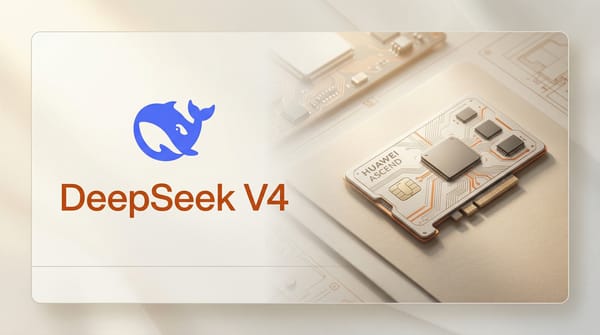
DeepSeek V4 will run exclusively on Huawei Ascend 950PR processors, marking a milestone in China's push to build advanced AI without American chip technology.
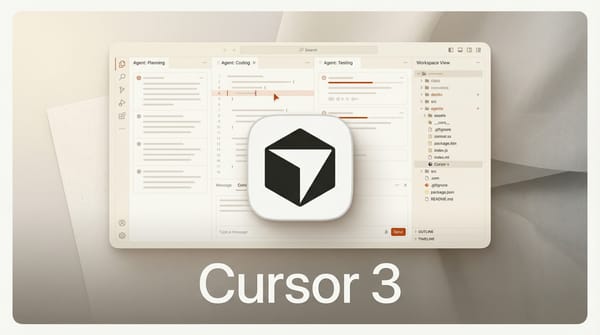
Cursor shipped a complete overhaul on April 2, replacing its code editor with a unified workspace built around AI agents, multi-agent management, and cloud-local handoff.

OpenAI acquired TBPN, the Technology Business Programming Network, a live tech news show with 300,000 followers, for low hundreds of millions of dollars.

Google Vids now lets Workspace users create AI-directed avatars using Veo 3.1, generate custom soundtracks with Lyria 3, and produce up to 10 free video clips per month.
Figma launched Make Kits and Make Attachments, two features that let design system authors teach Figma Make how to use their components and reference real data during AI generation.
Alibaba released Wan2.7-Image, a unified AI model that handles both image generation and editing in one system, with fine-grained personalization, color control, and a Pro variant capable of 4K output.
Technology Innovation Institute releases Falcon Perception, a compact 0.6B parameter vision model that beats Meta SAM 3 across six key benchmarks while running on consumer hardware.

PrismML emerged from stealth and open-sourced Bonsai 8B, a true 1-bit large language model that fits 8.2 billion parameters into just 1.15 GB of memory, roughly 14x more compressed than comparable 16-bit models.
H Company released Holo3, a vision-language model optimized for GUI agents that sets new state-of-the-art on the OSWorld-Verified benchmark, beating proprietary models with only 3B active parameters.