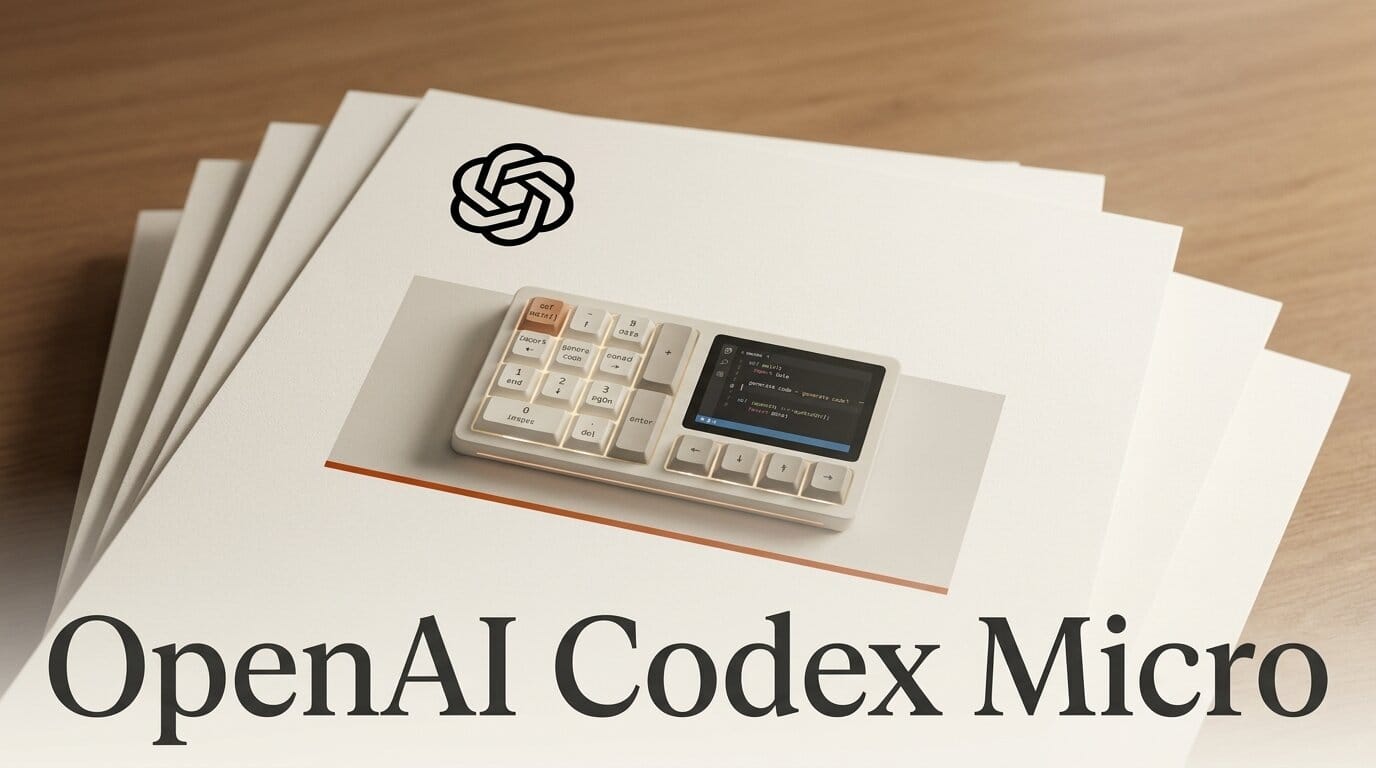
OpenAI revealed its first branded hardware on July 15, 2026, and it is not a phone or an AI pin. It is a small programmable macro pad called Codex Micro, built with boutique keyboard maker Work Louder to give developers physical controls for OpenAI's Codex coding agent.
What Happened
Codex Micro is a compact control deck that reuses the Work Louder Creator Micro 2 chassis: 13 mechanical keys, a joystick, a rotary encoder, and six programmable layers. OpenAI first teased the device at the AI Engineer World's Fair in late June and set July 15 as the reveal date. It targets Codex's roughly 5 million weekly users, who currently drive the agent through a terminal, IDE extension, or web dashboard.
What This Enables
The pitch is a faster agentic loop. Instead of retyping the same commands, you map Codex actions to physical keys and the encoder: kick off a task, approve or reject a proposed pull request, run the test suite, scrub through a multi-hour job, or switch repositories. Six layers mean one small deck can hold different shortcut sets for different projects. It is the same instinct creators show when they wire Codex into a purpose-built tool, like the Codex-powered video editor we covered this week, now moved onto dedicated hardware.
Why It Matters for Creators
This is a signal, not just a keyboard. OpenAI shipping a physical device aimed squarely at Codex users says agentic coding is now a daily, high-volume workflow worth optimizing at the hardware level. For builders who run agents for hours a day, tactile controls and an encoder for stepping through agent output could cut friction the way a stream deck did for video creators and streamers.
Key Details
Maker: OpenAI in collaboration with Work Louder.
Hardware: 13 mechanical keys, a joystick, a rotary encoder, six programmable layers.
Price: not yet publicly confirmed; early reports peg Work Louder pads in the $80 to $200 range.
Availability: revealed July 15, 2026, with full specs and ordering arriving at launch.
What to Do Next
If you live inside Codex, decide which three or four actions you repeat most and whether a physical trigger would genuinely save time before buying in. Watch OpenAI's developer channels for the final price and on-sale date, then plan your layer layout around your real agent workflow rather than the default mapping.