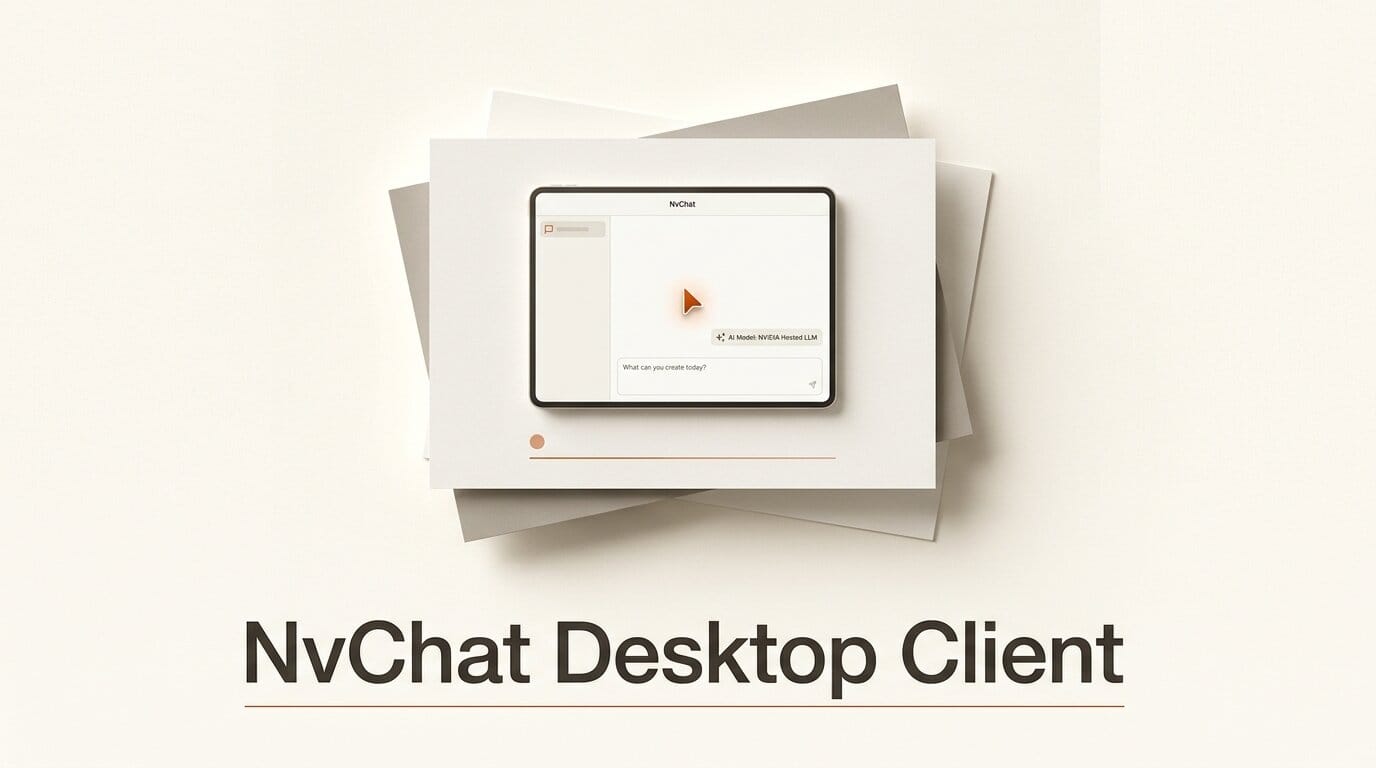
NvChat is a new free, open-source desktop app that turns NVIDIA's build.nvidia.com developer platform into a native chat client, giving you access to more than 100 hosted AI models without opening a browser. The single-file Windows app launched publicly on July 23, 2026, and ships as an MIT-licensed download that auto-updates in place.
Try It: Free Access to 100+ Models
To get started, sign in at NVIDIA's platform, open any model page, and click "Get API Key" to generate an nvapi credential. Paste it into NvChat and you can immediately chat with vision-capable models like Llama 3.2 Vision, reasoning models like DeepSeek-R1, and dozens of open-weight LLMs. NVIDIA's free tier covers casual use, with rate limits rather than a paywall, so creators can test prompts, summarize research, or run quick vision tasks at no cost.
Why It Matters for Creators
Most creators who want to compare open models end up juggling browser tabs or writing their own API scripts. NvChat collapses that into one lightweight window. Because it talks directly to NVIDIA's free API, you can A/B a prompt across a reasoning model and a fast general model in seconds, attach an image for a vision model to describe, and keep every conversation searchable and pinned for later reuse. For anyone prototyping an AI feature or drafting content, it is a zero-cost sandbox.
Key Details
Platform: Windows x64 only, built on .NET 8. No macOS or Linux build yet.
Models: 100+, loaded dynamically from NVIDIA's models endpoint, including vision and reasoning models.
Privacy: API keys are encrypted with Windows DPAPI and stored locally, so they cannot be decrypted on another machine.
Features: streaming replies, live markdown and code rendering, reasoning display, image attachments, per-conversation usage tracking, a global hotkey launcher, and export. The project shipped fourteen releases in its first two days.
What to Do Next
If you are on Windows, download the latest build from the project's GitHub page, generate a free NVIDIA API key, and try running the same prompt through a reasoning model and a general model side by side. It is the fastest way to feel the difference between model families before you commit one to a production workflow.