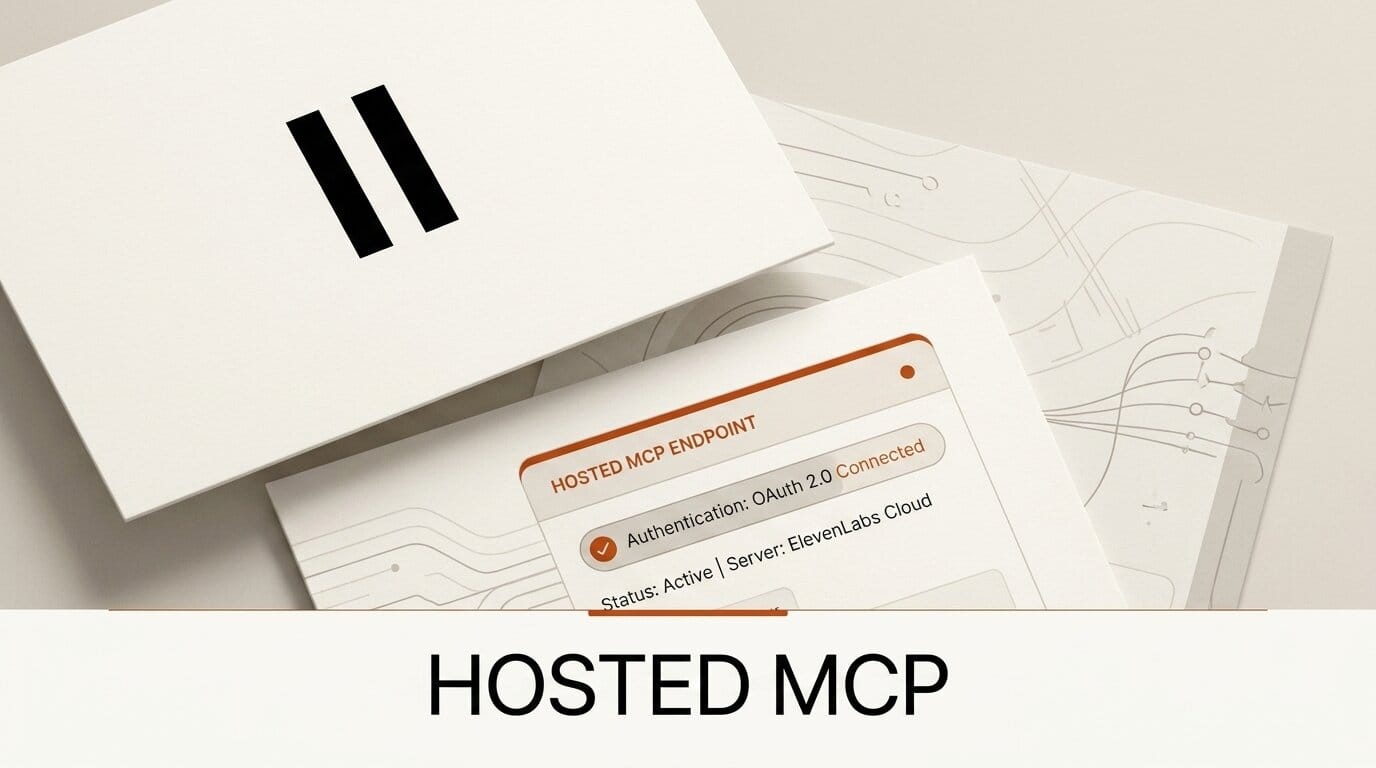
ElevenLabs archived its local MCP server repository on August 20, 2026, making it read-only and pointing developers to the hosted MCP server instead. The hosted endpoint authenticates with OAuth through an ElevenLabs account rather than a copied API key, and there is nothing to install or run locally.
How to migrate
The change is a client config edit, not a rewrite. Remove the local server entry from your MCP client, whether that is Claude, Cursor, or another host, and point it at the hosted server documented in the hosted MCP guide. On first connect you authorise through your ElevenLabs account and the client holds a token instead of your raw API key.
Do this on a copy of your client config first. If you have multiple MCP servers wired into one host, a bad edit takes all of them down at once, and MCP clients are not consistently good at telling you which entry broke.
Why it matters for creators
The security improvement is the real story. The now-archived local server means your ElevenLabs API key sits in a plaintext config file on your machine, and in practice it also sits in shell history, backups, and occasionally a screenshot. OAuth removes the key from the client entirely, which matters more if you work on shared or client-owned hardware.
The convenience gain is smaller but real: no local process to keep running, no version to update, and no Python environment to break when you upgrade something unrelated.
The trade is that voice generation now depends on a network round trip to ElevenLabs rather than a local process brokering the call. If you build offline-capable workflows, this is a step away from that, and the local server remaining available for developer workflows is the escape hatch.
Key details
Archive date: August 20, 2026, repository now read-only.
Auth: OAuth through an ElevenLabs account, no API key copied into the client.
Install: none, the server is hosted.
Original local server: still available for developer workflows, no longer maintained in the archived repository.
What to do next
Check whether any automation you run still points at the local server, then migrate the config and rotate the API key it used. An archived repository keeps working until it does not, and a rotated key is the cheap insurance. If you are wiring voice into a larger agent stack, our coverage of the stateless MCP spec explains why hosted servers are becoming the default shape.