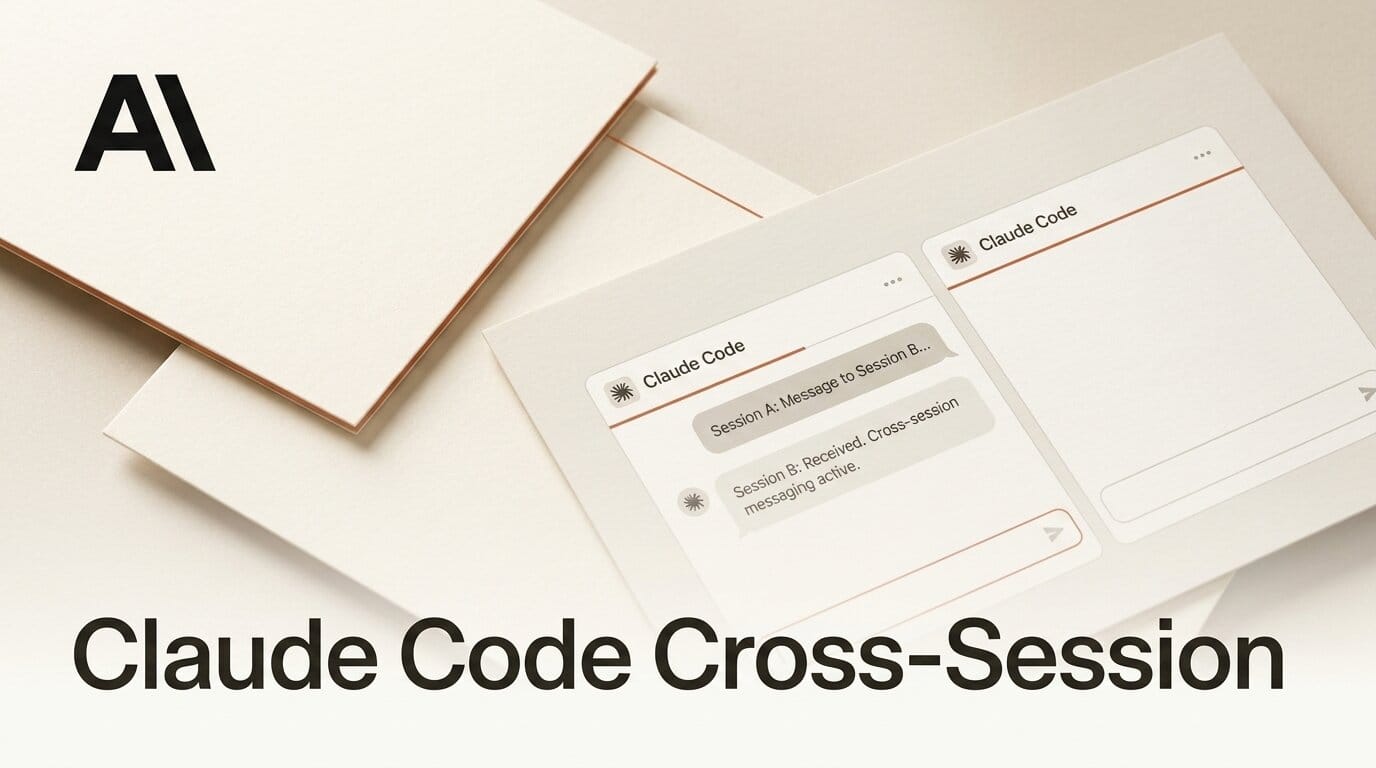
Claude Code can now pass messages between your separate sessions. Shipped in version 2.1.224 on August 7, 2026, cross session messaging lets one Claude Code session hand a finding, a status update, or a decision to another session running on the same machine, and reply to sessions on your other machines or on the web. On macOS and Linux it is on by default with nothing to enable.
What This Enables
If you run more than one Claude Code session at once, this closes a gap you have been filling by hand. Say one session refactors a shared module while another builds a feature on top of it. When the first session makes a breaking change, it can now warn the second session directly instead of you noticing the break later and re explaining it in the other terminal. Claude discovers reachable sessions with a ListAgents tool and delivers text with a SendMessage tool, so you never call either one yourself. You can also prompt it explicitly, for example asking one session whether a long migration in another session has finished.
Why It Matters for Creators
Builders increasingly run parallel Claude Code sessions across git worktrees to move faster on a single project. Until now those sessions were blind to each other, and you were the message bus, copy pasting context between windows. As 9to5Mac notes, messages carry only plain text, never conversation history or files, so a session shares a conclusion without leaking its full context. That keeps handoffs cheap and predictable when you are coordinating several agents on one codebase.
Key Details
The feature requires Claude Code v2.1.224 or later and runs on macOS and Linux, including Linux inside WSL 2, but not native Windows. As MacRumors reports, same machine messages travel over a per session socket and never reach Anthropic servers, while replies to sessions on another machine or on Claude Code on the web route through Remote Control. Permission boundaries stay per session: an incoming message cannot approve actions, change configuration, or run commands, and any work it requests still triggers the receiving session's normal permission prompts. You can hold or refuse inbound messages with the crossSessionInbound setting, and message loops are rate limited so two sessions cannot spam each other.
What to Do Next
Update Claude Code to v2.1.224 or later, then run /list-agents (also available as /peers) in a session to see which other sessions it can reach. Start a second session in a separate worktree on the same project and ask one to report a change to the other. If you script or run unattended workers, set crossSessionInbound to accept for those sessions so they take messages without a prompt. This builds naturally on Claude Code's managed agents and skills for coordinating multi agent work.