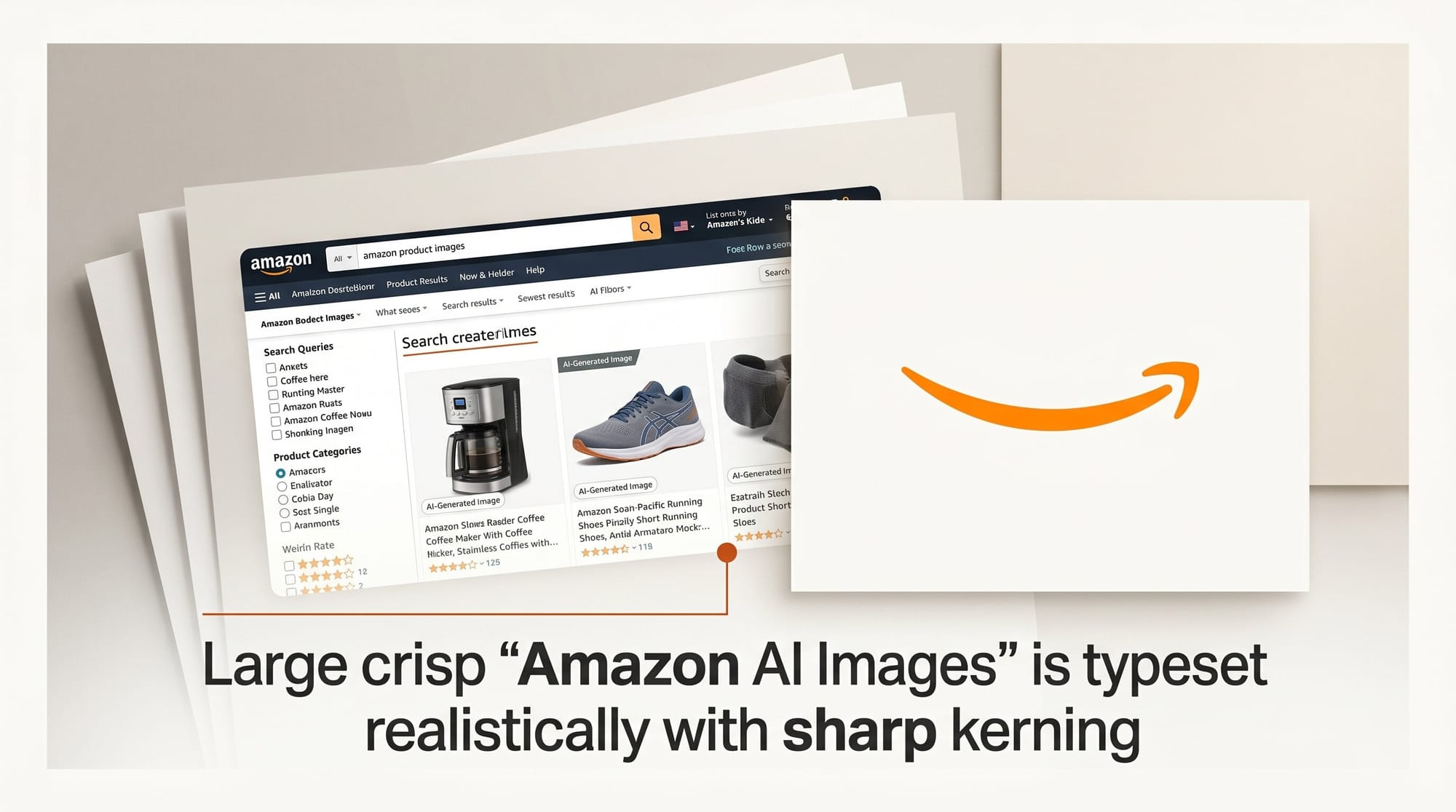
Amazon will start showing AI-generated product images in shopping search results, the retailer announced Wednesday. When a shopper types a query, a strip of AI-rendered images now appears below the autocomplete suggestions to help guide users toward the kind of product they had in mind, even if they cannot name it.
Amazon gives examples like "cowl neck" for a shirt style or "rattan" for furniture. The thumbnail previews are not tied to a specific listing; they are visual hints meant to point shoppers at the right product category before they click through to real seller pages.
What This Enables for Sellers
If you sell on Amazon, the new strip changes how shoppers narrow searches before they ever see your listing. A buyer who types "rattan" no longer has to scroll through mismatched chair and basket results. They tap a thumbnail that matches the look they want, and Amazon routes them to listings in that category. That means descriptive keywords mapped to recognizable visual styles (cottagecore, brutalist, mid-century) will pull more qualified traffic, while listings that rely on broad terms may lose visibility.
Audit your titles and bullet points for style-anchored keywords this week. Helium 10's playbook on AI-assisted Amazon images walks through the keyword-to-visual mapping in detail.
Why It Matters
Amazon already pushed AI into product discovery this year with the Alexa+ shopping assistant inside the search bar and AI shopping guides. Adding generated images on the front of every query is the most aggressive step yet, and it raises a thorny question for sellers: when shoppers compare a real product photo to an idealized AI rendering, real listings without lifestyle imagery will look worse. Brands that invested in flat catalog photos for years will need higher-fidelity creative to compete with the synthetic baseline Amazon is now setting.
Key Details
The feature appears below the autocomplete dropdown in the Amazon shopping app. Amazon has not disclosed which model generates the images, how they are filtered for accuracy, or whether sellers can flag misleading renderings. The launch follows Amazon Ads' own image generation tool for advertisers, which has been in beta and is now broadly available. That tool lets brands generate lifestyle backdrops for their existing product photography, which Amazon says lifts mobile Sponsored Brands click-through rates by up to 40 percent.
The new search-side images push that lifestyle aesthetic into the discovery layer rather than the ad layer, so the entire shopping funnel now leads with synthetic visuals before a real product even appears.
What to Do Next
Refresh your top-selling listings with lifestyle context in the main hero image, not just a white-background catalog shot, so your real product can hold its own next to AI thumbnails. If you do not already use AI to produce lifestyle variants, our 2026 comparison of AI image generators covers the tools sellers are using to spin product photos into multiple environments. And if you sell apparel or accessories, the FLUX VTO virtual try-on workflow shows how brands are now generating on-model imagery without a photo shoot.