Running one AI coding agent is straightforward. Running five of them on the same repository, without their edits colliding and without losing track of which branch holds which experiment, is the problem that actually slows builders down. Spotify Xirp is a purpose-built answer to that problem, and its move from an internal tool to a public beta on August 10, 2026 puts vendor-neutral agent orchestration into the hands of anyone who wants it. This is a close look at what Xirp does, how it compares to Conductor and Vibe Kanban, and which parallel-agent manager fits which builder.
Background
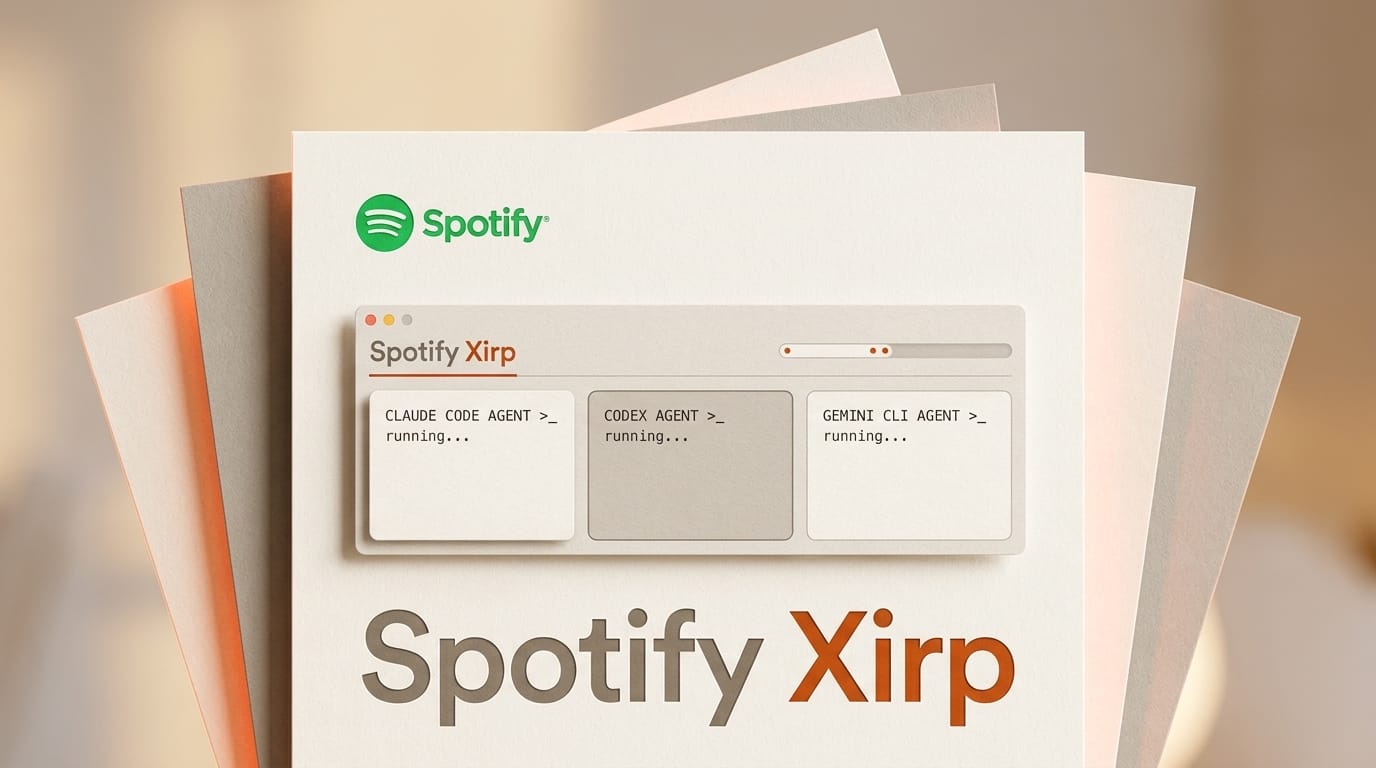
Spotify built Xirp for its own engineers before releasing it. In the post introducing the tool, the company describes it as a vendor-neutral agentic development environment: a desktop app that lets a developer run Claude Code, Codex, and Gemini CLI side by side and switch between them without losing session state. Thousands of Spotify engineers have already logged more than 36,000 sessions on it internally, which is a rare amount of production mileage for a tool most people are seeing for the first time.
The context that makes Xirp matter is the shift in how experienced developers work with agents. A year ago the bottleneck was model quality. Now the models are good enough that the real limit is coordination: keeping each agent isolated, remembering which worktree is doing what, and feeding every session the right project context. Xirp is one of the first shipped, model-agnostic products built specifically for that coordination layer.
Deep Analysis
Xirp is not the only tool chasing parallel agents, but its design choices are distinctive. Three ideas separate it from the pack: worktree isolation at scale, context that is decoupled from any single agent, and organizational grounding through Spotify Portal.
Worktree isolation lets fifty agents share one repo
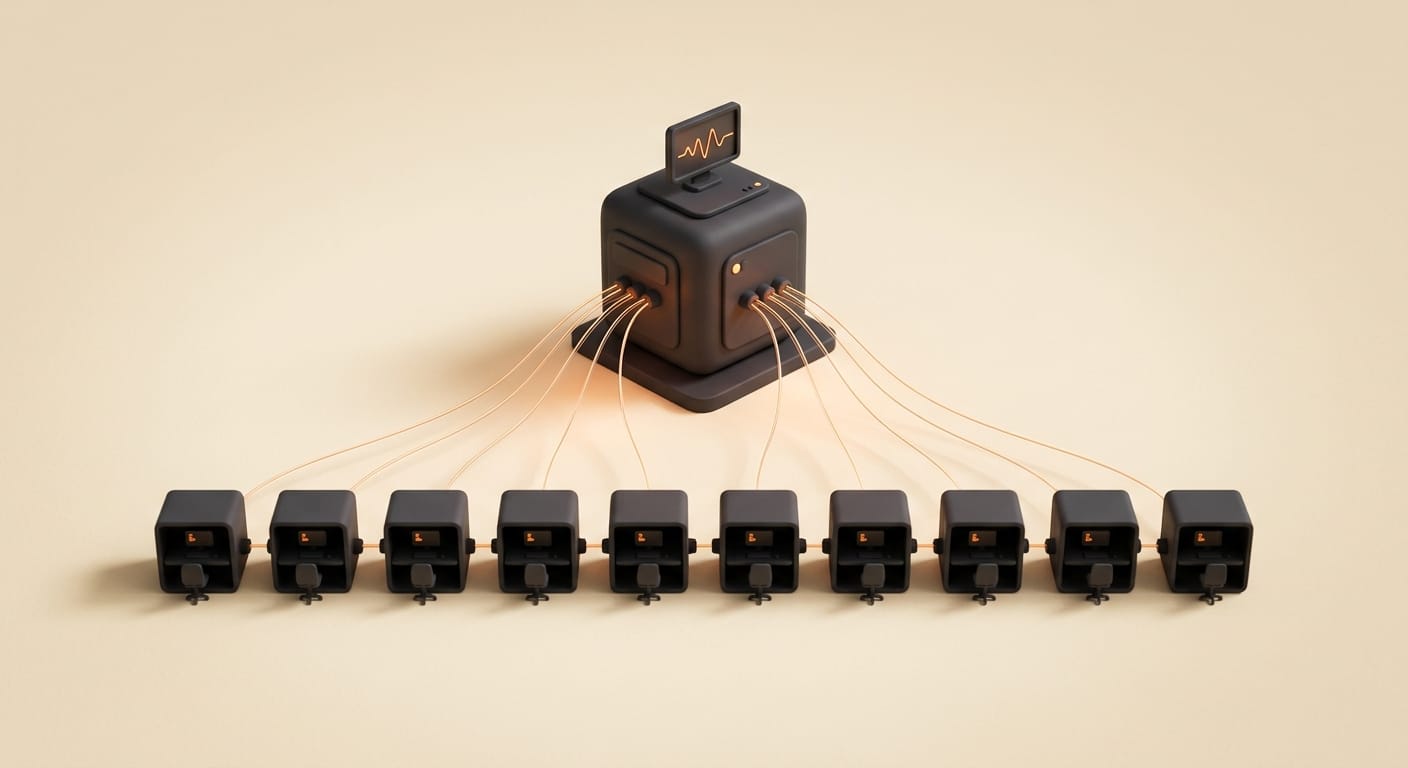
Every Xirp session runs in its own Git worktree, a native Git feature that gives each session its own working directory and branch while sharing one underlying object database. Because the sessions never touch the same files, Spotify says a developer can run more than fifty agents against the same codebase at once without their changes overwriting each other. Doing this by hand means creating worktrees, tracking branches, and cleaning them up manually, which is exactly the tedium that pushes most solo builders back to a couple of terminal tabs. Xirp turns worktree management into an invisible default, so the isolation you should have been using all along becomes automatic.
The vendor-neutral bet: context outlives the agent
Xirp's most interesting design decision is that context is not tied to a specific agent or model. A session holds the working state and metadata, and you can switch the harness driving it mid-task without rebuilding the task from scratch. If Claude Code stalls on a refactor, you can hand the same session to Codex and keep going. That is a direct hedge against lock-in: you are not betting your workflow on one lab's harness winning, and you are free to route each task to whichever model is cheapest or strongest for it. For builders who have watched pricing and capability leapfrog every few weeks, decoupling the work from the model is a practical form of insurance.

Xirp vs Conductor vs Vibe Kanban
Three tools now cover the parallel-agent job, and they make different trade-offs. Conductor, built by the Melty Labs team, is a polished macOS app that runs Claude Code and Codex in parallel worktrees with a diff-first review UI, checkpoints for rollback, and a multi-model mode for comparing two agents on the same prompt. Vibe Kanban is a cross-platform CLI-plus-web tool that arranges parallel agents on a Kanban board with isolated worktrees per task; after its original company wound down the commercial product, it continues as Apache-2.0 open source. Xirp is the newest entrant and the one with the deepest organizational context story.
| Feature | Xirp | Conductor | Vibe Kanban |
|---|---|---|---|
| Agents supported | Claude Code, Codex, Gemini CLI, self-hosted models | Claude Code, Codex | Claude, Cursor, Copilot, Gemini and more |
| Isolation | Git worktree per session, 50+ parallel | Git worktree per agent | Git worktree per task |
| Switch models mid-task | Yes, context is agent-agnostic | Compare in separate tabs | Per-task agent choice |
| Org context grounding | Yes, via Spotify Portal | No | No |
| Platform | Public beta, macOS | macOS | Cross-platform, open source |
| Cost | Free in beta, you pay model API | Free, you pay model API | Free, open source |
The short version: pick Vibe Kanban if you need cross-platform and open source, pick Conductor if you want the most refined Mac review-and-merge flow today, and pick Xirp if vendor neutrality and organizational context matter more than a mature UI. If you are on a Mac and want another view of this space, our deep dive on running Claude Code, Codex, and Cursor in parallel with Hang4r covers a lighter-weight alternative.
Where Portal changes the game
The feature no competitor matches is context grounding through Spotify Portal, the commercial version of the Backstage developer platform. When Xirp connects to Portal, a new session initializes with real organizational context: component architecture, dependency graphs, ownership topology, and prior architectural decisions. Instead of an agent guessing how your services fit together, it starts with the map. Session transcripts then flow back into Portal, so the work is visible across a team rather than trapped on one laptop. For a solo builder this is less relevant, but for anyone working in a codebase with more than a handful of services it is the difference between an agent that improvises and one that respects the system it is editing.
Impact on Creators
For builders, Xirp signals that the orchestration layer is becoming a product you adopt rather than a script you maintain. The value is no longer only in the agent; it is in the harness that keeps ten agents productive at once. If you already juggle more than one coding agent, moving a multi-agent task into a worktree-isolated manager is the single fastest way to cut the merge conflicts and lost-context frustration that come from running agents in loose terminal tabs.
The practical caveat is reach. Xirp is a Mac-first beta tied to a Spotify account and a Portal instance, so Windows and Linux builders cannot adopt it yet. That is where a cross-platform, open-source option like Vibe Kanban remains the safer bet for a workflow you plan to keep. The strategic takeaway is more durable than any one tool: learn to think in worktree-isolated parallel sessions now, because that pattern is where agentic building is heading regardless of which app wins.
Key Takeaways
Xirp is Spotify's shipped, battle-tested answer to running many coding agents at once, and its public beta makes vendor-neutral orchestration broadly available for the first time. Its differentiators are worktree isolation at fifty-plus sessions, context that survives a mid-task model switch, and organizational grounding through Portal that no competitor offers. Conductor is the most refined Mac experience today and Vibe Kanban is the cross-platform, open-source safe harbor. The meta-point for creators is that the orchestration layer, not the model, is now the part of the stack worth investing in.
What to Watch
The two things to track are platform reach and the context standard. If Spotify ships a cross-platform Xirp build, it immediately becomes a default recommendation instead of a Mac-only one. And Portal-style organizational grounding is the feature most likely to spread: whichever manager makes it easy to feed agents a real architecture map, rather than raw files, will pull ahead as codebases and agent counts grow. Watch whether Conductor, Vibe Kanban, or an open standard answers Portal before Xirp leaves beta.
FAQ
What is Spotify Xirp?
Xirp is a vendor-neutral agentic development environment from Spotify that lets you run multiple AI coding agents, including Claude Code, Codex, and Gemini CLI, in parallel, each isolated in its own Git worktree. It entered public beta on August 10, 2026.
How many agents can Xirp run at once?
Spotify says a developer can run more than fifty parallel agent sessions against the same codebase, because each session runs in its own Git worktree and cannot overwrite another session's files.
Can I switch models in the middle of a task?
Yes. Xirp keeps context decoupled from any single agent, so you can move a running session from one harness to another, for example from Claude Code to Codex, without rebuilding the task.
How is Xirp different from Conductor and Vibe Kanban?
All three run parallel agents in isolated worktrees. Conductor is a refined macOS app for Claude Code and Codex, Vibe Kanban is cross-platform and open source, and Xirp adds mid-task model switching and organizational context grounding through Spotify Portal.
Is Xirp free and what platforms does it support?
Xirp is free to try during the beta, though you pay your own model API costs. It is a Mac-first beta that requires a Spotify account and includes a Portal instance for context grounding.