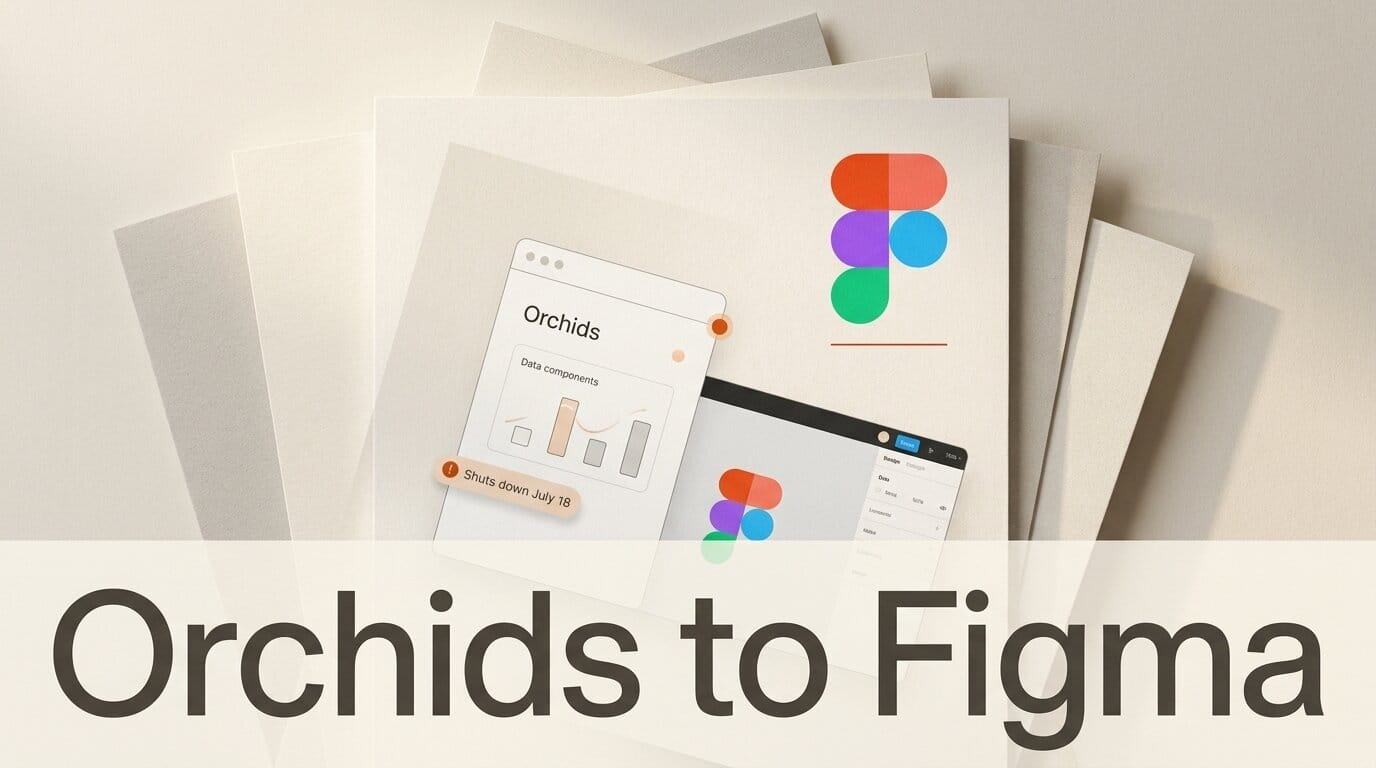
Orchids, the AI app builder that markets itself as a "full-stack coding agent," announced on July 7, 2026 that its team is joining Figma. The catch for the people who actually used it: both the Orchids and Bud products stop hosting deployed projects after July 18, 2026. If you built and shipped an app on Orchids, you have eleven days to download your code, push it to GitHub, or redeploy it elsewhere before your live project goes dark. It is the second high-profile AI app builder to be absorbed into a larger platform in 2026, after Wix acquired Base44, and it signals where prompt-to-app tooling is heading: into the incumbents.
What Orchids Was, and Why Figma Wanted It
Orchids started life inside Y Combinator's Winter 2025 batch under the name Bud, an "agent with a computer" founded by Kevin Lu and Bach Tran, both University of Pennsylvania computer science graduates. Lu previously worked on generative AI at AWS and researched at Stanford HAI; Tran came from Addepar. The six-person team built a natural-language builder that would plan features, design the interface, write frontend and backend code, wire up databases, configure auth and payments, and deploy a working project from a single prompt.
The pitch resonated with investors. Leonis Capital backed the company on the thesis that Orchids could build genuinely beautiful apps and websites, not the generic AI-generated layouts that plague the category. Orchids leaned into that differentiation, claiming a top rank on internal design benchmarks and supporting output across React, Next.js, Python, Swift, and Flutter. It could target web, mobile, Slack bots, AI agents, and Chrome extensions from one interface.

For Figma, the acquisition is a talent and technology play. Figma already ships Figma Make, its own prompt-to-app tool that turns plain-language descriptions into working React and TypeScript styled with Tailwind CSS. Absorbing a team that specialized in design-quality code generation strengthens exactly the surface Figma is racing to own. The Orchids founders framed the move plainly, calling Figma "one of, if not the, defining product company of our time."
The Shutdown Timeline: What Changes on July 18
This is an acqui-hire, not a product continuation. The Orchids announcement is direct about what happens next, and creators should treat the date as a hard deadline rather than a soft sunset.
- Now through July 18, 2026: Both Orchids and Bud remain fully operational. You can still open the editor, download code, and export.
- After July 18, 2026: All deployed projects stop being hosted. Live URLs served by Orchids will no longer resolve.
- Your responsibility: Migrate every project you care about to an alternative platform before the cutoff. The team is offering active migration help at hello@orchids.app.
The practical risk is not losing your source code, which you can export, but losing the live deployment your users or clients depend on. Anything with a public URL, a custom domain, or an active backend needs a new home before the deadline.
How Orchids Compares to Other AI App Builders
The AI app builder category is crowded, and the Orchids shutdown pushes its users toward a handful of established alternatives. Here is how the main options line up on the factors that matter most when you are choosing where to migrate.
| Tool | Status | Output | Best for |
|---|---|---|---|
| Orchids / Bud | Shutting down July 18, 2026 | Full-stack React, Next.js, Python, mobile | Migrating away now |
| Figma Make | Active (acquiring team) | React + TypeScript + Tailwind | Design-led teams already in Figma |
| Lovable | Active | Full-stack web apps, Supabase | Solo founders shipping MVPs |
| v0 | Active | React components, Next.js | Vercel-native frontend work |
| Bolt | Active | Full-stack in-browser (WebContainers) | Rapid prototyping, no local setup |
If your Orchids projects were primarily design-driven and your team already lives in Figma, Figma's AI app builder is the most natural landing spot, and it is the one the Orchids team itself is now building. Figma has been pushing agents directly into its canvas, and our guide to building Figma agents with skills and MCP covers where that is going. If you valued Orchids for shipping production backends fast, Lovable and Bolt are closer functional replacements. For frontend-heavy work that deploys to Vercel, v0 is the tightest fit.
How to Migrate Your Orchids Projects
You do not need to rebuild anything. Orchids generates standard code, so migration is an export-and-redeploy exercise. Work through this before July 18.
- Inventory your live projects. Open the Orchids dashboard and list every project with an active deployment or custom domain. Prioritize anything real users touch.
- Export the source. For each project, use the download option to pull the full codebase locally, or connect the project to GitHub and push it to a repository. GitHub is the safer default because it gives you version history and a clean handoff to any host.
- Pick a new host. For a Next.js or React project, Vercel imports directly from a GitHub repo and deploys on push. Netlify works the same way and is a strong choice for static and Jamstack builds.
- Rewire integrations. If a project used database, auth, or payment integrations that Orchids configured for you, recreate those credentials on the new host's environment variables. Check the Orchids docs for what was wired where.
- Move your domain and verify. Point your custom domain's DNS at the new host, deploy, and load the live URL end to end before the cutoff. Confirm the backend responds, not just that the homepage renders.

What This Enables for Creators
A shutdown is disruptive, but this migration is also a chance to reduce lock-in. Once your Orchids code lives in a GitHub repository you control, deployed to a host you chose, you are no longer dependent on any single AI builder staying in business. The generated code is yours, the pipeline is standard, and you can point any coding agent at the repo later. If you move to Figma Make, you also fold app generation into the same file where your design already lives, so the prompt has your real components and layouts to work from rather than inventing generic UI. The lesson the category keeps teaching is worth internalizing: treat AI-built apps as exportable code from day one, keep them in version control, and never let a live deployment exist only inside a vendor you cannot export from.
Frequently Asked Questions
What is the exact deadline to migrate off Orchids?
July 18, 2026. Both Orchids and Bud remain operational until that date, after which deployed projects stop being hosted. Export and redeploy before then.
Will I lose my source code?
No. You can download the full codebase or push it to GitHub. What you lose after July 18 is the live hosting, not the code itself, so exporting is the essential step.
Is Orchids the same as Figma Make now?
Not yet. This is an acqui-hire: the Orchids team is joining Figma to work on Figma's products, and the standalone Orchids product is shutting down. Figma Make is Figma's existing prompt-to-app tool and the most direct successor.
Where should I migrate my Orchids apps?
For design-led teams already in Figma, Figma Make is the natural fit. Lovable and Bolt are closer functional replacements for full-stack builds, and v0 is best for Vercel-native frontend work.
Can I get migration help from the Orchids team?
Yes. The team is offering active migration support and directs users to email hello@orchids.app for help with downloading, GitHub export, or redeployment.
What was Orchids known for?
Building design-quality full-stack apps from a single prompt, with output across React, Next.js, Python, Swift, and Flutter. It grew out of the Y Combinator Winter 2025 company Bud.