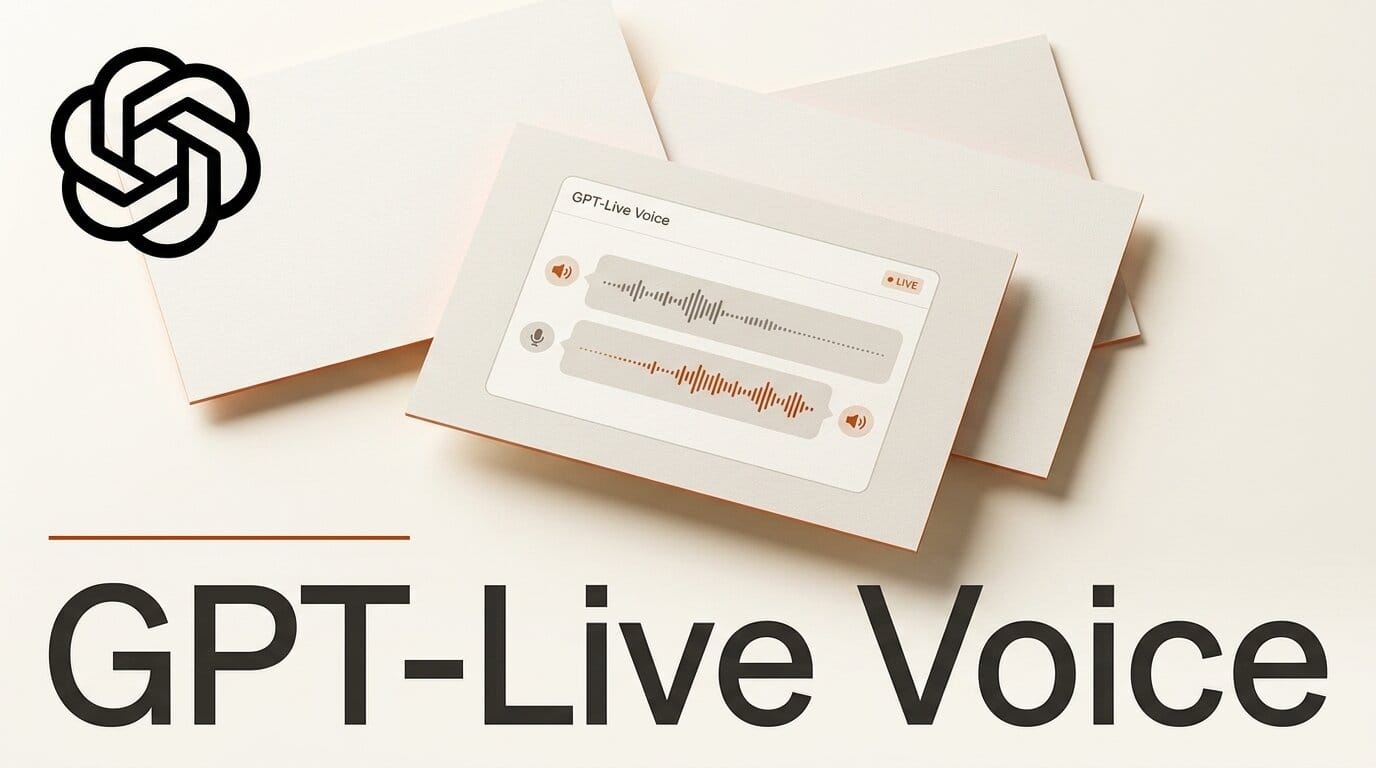
OpenAI launched GPT-Live on July 8, 2026, a pair of full-duplex voice models that listen and speak at the same time. GPT-Live-1 mini replaces Advanced Voice Mode by default for every ChatGPT user, while the larger GPT-Live-1 goes to paid tiers. It is the biggest change to conversational voice AI since the original Advanced Voice Mode, and it reaches an installed base OpenAI puts at more than 150 million voice users on day one.
For creators building voice agents, pod-style content, live translation, and interactive characters, the shift from turn-taking to continuous, always-listening speech changes what a voice interface can feel like. Here is what GPT-Live actually is, how it compares to the voice tools already in the market, and what you can do with it right now.
What OpenAI Shipped
GPT-Live comes in two model sizes. GPT-Live-1 mini is now the default voice in ChatGPT on iOS, Android, and web, replacing Advanced Voice Mode for free and paid users alike. GPT-Live-1, the larger model, is reserved for paid subscribers and adds stronger reasoning and steadier long-session behavior. According to TechCrunch, product lead Atty Eleti described 30 to 40 minute continuous conversations during testing, a duration the old turn-based mode struggled to sustain.
The models ship with nine remastered voices and a redesigned interaction model. Instead of waiting for you to stop speaking, GPT-Live makes interaction decisions many times per second: whether to talk, keep listening, pause, interrupt, or call a tool. That is the core of "full duplex," and it is what makes the difference between a walkie-talkie and a phone call.
Full Duplex: How GPT-Live Actually Works
Every prior ChatGPT voice mode was half duplex. It recorded your turn, detected silence, transcribed, generated a reply, then spoke, one direction at a time. GPT-Live processes input while generating output continuously, which is why it can drop in backchannels like "mhmm" or "yeah" while you are still talking, or stay silent when it senses you need a beat to think. Analysis from MarkTechPost describes the system as making speak-or-listen decisions on a sub-second loop rather than around discrete turns.
The second architectural idea is delegation. GPT-Live is optimized for fast, natural speech, not heavy reasoning. When a question needs web search or deeper thinking, it hands the task to a background frontier model and keeps the conversation flowing while that model works, then folds the result back in when ready. At launch the background model is GPT-5.5: the Instant and mini tiers use GPT-5.5 Instant, while Medium and High tiers use GPT-5.5 Thinking at medium and high reasoning effort. On expert benchmarks like GPQA and the BrowseComp agentic-search test, OpenAI reports GPT-Live-1 substantially outperforms the model behind Advanced Voice Mode.
GPT-Live vs the Voice Tools Already in Your Stack
GPT-Live is a consumer ChatGPT feature, not an API product yet. That distinction matters if you build voice apps. Just two days earlier, OpenAI shipped gpt-realtime-2.1 for the Realtime API, the model developers actually call in production. GPT-Live's own API access is described as "planned soon," so for now it is the in-app experience that changed, not your build target. The Realtime API line remains the path for custom voice agents.

| Option | Surface | Duplex | Who gets it | Best for |
|---|---|---|---|---|
| GPT-Live-1 mini | ChatGPT app default | Full | All users (free + paid) | Everyday natural conversation |
| GPT-Live-1 | ChatGPT app | Full | Paid tiers | Long sessions, harder questions |
| Advanced Voice Mode | ChatGPT (retired default) | Half | Being replaced | Legacy turn-based voice |
| gpt-realtime-2.1 | Realtime API | Speech-to-speech | Developers | Custom production voice agents |
Against third-party voice stacks, GPT-Live raises the bar on conversational feel but stays inside ChatGPT. Builders who need voice cloning, granular latency control, or self-hosting still reach for dedicated audio tools, including open options like ZeroLabs, and rival assistants such as xAI's Grok voice agent builder.
Why It Matters for Creators
The practical unlock is conversation that survives interruption. If you record voice-driven content, run live Q and A, or prototype a character, half-duplex voice forced an unnatural rhythm: speak, wait, listen, repeat. Full duplex lets you talk over the model, redirect it mid-sentence, and get acknowledgment sounds that make a recorded exchange feel like a real dialogue rather than a command line.

Live translation is the second creator win. Because GPT-Live keeps talking while a background model works, it can carry a translated conversation with far less of the dead air that made earlier voice translation awkward on camera. And the delegation design means you get fast speech for the chatty 90 percent of an exchange, with GPT-5.5 Thinking quietly handling the moments that need real reasoning, without you switching modes.
Interactive character work is the third. Anyone prototyping a voice persona, a game NPC, or a branded assistant now gets a baseline conversational feel that took a full custom stack to approximate a year ago. The nine remastered voices give you a starting palette, and the sub-second interaction loop means a character can react, hesitate, and interrupt the way a person would. For creators who storyboard voice experiences, that shortens the distance between an idea and a convincing demo you can put in front of a client or an audience.
What Is Missing at Launch
OpenAI was explicit about the gaps, as coverage from The Next Web noted. Video and screen sharing inside GPT-Live are not available yet, and full multilingual parity is still in progress, so translation quality varies by language pair. The developer API is not live. And because GPT-Live-1 mini is now the default, some users will notice a different voice and cadence than the Advanced Voice Mode they were used to, which is worth flagging if your workflow or audience depends on a specific voice.
Frequently Asked Questions
What is the difference between GPT-Live-1 and GPT-Live-1 mini?
GPT-Live-1 mini is the lighter model that now replaces Advanced Voice Mode by default for all ChatGPT users. GPT-Live-1 is the larger model available to paid subscribers, with stronger reasoning and better long-session stability. Both are full duplex.
Is GPT-Live available in the API?
Not yet. OpenAI describes API access as planned soon. For production voice agents today, developers use the Realtime API models such as gpt-realtime-2.1, which are separate from the in-app GPT-Live experience.
What does full duplex mean for voice AI?
Full duplex means the model can listen and speak at the same time, making decisions many times per second about whether to talk, pause, or interrupt. It enables natural back-and-forth, backchannels like "mhmm," and comfortable interruptions, unlike older turn-based voice modes.
Which model does GPT-Live use for reasoning?
At launch GPT-Live delegates deeper reasoning and web search to GPT-5.5 running in the background. The Instant and mini tiers use GPT-5.5 Instant, while Medium and High tiers use GPT-5.5 Thinking at medium and high reasoning effort.
Do I need a paid ChatGPT plan to use GPT-Live?
No. GPT-Live-1 mini is the new default voice for everyone, including free users. The larger GPT-Live-1 model requires a paid tier.
Can GPT-Live do live translation and video?
It can do live conversational translation, though full multilingual parity is still rolling out. Video and screen sharing are not available in GPT-Live at launch.