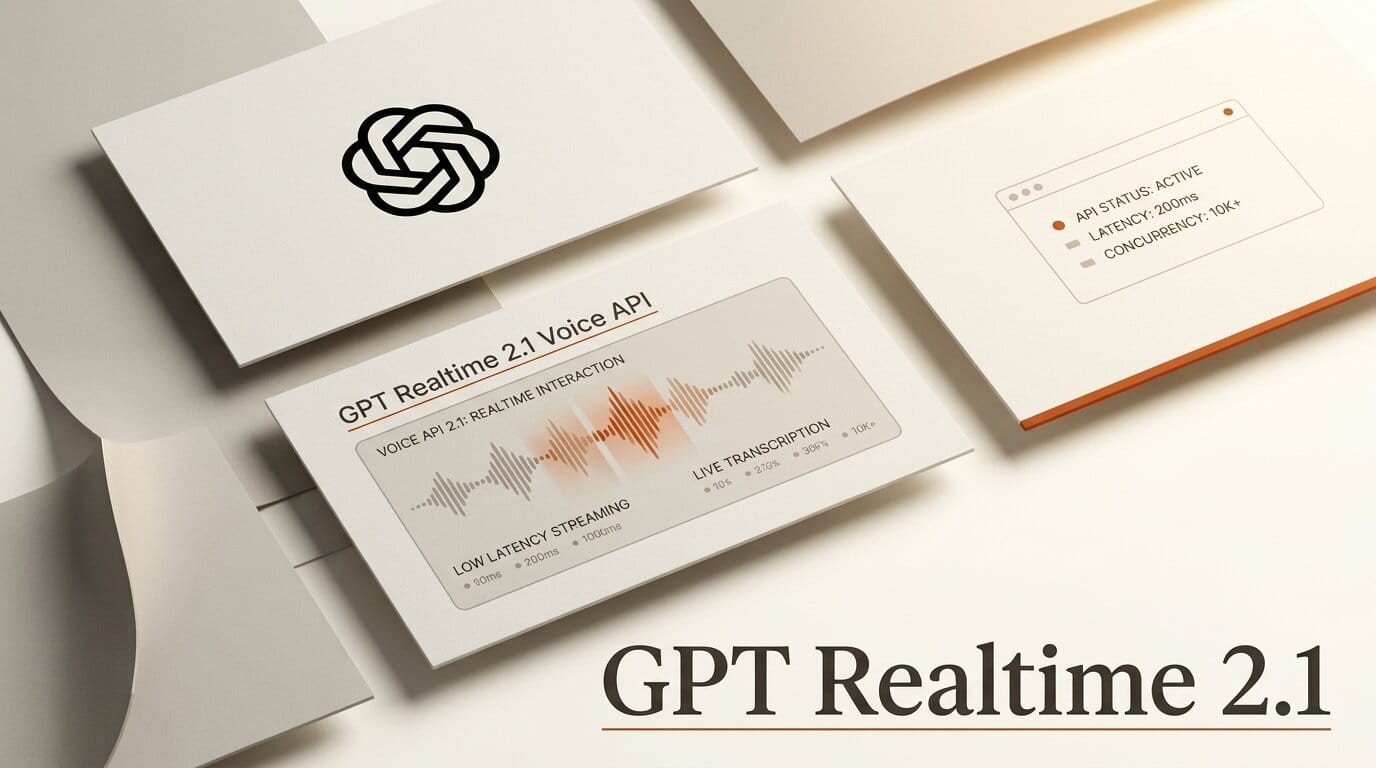
OpenAI released gpt-realtime-2.1 and gpt-realtime-2.1-mini on July 6, two new Realtime API voice models that cut latency and add a lower-cost tier for speech-to-speech agents. The headline number is at least a 25 percent drop in p95 latency across the Realtime line, driven by improved caching.
Try It: Swap Your Realtime Voice Endpoint
If you already run a voice agent on the Realtime API, the fastest win is a one-line model swap. Point your session at gpt-realtime-2.1 for the flagship reasoning model, or gpt-realtime-2.1-mini when cost and speed matter more than depth. The 2.1 update sharpens alphanumeric recognition (order numbers, confirmation codes, and emails spelled aloud), silence and noise handling, and interruption behavior, so a caller can talk over the agent without breaking the turn. Reasoning effort, tool use, and instruction-following are all configurable per session.
Why It Matters for Creators
Voice is becoming a first-class build surface, from interactive characters and audio tour guides to hands-free creative assistants. Lower latency is what separates a natural conversation from a walkie-talkie exchange, and a 25 percent p95 cut is felt directly in how alive an agent sounds. The mini tier also makes always-on voice viable for hobby projects and prototypes that could not justify the flagship audio rate. This is an incremental step up from gpt-realtime-2, not a new generation, but the reliability gains land hardest in production.
Key Details
Pricing (gpt-realtime-2.1): 32 dollars per million audio input tokens, 64 dollars audio output, 4 dollars text input, with cached input as low as 0.40 dollars.
Pricing (mini): 10 dollars audio input, 0.60 dollars text input, with cached audio at 0.30 dollars, roughly a third of the flagship rate.
What changed: 25 percent lower p95 latency, better recognition and interruption handling, and configurable reasoning effort. Full notes are in the OpenAI API changelog.
What to Do Next
Test the two models side by side on your own audio before committing, since the mini can cover far more of a real workload than its price suggests. If you are still comparing voice stacks, our coverage of xAI's Grok voice agent builder lays out a competing approach. For benchmark context, read the third-party breakdown at MarkTechPost.