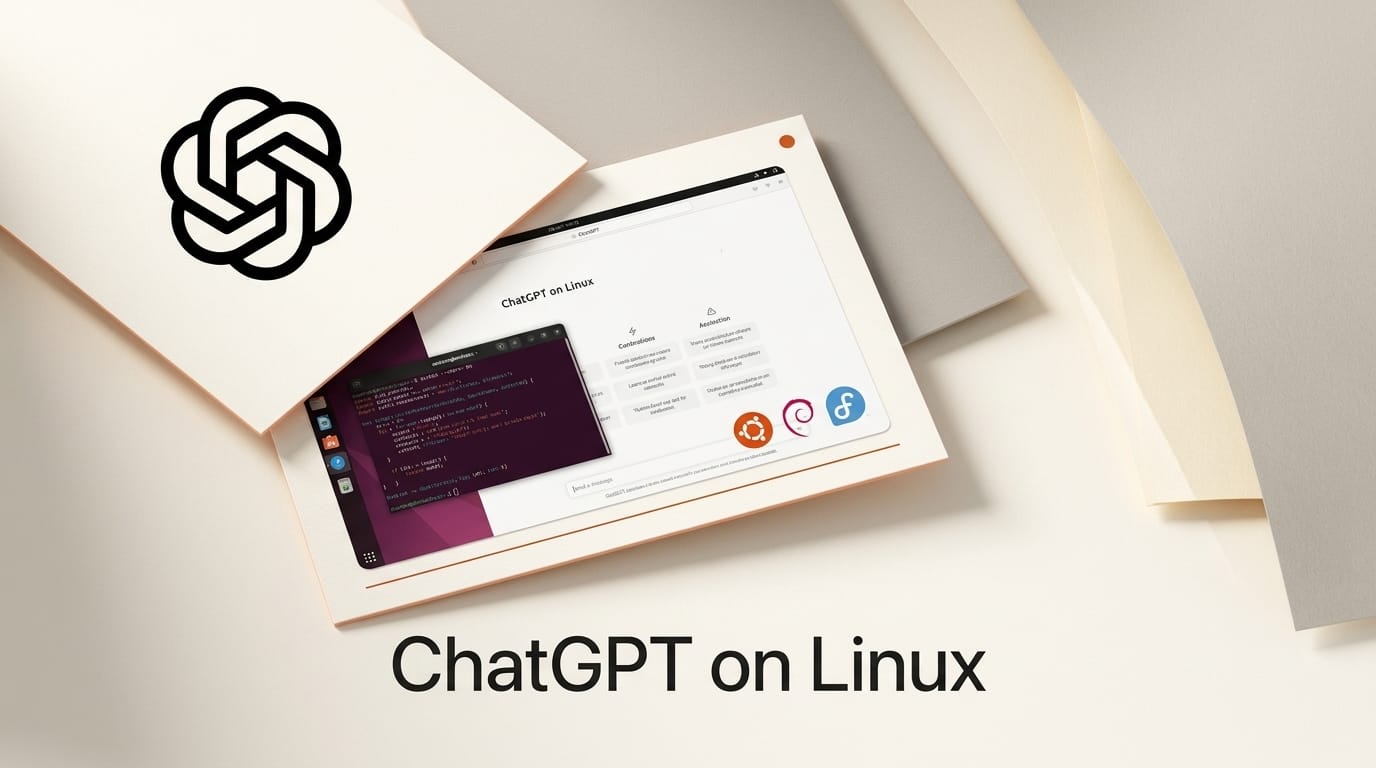
OpenAI launched a ChatGPT desktop app for Linux on August 11, 2026, releasing it worldwide in preview and closing the last major gap in its desktop platform coverage. The single app bundles ChatGPT, ChatGPT Work, and the Codex coding agent, so Linux developers finally get the same native workspace that macOS and Windows users have had since July. It arrives roughly a month after Anthropic shipped its Claude desktop app for Linux, and it turns a browser tab into a first-class local tool that can read your files, edit code, and run commands with permission. Coverage from TechCrunch confirms the preview is live now for the most common developer distributions.
What OpenAI Shipped
The Linux preview installs as native DEB and RPM packages for both x64 and ARM64 machines, so it runs on a workstation and on an ARM laptop or dev board without a translation layer. OpenAI supports five desktop distributions at launch: Ubuntu 24.04 LTS, Ubuntu 26.04 LTS, Debian 13, Fedora 43, and Fedora 44. An unofficial community package has already appeared in the Arch User Repository, though only the five listed distributions are officially supported. Details on the packaging and supported releases were first documented by Linuxiac.
OpenAI framed the release as a direct response to demand, saying Linux was one of the most requested platforms for the desktop app and that the launch extends ChatGPT and Codex across every major desktop operating system. Because this is a preview, the company is explicit that early users should expect bugs and interface changes as it stabilizes, a point echoed in the launch writeup at The New Stack.

ChatGPT, Work, and Codex in One App
The desktop app is not one chat window. It is three workspaces sharing one native shell, each with its own history and context:
- ChatGPT is the familiar assistant for questions, drafting, and research.
- ChatGPT Work is OpenAI's mode for longer, more complex multi-step tasks that need to persist across a session.
- Codex is the coding agent, and it is the reason developers will care about this build. Codex can open local projects, edit files, work with Git repositories, and run commands with your permission, all inside a workspace kept separate from your regular chats.
That permission model is the important part. Codex is an autonomous coding agent, not an autocomplete box, so it proposes and executes real actions against your working tree. Keeping it in a dedicated workspace with explicit command approval is how OpenAI reconciles agent autonomy with the reality that it is touching your actual machine. If you have used the Codex CLI or the merged macOS and Windows client, the Linux workspace behaves the same way, and the general Codex documentation lives in OpenAI's official docs.
How the Linux App Compares to macOS, Windows, and Claude
The July release merged the standalone Codex app into the ChatGPT desktop client on macOS and Windows. Linux now uses that same architecture, arriving in preview rather than general availability. Here is how the three OpenAI desktop targets and Anthropic's competing Linux client line up:
| App | Status | Supported OS | Packages | Bundled workspaces |
|---|---|---|---|---|
| ChatGPT for Linux | Preview (Aug 11, 2026) | Ubuntu 24.04 / 26.04, Debian 13, Fedora 43 / 44 | DEB, RPM (x64, ARM64) | ChatGPT, Work, Codex |
| ChatGPT for macOS / Windows | Generally available | macOS, Windows | Native installers | ChatGPT, Work, Codex |
| Claude for Linux | Available (July 2026) | Ubuntu 22.04+, Debian 12+ | Native packages | Claude assistant, Claude Code |
The practical takeaway: OpenAI matched Anthropic on Linux within about a month, and both vendors now put a permissioned coding agent on the Linux desktop. If you already run Claude on Linux, you can now run both agents side by side and pick per task instead of per platform.

Install and Run Codex on Linux: Step by Step
Getting from download to a working Codex session takes a few minutes. The flow below assumes one of the officially supported distributions:
- Confirm your distribution. Run
lsb_release -aor check/etc/os-releaseto verify you are on Ubuntu 24.04/26.04, Debian 13, or Fedora 43/44. Other releases may work but are unsupported in preview. - Grab the right package. Download the DEB build for Ubuntu and Debian, or the RPM build for Fedora, matching your architecture (x64 or ARM64).
- Install it. Use
sudo apt install ./chatgpt.debon Debian and Ubuntu, orsudo dnf install ./chatgpt.rpmon Fedora, so the package manager resolves dependencies. - Sign in and open the Codex workspace. Launch the app, authenticate with your OpenAI account, and switch from the ChatGPT workspace to Codex.
- Point Codex at a project. Open a local folder or clone a Git repository, then describe the change you want. Codex proposes edits and commands, and you approve each action before it runs.
Because the build is a preview, keep a backup or work on a branch until you trust the agent's changes, a caution reinforced by early coverage at Thurrott.

What This Enables for Creators and Builders
For the many developers, indie hackers, and technical creators who live on Linux, this removes a real workflow tax. Until now, using Codex natively meant a Mac, a Windows machine, or a browser tab with no filesystem access. A native Linux client means the agent can operate on the same repositories, build scripts, and asset pipelines you already run locally, without a VM or a second machine.
Concretely, you can now hand Codex a stalled build, a flaky test, or a refactor and let it work directly against your tree while you keep your terminal open beside it. Creators who automate rendering, data collection, or site builds on Linux boxes can prototype those automations conversationally, then keep the scripts. The desktop framing also puts agent runs in front of you rather than buried in a CI log, which makes it easier to catch a bad command before you approve it. If you want to see how a comparable multi-agent Windows setup handles the same idea, our look at Termexo's Windows workbench for Claude Code and Codex covers the cross-platform pattern, and our comparison of Meta Muse Code versus Claude Code and Codex is a useful primer on how these agents differ in practice.
Frequently Asked Questions
Is the ChatGPT Linux app free?
The app itself is a free download, but access to ChatGPT, Work, and Codex follows your existing OpenAI account plan. Codex usage in particular is tied to your subscription tier, the same as on macOS and Windows.
Which Linux distributions are officially supported?
Ubuntu 24.04 LTS, Ubuntu 26.04 LTS, Debian 13, Fedora 43, and Fedora 44. There is also an unofficial Arch User Repository package, but Arch is not officially supported in the preview.
Does it run on ARM Linux machines?
Yes. OpenAI ships both x64 and ARM64 builds as DEB and RPM packages, so ARM laptops and single-board machines running a supported distribution can install it natively.
What can Codex actually do on my machine?
Codex can open local projects, edit files, work with Git repositories, and run shell commands, but each command requires your explicit approval before it executes. It runs in a workspace separate from your normal ChatGPT history.
How is this different from Claude's Linux desktop app?
Both put a permissioned coding agent on the Linux desktop. OpenAI's app bundles ChatGPT, Work, and Codex and supports newer Ubuntu, Debian, and Fedora releases, while Anthropic's Claude app targets Ubuntu 22.04+ and Debian 12+ and ships Claude Code as its agent. You can run both at once.
Should I use the preview for production work?
Treat it as a preview. It is stable enough for daily experimentation, but OpenAI warns of bugs and changes, so work on a branch and keep backups before letting Codex modify anything important.