The hardest problem in AI video is not making a beautiful shot. It is making the same character look like the same character across dozens of shots. On July 20, 2026, District 9 director Neill Blomkamp released Nightborne, a 13-minute sci-fi horror short made entirely with ByteDance's Seedance 2.0, and the reason it holds together is not the model alone. It is the production method Blomkamp wrapped around the model to force continuity that generative video does not give you for free. This is a case study in how a professional director solved the continuity problem, and what a solo creator can and cannot replicate from it.
Background
Nightborne was directed frame by frame through text prompts, generated with Seedance 2.0, ByteDance's flagship video model. Blomkamp did not simply type a premise and accept an output. He used human concept artists to establish the look, and licensed 32 real faces and voices to anchor his characters and hold them consistent across the film. Alongside the release he announced Barley Studios, an AI-first successor to his earlier Oats Studios, and signaled that a full AI-generated feature is the goal, with Nightborne positioned as a test short rather than a finished statement. The 13-minute runtime matters: most AI shorts that circulate are under two minutes precisely because continuity collapses as length grows.
Deep Analysis
What makes Nightborne instructive is that it is not a demo of a model. It is a demonstration of a pipeline, and the pipeline exists to compensate for the specific weaknesses of text-to-video generation.
The continuity problem AI video still has
Generative video models produce each clip from scratch. Ask the same model for the same character twice and you get two plausible but different faces, subtly shifted proportions, drifting wardrobe, inconsistent lighting. For a five-second clip nobody notices. For a 13-minute narrative with recurring characters, that drift is the difference between a film and a slideshow of pretty fragments. This is the wall every AI filmmaker hits, and it is why the impressive short you saw last month was probably 90 seconds long. Blomkamp's entire method is built around not hitting that wall.
The drift compounds in more than faces. Physics wobbles between shots, an object's weight and motion changing subtly; environments reshuffle their details; and lighting continuity, the invisible glue of live-action editing, is not something a text-to-video model tracks across separate generations. A director trained on continuity supervision notices all of these immediately, which is part of why a filmmaker rather than a prompt hobbyist was the one to push runtime this far.
How Blomkamp solved it: reference-locking and licensed identities
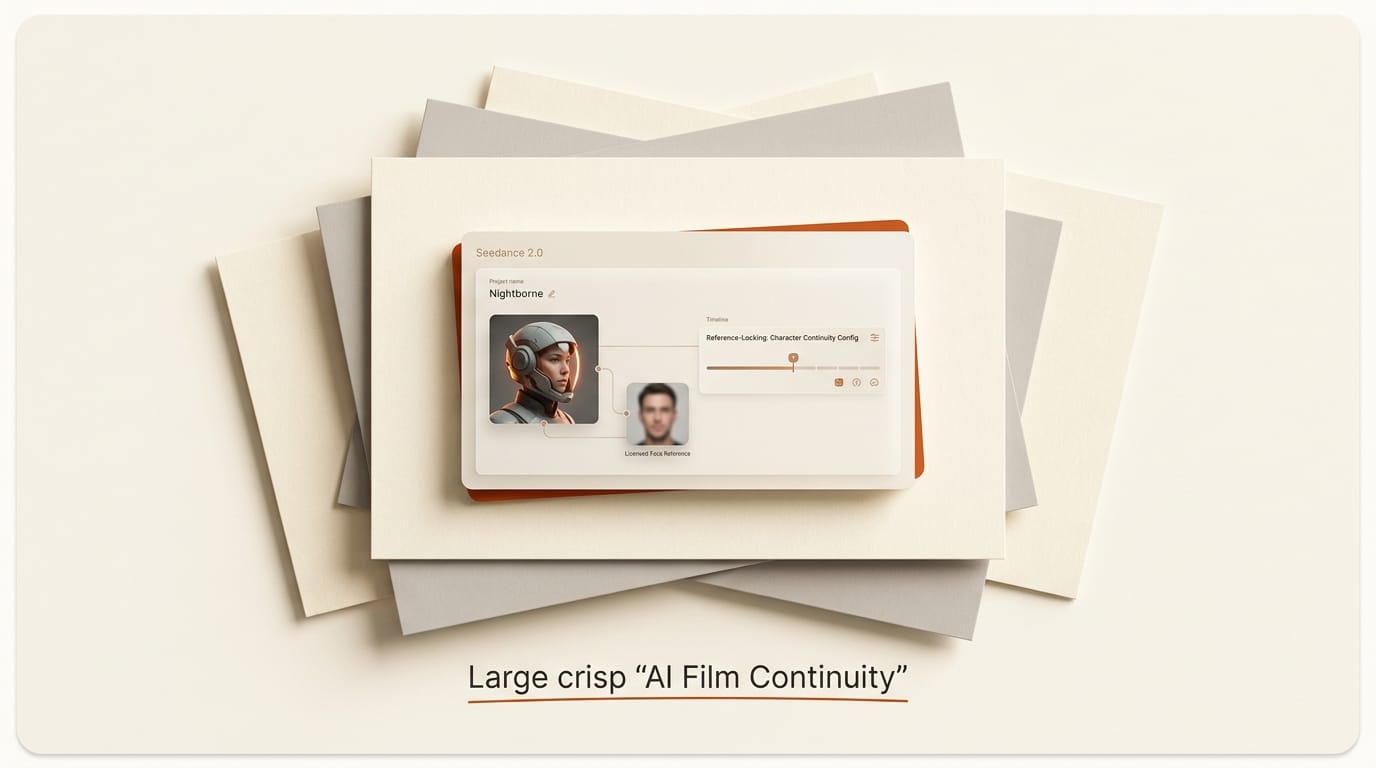
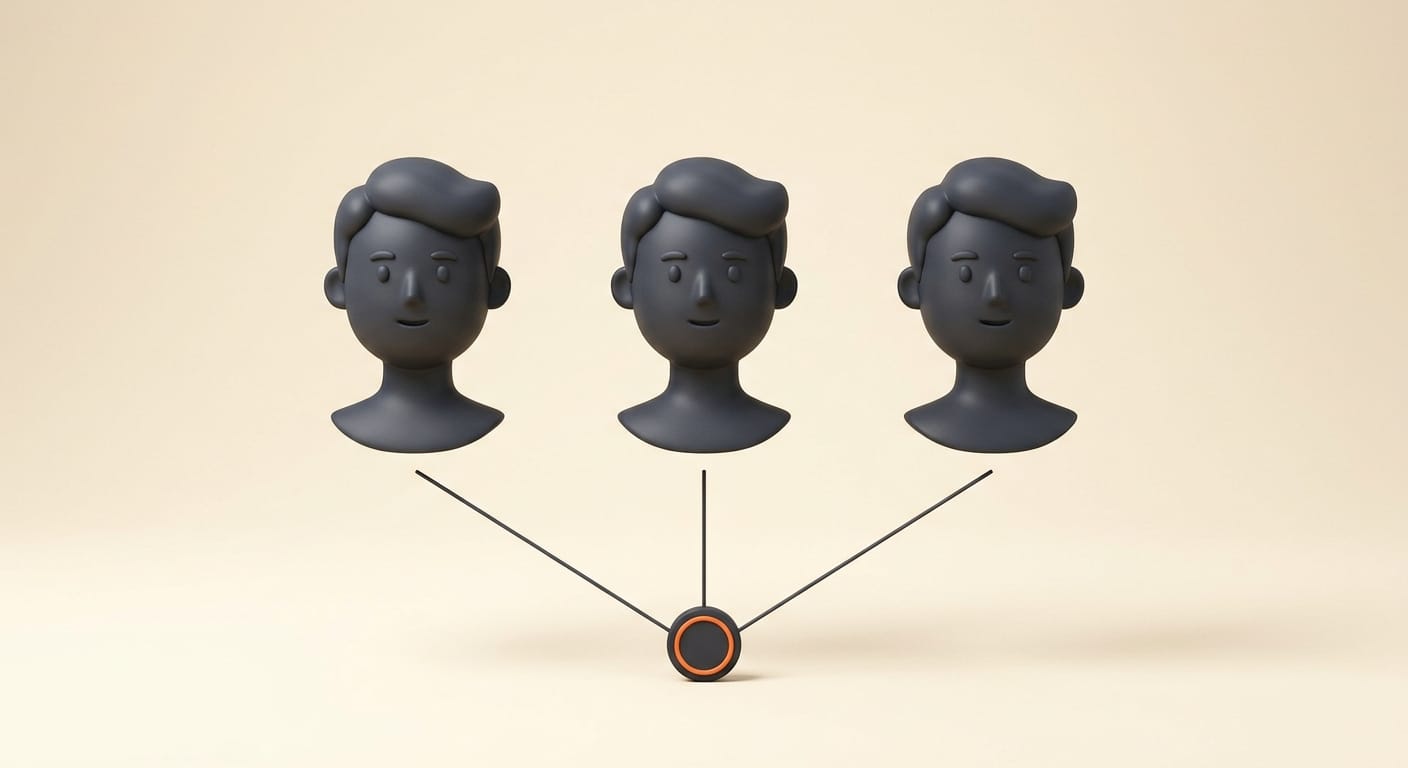
The key move was anchoring identity to real, licensed references rather than to the model's imagination. By licensing 32 faces and voices, Blomkamp gave the production fixed identity targets to steer generation toward, so a character in shot 40 could be matched against the same reference used in shot 4. Concept artists set the visual world first, providing a consistent style bible the prompts could reference. This inverts the naive AI-video workflow. Instead of generating and hoping for consistency, the production defined the invariants up front, the faces, the voices, the look, and used the model to fill in motion and staging around those fixed points. Continuity became a constraint the pipeline enforced, not a lottery the model ran each clip.
Frame-by-frame directing versus one-prompt generation
Blomkamp directed frame by frame, which is the unglamorous heart of the method. Rather than prompting a whole scene and accepting the result, he treated each shot as a directed unit, iterating prompts against the reference targets until the output matched intent. This is closer to traditional shot-by-shot filmmaking than to the type-a-sentence workflow most people associate with AI video. The lesson is that the director did not disappear. The labor moved from operating a camera to operating a prompt-and-reference loop, but the shot discipline, coverage, matching, pacing, is the same craft that made his live-action work coherent.
Where this sits among other AI shorts
Most viral AI shorts optimize for a single arresting image or a short, loopable spectacle. Nightborne optimizes for narrative endurance, and it pays for that with a heavier pipeline. Compared with quick Seedance experiments that lean on the model's longer-clip capabilities alone, Blomkamp's short is doing something structurally different: it is treating the model as a rendering engine inside a real production, not as the production itself. That distinction is the whole story of where serious AI filmmaking is going.
It also separates Nightborne from the growing body of open-workflow experiments where creators wire Seedance into node-based pipelines for control. Those pipelines chase technical control over a shot; Blomkamp is chasing narrative control over a film. Both are legitimate, but they answer different questions. The open-workflow crowd asks how much you can bend a single generation. Blomkamp asks how many generations you can chain before the story falls apart, and his answer, so far, is 13 minutes.
Impact on Creators
For a solo creator, the encouraging news is that the core technique is replicable at small scale. You do not need 32 licensed actors. You need consistent references. Establish your characters as fixed image and voice references before you generate anything, keep a style bible your prompts point back to, and direct shot by shot against those references instead of prompting whole scenes and accepting drift. Tools like Dreamina put Seedance-class generation within reach, and reference-locking features are increasingly standard, so the method scales down even if the budget does not.
The sobering news is that the labor did not vanish, it relocated. Nightborne is not a story about typing a prompt and receiving a film. It is a story about a director applying decades of shot discipline to a new rendering tool, plus the resources to license identities and pay concept artists. A solo creator can adopt the method, but should expect the same iteration, matching, and craft that traditional filmmaking demands. The model lowers the cost of pixels, not the cost of directing.
Key Takeaways
- Nightborne is a 13-minute short made entirely with Seedance 2.0, notable for sustaining continuity at a length most AI shorts cannot reach.
- The continuity was engineered, not generated: licensed faces and voices plus concept-artist style bibles gave the pipeline fixed identity targets.
- Blomkamp directed frame by frame, treating the model as a rendering engine inside a real production rather than as the production itself.
- Solo creators can replicate the method at small scale with consistent references and shot-by-shot direction, but the directing labor remains.
- Barley Studios, Blomkamp's AI-first studio, frames this as a test short toward a full AI-generated feature.
What to Watch
The open question is whether reference-locking scales from 13 minutes to feature length without the seams showing. A short can hide the model's weak points through careful shot selection; a 90-minute film has far more surface area for drift, and audiences forgive far less over a longer sit. Watch whether Barley Studios can hold identity, physics, and tone across a feature, and whether the licensing model, paying real people for their faces and voices as generative references, becomes the standard consent-and-credit framework the industry has been arguing about. If Blomkamp pulls the feature off, the interesting shift will not be that AI made a movie. It will be that the director's craft turned out to be the irreplaceable part.