On May 5, 2026, Luma opened the Uni-1.1 API, putting its Unified Intelligence image model behind a REST endpoint and naming eight launch partners that span most of the creator-facing image stack outside the big foundation labs. The release pairs two endpoints (Generate Image and Modify Image) with Python and JavaScript SDKs, a nine-reference ceiling per request, and native rendering of Chinese, Japanese, and Arabic scripts. Generation lands at roughly 31 seconds per image, and Luma claims less than half the price and latency of comparable models. The bigger story is not the API itself but what it means for a creative tool stack that was already mid-consolidation.
Background
Uni-1 first surfaced on March 5, 2026, when Luma launched Creative Agents on top of the Uni-1 model. That release was packaged as a creator-facing product inside Luma's own surface. Two months later, Uni-1.1 is the same architecture exposed as raw infrastructure. The model has since climbed into the top three of the public Image Arena across text-to-image and image edit, taken the number one spot on Human Preference Elo for overall quality, style and editing, and reference-based generation, and led RISEBench on overall reasoning and spatial logic.
The pricing story is sharper than the leaderboard story. Luma is not selling Uni-1.1 as a flagship premium model. It is selling it as a faster, cheaper alternative to whatever you are using now, with the explicit promise of cutting both image cost and latency in half. That positioning is what turns the announcement into a distribution event rather than a product launch.
Deep Analysis
Unified Intelligence vs Stitched Pipelines
Most production image generators today are stitched: a language model interprets the prompt, a separate diffusion or transformer model handles pixels, and the two coordinate through some intermediate representation. Each handoff is a chance to lose constraints. If you brief the system to hold a color palette, a camera angle, and a product reference at once, stitched pipelines tend to honor whichever constraint dominates the conditioning and quietly drop the others. Studios know this failure mode because it is the reason most production image work still cycles through three to ten retries per usable frame.
Unified Intelligence puts text and image tokens into a single sequence and passes them through one transformer. The architectural argument is that the model never has to translate between representations, so it can resolve multi-constraint briefs as a single optimization rather than a chain of compromises. The benchmark evidence backs the claim conditionally: Uni-1.1 leads on RISEBench's reasoning and spatial logic and tops Human Preference Elo on reference-based generation, both of which are the categories where stitched pipelines historically lose the most ground. The architecture is also why the nine-reference ceiling is plausible. Stitched systems with dense cross-attention bottlenecks struggle past three or four references; a unified transformer treats them as more tokens.
Eight Partners as a Distribution Bet
The eight names in the announcement (Envato, Comfy, Runware, Flora, Krea, Magnific, Fal, and LovArt) read like a list of the surfaces a working creator already touches in a given week. Envato sits on the stock side. Comfy is the canonical node-based workflow tool. Runware and Fal are inference resellers that put models behind cheap GPU pools. Krea, Magnific (formerly Freepik), and LovArt are creator-first design and editing platforms. Flora is the studio canvas built around AI-native production. Together they cover the stock library, the workflow graph, the inference layer, and the production surface.
This is the same playbook OpenAI used with the GPT-3 API and Anthropic used with the Claude connector launch: skip the consumer fight, take a model with measurable benchmark wins, and put it inside every tool a creator already pays for. For Luma, the implication is that Uni-1.1 will show up in your existing pipeline without a separate subscription. For competing image labs, the implication is harder. If your model is not on this list and your pricing is not within 2x of Luma's, the eight partner platforms have a faster, cheaper, top-three model their users can switch to with one menu change.
Nine References and the Multi-Constraint Brief
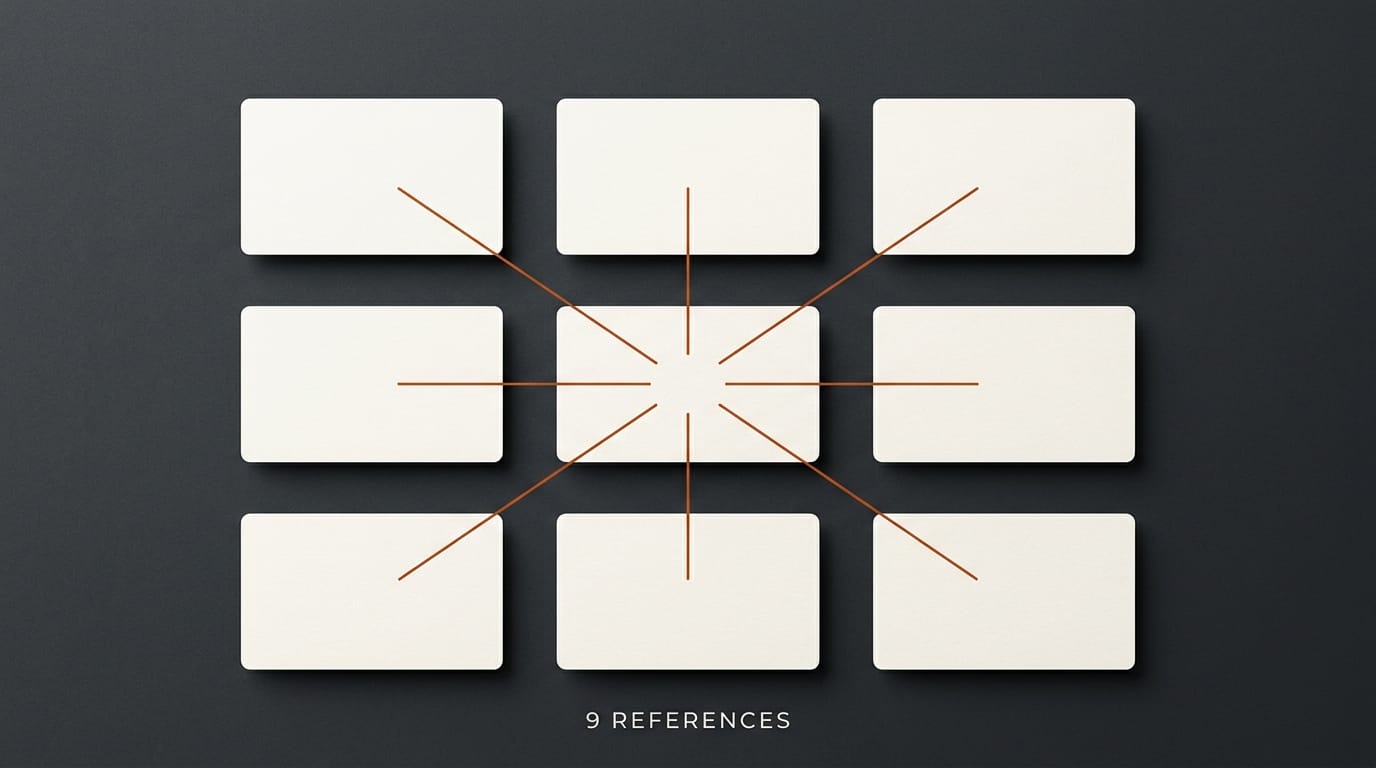
The nine-reference ceiling is the specification line creators should care about most. Production image work for brands is not text-to-image. It is text-plus-references-to-image, where the references encode brand identity, lighting setup, product geometry, talent likeness, and shot framing. Most production APIs cap usable references at one to three; some workarounds use ControlNet stacks or LoRA fine-tunes, but those add their own constraints and training cost. Nine native references in a single call collapses a workflow that often took two to four sequential model calls into one.
The Modify Image endpoint is the second half of that story. Natural-language editing for background swaps, lighting tweaks, and localized changes is the iteration loop that comes after generation, and right now most teams ship that work to a separate inpainting model or a manual Photoshop pass. Combining generation and edit on the same model with the same reference pool removes the round-trip cost of switching tools and, in theory, preserves the constraint stack between turns. The honest test for a working studio is whether Uni-1.1 can take the same nine references through a generate-then-edit-then-edit sequence without losing the brand identity by turn three. That is the benchmark the partner platforms will be running this week.
Multilingual Rendering Reaches the Long Tail
Non-Latin script rendering has been a quiet failure mode for image models throughout 2024 and 2025. Even top models routinely produced garbled Chinese characters, miswritten Arabic letterforms, and substituted Japanese kanji that looked plausible but did not exist. The workaround for global campaigns has been to generate the visual without text and composite the typography in post. That works for hero images and breaks for any product shot where the script needs to live on a label, a sign, or a screen.
Uni-1.1 ships with native rendering of Chinese, Japanese, and Arabic, with what Luma calls regional aesthetic awareness. The capability is small in feature-list terms and large in revenue terms: campaigns produced in those three script families anchor most of the ad spend in markets that account for roughly half the global digital ad economy. For agencies running multilingual creative pipelines, Uni-1.1 turns text rendering from a manual composite into an API parameter. For Luma, it adds a category of work the company can sell against US-centric models that still treat non-Latin scripts as a stretch goal.
Impact on Creators
For freelancers and small studios, the practical change is that one API key now covers reference-heavy generation, natural-language edit, and multilingual rendering at sub-half-price economics. The 31-second latency is fast enough for interactive iteration, slow enough that batch workflows still matter, and well within the range where ComfyUI graphs can fold Uni-1.1 into existing chains. Anyone billing by the project rather than the hour gains from the cost compression directly. Anyone billing by the hour should plan on shorter delivery cycles becoming the new client expectation.
For larger studios already on managed enterprise contracts, the relevant question is whether Uni-1.1 inside Magnific, Krea, or Flora is good enough to displace whatever flagship the studio is paying premium rates for. The benchmark answer says yes for reference-heavy and edit-heavy work. The contract answer takes longer because procurement cycles do not move at the speed of model releases. Expect the first six weeks to be A/B tests on internal pipelines, the next quarter to be partial migrations on reference-heavy categories like product photography and brand campaigns, and the rest of the year to be a slow renegotiation on the categories where Uni-1.1 holds up.
Key Takeaways
- Uni-1.1's single-transformer architecture is the technical reason it leads RISEBench reasoning and Human Preference Elo on reference-based generation; it is also why a nine-reference ceiling is plausible at production latency.
- The eight launch partners cover stock, workflow, inference, and production surfaces, which means Uni-1.1 reaches working creators through tools they already pay for rather than requiring a new subscription.
- Native rendering for Chinese, Japanese, and Arabic scripts is the feature with the largest near-term revenue impact, because it unlocks creative work for markets that previously composited text in post.
- The pricing position (less than half the cost and latency of comparable models) puts pressure on every flagship image API that does not have an exclusive enterprise contract holding the price up.
What to Watch
The first signal to watch is whether the eight partner platforms expose Uni-1.1 as a default rather than an option. If Krea and Magnific make Uni-1.1 the recommended generator on their main editor surfaces, that confirms the model is good enough to replace whatever flagship those teams currently route through. The second signal is whether the rest of the creator stack signs on within four to six weeks. ComfyUI's existing partner velocity suggests new model nodes ship in days; absence after a month would imply integration friction that is not visible from the announcement. The third signal is whether Luma releases pricing per image on the public Build tier. The current "less than half the price" framing is comparative and Luma keeps the actual unit cost off the public pricing page; a published per-image rate would lock the cost-compression claim and force every competing API to respond on the next pricing cycle.
Frequently asked questions
What is Luma Uni-1.1 and how does it differ from Photon?
Uni-1.1 is Luma's unified API combining image generation + editing into a single endpoint. Photon was Luma's text-to-image model; Uni-1.1 extends that to native editing capabilities (inpainting, outpainting, region edits) without requiring separate model calls. The "Uni" branding signals one unified interface across generation and editing tasks.
How does Uni-1.1 compare to Midjourney V8 and FLUX 1.1 Pro?
Uni-1.1 ranks in the top 3 on Luma's reported benchmarks, behind Midjourney V8 on aesthetic ELO and competitive with FLUX 1.1 Pro on photorealism. Where Uni-1.1 wins is the 9-reference image conditioning (more references than most peers support) and the unified edit-after-generate workflow without losing source consistency.
How much does Luma Uni-1.1 cost?
Pricing is per-image via the API. As of May 2026, Uni-1.1 is positioned mid-tier between FLUX Schnell (cheapest open-source) and Midjourney V8 paid plans. Check lumalabs.ai for the current rate card; pricing has been adjusting frequently as the model launches with 8 partner integrations.
Which 8 launch partners are using Uni-1.1?
Per Luma's launch, Uni-1.1 ships with 8 launch-partner integrations. Specific partners include creative-app vendors and design-tool platforms; check the Luma blog for the full partner list. The partnership pattern signals Luma's distribution strategy is partner-first rather than direct-to-creator.
Can I use Uni-1.1 for commercial creator work?
Yes, Luma's commercial license terms apply at paid API tiers. For creator agencies and content shops shipping client work, the licensing terms are competitive with Midjourney's commercial tier. Verify current terms in the Luma API docs before any major commercial deployment.