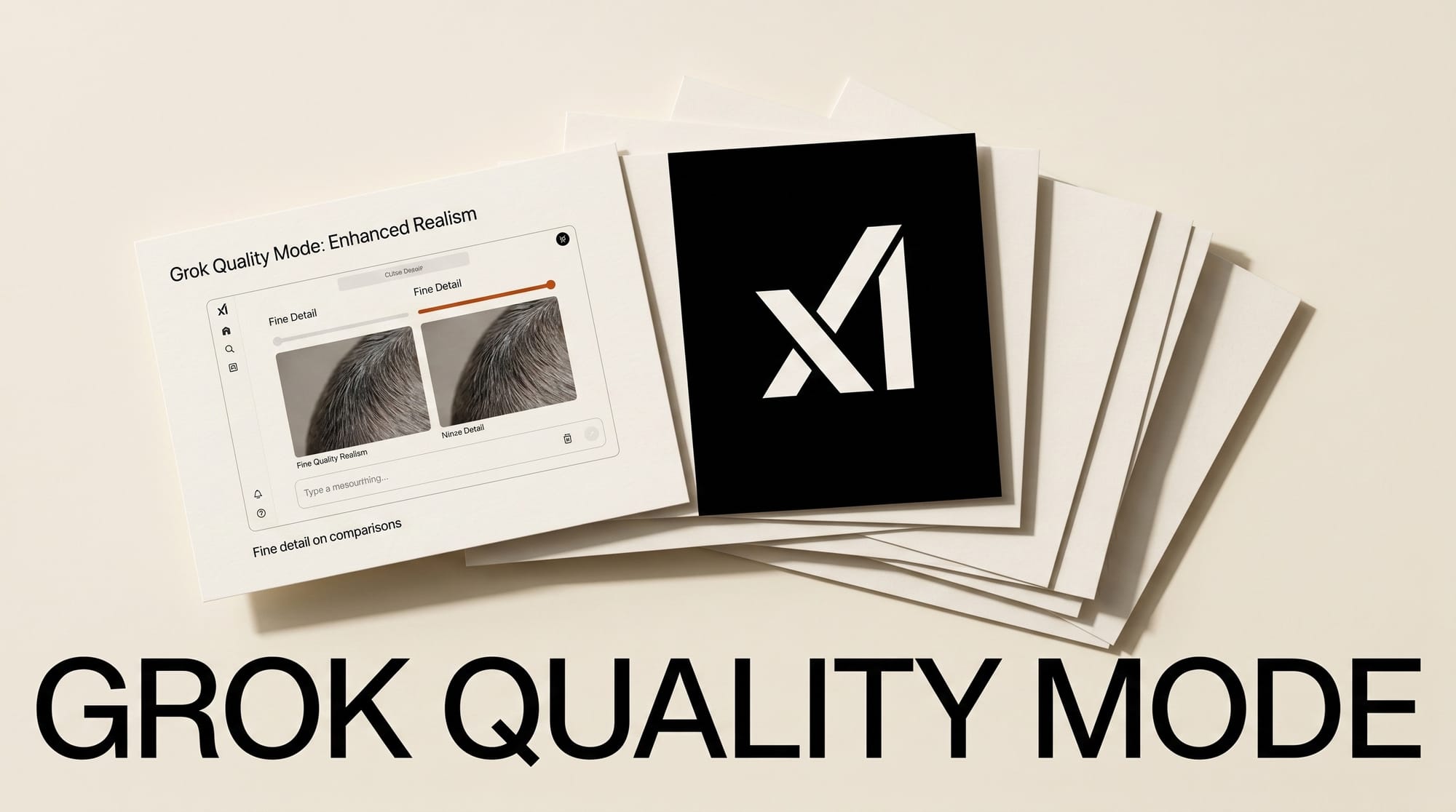
xAI announced on May 6, 2026 that eight Grok models will be retired on May 15, 2026 at 12:00pm PT, including grok-imagine-image-pro - the premium image generation model used by developers and creative teams building with the Grok Imagine API. The retirement covers the full xAI model catalogue from legacy Grok 4 variants to the image pro model, and affects any application that calls those model identifiers directly. For creative workflows, the more significant news is that grok-imagine-image-quality, a new Quality Mode tier, also launched on May 6 as the recommended upgrade path for teams that need higher realism and accurate text rendering.
What Happened

xAI published a migration guide detailing the full list of retiring models and their replacements. Eight model identifiers will stop responding on May 15:
grok-4-1-fast-reasoninggrok-4-1-fast-non-reasoninggrok-4-fast-reasoninggrok-4-fast-non-reasoninggrok-4-0709grok-code-fast-1grok-3grok-imagine-image-pro
According to xAI, "migrating is as simple as changing the model field in your API request." No prompt engineering changes or structural API updates are required for most workflows. The transition follows xAI's accelerating release cadence in 2026, which has moved the Grok Imagine image stack from a single model to a three-tier system - standard, quality, and the now-deprecated pro.
The Creative Angle: grok-imagine-image-pro Is Leaving
Of the eight retiring models, grok-imagine-image-pro is the one that matters most to creative teams. If you have been using the Grok Imagine API to generate images for campaigns, UI mockups, concept art, or branded content, your code currently calls one of two image model identifiers: grok-imagine-image (standard) or grok-imagine-image-pro (premium). After May 15, grok-imagine-image-pro will return errors.
The timing aligns with a pattern emerging across the AI industry in May 2026. OpenAI shut down DALL-E 3 on May 12, pushing users toward GPT Image 1. Now xAI is following with its own image model consolidation. Both moves reflect the same underlying logic: the "pro" naming convention from 2025 has been superseded by newer architectures that deliver better results at lower cost. The old premium tiers are no longer the premium option.
For context on where Grok Imagine has been heading, the April 30 Grok Imagine Agent launch introduced multi-step creative execution inside Grok's open canvas - a major architectural shift from single-shot generation. The May 15 deprecation is the cleanup phase: legacy model identifiers are being retired to consolidate the API surface around the current generation.
What Quality Mode Delivers
The xAI image generation documentation now recommends grok-imagine-image-quality as the default for all new image requests. The model runs on xAI's Aurora architecture, which uses an Autoregressive Mixture-of-Experts approach rather than traditional diffusion methods. This enables native support for long prompts and tight integration between the language understanding and image rendering stages.
Quality Mode produces four images per request and emphasizes three areas where the old pro model frequently fell short:
- Higher realism: Fine surface details, volumetric lighting, accurate material textures, and realistic skin rendering for character-driven creative work.
- Text rendering: Accurate, clean text inside generated images, including multilingual labels, logos, and typographic layouts - historically a weak point for AI image generators.
- Prompt adherence: Tighter scene construction and consistent results for brand-controlled projects, reducing the iteration count needed to hit a specific visual direction.
According to third-party benchmarks tracked at Artificial Analysis, grok-imagine-image-quality ranked third on the Text-to-Image Arena as of early May 2026 with 1,223 ELO points, placing it above several established commercial models. The full Quality vs. Speed mode breakdown shows Quality Mode is designed for professional outputs where fidelity matters more than throughput, while Speed Mode (also still available) handles rapid iteration and concept validation.
Full Migration Map
xAI's recommended replacements for all retiring models:
| Retiring Model | Replace With |
|---|---|
grok-4-1-fast-reasoning |
grok-4.3 |
grok-4-1-fast-non-reasoning |
grok-4.20-non-reasoning |
grok-4-fast-reasoning |
grok-4.3 |
grok-4-fast-non-reasoning |
grok-4.20-non-reasoning |
grok-4-0709 |
grok-4.3 |
grok-code-fast-1 |
grok-4.3 |
grok-3 |
grok-4.3 |
grok-imagine-image-pro |
grok-imagine-image or grok-imagine-image-quality |
Note: xAI's official migration guide maps grok-imagine-image-pro to the standard grok-imagine-image model, which is the minimum viable migration. However, the image generation documentation recommends grok-imagine-image-quality for all new requests given its superior output fidelity. Teams with quality-sensitive creative work should migrate to grok-imagine-image-quality rather than the standard tier.
How to Migrate in Three Minutes
The migration requires one line change. Here is the Python example from xAI's documentation:
# Before (retiring May 15)
response = client.image.sample(
    prompt="A collage of London landmarks...",
    model="grok-imagine-image-pro",
)

# After (standard migration path)
response = client.image.sample(
    prompt="A collage of London landmarks...",
    model="grok-imagine-image",
)

# Recommended (upgrade path - better quality)
response = client.image.sample(
    prompt="A collage of London landmarks...",
    model="grok-imagine-image-quality",
)
If you use xAI's API through a third-party platform or no-code integration layer, check the platform's model selector for an updated identifier. Most major API gateways that expose Grok Imagine have already added grok-imagine-image-quality following the May 6 launch. If your platform has not yet updated, the standard grok-imagine-image identifier remains fully supported and is not being deprecated.
What Happens After May 15
API calls that reference any of the eight retiring identifiers will fail after 12:00pm PT on May 15, 2026. xAI has not published specific error codes for post-retirement requests, but the behavior will match other API deprecations: the request will not queue, fall back to a different model, or degrade gracefully. It will simply error. Any production pipeline calling grok-imagine-image-pro needs to be updated before the deadline to avoid outages.
xAI directs teams with migration questions to their release notes and to contact support@x.ai for enterprise migration support. The Grok 4.3 launch from late April - which brought a 40 percent price reduction and improved agentic performance - is the same model that absorbs most of the retiring text/reasoning workloads. That context is in the earlier Grok 4.3 and Custom Voices launch coverage.
What to Do Next
Audit your codebase or integration settings for any of the eight retiring model identifiers. For image generation specifically, search for grok-imagine-image-pro and update to grok-imagine-image-quality if you want improved realism and text accuracy, or to grok-imagine-image as the direct minimum-friction swap. Run a test generation after updating to confirm the output meets your quality bar before the May 15 deadline.
If you are evaluating whether to migrate at all versus switching to a competing image generation API, the context from the DALL-E 3 shutdown analysis covers the broader creative image generation landscape as it stands post-consolidation.
Frequently Asked Questions
When exactly do the models go offline?
May 15, 2026 at 12:00pm Pacific Time. Calls to retiring identifiers made before that timestamp will continue to work normally.
Does grok-imagine-image (without the -pro suffix) stay active?
Yes. The standard grok-imagine-image model is not being deprecated and remains available. Only the -pro variant is being retired.
Is Quality Mode more expensive than Image Pro?
xAI uses flat per-image pricing rather than token-based pricing for image generation. Current pricing details for grok-imagine-image-quality are listed on the xAI model page. The May 6 launch positioned Quality Mode as the new standard for professional outputs rather than as a premium add-on tier.
Will my existing saved generations or Grok.com outputs be affected?
The deprecation affects API calls only. Images already generated and saved are not deleted. The consumer-facing Grok.com interface manages model selection automatically and will continue to deliver quality-tier outputs without requiring any user action.
Why is xAI retiring these models now?
xAI has shipped major architecture updates across the Grok 4 line throughout Q1-Q2 2026, including Grok 4.3 (late April), Grok Imagine Quality Mode (May 6), and the Custom Voices API (April 30). The May 15 retirement consolidates the API surface around the current generation and removes legacy identifiers that carry higher maintenance cost for smaller performance gains.