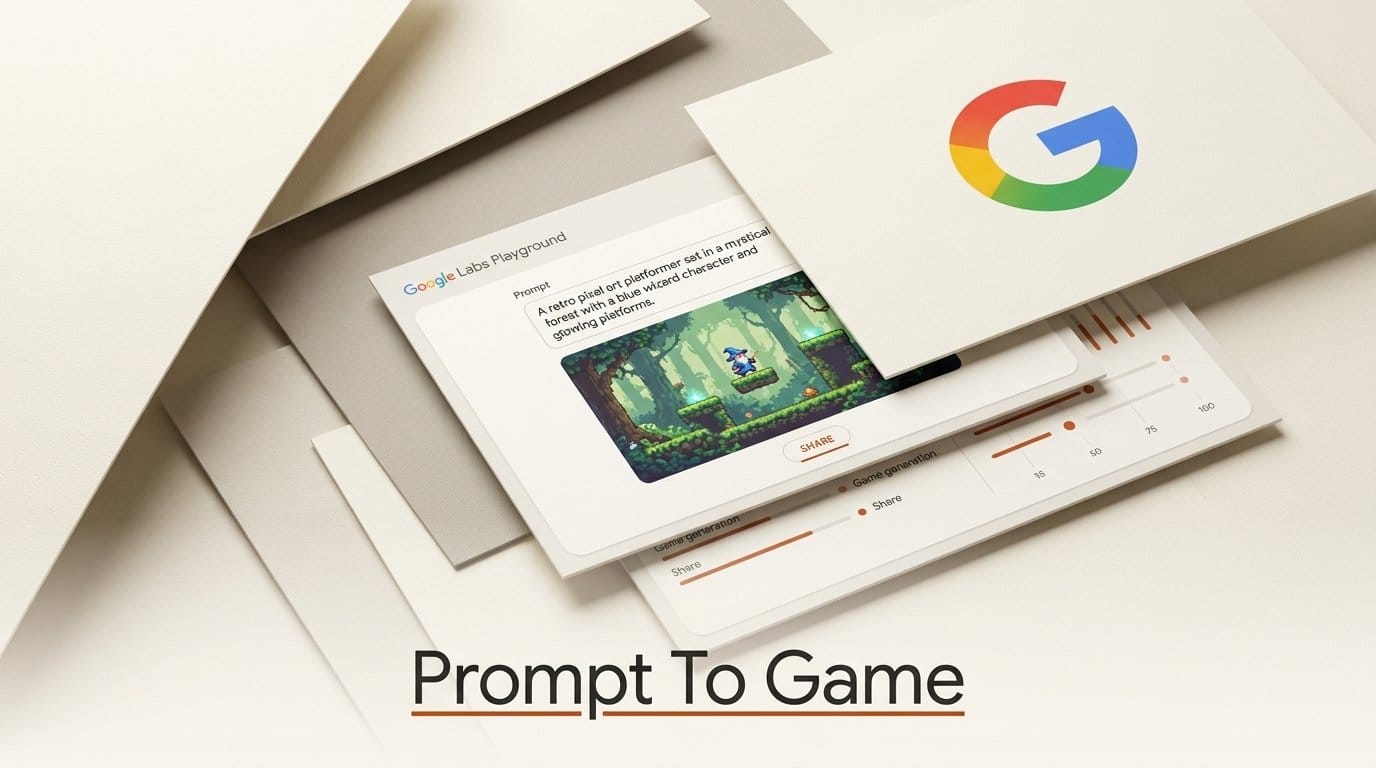
Google Labs launched Playground on October 7, 2026: a browser app that turns a typed description into a playable 2D or 3D game you can share with a link. It is live today for adults 18 and over in the US. Free accounts can create games, and Google One members get more creation access. According to 9to5Google, it runs on Gemini, Nano Banana and Lyria models, so the game logic, the art and the music all come from the same chat.
What shipped
Playground is a chat window. You describe the game you want, or remix one of the starter prompts, and it builds a version you can play right away on a phone or a laptop. Then you direct it: ask for different rules, a new character, a bigger level or floatier jumps, and it rebuilds the game. Some genres support multiplayer, and published games can carry leaderboards linked to your Play Games profile.
Finished games can stay private, go to friends as a link, or be published to the community gallery, where other people play and rate them. Google screens published games and applies its community guidelines. Engadget notes that creation access is tiered by Google One plan, and Google has not yet said what each tier gets. You start at playground.google with your Google account.
Playground vs Meta Pocket vs Roblox Build
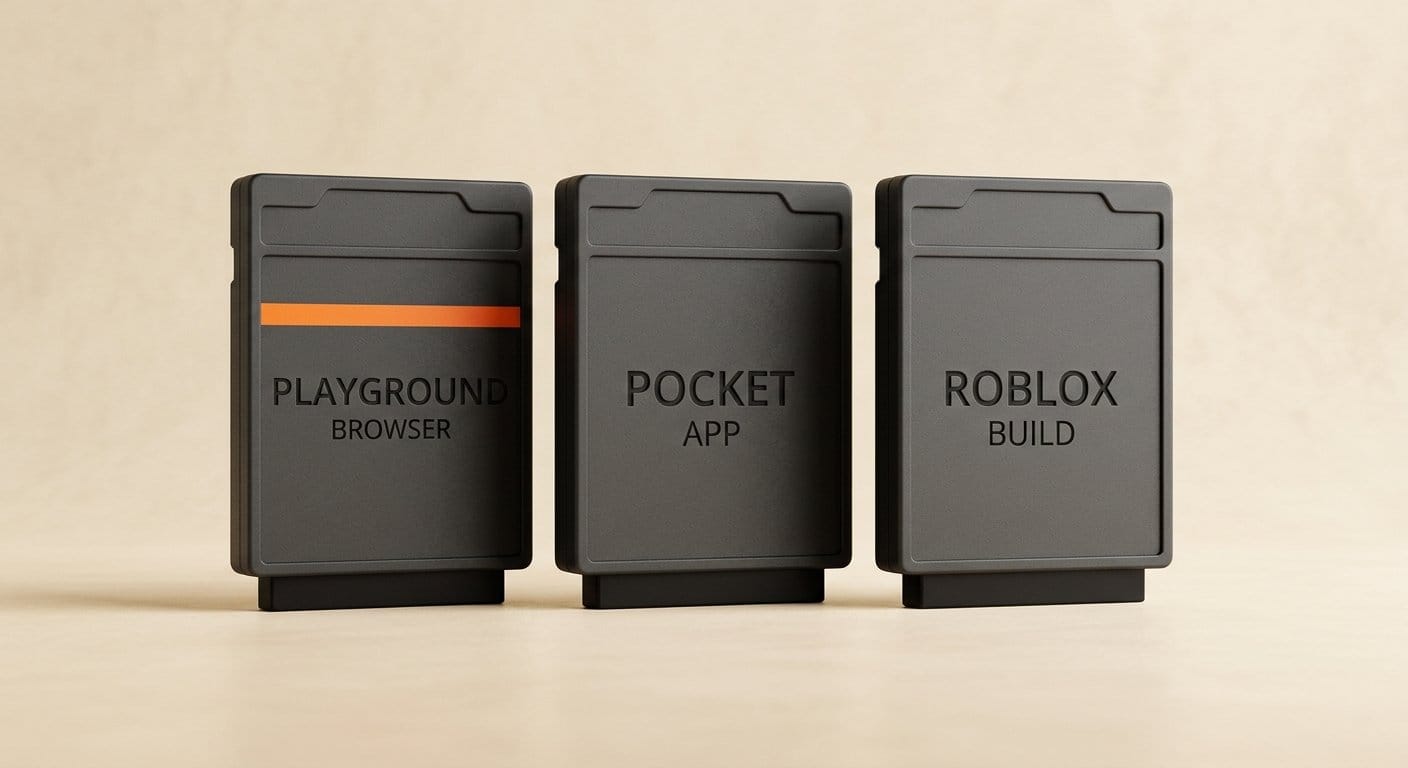
Our comparison. Playground is a new product, so there is no previous version to compare it with. We set it against the two closest consumer apps that also turn a prompt into a game: Meta's Pocket and Roblox's Build. Every cell links to its source. Availability for Pocket and Build is what each company said at launch.
The difference that matters for creators is the last row. Pocket and Build keep your game inside their own app. A Playground game opens in a browser, so you can share a link wherever your audience already is.
What it means for your workflow
If you make videos, illustrations or courses, Playground turns an idea into something people can play without hiring a developer. A YouTuber can make a small game that goes with a video. A teacher can build a quiz game for a lesson. An illustrator can test whether a character works as a playable hero before committing to a full project. Each round is a sentence in a chat box, so trying three versions takes minutes, not weeks.
For anything more ambitious, Google says Unity Spark will plug into Playground to add professional-level mechanics and high-fidelity 3D. Spark is a separate AI game maker from Unity that is still in closed beta with a waitlist, so treat it as a later upgrade path, not something you can use this week. If you have played with Grok Build mode, Playground is a similar idea, but it focuses only on games and adds a gallery and leaderboards.
If you are in the US, the practical move today is to build one small game tied to something you already make, share the link with a few followers, and see whether they play it to the end.
What is not known yet
- How many games a free account can make, and what each Google One plan adds. Google has not published the tiers.
- Whether you can export a game, put it on your own site, or earn money from it.
- Whether people outside the US can play a link you share, and when creation opens in other countries.
- When the Unity Spark connection arrives, and what it will cost.
Google calls Playground an experiment, so expect its features and limits to change quickly.