Google shipped Gemini 3.7 Flash on August 13, 2026, just three weeks after 3.6 Flash, and called it "our most intelligent workhorse model yet for coding and agents." The update keeps the 1,048,576-token context window and the low-cost Flash positioning, but posts double-digit gains on every coding, document, and automation benchmark Google published. For creators and builders who lean on a fast, cheap model to draft code, parse PDFs, and drive agent loops, this is the release that matters more than the flagship Pro tier. Google detailed the model in its official announcement, and this deep dive breaks down what changed, what it costs, and how to put it to work today.
What Google Shipped in Gemini 3.7 Flash
Gemini 3.7 Flash is a text-output model that accepts text, image, video, audio, and PDF input, with a 1,048,576-token context window and a 65,536-token output limit. The model ID is gemini-3.7-flash. The headline theme is agentic coding: Google positions it as a workhorse for debugging, first-pass production code, multi-step planning, and long-horizon engineering tasks where an agent has to stay on track across many tool calls.
One meaningful change is the thinking budget. Gemini 3.7 Flash supports reasoning at low, medium, and high levels, but drops the "minimal" setting that earlier Flash builds offered. In practice that means the model now leans harder into deliberate, staged reasoning for hard problems rather than answering instantly, which is what drives the jump on long-horizon and automation scores. Google documents how to tune this in its thinking guide. The model also supports caching, code execution, computer use (preview), file search, function calling, search grounding, Google Maps grounding, and structured outputs. It does not do image generation, audio generation, or the Live API.

Gemini 3.7 Flash vs 3.6 Flash: the benchmark jump
The clearest way to read this release is against the version it replaces. Every number below is from Google's launch benchmarks, comparing Gemini 3.7 Flash to 3.6 Flash on the same suite. The model card and full spec sheet are on the Gemini API docs.
| Benchmark | What it measures | Gemini 3.6 Flash | Gemini 3.7 Flash |
|---|---|---|---|
| FrontierCode 1.1 | Production code quality | 34.4% | 43.6% |
| DeepSWE v1.1 | Long-horizon engineering | 49.0% | 65.3% |
| WebDev Arena | Web development (Elo) | 1538 | 1588 |
| GDP.pdf | Document processing | 22.0% | 34.0% |
| AutomationBench | Workflow automation | 17.0% | 30.4% |
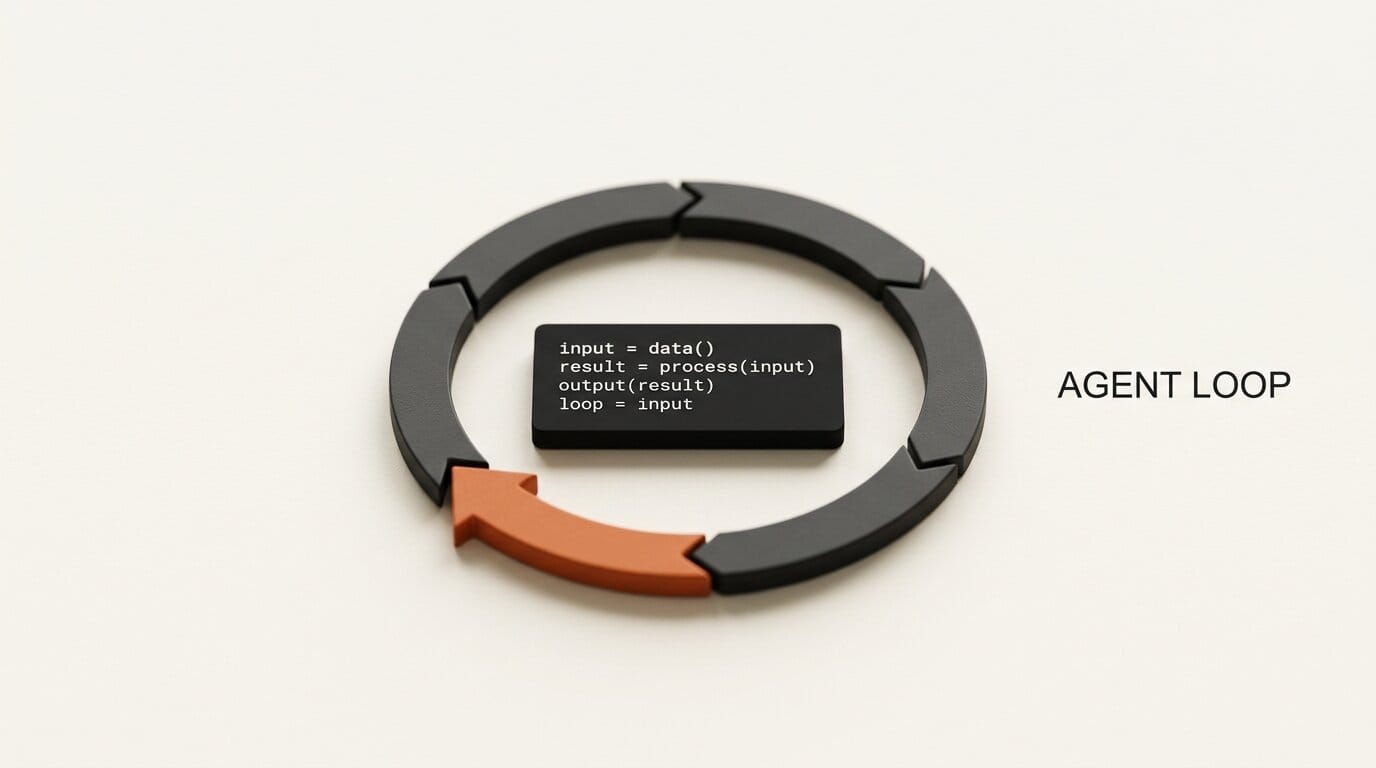
The biggest movers are the ones that matter for agents. Long-horizon engineering climbed more than 16 points and workflow automation nearly doubled, which tracks with Google's framing of 3.7 Flash as an agent driver rather than a one-shot code completer. Web development gained a 50-point Elo bump, meaning the model produces more functional UI on the first try. That competitive positioning puts it squarely against other cheap coding specialists like Grok 4.6, which chased the same agentic-coding-at-lower-cost pitch earlier this cycle.

Pricing and how it stacks up
Google is using introductory pricing to pull developers onto 3.7 Flash. Through December 31, 2026, the model runs at $0.75 per million input tokens and $3.75 per million output tokens. On January 1, 2027, standard pricing kicks in at $1.50 per million input and $7.50 per million output, so the current rate is effectively half price for the rest of the year. Current numbers live on the Gemini API pricing page.
At the introductory tier, Flash stays cheap enough to run in high-volume loops: batch jobs, large PDF ingestion, and agent runs that fire dozens of calls per task. The Batch API discounts throughput work further, and Flex plus Priority inference tiers let you trade latency against cost. That pricing shape is the same reason budget coding models like MAI-Code-1.1-Flash have been gaining ground: the marginal cost of a coding assistant now matters as much as its raw score.
What this enables for creators and builders
The practical unlock is running a capable agent without flagship-tier bills. Here is how to integrate Gemini 3.7 Flash into real work:
- Agent backends. Point a coding or research agent at
gemini-3.7-flashwith thinking set to medium or high. The long-horizon gains mean fewer derailments across multi-step tool chains, so your agent finishes tasks it used to abandon. - Document pipelines. Feed full PDFs directly (up to the 1M-token window) for contract review, research summarization, or data extraction. The GDP.pdf jump from 22% to 34% is the difference between a rough skim and a usable summary.
- UI prototyping. Use it to generate functional front-end components. The WebDev Arena Elo gain means more first-pass output that actually renders and runs.
- Structured extraction. Turn on structured outputs and function calling to get clean JSON from messy inputs for downstream automation.
You can test all of this in the browser first through Google AI Studio before writing a line of integration code, which is the fastest way to sanity-check whether Flash is strong enough for your task or whether you need the Pro tier.
How to start using Gemini 3.7 Flash today
Availability is broad from day one. Developers get the model through Google AI Studio and the Gemini API, and it is wired into Android Studio for in-editor coding. Enterprises reach it through the Gemini Enterprise Agent Platform, and consumers see it inside Gemini Spark for AI Pro and Ultra subscribers across 160-plus countries. To wire it into your own stack, request an API key, set the model to gemini-3.7-flash, choose a thinking level, and start with the introductory pricing while it lasts.
Frequently asked questions
Is Gemini 3.7 Flash better than Gemini 3.6 Flash?
Yes, on every benchmark Google published. The largest gains are in long-horizon engineering (49.0% to 65.3%) and workflow automation (17.0% to 30.4%), with smaller but real gains in production code quality, web development, and document processing. The context window and Flash pricing tier stay the same.
How much does Gemini 3.7 Flash cost?
Through December 31, 2026, it is $0.75 per million input tokens and $3.75 per million output tokens. Starting January 1, 2027, pricing rises to $1.50 per million input and $7.50 per million output. Batch and Flex inference tiers can lower effective cost for high-volume jobs.
What is the context window and what inputs does it accept?
Gemini 3.7 Flash has a 1,048,576-token input window and a 65,536-token output limit. It accepts text, image, video, audio, and PDF input, and produces text output. It does not generate images or audio and does not support the Live API.
Does Gemini 3.7 Flash support reasoning or thinking modes?
Yes. It supports thinking at low, medium, and high levels. Unlike some earlier Flash builds, it does not offer a "minimal" thinking setting, which pushes the model toward more deliberate multi-step reasoning on hard tasks.
Where can I use Gemini 3.7 Flash?
Developers access it via Google AI Studio, the Gemini API, and Android Studio. Enterprises use the Gemini Enterprise Agent Platform, and consumers get it through Gemini Spark on AI Pro and Ultra plans in more than 160 countries.
Should I use Flash or the Pro tier for coding agents?
Start with Flash. At introductory pricing it handles most agentic coding, document, and automation work at a fraction of Pro's cost. Move to Pro only when a task consistently exceeds Flash's ceiling on your own evaluations, which you can check quickly in AI Studio.