Claude Sonnet 5: Near-Flagship Power at a Lower Price
Anthropic launched Claude Sonnet 5 on June 30, 2026 as the new default model for Free and Pro, positioned close to Opus 4.8 at a lower price. Here is what changed, the tokenizer catch that resets your cost math, and how to switch your workflow.

Anthropic launched Claude Sonnet 5 on June 30, 2026, and made it the default model on the Free and Pro plans, with availability across Max, Team, Enterprise, Claude Code, and the API. Anthropic says Sonnet 5 performs "close to that of Opus 4.8" at a lower price, and calls it the most agentic Sonnet model yet: one that plans, uses tools like browsers and terminals, runs multi-step jobs autonomously, and checks its own output without being asked. For anyone who builds with Claude, the model you reach for by default just got more capable, and, until August 31, cheaper than the model it replaces.
What Anthropic Actually Shipped
Sonnet 5 replaces Sonnet 4.6 as the default model for everyday use. The API model ID is claude-sonnet-5, it carries a 1M-token context window (both default and maximum), and it can return up to 128,000 output tokens in a single response. Anthropic positions it as "a substantial improvement over its predecessor, Sonnet 4.6, on reasoning, tool use, coding, and knowledge work," with the largest gains concentrated in coding and agentic tasks, per the what's new in Sonnet 5 docs.
Notably, Anthropic did not lead with a benchmark chart. The official evaluation numbers live in the Sonnet 5 system card, and the third-party leaderboards had not even ranked the model on launch day. The honest framing for now is Anthropic's own: close to Opus 4.8, a clear step up from Sonnet 4.6. Treat any single SWE-bench percentage you see floating around as unverified until the arenas catch up.

Sonnet 5 vs Opus 4.8 vs Sonnet 4.6: The Numbers That Matter
The clearest way to understand where Sonnet 5 sits is to line it up against the flagship above it and the model it replaces. All prices are per million tokens (MTok).
| Spec | Sonnet 5 | Opus 4.8 | Sonnet 4.6 |
|---|---|---|---|
| Input price | $2 (intro) → $3 | $5 | $3 |
| Output price | $10 (intro) → $15 | $25 | $15 |
| Context window | 1M tokens | 1M tokens | 1M tokens |
| Max output | 128K tokens | 128K tokens | 128K tokens |
| Default for Free/Pro | Yes | No | No (replaced) |
| Positioning | Most agentic Sonnet | Top reasoning flagship | Previous default |
The takeaway: Sonnet 5 lands in the same price band as the model it replaces once the introductory window ends, while Anthropic claims it performs near the Opus 4.8 tier that costs more than twice as much on output. During the intro window it is genuinely cheaper than 4.6 was. For reference, Anthropic's model overview lists Haiku 4.5 at $1/$5, so Sonnet 5 still sits a clear step above the budget tier.
The Tokenizer Change That Quietly Resets Your Cost Math
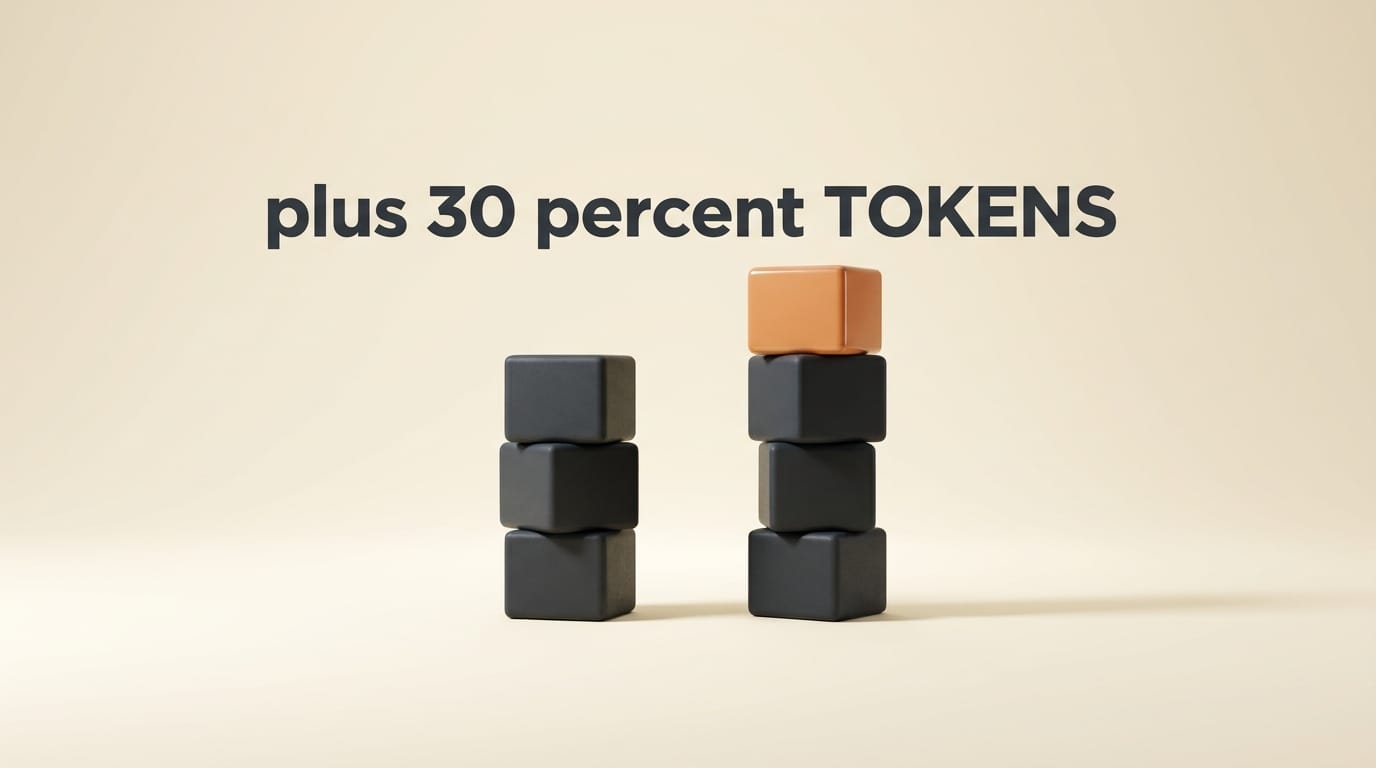
Here is the detail most launch coverage skips. Sonnet 5 ships with a new tokenizer, and the same text now produces roughly 30% more tokens than it did on Sonnet 4.6. The per-token price did not rise, but each task consumes more tokens, so the true cost of an equivalent job is not simply the number on the pricing page.
During the introductory pricing window ($2 input / $10 output through August 31, 2026), the lower per-token price more than absorbs the extra tokens, so right now Sonnet 5 is a real discount over 4.6. After August 31, when pricing settles to $3 / $15, the same as Sonnet 4.6, an identical job can cost slightly more than it did on 4.6 because of the higher token count, even though the sticker price is identical. This is not a reason to avoid Sonnet 5. It is a reason to re-measure your token budgets against your real workloads instead of assuming a clean price cut.
Price Per Token Is Not Cost Per Task
This is where most pricing takes go wrong, so it is worth slowing down. Per token, Sonnet 5 is clearly cheaper than Opus 4.8: $3 input and $15 output per million tokens at standard rates, against $5 and $25 for Opus. Opus is still the premium tier. But the price of a token is not the cost of a task, and Anthropic's own agentic search cost-performance chart on the announcement page makes the gap between those two ideas obvious.
That chart plots cost per task, not price per token, against pass rate, with a separate point for each effort level from low to max. The shape tells the real story. At low and medium effort, Sonnet 5 reaches accuracy comparable to Opus 4.8 for a fraction of the cost per task, which is the cost win everyone expects. But at the highest effort the two lines nearly meet: Sonnet 5 and Opus 4.8 land at roughly the same cost per task, around twenty dollars, and Opus keeps a small accuracy edge.
Why would a model with a much lower per-token price cost almost the same per task at the top end? Because Sonnet 5 spends more tokens to get there. It defaults to high effort, so it does more thinking, and its new tokenizer maps the same text to up to 1.35 times more tokens. Cheaper per token, more tokens per task. At max effort those two facts cancel out most of the price advantage.
The practical rule that falls out of this: run Sonnet 5 at sensible effort and it is a genuine bargain against Opus for similar results. Push it to max effort and you are paying near-Opus money for slightly-below-Opus accuracy, at which point you may as well reach for Opus. Match the effort level to the job, and let the cost-per-task curve, not the sticker price, drive the decision.
What Sonnet 5 Unlocks for Creators and Builders
Agentic workloads are expensive because they loop: the model plans, calls tools, reads results, and self-corrects, burning tokens at every step. A model that matches near-flagship quality at a mid-tier price makes long-running agents economically viable for solo creators and small teams that could never justify Opus-tier spend on every run.
Concretely, if you generate UI in Claude Code, prototype layouts, or spin up a small tool as an artifact, you were almost certainly already on a Sonnet model, and that default just got more capable at the same standard price. Sonnet 5 also self-checks its output unprompted, which means it is more likely to finish a multi-step build where earlier Sonnet models would stall halfway. The release continues Anthropic's agent push that recently produced Claude Tag, the always-on AI teammate in Slack, and the upgrade flows straight into features like Claude Code Artifacts that turn a session into a live, shareable page.
How to Move Your Workflow to Sonnet 5 (Step by Step)
If you want to test Sonnet 5 against your current setup before the intro pricing ends, here is a tight workflow that takes about 20 minutes.
- Pin the model. In the API or SDK, set the model to
claude-sonnet-5. In Claude Code, select Sonnet 5 in the model picker (it is the default, but confirm it). On claude.ai, it is already selected for Free and Pro. - Pick one real task. Choose a job you run often: a component build, a refactor, a research-and-summarize pass, or an agent loop. Do not test on a toy prompt.
- Run it on default settings. Adaptive thinking is on by default, so do not add manual thinking flags. Let it plan, use tools, and self-check.
- Measure tokens, not just quality. Record the input and output token counts. Compare them to the same task on Sonnet 4.6, and expect roughly 30% more tokens.
- Do the real cost math. Multiply your measured tokens by the intro price now, and by the $3 / $15 rate for after August 31, so you know both numbers before you commit a production pipeline.
- Decide per workload. Keep the highest-stakes reasoning jobs on Opus 4.8 if you need them; move the rest of your default and agentic work to Sonnet 5.

API and Behavior Changes You Need to Know
Sonnet 5 is not a drop-in clone of 4.6 at the API level. A few behaviors changed, and if you script against the API you will want to adjust rather than fight them:
- Adaptive thinking is on by default. The old manual extended-thinking setting is gone; requesting it returns a 400 error.
- Sampling is locked down. Non-default sampling parameters return a 400 error, so prompts that tuned temperature or top-p need to drop those overrides.
- Effort defaults to high. On both the API and Claude Code, the
effortsetting defaults to high. - Cybersecurity safeguards ship on by default. Sonnet 5 is the first Sonnet-tier model with real-time cyber safeguards enabled out of the box, matching the Opus 4.7 and 4.8 launches.
- Knowledge cutoff is January 2026. Plan retrieval or web tools accordingly for anything more recent.
On safety, Anthropic reports lower hallucination and sycophancy rates than Sonnet 4.6 and stronger resistance to prompt injection, with the supporting evaluations detailed in the system card.
Who Should Switch Now, and Who Should Wait
Switch now if you are already on a Sonnet model: the default did the upgrade for you, and the intro pricing makes this the cheapest Sonnet 5 will be. Stay on Opus 4.8 for your most demanding reasoning or highest-autonomy work; Anthropic still points the hardest jobs at the flagship, so Sonnet 5 raises the floor rather than retiring the ceiling. Wait and test first if you run a production pipeline pinned to Sonnet 4.6: do not flip it blind, because the tokenizer change and the locked sampling params can shift both your cost and your prompt behavior. Re-measure, then migrate.
Frequently Asked Questions
Is Claude Sonnet 5 free to use?
Yes. Sonnet 5 is the default model on Anthropic's Free and Pro plans, so most people who use claude.ai are already on it. It is also available on Max, Team, and Enterprise plans, in Claude Code, and through the API.
How much does Claude Sonnet 5 cost on the API?
Introductory pricing is $2 per million input tokens and $10 per million output tokens through August 31, 2026. After that it settles at $3 input and $15 output per million tokens, the same as Sonnet 4.6. See the Claude pricing page for current rates.
Is Sonnet 5 better than Opus 4.8?
No. Anthropic describes Sonnet 5 as performing "close to" Opus 4.8, not better than it. Opus 4.8 remains the recommended choice for the most demanding reasoning and highest-autonomy work. Sonnet 5 raises the quality of the default mid-tier model rather than replacing the flagship.
Why does Sonnet 5 use more tokens than Sonnet 4.6?
Sonnet 5 uses a new tokenizer that maps the same text to roughly 30% more tokens than Sonnet 4.6. The per-token price is unchanged, but because each task consumes more tokens, the real cost of an equivalent job is higher than the raw price difference suggests. Re-measure your workloads before assuming a clean price cut.
What is the model ID and context window?
The API model ID is claude-sonnet-5. It has a 1M-token context window (default and maximum) and can return up to 128,000 output tokens in a single response.
Do I need to change my API code to use Sonnet 5?
Possibly. Adaptive thinking is on by default and manual extended-thinking requests return a 400 error, and non-default sampling parameters also return a 400 error. If your existing code sets those, remove the overrides. Full migration notes are in the Claude Code documentation and the model overview.